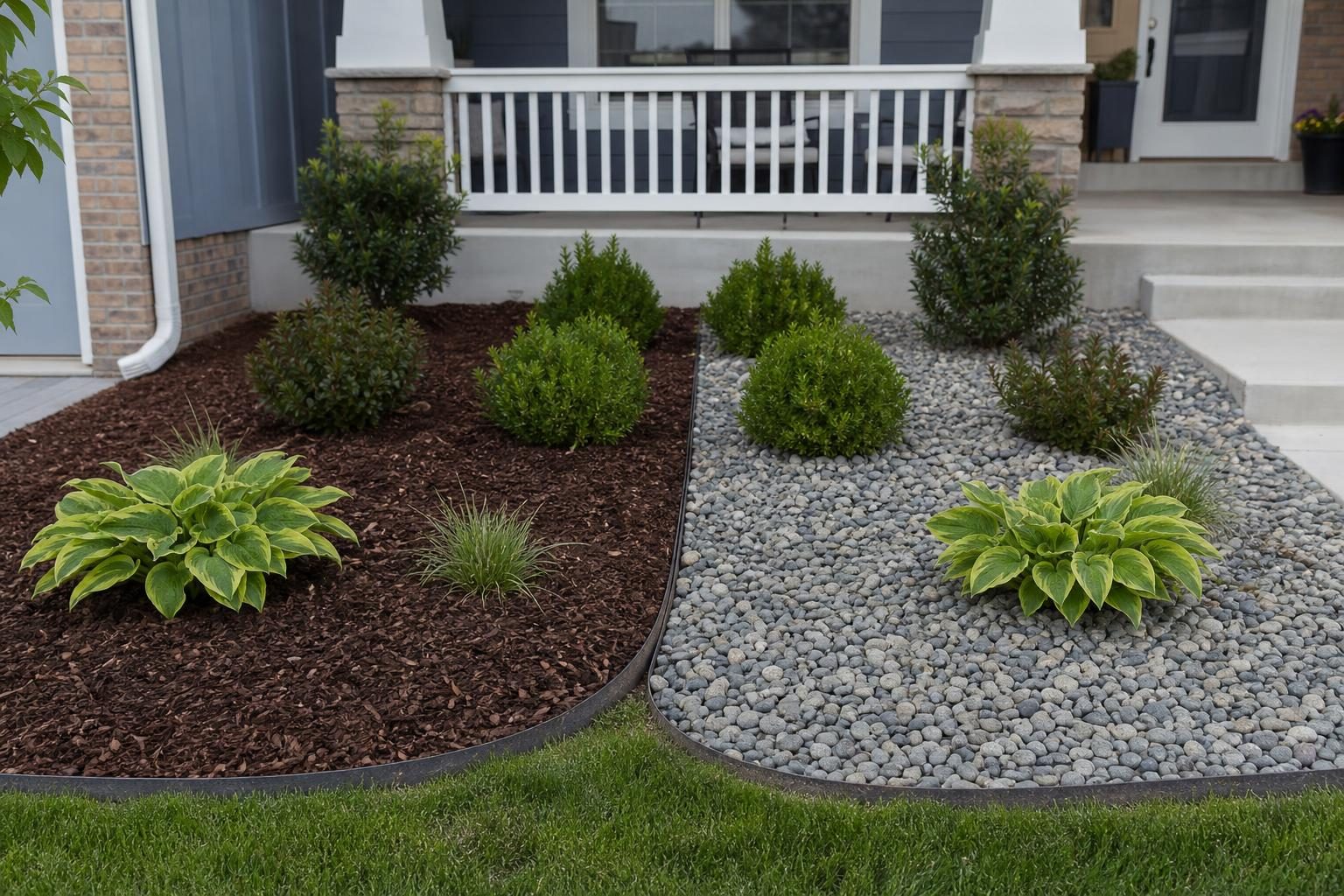
Mulch is cheaper to install, keeps soil cooler and improves it as it breaks down, but it needs topping up every year or two. Decorative rock costs more up front and lasts for many years, but it holds heat, does not feed the soil and still gets weeds. For planting beds, mulch is usually the better choice; rock makes more sense in drought-tolerant designs, drainage areas and spots where mulch washes or blows away.
Part of our Complete Mulch Guide: types, how much you need, prices and care in one place.
Cost per cubic yard and per ton
Bulk prices vary by region, product and delivery distance. These are typical US ranges for planning.
| Material | Typical bulk price | Typical installed cost |
|---|---|---|
| Shredded hardwood or bark mulch | About $25 to $50 per cubic yard | About $60 to $120 per cubic yard |
| Dyed or premium bark mulch | About $35 to $65 per cubic yard | About $70 to $140 per cubic yard |
| Pea gravel or crushed rock | About $30 to $60 per ton | About $80 to $160 per ton |
| River rock | About $60 to $150 per ton | About $120 to $250+ per ton |
| Lava rock | About $80 to $200 per cubic yard | About $150 to $300+ per cubic yard |
Bagged products cost much more per yard than bulk. Delivery fees often add $50 to $150 per load. Installed prices include labor, edging and weed removal in some quotes but not others, so check the scope. See our landscaping materials cost guide for more.

Coverage: how far each material goes
One cubic yard covers about 324 square feet at 1 inch deep. To find coverage, divide 324 by your depth in inches.
- Mulch at 3 inches: about 108 square feet per cubic yard.
- Gravel at 2 inches: about 162 square feet per cubic yard. Most gravel and rock weighs around 1.3 to 1.5 tons per cubic yard, so a ton covers roughly 100 to 120 square feet at 2 inches.
- River rock at 3 inches: about 108 square feet per cubic yard; larger stones need more depth to cover soil.
- Lava rock: much lighter, so more coverage per ton but usually sold by the yard.
Formula: square feet × depth in inches ÷ 324 = cubic yards. Our mulch depth guide explains the right depth for beds.
Example: a 200-square-foot bed
Using the bulk prices above and DIY installation, before delivery fees:
- Bark mulch, 3 inches deep: about 1.9 cubic yards, roughly $50 to $95 in bulk, plus a top-up of about a third to half that amount every year or two.
- River rock, 2 to 3 inches deep: about 1.75 to 2.5 tons, roughly $100 to $375 in bulk, with little replacement for many years.
Over five to ten years, rock can cost less in materials. Mulch still often wins on comfort, soil health and plant growth.

Heat and weed tradeoffs
Heat: rock makes beds hotter
Rock absorbs sun during the day and releases heat into the evening. In hot, sunny areas, that can stress plants, raise watering needs and make areas near the house warmer. Light-colored rock reflects more heat onto walls and windows.
Mulch insulates the soil, keeping roots cooler in summer and buffering cold in winter. It also holds soil moisture better.
Weeds: neither material stops them completely
Mulch suppresses weed seeds at 2 to 3 inches deep, and pulled weeds come out easily from loose mulch. But weed seeds can germinate on top of decomposing mulch.
Rock does not decompose, but dust, leaves and windblown seeds collect between stones and weeds root there. Pulling weeds from rock is harder, and debris is hard to rake out. Landscape fabric under rock helps at first but soil builds up on top over time.
For either material, remove existing weeds and roots first and install solid edging. Edging matters more with rock, because stones that migrate into the lawn can damage mowers, and with mulch on slopes, where it can wash onto walks in heavy rain.
Soil health and plants
Organic mulch breaks down and adds organic matter to the soil, improving structure and supporting soil life. It suits shrubs, perennials, trees and vegetable gardens.
Rock adds nothing to the soil. It works best with drought-tolerant plants that prefer lean, well-drained soil, such as many succulents and Mediterranean plants. Rock can also compact soil underneath over time.
When to choose each
| Situation | Better choice |
|---|---|
| Shrub and perennial beds | Mulch |
| Around trees | Mulch, kept away from the trunk |
| Drought-tolerant or desert-style garden | Rock |
| Drainage swales and dry creek beds | Rock |
| Under downspouts or roof drip lines | Rock |
| Areas where mulch blows or washes away | Rock |
| Fire-sensitive areas near the house | Rock or gravel near the structure; check local guidance |
| Vegetable and annual beds | Mulch |

Switching later
Changing from mulch to rock is easy: let the mulch break down or remove it, then add rock. Changing from rock to mulch is much harder, because rock must be shoveled or raked out by hand. Think long term before covering beds in rock.
If you want both, a common approach is mulch in planting beds and rock in drainage areas, borders and narrow strips along the house. Our low-water landscaping guide shows how to combine them.
Common mistakes with either material
- Piling mulch against tree trunks in a “volcano,” which traps moisture against the bark.
- Adding fresh mulch every year without checking depth, until beds are buried 5 or 6 inches deep.
- Using small, light rock on slopes or near downspouts where water will move it.
- Ordering by the bag for large areas when bulk delivery is far cheaper.
- Putting rock right against the house in hot climates where reflected heat matters.
What to check in a quote
- Material type, size and color, and depth.
- Square footage covered and total cubic yards or tons.
- Weed removal and existing material removal.
- Edging type and length.
- Whether landscape fabric is included and why.
- Delivery and disposal fees.

Compare mulch and decorative rock cost ranges
Use these calculators to compare rough mulch and gravel costs for the same coverage area before deciding which material fits the project and maintenance plan.
Mulch Cost Calculator
Estimate mulch quantity plus material and installation cost ranges for planting beds.
Mulch cost estimate
- Estimated cubic yards
- –
- Material estimate
- –
- Delivery and labor estimate
- –
- Low total
- –
- High total
- –
Gravel Cost Calculator
Estimate gravel tonnage, delivery, and installation cost ranges for stone coverage projects.
Gravel cost estimate
- Estimated tons
- –
- Material estimate
- –
- Delivery and labor estimate
- –
- Low total
- –
- High total
- –
Frequently asked questions
Is rock cheaper than mulch in the long run?
Often, in materials alone, because rock rarely needs replacing. But it costs more up front, can raise watering needs and does not improve soil.
How often do you need to replace mulch?
Most organic mulch needs a top-up every one to two years to maintain 2 to 3 inches of depth.
Does mulch or rock attract pests?
Neither material is a guaranteed pest magnet, but wood mulch against the house can hide termite activity and hold moisture near siding, and rock can shelter insects and small animals. Keep either material a few inches below and back from siding and keep an inspection gap at the foundation.