Landscaping Guru

  • Sod vs Seed Timeline Guide for Homeowners

    Sod vs Seed Timeline Guide for Homeowners

    The timeline difference between sod and seed is one of the biggest reasons homeowners choose one over the other. One gives near-immediate coverage, while the other asks for patience and favorable conditions.

    How sod changes the timeline

    • The lawn looks finished quickly once installed.
    • Roots still need establishment time before heavy use.
    • Good prep and irrigation remain critical even though coverage is immediate.

    How seed changes the timeline

    • Germination and fill-in depend on weather, watering, and site prep.
    • Washout, birds, weeds, and uneven growth can extend the process.
    • The usable-lawn timeline is usually much longer than installation day.

    Which one fits your schedule

    • Choose sod when appearance and faster coverage matter most.
    • Choose seed when the budget is tighter and the timeline is more flexible.
    • Match the method to the season and local growing conditions.

    Bottom line

    If timing matters more than the initial price, the timeline difference between sod and seed can be the deciding factor.

    For the broader overview, continue with Sod vs Seed Guide for Homeowners.


  • Sod vs Seed Cost Guide for Homeowners

    Sod vs Seed Cost Guide for Homeowners

    Sod and seed create very different cost patterns because one buys instant coverage and the other buys a slower establishment process with more early care.

    Where sod usually costs more

    • Higher upfront material cost and delivery.
    • Faster visual results that some homeowners value enough to justify the spend.
    • Possible waste or extra labor when shapes are irregular or access is tight.

    Where seed can cost less

    • Lower material cost in many projects.
    • More vulnerability to patchiness, washout, and repeat work if conditions are weak.
    • A longer establishment window that can increase care demands.

    How to compare fairly

    • Include watering, rework risk, timing, and usable-yard expectations in the comparison.
    • Ask whether site prep quality changes the success odds for one option more than the other.
    • Be realistic about how patient and hands-on you can be during establishment.

    Bottom line

    The better value depends on whether you prioritize lower upfront spend or a faster, more immediate lawn result.

    For the broader overview, continue with Sod vs Seed Guide for Homeowners.


  • How to Choose Between Mulch and Rock Landscaping Guide

    How to Choose Between Mulch and Rock Landscaping Guide

    Choosing between mulch and rock gets much easier when you look at plant health, maintenance style, site conditions, and how formal or natural you want the beds to feel.

    Questions to ask before choosing

    • How hot and dry does the bed already get?
    • How much leaf litter, debris, or wind does the area see?
    • Do the plants want cooler, more moisture-balanced root conditions?

    When mulch usually wins

    • Plant-heavy beds where root protection and moisture support matter.
    • Yards where a softer, easier-to-refresh finish is preferred.
    • Homeowners who do not mind periodic replenishment.

    When rock usually wins

    • Low-water designs with the right plants and edge control.
    • Sites where mulch blows away or washes out too easily.
    • Designs where a crisp, mineral look is part of the goal.

    Bottom line

    The right answer usually comes from the planting and maintenance plan, not just from which finish looks cleaner on installation day.

    For the broader overview, continue with Mulch vs Rock Landscaping Guide for Homeowners.


  • Mulch vs Rock for Plant Beds Guide for Homeowners

    Mulch vs Rock for Plant Beds Guide for Homeowners

    Plant beds often reveal the biggest differences between mulch and rock because temperature, moisture, and root-zone conditions matter just as much as appearance.

    Where mulch often performs well

    • Beds with mixed shrubs and perennials that benefit from moderated moisture and organic protection.
    • Spaces where a softer, more natural look fits the planting style.
    • Yards where soil improvement over time matters.

    Where rock can make sense

    • Very low-water designs, certain modern looks, and beds where runoff or wind makes mulch harder to manage.
    • Areas where the plants and site conditions can tolerate more reflected heat.
    • Projects where stable edging and cleanup strategy are already planned.

    What homeowners should watch for

    • Heat buildup, soil dryness, and root stress around certain plant types.
    • Migration, weed intrusion, and debris cleanup in rock-heavy beds.
    • Replenishment needs, slope behavior, and how each material interacts with irrigation.

    Bottom line

    The better bed material depends on the planting plan, the irrigation approach, and the site’s moisture and heat conditions.

    For the broader overview, continue with Mulch vs Rock Landscaping Guide for Homeowners.


  • Mulch vs Rock Maintenance Guide for Homeowners

    Mulch vs Rock Maintenance Guide for Homeowners

    Mulch and rock ask for very different upkeep. Homeowners should choose based on the kind of maintenance they want, not just which material seems more permanent.

    What mulch maintenance looks like

    • Refreshing depth as the material breaks down.
    • Cleaning blown material off paths and keeping edges neat.
    • Watching for weed pressure and moisture balance in planting beds.

    What rock maintenance looks like

    • Managing weed growth in gaps and keeping rock from migrating out of place.
    • Cleaning leaves, debris, and soil buildup from the surface.
    • Watching for heat stress, glare, and instability on slopes or edges.

    Which one feels easier

    • Mulch can feel simpler if you are comfortable with periodic replenishment.
    • Rock can feel more permanent but often creates more visible cleanup demands.
    • Planting density, wind, slope, and tree litter heavily affect the answer.

    Bottom line

    The easier-care material is the one whose upkeep pattern actually suits the bed conditions and the way you use the yard.

    For the broader overview, continue with Mulch vs Rock Landscaping Guide for Homeowners.


  • Mulch vs Rock Cost Guide for Homeowners

    Mulch vs Rock Cost Guide for Homeowners

    Mulch and decorative rock can create very different cost patterns. The day-one number is only part of the decision because replacement frequency and labor needs change the long-term picture.

    What mulch usually costs

    • Lower upfront material cost in many yards.
    • Recurring refresh cost as organic material breaks down.
    • Possible savings when the goal is simple bed cleanup and moisture support.

    What rock usually costs

    • Higher upfront material and prep cost, especially when fabric, edging, or extra base work is involved.
    • Potentially lower refresh frequency if the installation is stable.
    • Added labor when removing old material or correcting grades first.

    How to compare long-term spend

    • Ask how often mulch will need replenishment in your conditions.
    • Ask whether rock will increase cleanup, heat, or weed-control effort.
    • Factor in whether the chosen material really fits the site and planting plan.

    Bottom line

    The lower-cost option depends on whether you value lower upfront spend or a longer replacement cycle with higher setup cost.

    For the broader overview, continue with Mulch vs Rock Landscaping Guide for Homeowners.


  • How to Choose Between a Patio and Deck Guide

    How to Choose Between a Patio and Deck Guide

    Choosing between a patio and a deck gets easier when you look at elevation, maintenance, comfort, and how the outdoor space needs to connect to the rest of the yard.

    Questions to ask first

    • How high is the door above grade?
    • Do you want a ground-level gathering space or a raised platform?
    • Which option fits your maintenance tolerance and budget best?

    When a patio is usually the better answer

    • You want a durable, ground-level space integrated with landscaping.
    • The yard is already close to grade and drainage can be handled well.
    • You prefer a more permanent hardscape feel.

    When a deck is usually the better answer

    • The home’s floor height makes a raised structure more practical.
    • Views, railings, and elevation are part of the intended experience.
    • You want to avoid heavy fill, steps, or retaining just to reach grade.

    Bottom line

    The better option is the one that works with the house and the site instead of forcing the yard into an awkward layout.

    For the broader overview, continue with Patio vs Deck Guide for Homeowners.


  • Patio vs Deck Resale and Lifestyle Guide for Homeowners

    Patio vs Deck Resale and Lifestyle Guide for Homeowners

    Patios and decks add value differently. The stronger choice is often the one that fits the home, the yard, and everyday use patterns better rather than the one with the flashier first impression.

    When patios often fit better

    • Ground-level entertaining, smooth transitions to lawn and planting areas, and lower-maintenance outdoor living goals.
    • Homes where drainage and circulation need to work alongside the gathering space.
    • Yards that benefit from a more integrated hardscape feel.

    When decks often fit better

    • Homes with elevation changes or a high back door that would make a patio awkward.
    • Properties where views, height, or upper-level access are part of the experience.
    • Layouts where a raised outdoor room feels more natural than a ground-level surface.

    What buyers and homeowners notice most

    • Ease of use, comfort, and how well the outdoor space fits the house.
    • Maintenance expectations and visible condition.
    • Whether the space feels intentional, accessible, and right-sized.

    Bottom line

    Lifestyle fit and home integration usually matter more than trying to force one option to win every value conversation.

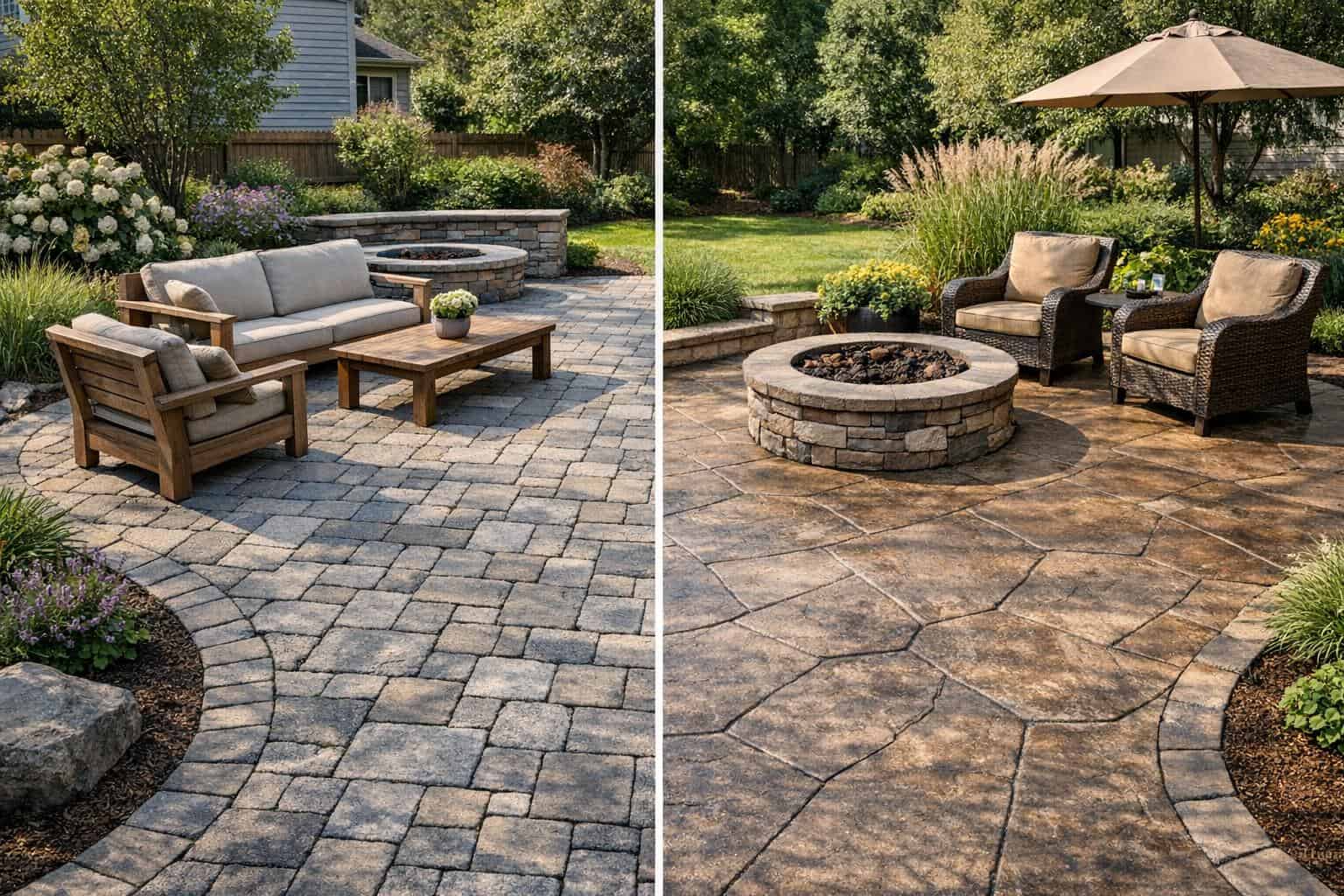
    Patio vs Deck Resale and Lifestyle Guide for Homeowners related example showing Concrete, paver, and stone outdoor surfaces showing common patio and walkway material choices for homeowners
    This patio example gives homeowners a visual reference for comparing layout, materials, and maintenance tradeoffs before starting the project.

    For the broader overview, continue with Patio vs Deck Guide for Homeowners.

    Patio vs Deck Resale and Lifestyle Guide for Homeowners related example showing Backyard patio comparison showing paver surface and stamped concrete surface
    This related patio detail helps show how site conditions and finish choices can change the homeowner's plan.

  • Patio vs Deck Maintenance Guide for Homeowners

    Patio vs Deck Maintenance Guide for Homeowners

    A patio and a deck can deliver similar outdoor living function, but the upkeep experience is very different once the project is built.

    What patio maintenance usually involves

    • Sweeping, joint care, occasional sealing depending on material, and watching for settling or drainage issues.
    • Cleaning stains, moss, or weed intrusion in joints where relevant.
    • Checking edges and nearby grades so runoff does not shorten the surface life.

    What deck maintenance usually involves

    • Inspecting boards, fasteners, railings, stairs, and structural elements.
    • Cleaning, staining, or sealing for wood systems.
    • Monitoring movement, rot risk, and finish wear over time.

    Which one feels easier

    • Patios often feel lower maintenance in many climates, but drainage and joint stability still matter.
    • Decks can require more frequent visible upkeep, especially with natural wood.
    • The right answer depends on material choice, shade, moisture, and how exposed the space is.

    Bottom line

    The lower-maintenance option is usually the one whose upkeep pattern best matches your climate and how much hands-on care you are comfortable with.

    For the broader overview, continue with Patio vs Deck Guide for Homeowners.


  • Patio vs Deck Cost Guide for Homeowners

    Patio vs Deck Cost Guide for Homeowners

    Patio and deck pricing can overlap in some projects, but the structure, elevation, materials, and access conditions often push one option noticeably higher than the other.

    What pushes patio pricing

    • Excavation, base prep, drainage, retaining needs, and material choice.
    • Layout shape, cut work, and edge detailing.
    • Whether the patio ties into stairs, walkways, walls, or outdoor kitchens.

    What pushes deck pricing

    • Height, framing complexity, stairs, railings, and structural requirements.
    • Choice between pressure-treated lumber, composite, or premium finishes.
    • Access difficulty and attachment details at the house.

    How to compare the spend

    • Compare the usable outcome, not just the square footage.
    • Factor in future maintenance, replacement cycles, and comfort in your climate.
    • Ask what site conditions are making one option more complex than the other.

    Bottom line

    The cost winner often depends on elevation, drainage, and the finish level more than on the simple patio-versus-deck label.

    For the broader overview, continue with Patio vs Deck Guide for Homeowners.