Hiring and Planning

Hiring and planning guides that help homeowners compare contractors, ask better questions, and understand project expectations before work begins.

Start with the service type

Landscaping Services Guideposts

Use these guides to understand what each service includes before comparing providers or requesting quotes.

Core service explainers

Start here when you are still deciding what kind of landscaper or outdoor contractor you need.

Compare before you hire

Use these pages when two services or surface choices sound similar but lead to different scopes.

Hire smarter

Planning And Contractor Comparison

Use this hub when you are moving from ideas into estimates, bids, and contractor conversations.

Before requesting estimates

These guides help define scope and compare companies before the first site visit.

Budget with better assumptions

Cost Guides And Calculators

Use this hub to move from rough budget ranges into the details that usually change quotes.

Calculator starting points

Open the calculator hub or a cost guide when you need a quick planning range.

High-impact cost decisions

These pages help compare choices where price, lifespan, and maintenance tradeoffs matter.

Understand the build

Installation And Site-Work Pathways

Use these guides to understand sequencing, site prep, access, and the details that affect long-term performance.

Hardscape and site prep

These projects often depend on base prep, demolition, grading, drainage, and access.

Drainage and retaining work

Use these when water, grade, or slope stability is part of the project.

Choose materials with ownership in mind

Material And Finish Decision Paths

Use these guides when appearance, maintenance, replacement, and budget all affect the right material choice.

Surface and finish comparisons

Compare outdoor surfaces before committing to a driveway, patio, or lawn direction.

Landscape material planning

Use these pages when quantity, delivery, or long-term maintenance are the main concern.

Protect the investment

Maintenance And Ownership Next Steps

Use these guides to understand ongoing care, seasonal refreshes, and when maintenance points to a bigger fix.

Maintenance planning

These guides help compare recurring service, seasonal work, and refresh projects.

When upkeep becomes repair

Use these when repeated maintenance problems suggest drainage, surface, or material issues.

  • Patio Planting for Sun vs Shade Guide

    Patio Planting for Sun vs Shade Guide

    Patio planting often looks good on day one and struggles later because the light conditions were underestimated. A patio edge in intense sun needs a very different planting strategy than one that stays shaded for much of the day.

    Read the exposure where the patio actually sits

    The house, nearby fences, structures, and trees can change light conditions more than homeowners expect.

    Choose planting that supports comfort and maintenance

    The best patio-edge plants still need to work with circulation, debris, and how the space is used. Pair this with our Patio Perimeter Planting Ideas Guide for Homeowners if the patio border still needs visual planning too.

    Do not force one palette across very different microclimates

    One side of a patio may behave very differently than another, especially when the house creates half-day shade.

    What homeowners should remember

    The best patio planting decisions match the real exposure conditions so the outdoor room stays attractive and manageable over time.
  • Privacy Screening for Corner Lots Guide for Homeowners

    Privacy Screening for Corner Lots Guide for Homeowners

    Corner lots create a different privacy challenge because more of the yard may be visible from the street or neighboring angles. The best screening strategies still preserve openness and curb appeal while reducing the exposures that matter most.

    Choose which exposures need the most screening

    Not every visible side of a corner lot needs the same treatment. Often the better result comes from screening the most exposed activity areas while letting other edges stay lighter.

    Support privacy without losing curb appeal

    Corner-lot planting still has to feel like part of the front-yard design. Pair this with our Corner Lot Front Yard Landscaping Ideas Guide if the full frontage is being reconsidered.

    Let the lot geometry guide the screen shape

    Because corner lots read from more than one direction, the best screen often works as part of a bigger composition rather than a single straight line.

    What homeowners should remember

    The best corner-lot privacy screens improve comfort without making the property feel heavy or overplanted from the street.


  • Front Yard Plant Spacing Mistakes Guide for Homeowners

    Front Yard Plant Spacing Mistakes Guide for Homeowners

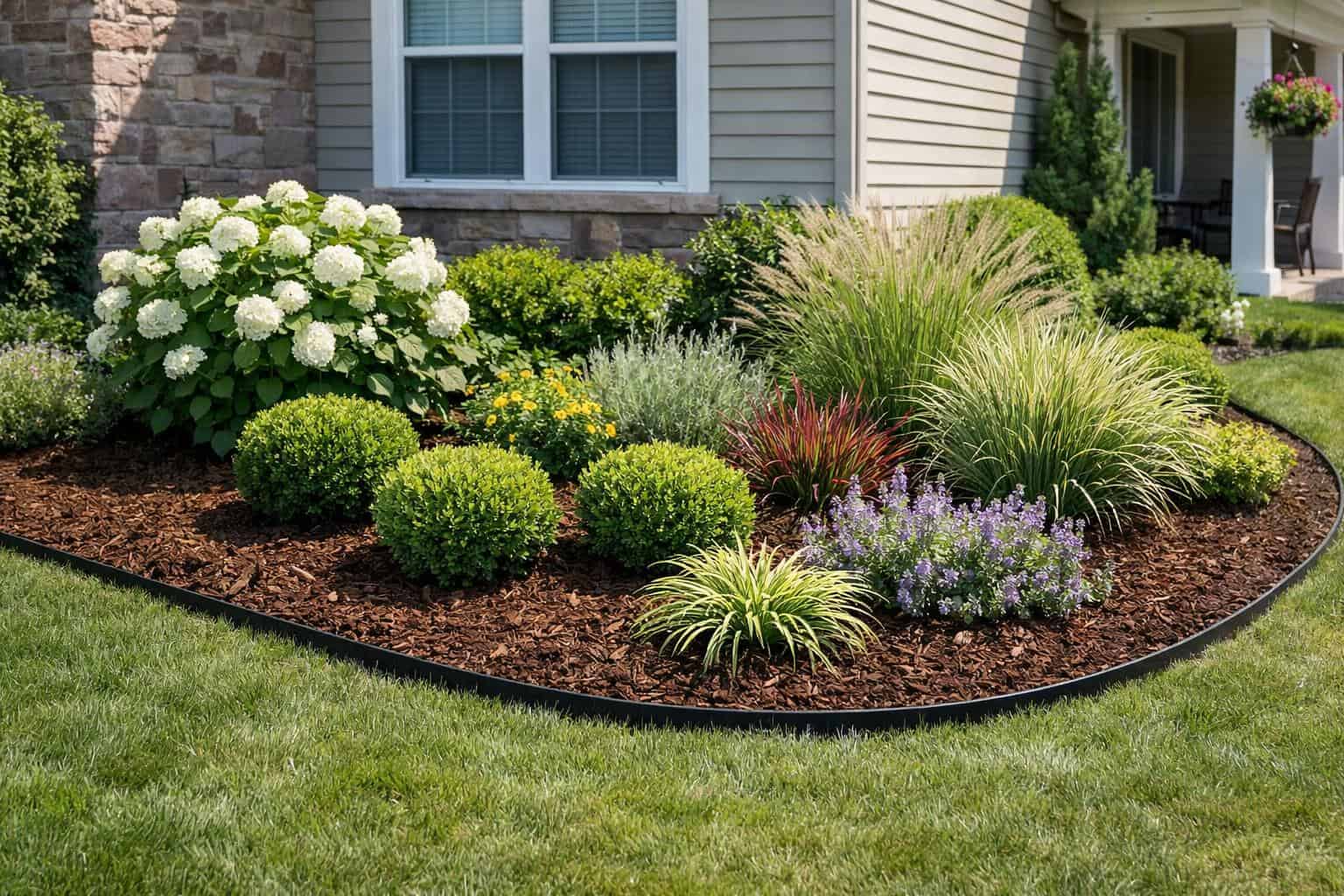
    Plant spacing mistakes often do not show up right away. A bed can look great when everything is newly planted, then become crowded, awkward, or hard to maintain a few seasons later. The best front-yard layouts think about how plants will grow together over time, not just how full the bed looks on day one.

    Do not plant for the nursery size

    Many front-yard problems start when spacing decisions are based on how small the plants look at purchase time instead of how they will mature.

    Give repeated plants room to read clearly

    Repetition looks stronger when individual groupings still have room to form their intended shape. Pair this with our Front Yard Repetition in Planting Guide for Homeowners if rhythm and grouping are also part of the plan.

    Leave maintenance access in the design

    Proper spacing also helps with pruning, cleanup, and keeping edges readable over time.

    What homeowners should remember

    The best plant-spacing decisions make the front yard easier to live with because the bed can mature without constantly being corrected.


  • Front Yard Repetition in Planting Guide for Homeowners

    Front Yard Repetition in Planting Guide for Homeowners

    Repetition is one of the simplest ways to make a front yard feel more designed. Repeating forms, colors, or plant types helps the eye understand the yard as one composition instead of a string of unrelated decisions.

    Repeat the right things, not everything

    Repetition works best when a few plants or forms are used consistently enough to create rhythm without making the yard feel rigid.

    Use repetition to unify separate beds

    One of its biggest advantages is helping disconnected planting areas feel like part of the same plan. Pair this with our Front Yard Shrub Grouping Ideas Guide for Homeowners if you are also refining the structure of the beds themselves.

    Balance repetition with variation in scale

    A yard still needs depth and contrast, but repetition usually gives that variation a clearer framework.

    What homeowners should remember

    The best front-yard repetition strategies make the planting feel more cohesive because the design starts to speak with one voice.


  • Walkway Entry Width Guide for Homeowners

    Walkway Entry Width Guide for Homeowners

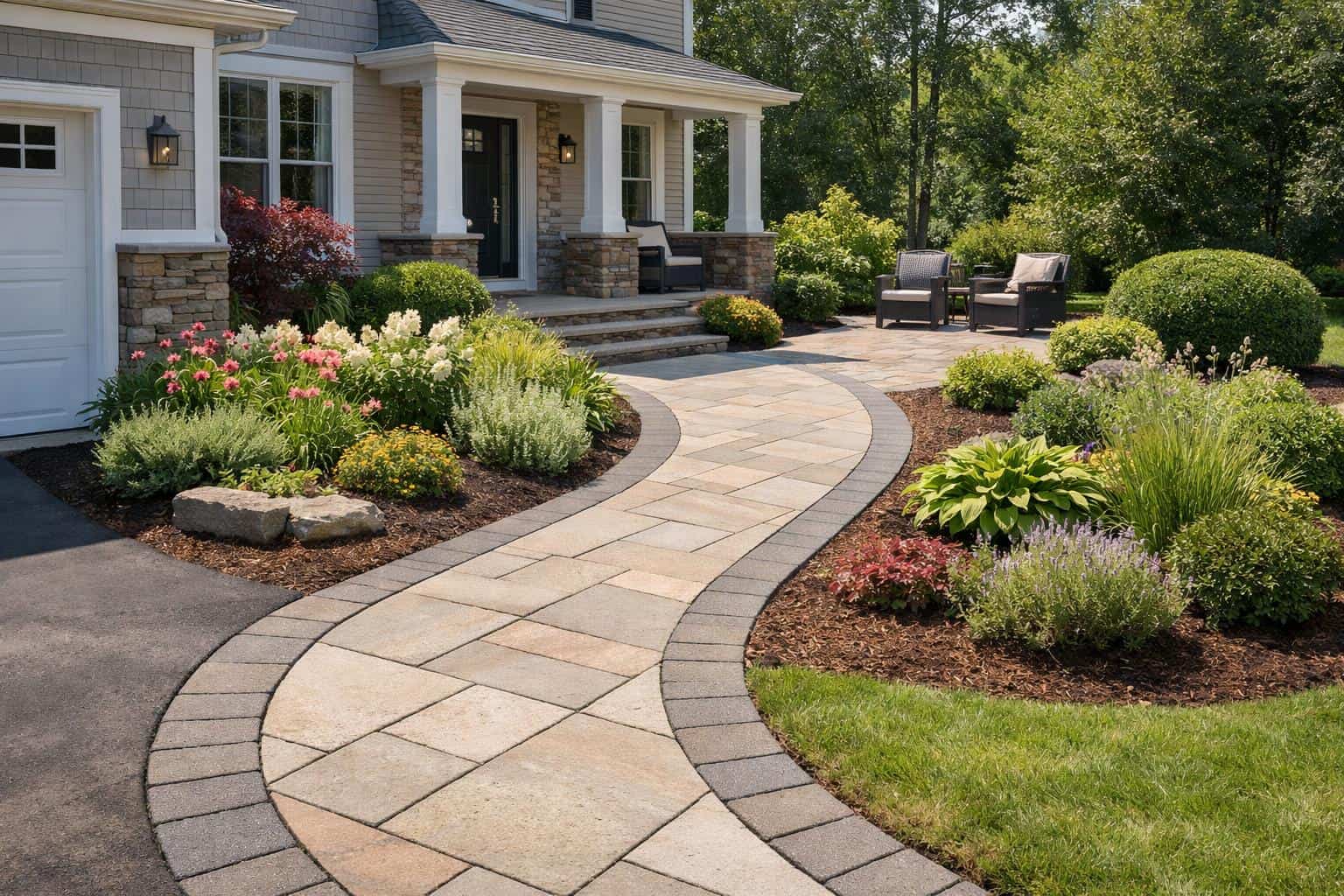
    Walkway width affects both function and feel. A narrow path can feel pinched or secondary, while a wider entry path can make the front approach feel more comfortable and welcoming. The best width usually depends on the house scale, approach length, and how formal the entry should read.

    Match the width to the importance of the route

    The primary front walk often deserves a more generous width than a side path or a garden route.

    Let house scale and planting width influence the choice

    A walkway should feel like it belongs to the house and still leave enough room for surrounding planting to work. Pair this with our Curved Walkway vs Straight Walkway Guide for Homeowners if shape and route are also part of the decision.

    Think about how people actually arrive

    Entry width feels different on a short direct route than on a longer path where two people may walk side by side.

    What homeowners should remember

    The best walkway width is usually the one that makes the approach feel natural and appropriate to the house.


  • Outdoor Kitchen Landing Space Guide for Homeowners

    Outdoor Kitchen Landing Space Guide for Homeowners

    Landing space is the counter area where food, trays, tools, or plates can actually be set down. It sounds like a small detail, but it often decides whether an outdoor kitchen feels usable or frustrating once the cooking starts.

    Give key appliances a place to offload to

    Grills, side burners, and prep areas all work better when there is nearby landing space for real cooking tasks.

    Do not treat landing space as leftover counter

    The best layouts plan it intentionally rather than hoping the remaining counter is enough. Pair this with our Outdoor Kitchen Prep Zone Layout Guide for Homeowners if prep workflow is also part of the same decision.

    Think about serving and cleanup too

    Landing space matters for more than cooking. It also affects how the kitchen handles drinks, plates, and guest flow.

    What homeowners should remember

    The best outdoor-kitchen layouts make room for real use, not just appliance placement.


  • Low-Maintenance Foundation Bed Guide for Homeowners

    Low-Maintenance Foundation Bed Guide for Homeowners

    Foundation beds often become higher maintenance than they need to be because plant size, spacing, and material choices are made for immediate appearance instead of long-term upkeep. A lower-maintenance foundation bed should still look intentional while staying easier to manage.

    Start with the mature size problem

    Many foundation beds become work-intensive because shrubs quickly outgrow the available space and need constant correction.

    Use a cleaner palette with stronger repetition

    Fewer dependable plants often perform better than a bed full of small mixed choices. Pair this with our Foundation Planting Ideas Guide for Homeowners if the visual layout still needs more structure.

    Keep the bed easy to edge and clean

    The more practical the bed is to maintain, the more likely it is to keep looking intentional over time.

    What homeowners should remember

    The best low-maintenance foundation beds make the house feel more grounded without creating a constant pruning problem.


  • Evergreen Screen Pruning and Shape Guide for Homeowners

    Evergreen Screen Pruning and Shape Guide for Homeowners

    Even privacy planting that starts out well can become a maintenance problem if pruning is handled poorly. The best evergreen screens hold their intended shape because homeowners or contractors manage them consistently and with the plant’s long-term size in mind.

    Prune for the mature shape you actually want

    A privacy screen tends to perform better when it is guided toward the right form early instead of cut back aggressively only after it gets too large.

    Shape affects light and fullness

    Pruning style can influence whether lower growth stays healthy and whether the screen keeps a useful visual density. Pair this with our Evergreen Screen Spacing Guide for Homeowners if spacing and long-term fill-in are still part of the plan.

    Do not wait until the screen is out of control

    Corrective pruning on an oversized hedge or screen is usually harder than maintaining a reasonable shape over time.

    What homeowners should remember

    The best pruning approach protects privacy, plant health, and manageable scale at the same time.


  • Patio Edge Seating vs Open Perimeter Guide

    Patio Edge Seating vs Open Perimeter Guide

    Some patios feel more inviting when the edge is lined with a bench, wall seat, or built-in gathering element. Others work better when the perimeter stays open and movement is easier. The right choice depends on the patio size, circulation needs, and how the yard is used.

    Use edge seating when the patio needs more gathering capacity

    Built-in or perimeter seating can add structure and function, especially when the patio is meant for entertaining.

    Keep the perimeter open when circulation matters more

    Some patios benefit from cleaner movement around the edge, especially where the space connects to steps, lawn, or multiple activity zones. Pair this with our Backyard Patio Layout Ideas Guide for Homeowners if you are still shaping the larger patio plan.

    Match the edge strategy to the patio size

    Smaller patios can feel crowded faster, while larger patios may benefit more from seating at the perimeter.

    What homeowners should remember

    The best patio edge is usually the one that supports both how people gather and how they move through the space.


  • Privacy Planting Between Neighbors Guide for Homeowners

    Privacy Planting Between Neighbors Guide for Homeowners

    Privacy planting between neighbors often works best when it solves the real view issue without turning the shared edge into an overgrown barrier. The best screens balance comfort, maintenance, and space limitations in a way that still suits the lot.

    Screen the actual view problem first

    Not every lot line needs the same density. Many homeowners get a better result by focusing on windows, patios, or seating views that matter most.

    Choose a screen that fits the lot depth

    The available width near the property line often decides whether a layered screen or a tighter planting strategy makes more sense. Pair this with our Layered Screening vs Single-Row Hedge Guide for Homeowners if you are still comparing approaches.

    Think about long-term neighbor reality too

    A screen should still be maintainable and not create avoidable disputes over crowding or overhang.

    What homeowners should remember

    The best neighbor-line planting gives homeowners more comfort while still fitting the scale and constraints of the actual property edge.