Landscaping Guru

  • Covered Patio vs Open Patio Guide for Homeowners

    Covered Patio vs Open Patio Guide for Homeowners

    Some patios work best as open-air gathering spaces, while others need shade or cover to stay comfortable enough for regular use. The right answer depends on climate, orientation, and how the household plans to use the space.

    When an open patio often works well

    • The site already gets enough seasonal comfort and shade.
    • The household values flexibility and a simpler build.
    • The yard benefits from a more open feel and stronger connection to lawn or planting zones.

    When a covered patio often makes more sense

    • The patio would be too hot, exposed, or weather-limited without shade or shelter.
    • Dining and longer gatherings are a core goal.
    • The outdoor room needs more structure to feel usable through more of the year.

    How to decide

    • Start with sun, wind, and timing of use rather than aesthetics alone.
    • Ask whether people will really linger on the patio without shade or cover.
    • Make sure the cover choice still fits the house and circulation around the patio.

    Bottom line

    The better patio is the one people will actually use comfortably, not just the one that looks good in the plan.

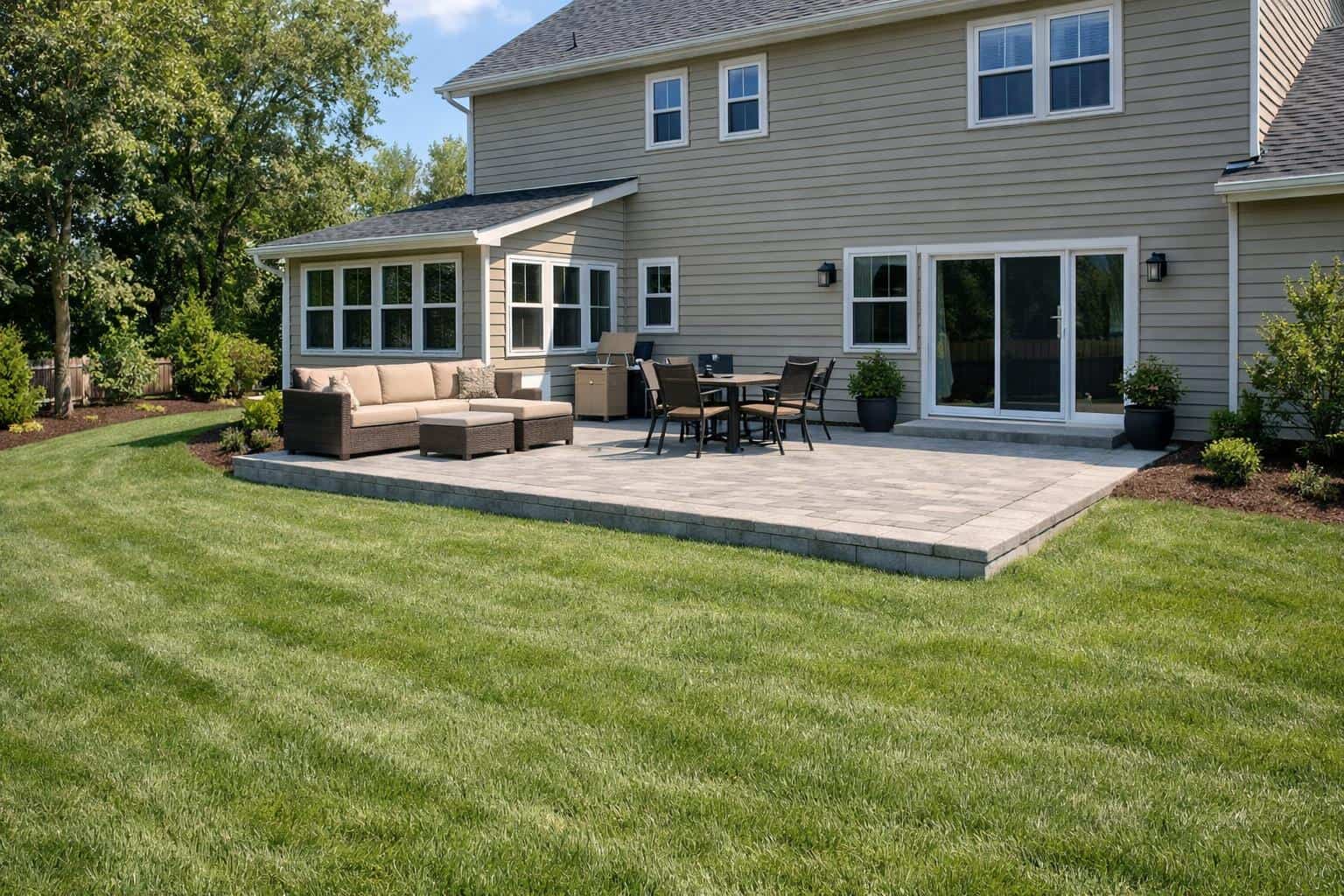
    Covered Patio vs Open Patio Guide for Homeowners related example showing Concrete, paver, and stone outdoor surfaces showing common patio and walkway material choices for homeowners
    This patio example gives homeowners a visual reference for comparing layout, materials, and maintenance tradeoffs before starting the project.

    For the broader overview, continue with Patio Installation Guide for Homeowners.

    Covered Patio vs Open Patio Guide for Homeowners related example showing Backyard patio comparison showing paver surface and stamped concrete surface
    This related patio detail helps show how site conditions and finish choices can change the homeowner's plan.

  • Best Patio Materials Guide for Homeowners

    Best Patio Materials Guide for Homeowners

    The best patio material depends on how the space will be used, how formal you want it to feel, and how much movement, maintenance, and climate stress the site will put on it over time.

    What homeowners usually compare

    • Pavers, poured concrete, stamped concrete, natural stone looks, and modular hardscape systems.
    • Materials that feel more formal versus softer or more textured.
    • Options that differ in repair style, upkeep, and long-term appearance.

    What makes one patio material fit better

    • Traffic level, climate, drainage, and how the patio ties into the rest of the yard.
    • Whether you value spot repair, lower upfront cost, or a specific finish look.
    • How the material will age next to the home and nearby walkways or walls.

    How to choose well

    • Match the material to the way you will really use the patio.
    • Think beyond day-one appearance and ask how the surface will look in a few seasons.
    • Do not separate the material from the site’s water movement and base requirements.

    Bottom line

    The best patio material is the one that fits the site’s conditions and the ownership experience you actually want.

    Best Patio Materials Guide for Homeowners related example showing Concrete, paver, and stone outdoor surfaces showing common patio and walkway material choices for homeowners
    This patio example gives homeowners a visual reference for comparing layout, materials, and maintenance tradeoffs before starting the project.

    For the broader overview, continue with Patio Installation Guide for Homeowners.

    Best Patio Materials Guide for Homeowners related example showing Backyard patio comparison showing paver surface and stamped concrete surface
    This related patio detail helps show how site conditions and finish choices can change the homeowner's plan.

  • How to Choose the Right Walkway Width and Layout Guide

    How to Choose the Right Walkway Width and Layout Guide

    Walkways feel awkward when width and layout are guessed instead of planned. The right path should feel comfortable for the way people actually move through the yard.

    What width should respond to

    • Whether the path is a main entry, a side route, or a casual garden connector.
    • How often people walk side by side or carry items along it.
    • How the path relates to nearby planting, fences, and hardscape edges.

    What layout should respond to

    • The natural line between origin and destination.
    • How the path interacts with drainage, grade, and other yard zones.
    • Whether the route should feel direct, relaxed, or more exploratory.

    What to avoid

    • Narrow routes that feel pinched once planting fills in.
    • Layouts that ignore where people really want to walk.
    • Paths that feel oversized for the scale of the yard without a reason.

    Bottom line

    The best walkway layout feels natural underfoot because its width and route fit the way the yard is actually used.

    For the broader overview, continue with Walkway and Pathway Installation Guide for Homeowners.


  • Walkway Cost vs Durability Guide for Homeowners

    Walkway Cost vs Durability Guide for Homeowners

    Walkway costs can look close at first, but the more durable path is not always the cheapest to install and the cheapest path is not always the best long-term value.

    What drives walkway cost

    • Material type, base prep, edging, and route complexity.
    • How much cutting, shaping, or grading the path needs.
    • Whether the walkway ties into other hardscape or grade changes.

    What durability really depends on

    • Proper base and drainage, not just the surface material.
    • How much traffic and movement the path will see.
    • Whether the chosen material suits the site’s climate and maintenance level.

    How to compare value

    • Ask how the path is expected to age in your yard, not in ideal conditions.
    • Consider ease of repair alongside surface longevity.
    • Match the walkway’s build quality to the importance of the route.

    Bottom line

    The best walkway value usually comes from the system that fits the site’s traffic and drainage conditions, not simply the lowest upfront price.

    For the broader overview, continue with Walkway and Pathway Installation Guide for Homeowners.


  • Curved vs Straight Walkways Guide for Homeowners

    Curved vs Straight Walkways Guide for Homeowners

    The shape of a walkway changes more than style. It affects travel flow, how formal the yard feels, and how the route relates to the home and landscape.

    When straight walkways often work better

    • The route is direct and formal, such as a main front entry path.
    • The home architecture benefits from a cleaner, more structured approach.
    • You want a simpler, more efficient travel line.

    When curved walkways often work better

    • The path needs to move around planting, grade, or outdoor-living zones.
    • A softer garden feel is part of the design goal.
    • You want the walkway to reveal the yard gradually instead of in one direct line.

    How to choose the right geometry

    • Let the destination and site conditions decide the route first.
    • Avoid adding curves just to make the path seem more ‘designed.’
    • Make sure the shape still feels natural for how people actually walk.

    Bottom line

    The best walkway shape is the one that fits both the movement pattern and the character of the yard, not just the one that feels more decorative on paper.

    Curved vs Straight Walkways Guide for Homeowners related example showing Front entry walkway with edging, planting beds, and material detail relevant to pathway cost planning
    This walkway example gives homeowners a visual reference for comparing layout, materials, and maintenance tradeoffs before starting the project.

    For the broader overview, continue with Walkway and Pathway Installation Guide for Homeowners.

    Curved vs Straight Walkways Guide for Homeowners related example showing Walkway detail relevant to settling, edge wear, and warning signs
    This related walkway detail helps show how site conditions and finish choices can change the homeowner's plan.

  • Best Walkway Materials Guide for Homeowners

    Best Walkway Materials Guide for Homeowners

    The best walkway material depends on how the path is used, how formal you want it to feel, and how much movement, drainage, and upkeep the site will put on it over time.

    What homeowners usually compare

    • Pavers, poured concrete, stepping surfaces, gravel-style paths, and natural stone looks.
    • Surface options that feel more formal versus softer garden-path styles.
    • Materials that handle different traffic and maintenance expectations.

    What makes one material fit better than another

    • Traffic level, slope, and drainage behavior.
    • How the walkway connects to patios, driveways, and the home’s style.
    • Whether repairability or simplicity matters more to you.

    How to choose wisely

    • Match the material to the job of the path, not just the look of a photo.
    • Think about slip, cleanup, and edge stability as much as appearance.
    • Keep the wider hardscape language of the yard in mind.

    Bottom line

    The best walkway material is the one that fits the path’s function and the site’s conditions while still supporting the look of the yard.

    For the broader overview, continue with Walkway and Pathway Installation Guide for Homeowners.


  • How to Choose the Right Landscape Maintenance Plan Guide

    How to Choose the Right Landscape Maintenance Plan Guide

    The right maintenance plan depends on the kind of landscape you own, the standard you want to maintain, and which work you truly want off your plate.

    Questions to answer first

    • Do you want help with basic appearance control or broader plant and system care?
    • How neat does the yard need to stay between visits?
    • What tasks are you still willing to handle yourself?

    What a strong maintenance fit looks like

    • The service frequency matches the growth and cleanup pressure of the property.
    • The scope addresses the parts of the yard that frustrate you most.
    • The expectations are clear about what is included and what is not.

    What weak fits usually look like

    • Too little service for a complex yard.
    • Too much service for a simplified low-maintenance landscape.
    • A plan that keeps things tidy but never addresses recurring pain points.

    Bottom line

    The best maintenance plan is the one that fits the landscape you actually own and the ownership experience you want, not just the cheapest recurring service.

    How to Choose the Right Landscape Maintenance Plan Guide related example showing Groundcover and hardscape materials relevant to comparing real long-term maintenance demands
    This low maintenance example gives homeowners a visual reference for comparing layout, materials, and maintenance tradeoffs before starting the project.

    For the broader overview, continue with Landscape Maintenance Plans Guide for Homeowners.

    How to Choose the Right Landscape Maintenance Plan Guide related example showing Low-water landscape bed materials including rock and mulch relevant to drought-conscious groundcover selection
    This related low maintenance detail helps show how site conditions and finish choices can change the homeowner's plan.

  • Landscape Maintenance Cost vs Time Saved Guide for Homeowners

    Landscape Maintenance Cost vs Time Saved Guide for Homeowners

    Maintenance value is not just the invoice total. It also includes the time, consistency, and problem-prevention the homeowner gets back by not doing everything alone.

    Where maintenance cost can be worth it

    • When the yard regularly steals time from weekends and still never looks done.
    • When recurring neglect turns into larger repair or replacement problems.
    • When consistency matters more than occasional DIY cleanup marathons.

    Why some plans feel overpriced

    • The service scope is not clearly matched to the yard’s real needs.
    • The homeowner is paying for frequency or depth they do not actually value.
    • The plan focuses on recurring tasks but misses the issues causing the most frustration.

    How to judge the tradeoff

    • Compare cost against your real cleanup time and stress load.
    • Ask what work you still expect to do yourself.
    • Choose a plan that solves the right workload, not just the obvious one.

    Bottom line

    The best maintenance value comes from a plan that meaningfully reduces your workload and keeps the yard from drifting into bigger problems.

    Landscape Maintenance Cost vs Time Saved Guide for Homeowners related example showing Groundcover and hardscape materials relevant to comparing real long-term maintenance demands
    This low maintenance example gives homeowners a visual reference for comparing layout, materials, and maintenance tradeoffs before starting the project.

    For the broader overview, continue with Landscape Maintenance Plans Guide for Homeowners.

    Landscape Maintenance Cost vs Time Saved Guide for Homeowners related example showing Low-water landscape bed materials including rock and mulch relevant to drought-conscious groundcover selection
    This related low maintenance detail helps show how site conditions and finish choices can change the homeowner's plan.

  • Full-Service vs Basic Landscape Maintenance Guide for Homeowners

    Full-Service vs Basic Landscape Maintenance Guide for Homeowners

    Not every maintenance plan includes the same level of care. Some are mainly mowing and cleanup, while others handle plant health, irrigation, seasonal detail work, and more strategic upkeep.

    What basic maintenance usually includes

    • Routine mow, blow, edge, and general cleanup work.
    • Simple recurring visits focused on appearance control.
    • Limited deeper care unless added separately.

    What full-service maintenance often includes

    • Broader pruning, plant care, irrigation review, seasonal detailing, and site monitoring.
    • More proactive attention to small issues before they turn into repair work.
    • A deeper maintenance relationship with the whole yard, not just the lawn edge.

    How to choose the right level

    • Match the plan to the complexity of the landscape.
    • Ask what problems you are expecting the crew to notice and manage.
    • Do not buy a bare-bones plan for a yard that clearly needs more oversight.

    Bottom line

    The right maintenance level depends on whether you need simple appearance control or a more complete ownership-support plan for the whole landscape.

    For the broader overview, continue with Landscape Maintenance Plans Guide for Homeowners.


  • Weekly vs Monthly Landscape Maintenance Plans Guide

    Weekly vs Monthly Landscape Maintenance Plans Guide

    Maintenance frequency shapes how a yard looks between visits, how problems get caught, and how much work builds up each time the crew arrives.

    When weekly service often makes more sense

    • High-visibility yards where appearance matters constantly.
    • Properties with fast growth, significant lawn area, or frequent cleanup needs.
    • Households that want the yard to stay consistently polished.

    When monthly service can make sense

    • Simpler or lower-maintenance landscapes.
    • Yards with minimal lawn and more stable plant/material choices.
    • Homeowners willing to tolerate more change between visits.

    How to choose the cadence

    • Look at growth rate, debris pressure, and how neat the yard needs to stay.
    • Compare what work becomes harder or more expensive if visits are spaced out.
    • Choose the frequency that matches the landscape you actually have, not the idealized one.

    Bottom line

    The right maintenance frequency is the one that keeps the yard under control without paying for more visits than the landscape really needs.

    For the broader overview, continue with Landscape Maintenance Plans Guide for Homeowners.