Landscaping Guru

Start with the service type

Landscaping Services Guideposts

Use these guides to understand what each service includes before comparing providers or requesting quotes.

Core service explainers

Start here when you are still deciding what kind of landscaper or outdoor contractor you need.

Compare before you hire

Use these pages when two services or surface choices sound similar but lead to different scopes.

Hire smarter

Planning And Contractor Comparison

Use this hub when you are moving from ideas into estimates, bids, and contractor conversations.

Before requesting estimates

These guides help define scope and compare companies before the first site visit.

Budget with better assumptions

Cost Guides And Calculators

Use this hub to move from rough budget ranges into the details that usually change quotes.

Calculator starting points

Open the calculator hub or a cost guide when you need a quick planning range.

High-impact cost decisions

These pages help compare choices where price, lifespan, and maintenance tradeoffs matter.

Understand the build

Installation And Site-Work Pathways

Use these guides to understand sequencing, site prep, access, and the details that affect long-term performance.

Hardscape and site prep

These projects often depend on base prep, demolition, grading, drainage, and access.

Drainage and retaining work

Use these when water, grade, or slope stability is part of the project.

Choose materials with ownership in mind

Material And Finish Decision Paths

Use these guides when appearance, maintenance, replacement, and budget all affect the right material choice.

Surface and finish comparisons

Compare outdoor surfaces before committing to a driveway, patio, or lawn direction.

Landscape material planning

Use these pages when quantity, delivery, or long-term maintenance are the main concern.

Protect the investment

Maintenance And Ownership Next Steps

Use these guides to understand ongoing care, seasonal refreshes, and when maintenance points to a bigger fix.

Maintenance planning

These guides help compare recurring service, seasonal work, and refresh projects.

When upkeep becomes repair

Use these when repeated maintenance problems suggest drainage, surface, or material issues.

  • Best Landscape Materials for Small Front Yards Guide

    Best Landscape Materials for Small Front Yards Guide

    Small front yards often have less room for material mistakes because every surface is more visible. A material mix that feels layered and interesting in a larger yard can feel crowded or visually noisy in a smaller entry zone. That is why front-yard material choices often work best when they simplify circulation, support curb appeal, and avoid competing with the architecture of the house.

    In a small front yard, restraint is often more effective than trying to showcase too many finishes at once.

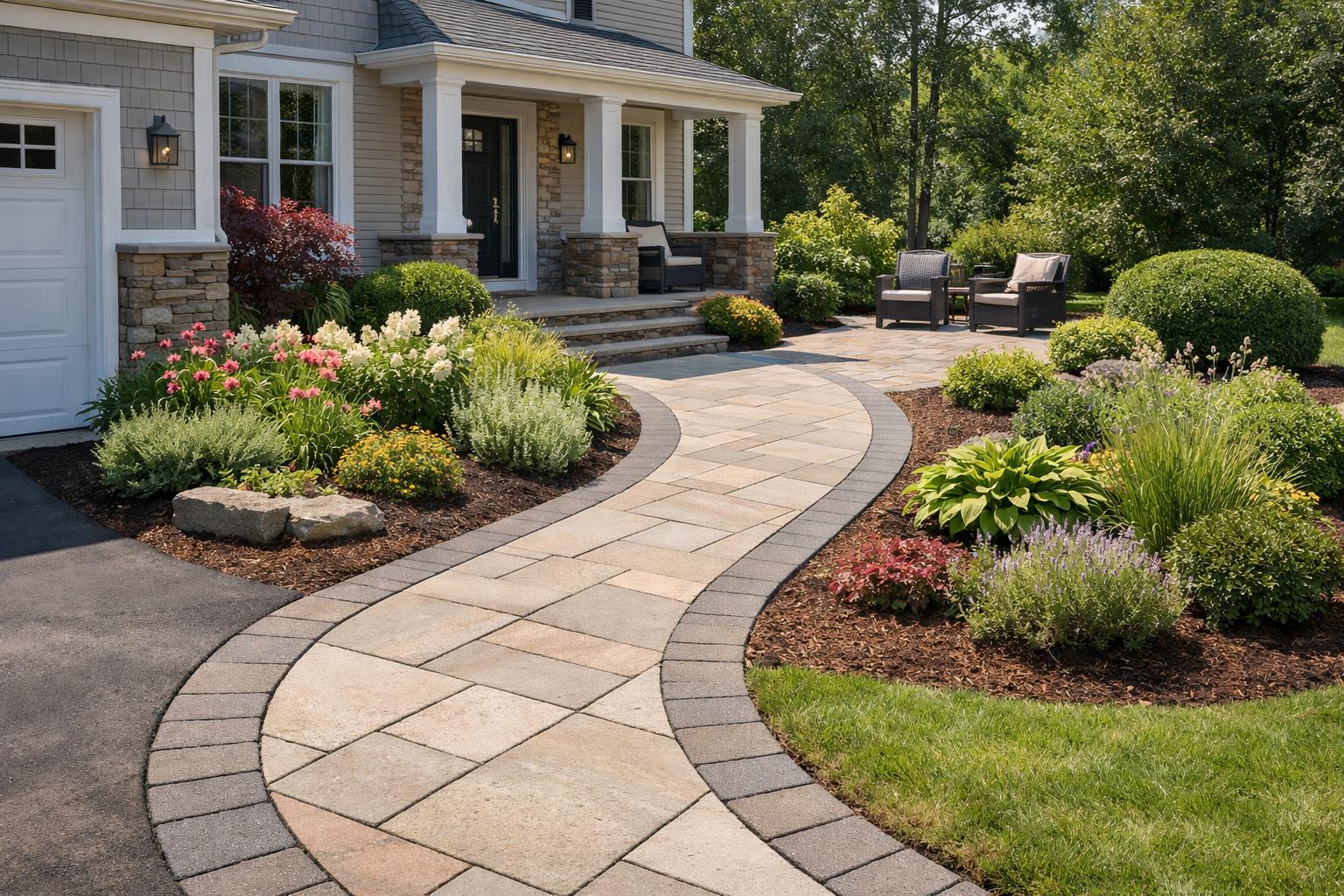
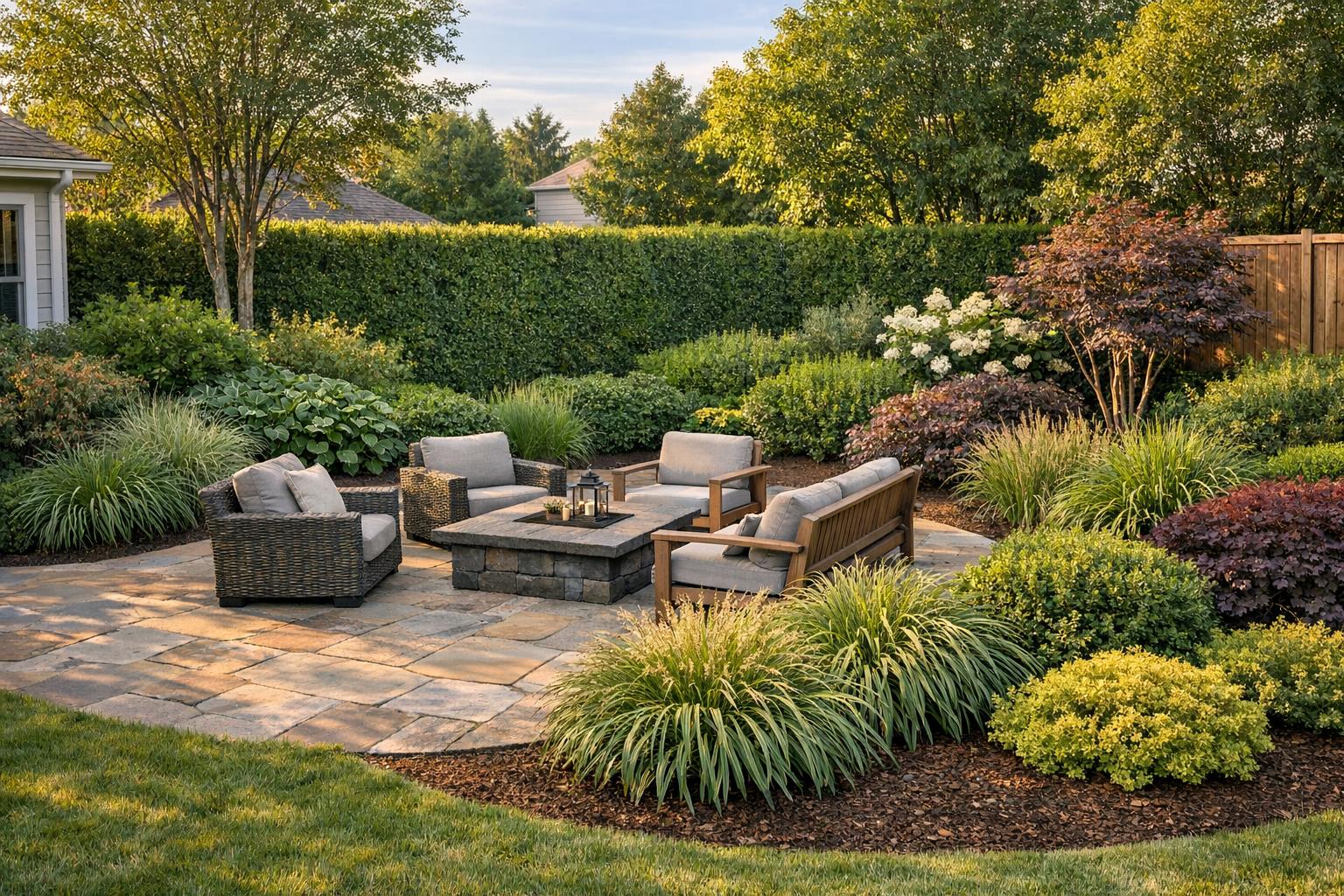
    Front entry landscape materials relevant to choosing surfaces and finishes for a smaller yard
    Smaller front yards often benefit when homeowners choose materials that simplify the entry path, keep scale consistent, and avoid overloading the space with too many finishes.

    Scale and repetition matter

    Repeating a small number of compatible materials often makes a compact front yard feel more finished. Too many textures, colors, and edge styles can make the space feel busy even when each individual product is attractive.

    Think about entry flow first

    Walkway material, planting-bed definition, edging, and any accent surfaces should all support the way someone approaches the front door. Materials that interrupt that flow or create unnecessary visual breaks can make a small yard feel less coherent.

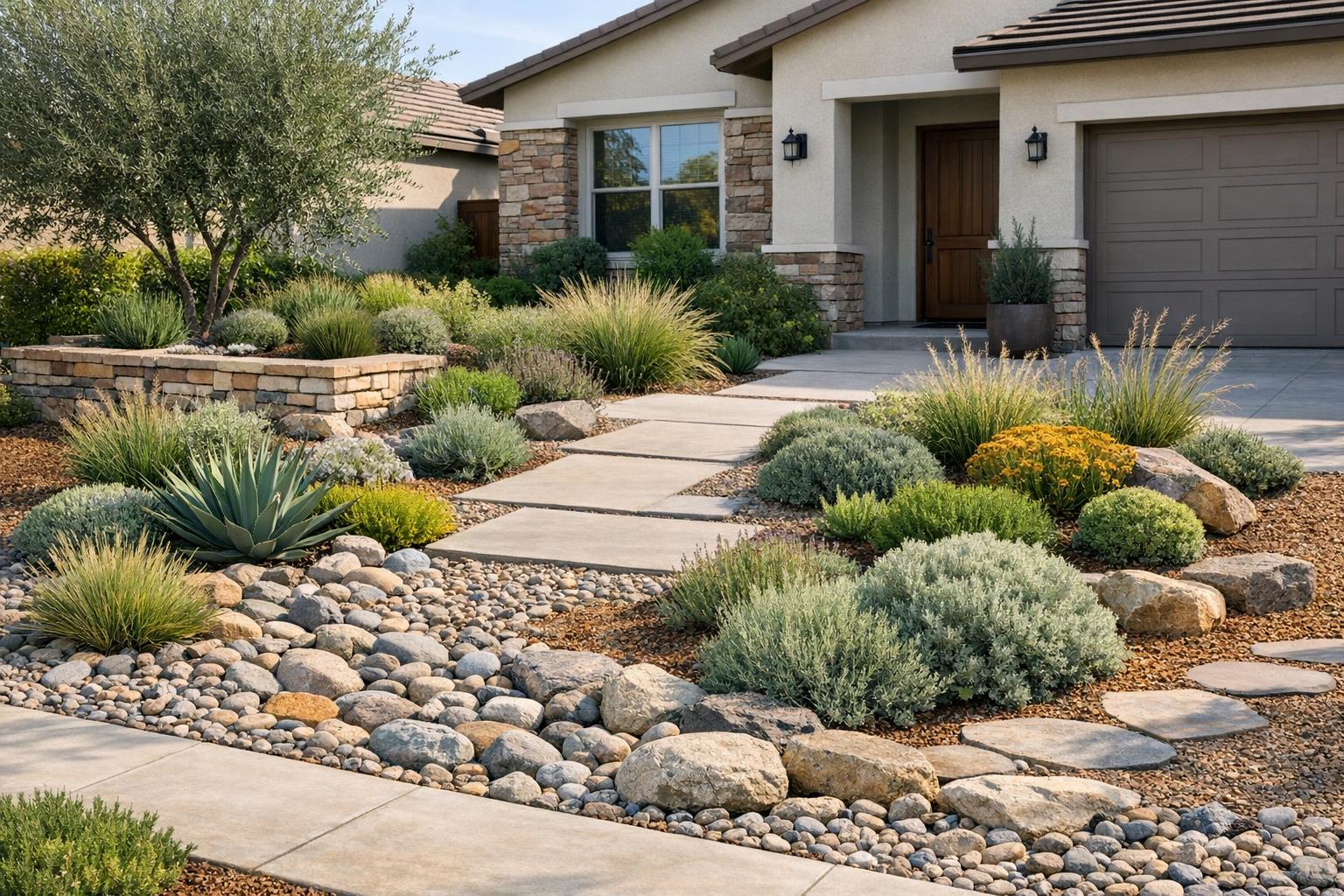
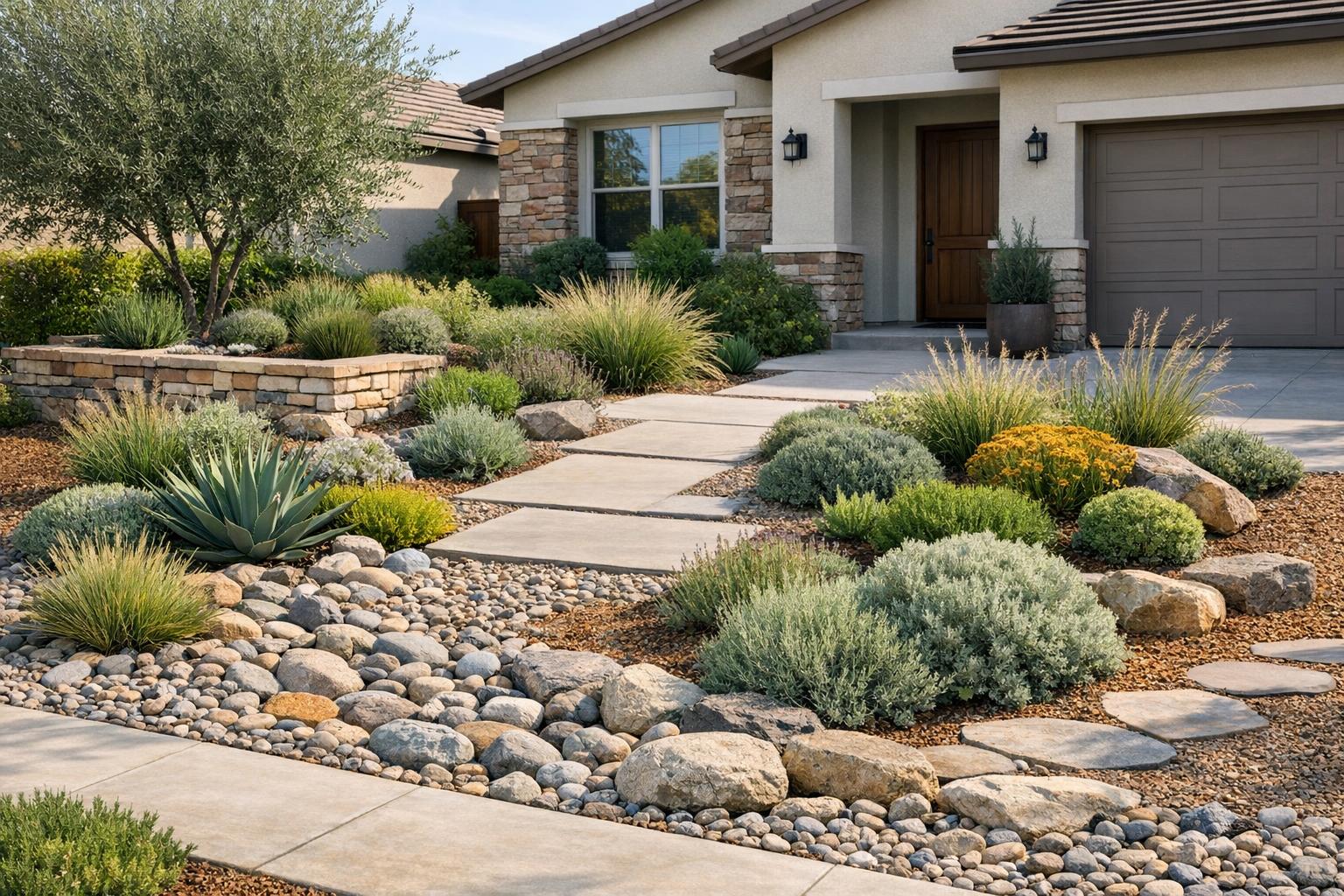
    Best Landscape Materials for Small Front Yards Guide related example showing Low-water landscape bed materials including rock and mulch relevant to drought-conscious groundcover selection
    This materials example gives homeowners a visual reference for comparing layout, materials, and maintenance tradeoffs before starting the project.

    Use materials to support curb appeal, not compete with it

    The front-yard landscaping guide, patio and walkway materials guide, and hardscape matching guide all help clarify these smaller-space decisions.

  • Best Landscape Materials for Sloped Yards Guide

    Best Landscape Materials for Sloped Yards Guide

    Sloped yards need materials that do more than provide a finished look. The wrong product can wash, migrate, collect runoff, or create awkward footing. The right choice usually depends on how steep the grade is, how water moves through the property, and whether the area is meant for circulation, planting, seating, or simple visual coverage.

    That means slope-friendly materials should be chosen with drainage and erosion behavior in mind from the start.

    Landscape slope and runoff context relevant to choosing materials for grade and erosion control
    Sloped-yard materials usually work better when homeowners compare runoff control, stability, maintenance, and how well the product stays where it belongs after storms.

    Stability matters as much as appearance

    Loose material may look attractive on a slope but still perform poorly if it shifts, erodes, or requires constant reworking. Edging, drainage detail, retaining structures, and planting density all influence whether a product feels stable over time.

    Best Landscape Materials for Sloped Yards Guide related example showing Low-water landscape bed materials including rock and mulch relevant to drought-conscious groundcover selection
    This materials example gives homeowners a visual reference for comparing layout, materials, and maintenance tradeoffs before starting the project.

    Some slopes need more than a surface material

    In many yards, the material choice is only part of the answer. The slope may also need regrading, drainage work, steps, walls, or planting reinforcement so the surface can hold up.

    Choose with runoff in mind

    The drainage solutions guide, erosion control guide, and regrading signs guide help homeowners think through those site conditions before material selection.


  • What Makes a Landscape Material Low Maintenance Guide

    What Makes a Landscape Material Low Maintenance Guide

    Homeowners often hear a material described as low maintenance without getting a clear explanation of what that actually means. Some products reduce watering but still need cleanup. Others hold their look well but are harder to refresh or repair. A truly low-maintenance choice usually depends on how the homeowner defines the work they most want to avoid.

    That is why low maintenance should be treated as a set of tradeoffs, not a universal label.

    Groundcover and hardscape materials relevant to comparing real long-term maintenance demands
    Homeowners usually judge maintenance more accurately when they compare cleanup, edge control, weed pressure, repair effort, and refresh timing instead of focusing on appearance alone.

    Think beyond the first season

    Some materials look very neat right after installation but become labor-heavy once weeds, settling, stain exposure, or edge drift appear. Others need occasional topping off but are simple to refresh. Long-term behavior matters more than first-impression neatness.

    What Makes a Landscape Material Low Maintenance Guide related example showing Low-water landscape bed materials including rock and mulch relevant to drought-conscious groundcover selection
    This low maintenance example gives homeowners a visual reference for comparing layout, materials, and maintenance tradeoffs before starting the project.

    Compare cleanup, repairability, and refresh cycles

    Homeowners should ask how the material handles debris, runoff, pet use, staining, fading, and small repairs. A material that is easy to touch up may feel lower-maintenance than one that lasts longer on paper but is frustrating to correct once it looks tired.

    Maintenance depends on context

    The low-maintenance landscaping guide, ground-cover lifespan guide, and low-water materials guide help connect those tradeoffs to real project choices.


  • Best Landscape Materials for Low-Water Yards Guide

    Best Landscape Materials for Low-Water Yards Guide

    Low-water yards are often misunderstood as a simple swap from lawn to rock, but the most successful projects usually use a more balanced material strategy. Mulch, decorative stone, hardscape, planting density, and irrigation layout all work together to determine how water-efficient and comfortable the space actually feels.

    A yard can use less water and still feel intentional, layered, and livable if the materials are chosen as part of one plan.

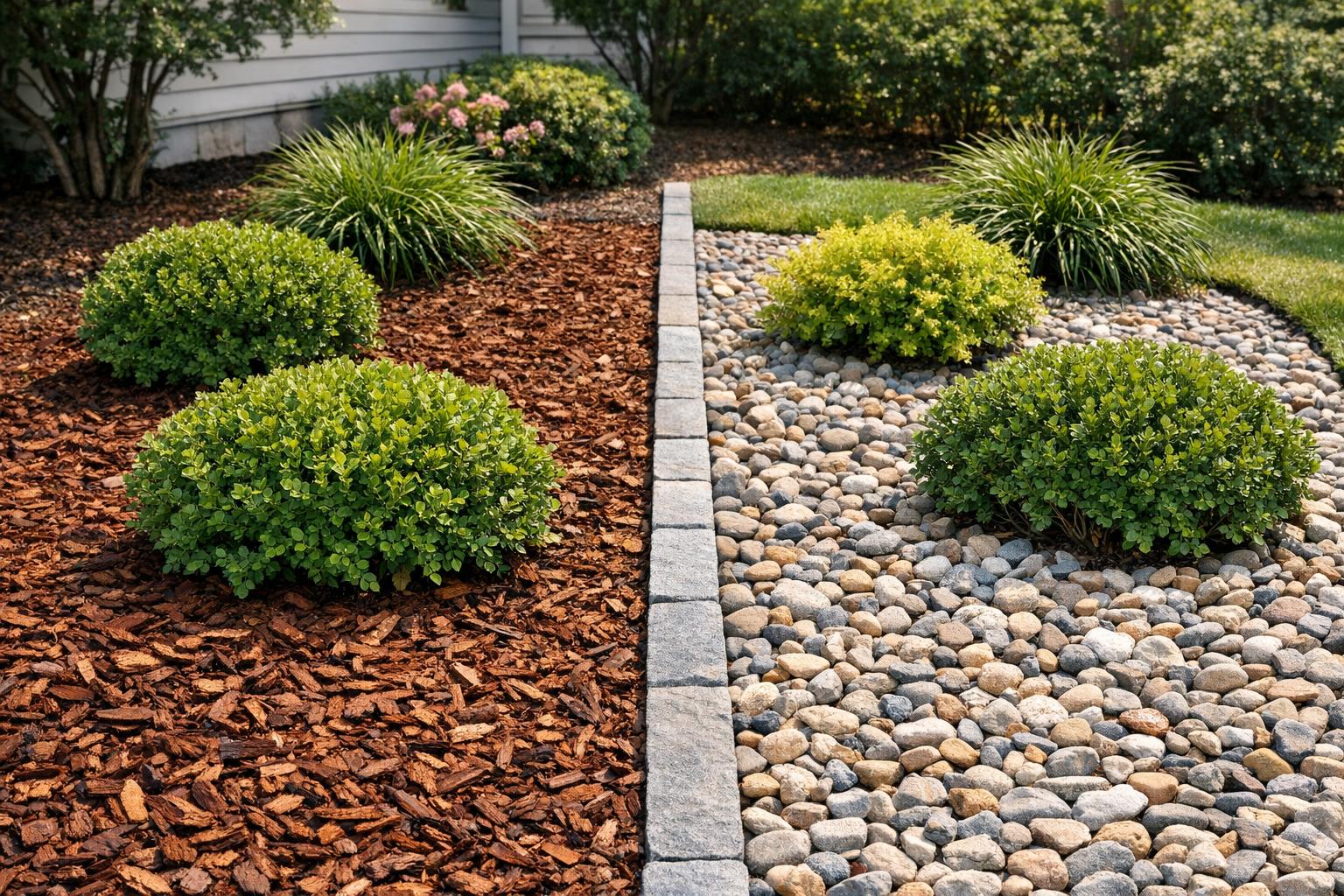
    Low-water landscape bed materials including rock and mulch relevant to drought-conscious groundcover selection
    Low-water material decisions usually work best when homeowners compare evaporation control, heat, runoff, maintenance, and how the materials interact with planting zones.

    Ground-cover choices affect water use and heat

    Mulch, decorative rock, and mixed ground-cover approaches each have different strengths. Some help moderate soil temperature better. Some create a cleaner, more structural look. Some may increase reflected heat or require different maintenance approaches.

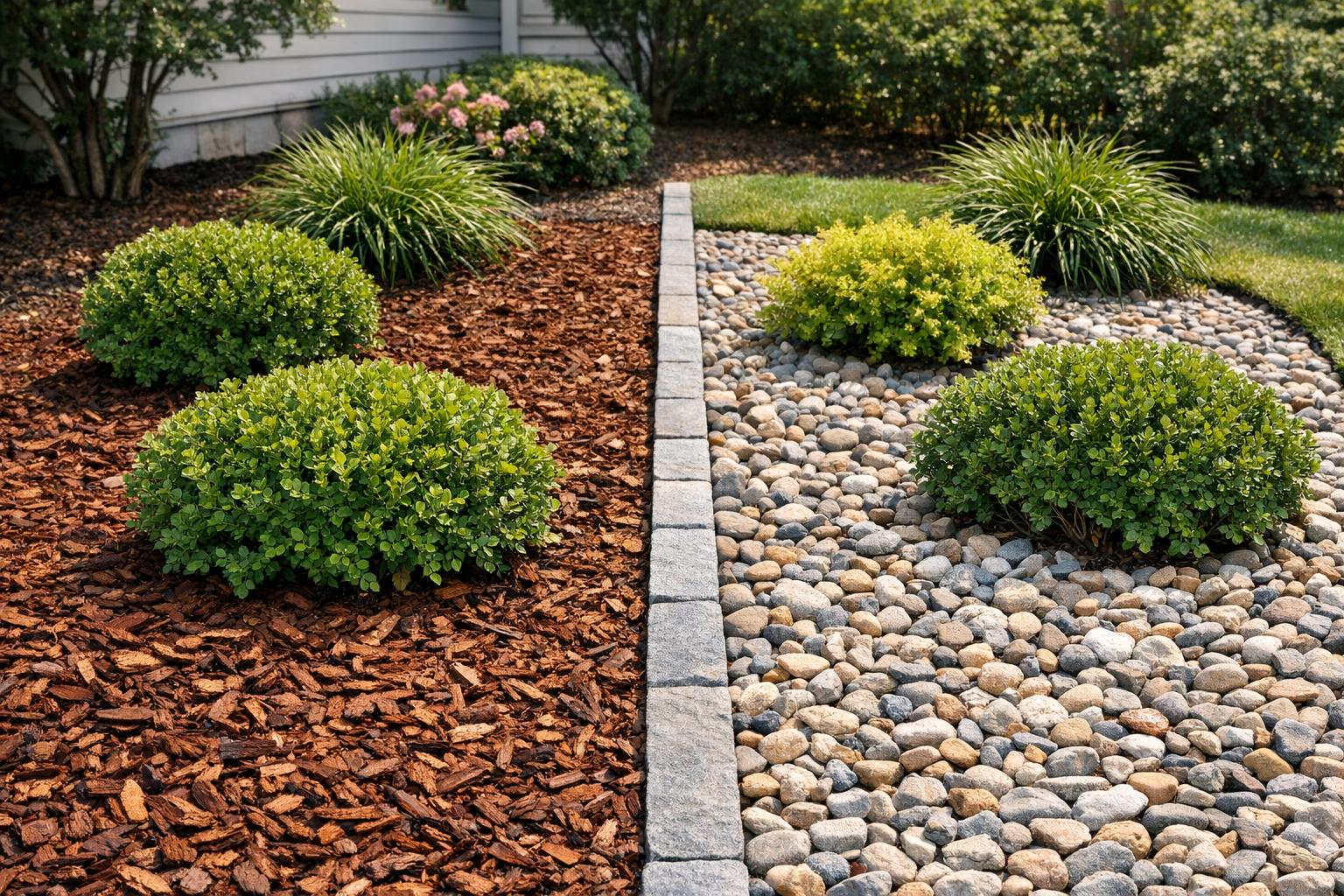
    Best Landscape Materials for Low-Water Yards Guide related example showing Landscape beds and groundcover materials relevant to homeowner quantity planning for mulch, soil, and decorative rock
    This materials example gives homeowners a visual reference for comparing layout, materials, and maintenance tradeoffs before starting the project.

    Hardscape can reduce water use but still needs balance

    Patios, walkways, and other hardscape surfaces can reduce irrigated square footage, but too much surface without shade, planting, or comfortable transitions can make a yard feel harsh. The overall composition matters.

    Material choice should follow the irrigation plan

    The low-water landscaping guide, materials cost guide, and low-maintenance plant guide all help connect product selection to the bigger yard strategy.


  • Best Landscape Materials for Pet-Friendly Yards Guide

    Best Landscape Materials for Pet-Friendly Yards Guide

    Pet-friendly yards are not only about choosing grass versus turf. The full material mix matters: ground cover, bed edging, cleanup surfaces, drainage behavior, and how the yard feels underfoot all shape whether the space works well for both pets and people. Some materials are easier to clean, some are softer or cooler, and some hold up better under repeated wear.

    The right choice usually depends on how the pet uses the yard and how much maintenance the household wants to take on.

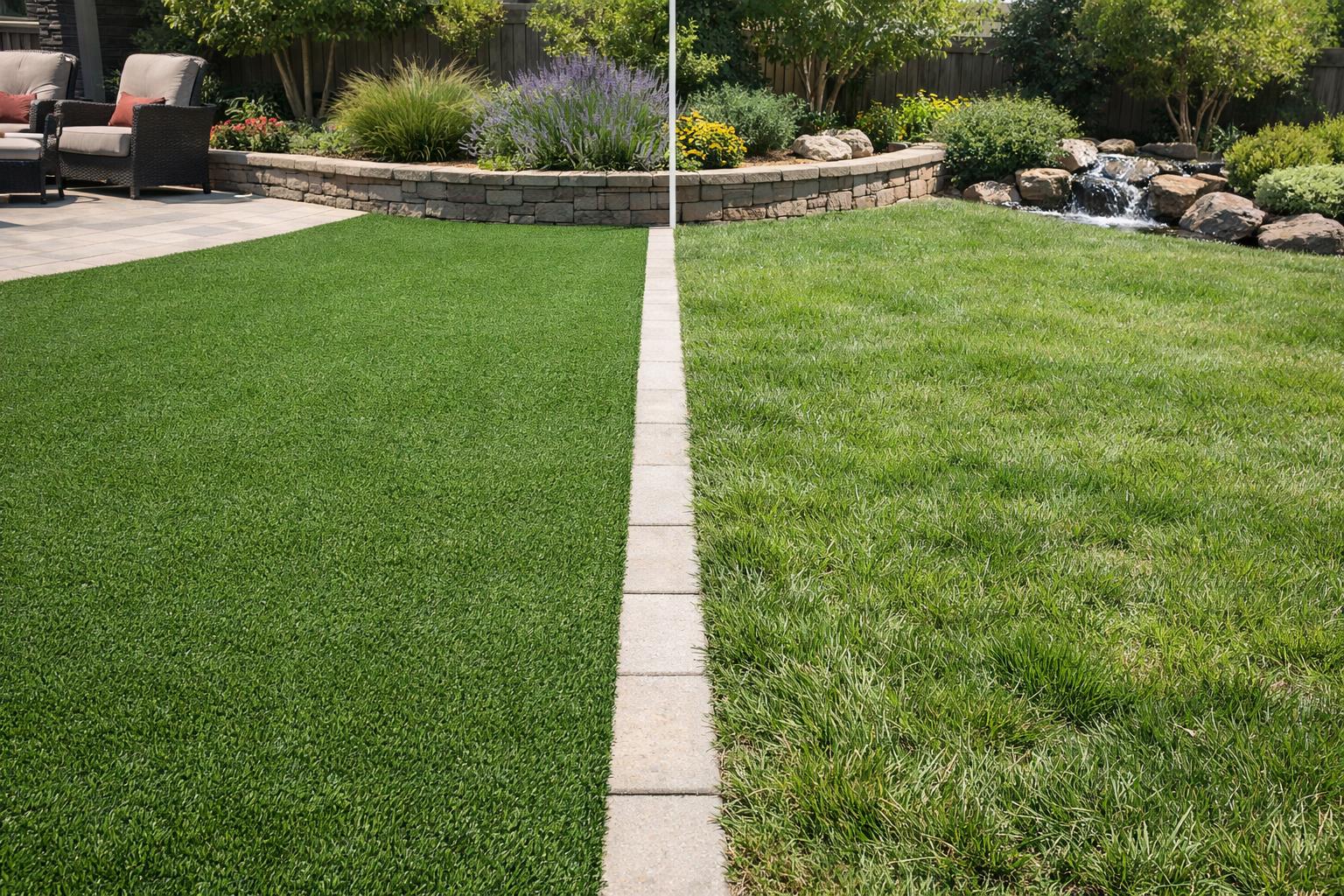
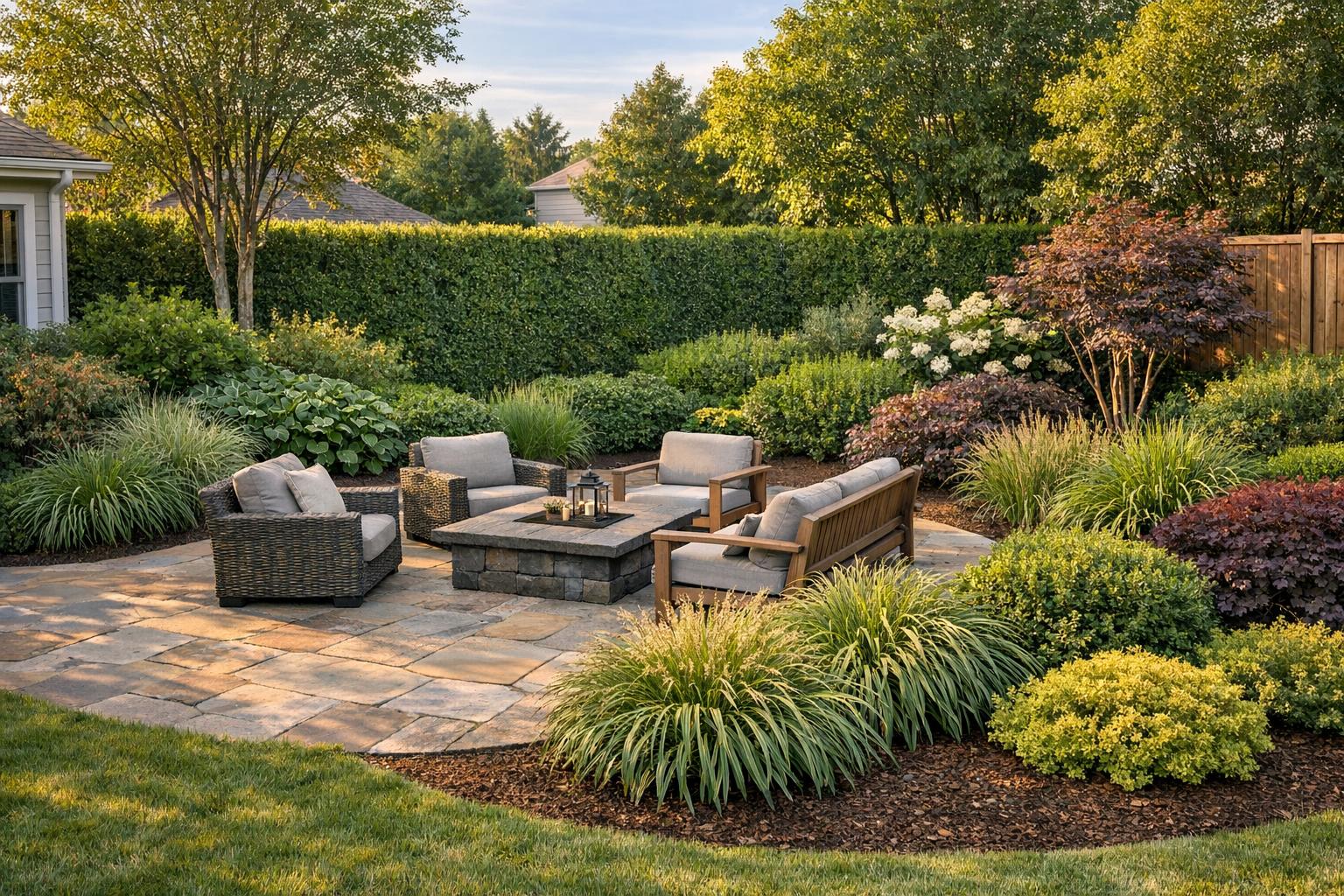
    Backyard surface choices relevant to pet-friendly yard design and material selection
    Pet-friendly material choices usually improve when homeowners compare surface temperature, drainage behavior, cleanup effort, and how paws move across the yard every day.

    Surface comfort and cleanup both matter

    Some pet owners prioritize easy cleanup and drainage. Others care more about comfort, shade, and natural feel. Patios, turf, mulch types, rock surfaces, and lawn areas all behave differently once daily pet use enters the picture.

    Drainage and odor control should not be afterthoughts

    Materials that trap moisture, stay muddy, or hold organic mess can create frustration quickly. Homeowners usually get better long-term results when drainage and cleanup are part of the surface decision from the start.

    Best Landscape Materials for Pet-Friendly Yards Guide related example showing Low-water landscape bed materials including rock and mulch relevant to drought-conscious groundcover selection
    This materials example gives homeowners a visual reference for comparing layout, materials, and maintenance tradeoffs before starting the project.

    Choose materials as a yard system

    The pet-friendly backyard guide, turf vs natural grass guide, and low-maintenance landscaping guide all help homeowners build a more complete plan.


  • Do Pavers Need Sealing Guide for Homeowners

    Do Pavers Need Sealing Guide for Homeowners

    Many homeowners hear conflicting advice about paver sealing. Some are told it is essential. Others are told it is unnecessary. In practice, sealing is usually a choice about appearance, stain resistance, maintenance style, and how the space is used rather than a simple yes-or-no rule for every project.

    The best answer often depends on where the pavers are installed, what kind of wear they get, and what look the homeowner wants long term.

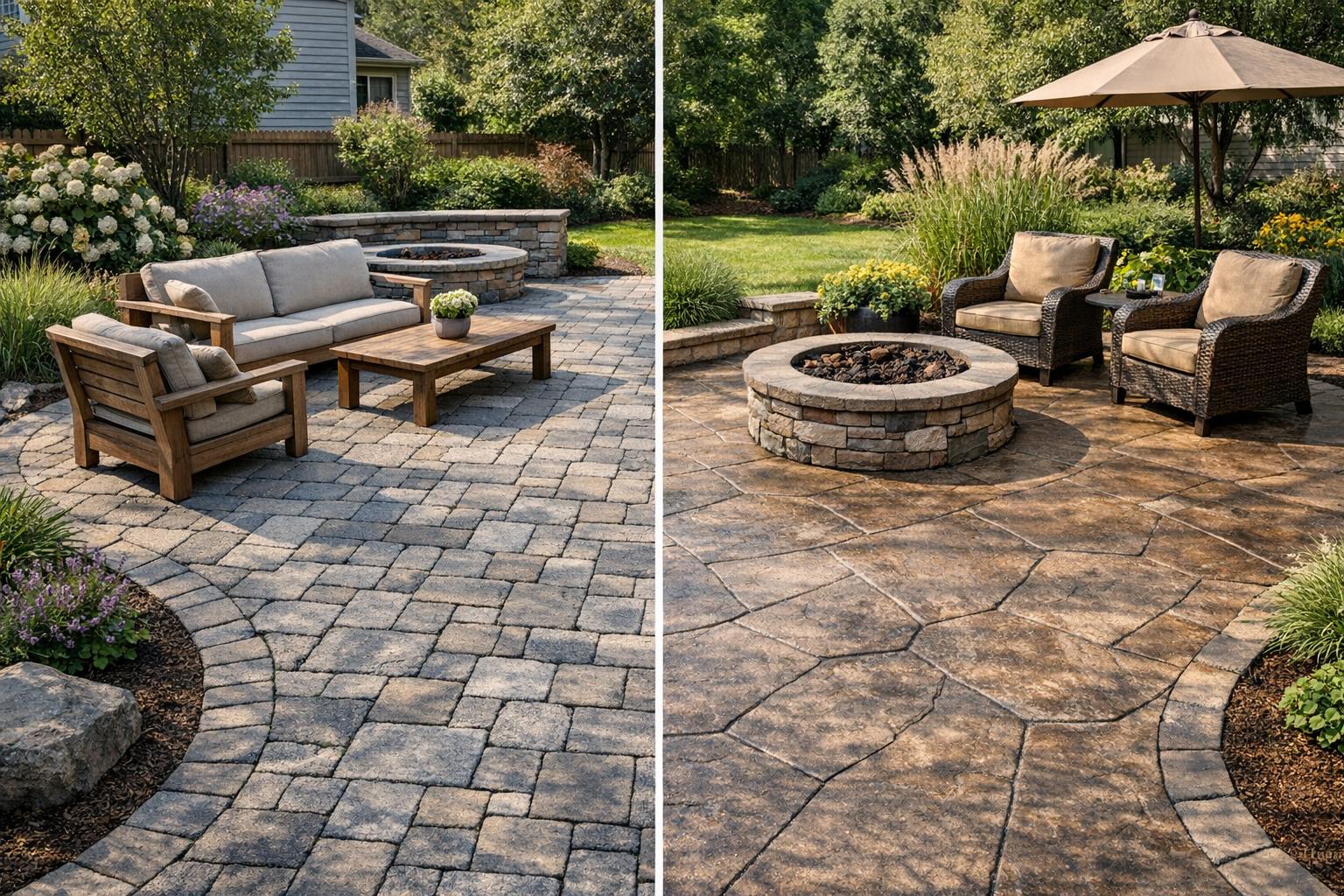
    Paver surface detail relevant to sealing, stain resistance, and long-term hardscape care
    Paver sealing decisions usually make more sense when homeowners compare surface look, stain exposure, traction, and how much maintenance they actually want over time.

    Why some homeowners choose to seal pavers

    Sealing can deepen color, reduce some surface staining, and change the way the hardscape looks after cleaning. It may also help some owners feel the surface stays cleaner-looking between maintenance cycles.

    Why sealing is not always the right choice

    Not every paver area needs that extra finish treatment. Some homeowners prefer a more natural-weathered look, and some surfaces need careful consideration around traction, sheen, or future maintenance expectations.

    Think about use and upkeep together

    A patio near outdoor dining may raise different maintenance questions than a walkway or driveway. The paver colors and finishes guide, hardscape matching guide, and patio and walkway materials guide all help provide context before sealing becomes part of the maintenance plan.

    Do Pavers Need Sealing Guide for Homeowners related example showing Landscape beds and groundcover materials relevant to homeowner quantity planning for mulch, soil, and decorative rock
    This materials example gives homeowners a visual reference for comparing layout, materials, and maintenance tradeoffs before starting the project.

  • How Long Mulch, Decorative Rock, and Ground Cover Usually Last Guide

    How Long Mulch, Decorative Rock, and Ground Cover Usually Last Guide

    Ground-cover materials rarely stay exactly the same year after year. Organic mulches break down, decorative rock can migrate or sink, and some bed materials lose their clean look faster than homeowners expect. That does not mean the original choice was wrong. It usually means the material has a normal refresh cycle that should be part of the long-term maintenance plan.

    The more sun, runoff, foot traffic, and weed pressure a bed receives, the more quickly that refresh cycle may show up.

    Landscape bed showing mulch and planted edges relevant to ground-cover lifespan and maintenance planning
    Mulch, decorative rock, and other ground covers usually last longer when bed edges are controlled, runoff is managed, and refresh timing matches how the space actually wears.

    Organic mulch usually changes the fastest

    Mulch often fades, settles, or decomposes over time, especially in sunnier or wetter beds. That is part of how organic material works. Some homeowners like the soil-building benefits, while others prefer a ground cover that keeps a more stable appearance.

    Decorative rock can last longer but still needs attention

    Rock and stone ground covers usually break down far more slowly, but they can still shift, collect debris, mix with soil, or look uneven over time. Edging, weed control, and occasional redistribution often matter more than homeowners expect.

    Longevity depends on the site, not just the product

    The mulch vs rock guide, bulk mulch guide, and maintenance plans guide all help homeowners connect lifespan expectations to real upkeep.

    How Long Mulch, Decorative Rock, and Ground Cover Usually Last Guide related example showing Landscape beds and groundcover materials relevant to homeowner quantity planning for mulch, soil, and decorative rock
    This materials example gives homeowners a visual reference for comparing layout, materials, and maintenance tradeoffs before starting the project.

  • How to Choose Low-Maintenance Plants for Your Yard Guide

    How to Choose Low-Maintenance Plants for Your Yard Guide

    Many homeowners want low-maintenance plants, but that phrase means different things depending on the household. Some want plants that need less water. Others want fewer pruning chores, slower growth, or cleaner year-round structure. The best plant choices usually come from matching the plant to the site and the homeowner’s actual care habits instead of looking for one magic category of easy plants.

    A beautiful plant can still feel high-maintenance if it is wrong for the soil, sun, water schedule, or amount of space available.

    Residential planting bed relevant to choosing easier-care shrubs and perennials for a lower-maintenance yard
    Homeowners usually get lower-maintenance planting plans when they compare water needs, growth habit, pruning demands, and sun exposure before they fall in love with a single plant look.

    Start with site conditions and care habits

    Sun exposure, heat, wind, irrigation type, and local climate should all shape plant selection. So should the homeowner’s real maintenance routine. A plant that needs regular shaping may be fine for one property and frustrating on another.

    Think about growth habit, not just current size

    Plants that outgrow the space quickly often become maintenance problems even if they are healthy. Homeowners should compare mature width, pruning needs, leaf drop, and how the plant behaves through different seasons.

    How to Choose Low-Maintenance Plants for Your Yard Guide related example showing Groundcover and hardscape materials relevant to comparing real long-term maintenance demands
    This low maintenance example gives homeowners a visual reference for comparing layout, materials, and maintenance tradeoffs before starting the project.

    Use maintenance goals to narrow the palette

    It often helps to connect plant choices to broader goals like privacy, low-water use, pollinator support, or cleaner front-yard curb appeal. The low-maintenance landscaping guide, plant material comparison guide, and low-water landscaping guide all support that process.


  • How to Match New Pavers or Stone to Existing Hardscape Guide

    How to Match New Pavers or Stone to Existing Hardscape Guide

    Adding new hardscape to an existing yard often creates a common homeowner question: should the new surface match the old one exactly, or should it coordinate without pretending to be the same? In most cases, the better result comes from aiming for visual harmony rather than a forced near-match that ends up drawing more attention to the difference.

    That is especially true when the older surface has weathered, faded, or is no longer available in the same product line.

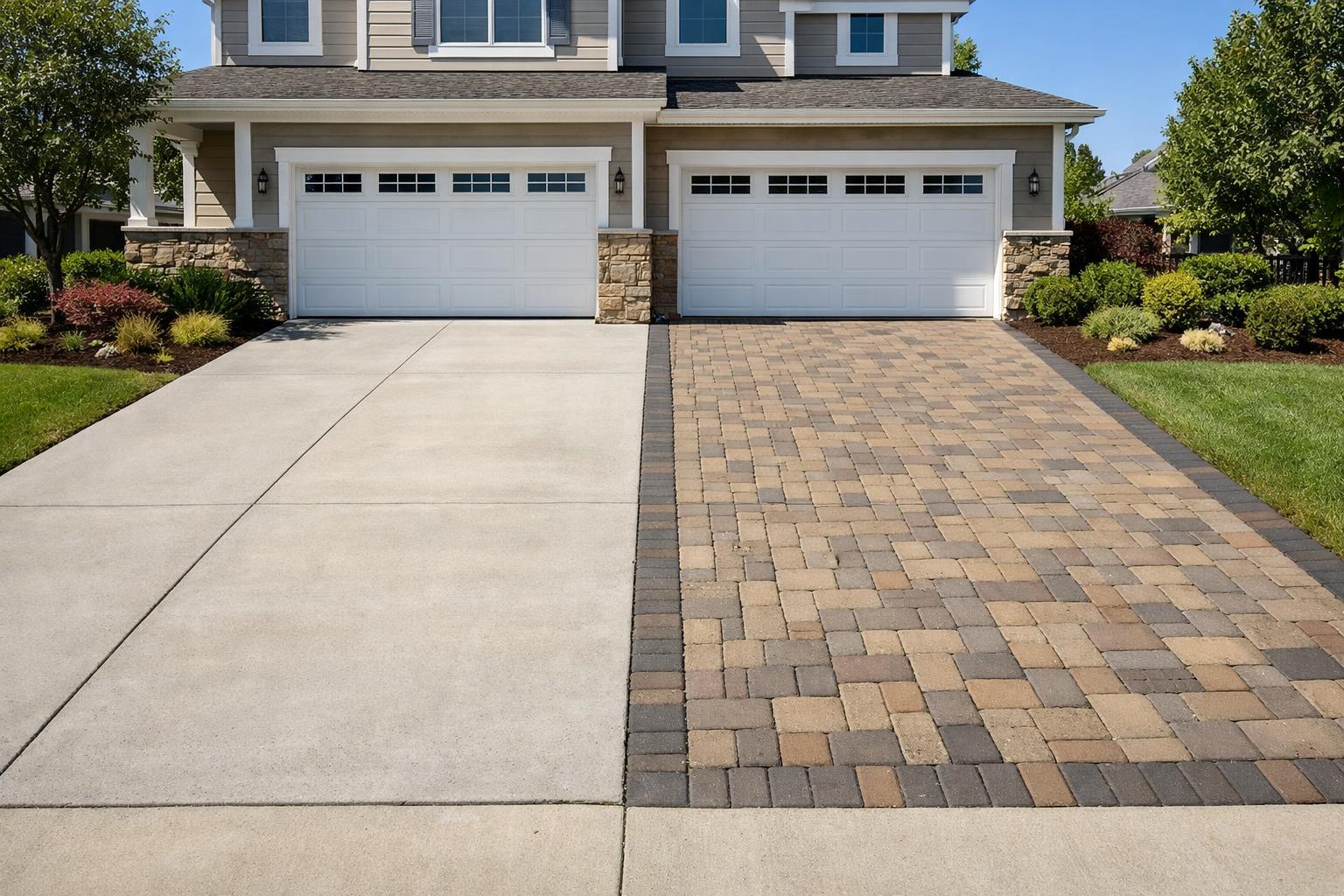
    Paver and stone surface detail relevant to matching new hardscape to existing outdoor materials
    New pavers and stone usually blend better with older hardscape when homeowners compare surrounding tones, texture, weathering, and border transitions instead of chasing an exact showroom match.

    Look at tone, texture, and scale first

    Before comparing brand names or color labels, homeowners should compare the dominant tone of the existing surface, the texture, the size of the units, and how much variation shows across the area. Those features often matter more than a product name.

    Transitions matter more than exact duplication

    Border courses, edge detail, steps, and transition bands can make a mixed-material project feel intentional. In many cases, that works better than trying to disguise a newer surface as if it were installed at the same time as the original one.

    Use larger references whenever possible

    Sample boards are useful, but they rarely show how a material will read across a larger area. The paver colors and finishes guide and patio and walkway materials guide help homeowners think through those broader design decisions.

    How to Match New Pavers or Stone to Existing Hardscape Guide related example showing Landscape beds and groundcover materials relevant to homeowner quantity planning for mulch, soil, and decorative rock
    This materials example gives homeowners a visual reference for comparing layout, materials, and maintenance tradeoffs before starting the project.

  • Questions to Ask Before Ordering Bulk Landscape Material Guide

    Questions to Ask Before Ordering Bulk Landscape Material Guide

    Bulk landscape material orders can save money and simplify bigger projects, but they can also create headaches if the homeowner orders before asking the right practical questions. Delivery access, quantity format, staging location, moisture level, and product consistency all affect whether the material is actually useful when it arrives.

    That is why a quick supplier conversation before ordering can be more valuable than chasing a slightly lower unit price.

    Landscape material coverage and delivery context relevant to asking practical bulk-order questions
    Bulk material orders often work better when homeowners confirm drop location, quantity format, cleanup expectations, and how much real coverage the material should provide.

    Confirm what unit the material is sold in

    Some products are quoted by the cubic yard, some by the ton, and some by truckload minimums. Homeowners should make sure they understand what those units mean for their actual project before comparing prices.

    Ask where and how the material will be dropped

    Driveway placement, curb drop, access width, HOA restrictions, and whether the truck can back into the property all matter. A delivery that cannot be placed where the crew or homeowner actually needs it can turn into extra labor very quickly.

    Questions to Ask Before Ordering Bulk Landscape Material Guide related example showing Landscape beds and groundcover materials relevant to homeowner quantity planning for mulch, soil, and decorative rock
    This materials example gives homeowners a visual reference for comparing layout, materials, and maintenance tradeoffs before starting the project.

    Get clear on consistency and cleanup

    Some products vary more than homeowners expect in moisture, color, and piece size. It also helps to ask what happens if the order is short, if there is excess, or if cleanup around the drop zone becomes part of the project. The quantity guide and bulk-vs-bagged guide are natural next steps.