Materials and Finish Choices

Material and finish comparison guides for homeowners deciding between surface options, appearance, maintenance, and long-term durability.

Start with the service type

Landscaping Services Guideposts

Use these guides to understand what each service includes before comparing providers or requesting quotes.

Core service explainers

Start here when you are still deciding what kind of landscaper or outdoor contractor you need.

Compare before you hire

Use these pages when two services or surface choices sound similar but lead to different scopes.

Hire smarter

Planning And Contractor Comparison

Use this hub when you are moving from ideas into estimates, bids, and contractor conversations.

Before requesting estimates

These guides help define scope and compare companies before the first site visit.

Budget with better assumptions

Cost Guides And Calculators

Use this hub to move from rough budget ranges into the details that usually change quotes.

Calculator starting points

Open the calculator hub or a cost guide when you need a quick planning range.

High-impact cost decisions

These pages help compare choices where price, lifespan, and maintenance tradeoffs matter.

Understand the build

Installation And Site-Work Pathways

Use these guides to understand sequencing, site prep, access, and the details that affect long-term performance.

Hardscape and site prep

These projects often depend on base prep, demolition, grading, drainage, and access.

Drainage and retaining work

Use these when water, grade, or slope stability is part of the project.

Choose materials with ownership in mind

Material And Finish Decision Paths

Use these guides when appearance, maintenance, replacement, and budget all affect the right material choice.

Surface and finish comparisons

Compare outdoor surfaces before committing to a driveway, patio, or lawn direction.

Landscape material planning

Use these pages when quantity, delivery, or long-term maintenance are the main concern.

Protect the investment

Maintenance And Ownership Next Steps

Use these guides to understand ongoing care, seasonal refreshes, and when maintenance points to a bigger fix.

Maintenance planning

These guides help compare recurring service, seasonal work, and refresh projects.

When upkeep becomes repair

Use these when repeated maintenance problems suggest drainage, surface, or material issues.

  • Outdoor Kitchen Grill vs Prep Space Balance Guide

    Outdoor Kitchen Grill vs Prep Space Balance Guide

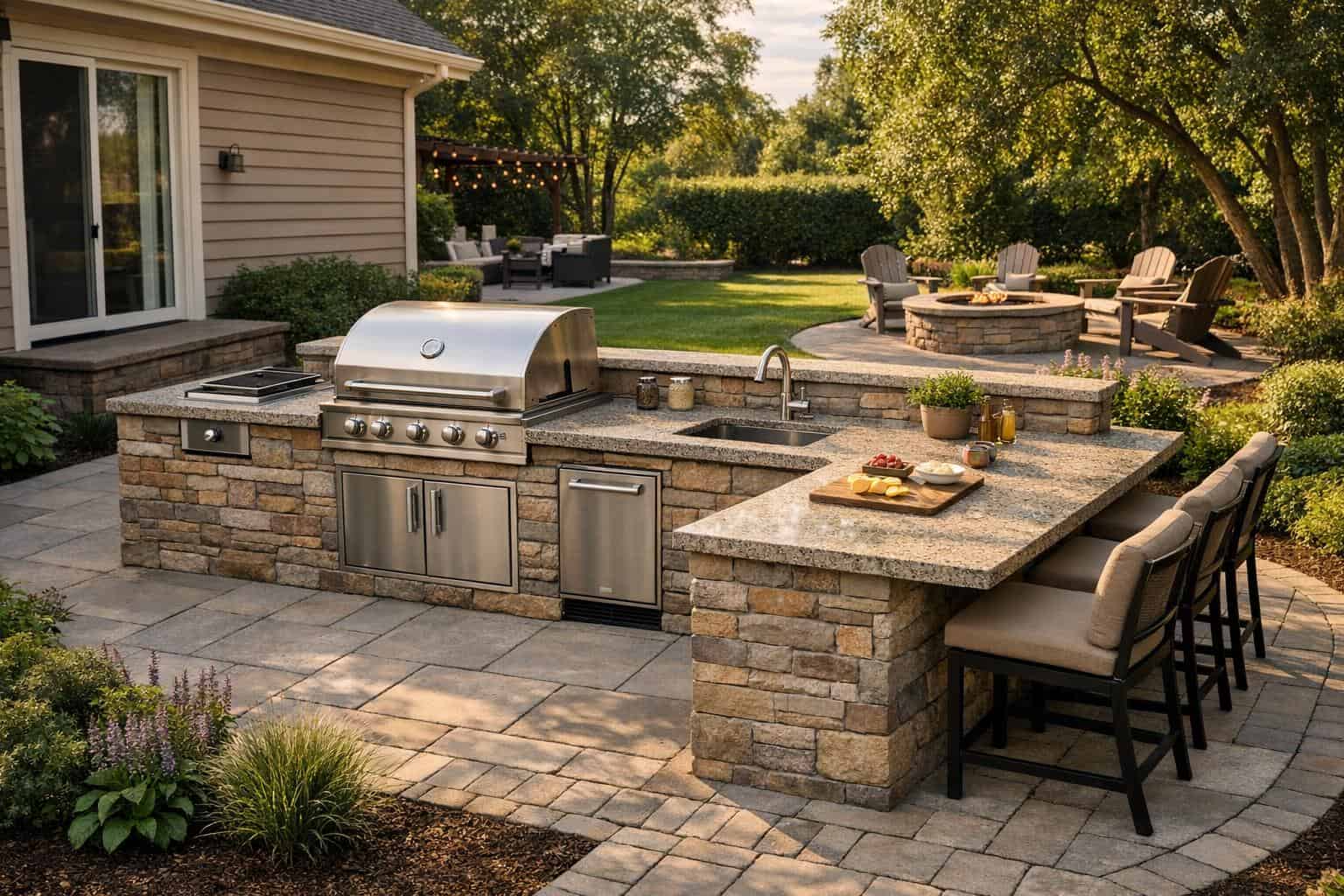
    Outdoor kitchens often get over-designed around appliance count and under-designed around workflow. The balance between grill presence and prep space matters because it determines how the kitchen actually feels to use once people start cooking and serving.

    Do not let the grill take over the whole plan

    A large grill may be the visual centerpiece, but prep space is what often makes the kitchen function well in everyday use.

    Plan for staging and serving, not just cooking

    Prep, plating, and guest interaction all need room. Pair this with our Outdoor Kitchen Prep Zone Layout Guide for Homeowners if you are refining workflow in the same project.

    Let the kitchen size match how you entertain

    The right balance depends on whether the space is for frequent cooking, casual hosting, or occasional use as part of a larger patio setup.

    What homeowners should remember

    The best outdoor-kitchen layouts balance appliance goals with enough prep room to keep the space comfortable and functional.
  • Flowering vs Evergreen Screen Guide for Homeowners

    Flowering vs Evergreen Screen Guide for Homeowners

    Some homeowners want a privacy screen that blooms and changes with the seasons. Others want year-round coverage and stronger structural screening. The best choice depends on how much privacy is needed, how formal or soft the yard should feel, and what maintenance the site can realistically support.

    Use flowering screens when seasonal character matters

    Flowering screens can add softness and color, especially where full year-round privacy is not essential.

    Use evergreens when coverage is the priority

    If the main goal is consistent screening, evergreens often make more sense. Pair this with our Evergreen vs Deciduous Privacy Screen Guide for Homeowners if you are comparing multiple screening directions.

    Think about cleanup and growth habit too

    Bloom, leaf drop, and pruning needs can matter just as much as privacy when the screen sits near patios, pools, or walkways.

    What homeowners should remember

    The best screening choice usually balances visual character with the level of privacy and upkeep the yard actually needs.


  • Front Yard Symmetry vs Asymmetry Guide for Homeowners

    Front Yard Symmetry vs Asymmetry Guide for Homeowners

    Front yard symmetry and asymmetry each create a different mood. Symmetry often feels orderly, formal, and calm. Asymmetry can feel more natural, layered, or modern. The right direction depends on the architecture, the entry layout, and how controlled or relaxed you want the front yard to feel.

    Use symmetry when the house and entry already want order

    Centered doors, formal facades, and strong axial walkways often pair naturally with symmetrical planting and repeated elements.

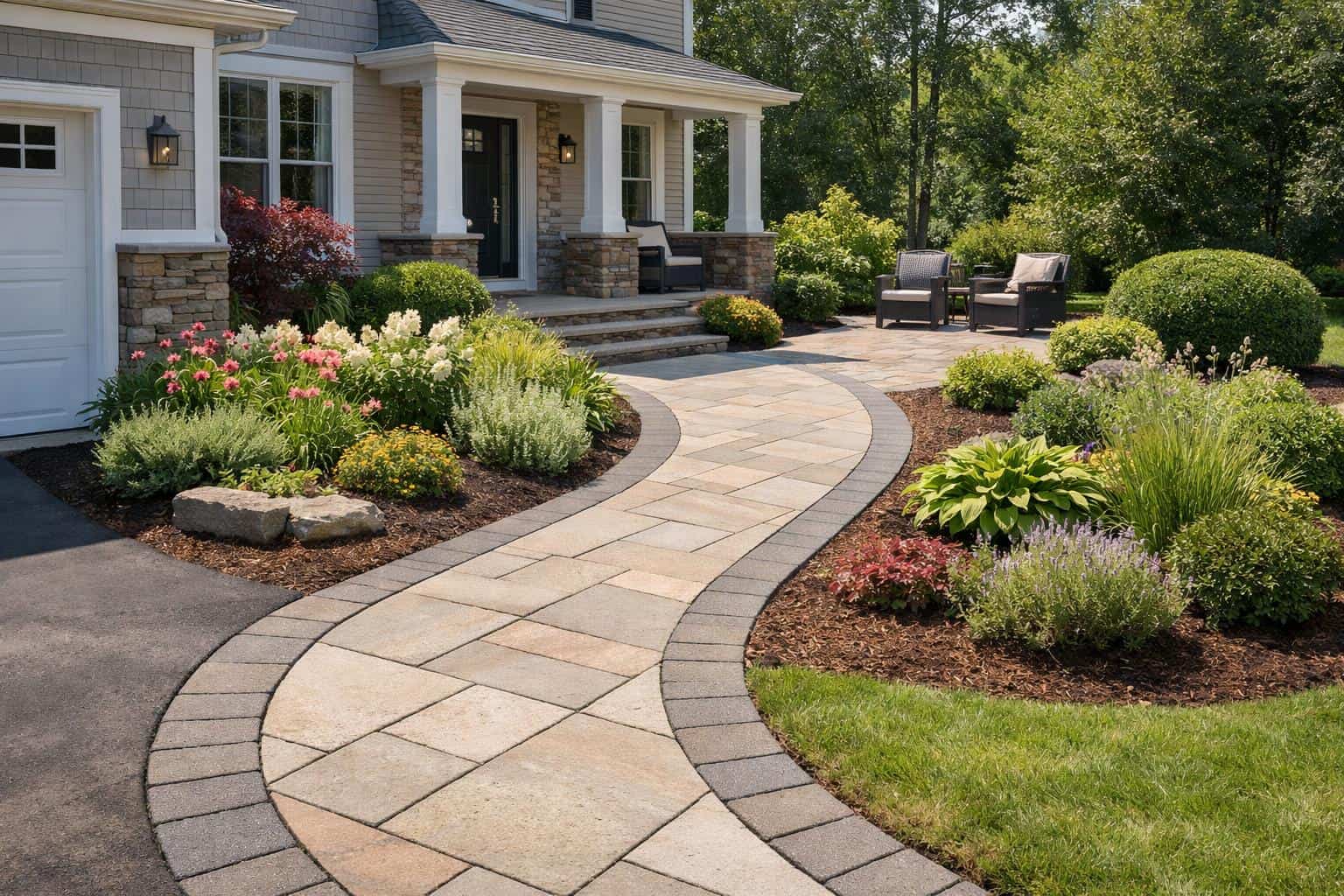
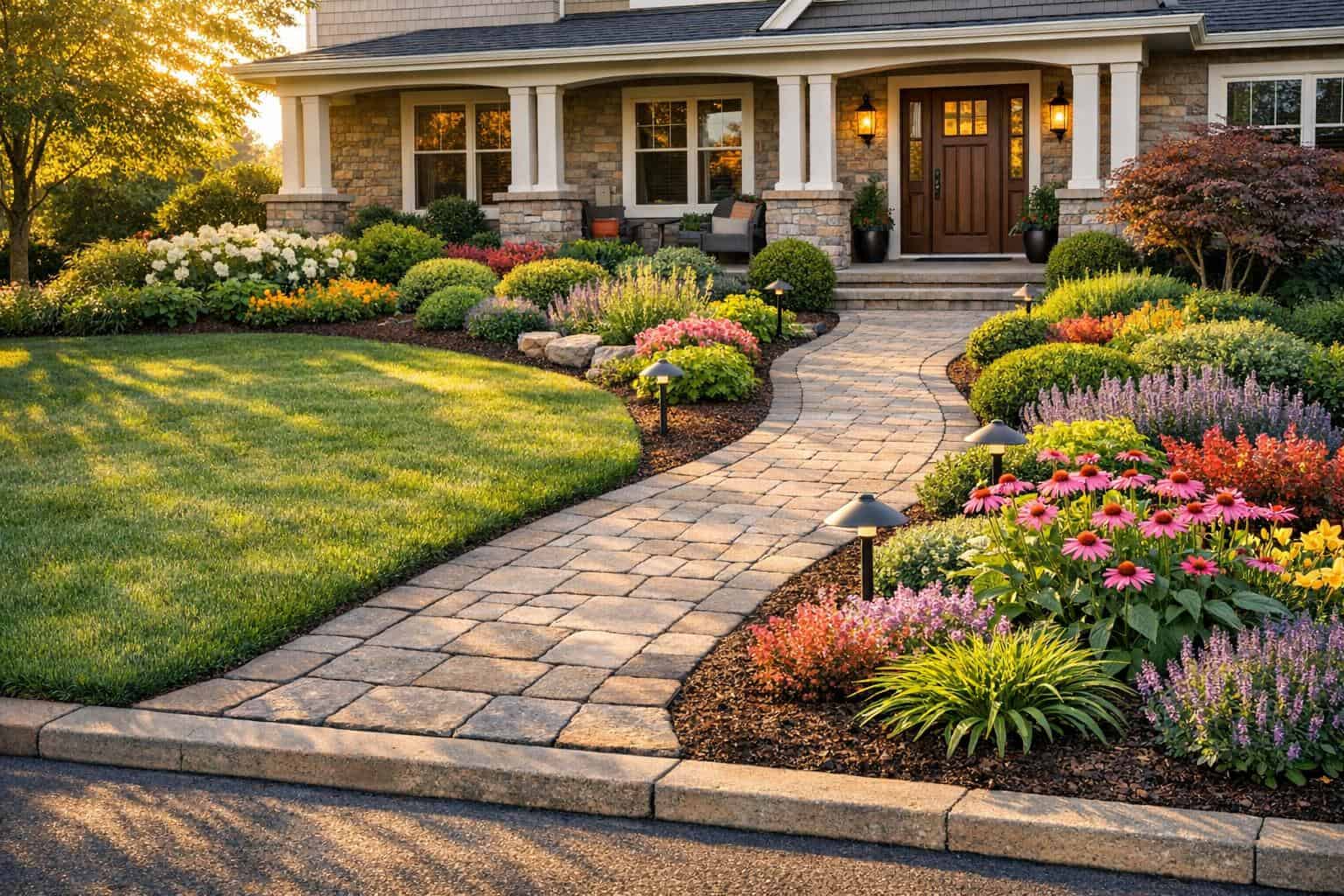
    Front Yard Symmetry vs Asymmetry Guide for Homeowners related example showing Front entry landscape materials relevant to choosing surfaces and finishes for a smaller yard
    This front yard example gives homeowners a visual reference for comparing layout, materials, and maintenance tradeoffs before starting the project.

    Use asymmetry when the site benefits from softer movement

    Asymmetry can work well on less formal homes, corner lots, and yards where the walkway, driveway, or planting zones do not line up on a central axis. Pair this with our Modern Front Yard Landscaping Ideas Guide for Homeowners if you are leaning toward a cleaner, more contemporary look.

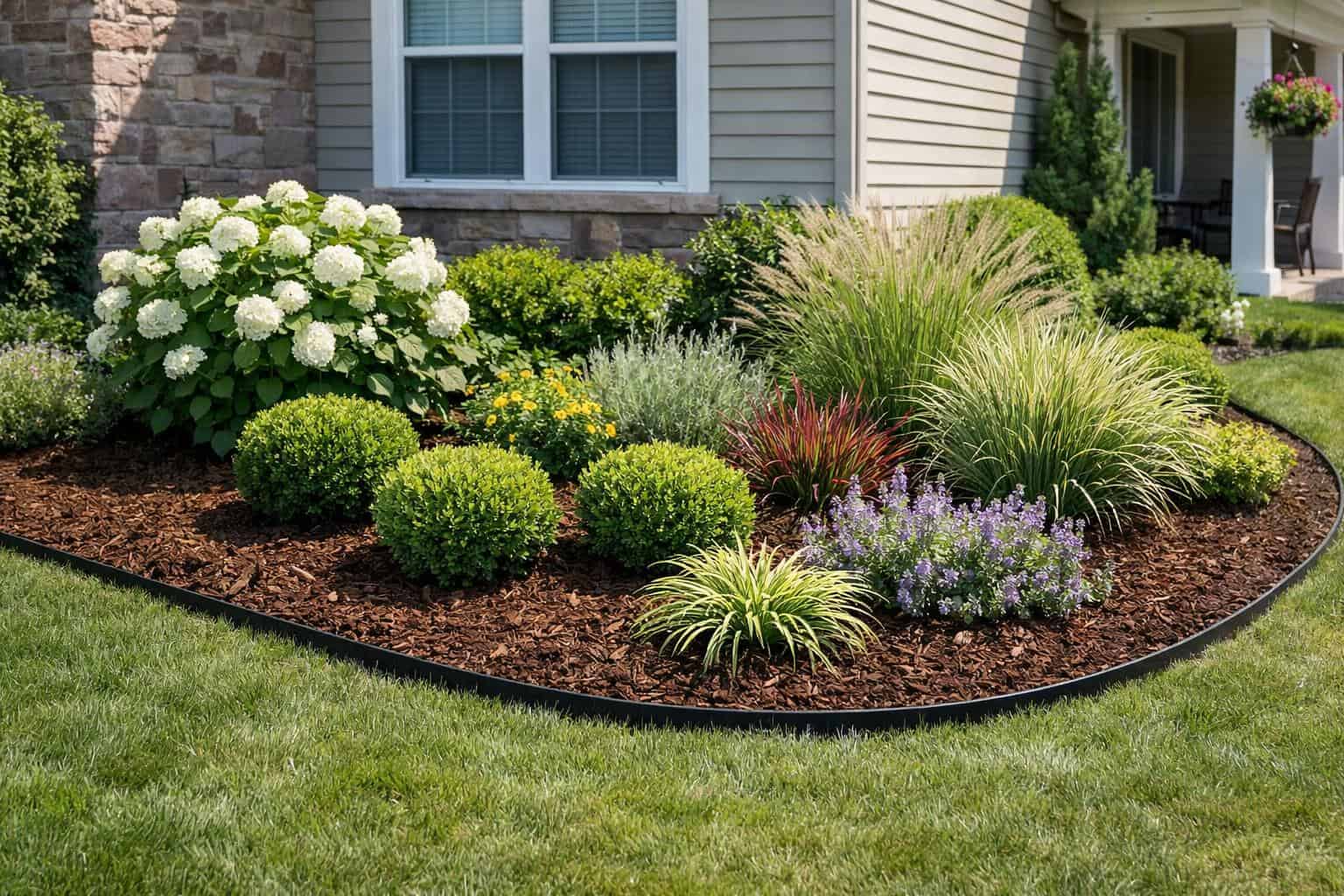
    Front Yard Symmetry vs Asymmetry Guide for Homeowners related example showing Small front yard hardscape and planting materials relevant to curb-appeal planning
    This related front yard detail helps show how site conditions and finish choices can change the homeowner's plan.

    Do not mix the two randomly

    Many front yards feel unresolved because some elements are highly symmetrical and others are not, without a clear reason. The better approach is to choose a dominant design language and let the rest support it.

    What homeowners should remember

    The best front-yard designs usually feel coherent because the planting, entry path, and house all support the same level of formality.


  • Stepping Stone Path Ideas Guide for Homeowners

    Stepping Stone Path Ideas Guide for Homeowners

    Stepping stone paths can add charm and softness to a yard, but they still need to be planned like real circulation routes. The best stepping-stone ideas balance appearance with comfort, spacing, and how the path fits the surrounding landscape.

    Use stepping stones where the route can be slower and more informal

    They often work well in garden transitions, side-yard routes, or softer backyard connections. They are usually less appropriate where the path needs to handle fast, direct everyday traffic.

    Get spacing and landing right

    The path has to feel natural to walk. If spacing is awkward or the surrounding surface is unstable, the whole path becomes less appealing to use. For the broader path-planning context, see our Gravel Path Ideas Guide for Homeowners and the main walkway guide together.

    Let the surrounding planting support the path

    Stepping-stone paths usually look strongest when nearby planting and ground treatment reinforce the softer character of the route.

    What homeowners should remember

    The best stepping-stone ideas create a natural-feeling route that still works comfortably as part of the yard.


  • Evergreen vs Deciduous Privacy Screen Guide for Homeowners

    Evergreen vs Deciduous Privacy Screen Guide for Homeowners

    Privacy screening does not always need to be evergreen, but it often depends on what kind of privacy the yard actually needs. Evergreens usually offer more year-round coverage. Deciduous screens can feel lighter, softer, and sometimes more appropriate for the site.

    Use evergreen when privacy needs to hold all year

    If the problem is an exposed patio, a close neighbor, or a year-round view into the yard, evergreens often make the most sense.

    Use deciduous screening when a lighter edge fits the site

    Some homeowners prefer a softer, more seasonal edge, especially where winter openness is acceptable. Pair this with our Evergreen Screen Ideas Guide for Homeowners if you are leaning toward evergreen structure but still comparing options.

    Think beyond privacy alone

    Screening also changes light, airflow, maintenance, and how enclosed the yard feels. The best choice is usually the one that balances privacy with the overall character of the yard.

    What homeowners should remember

    The strongest screening decisions usually start with the privacy need, then adjust for maintenance, spacing, and the mood you want the yard to have.


  • Curved Walkway vs Straight Walkway Guide for Homeowners

    Curved Walkway vs Straight Walkway Guide for Homeowners

    Walkway shape changes how the front or backyard feels before you ever choose the surface material. A straight path can feel direct and formal. A curved path can feel softer and more landscape-driven. The right choice depends on the house, the available space, and how people are meant to move.

    Use straight paths for direct movement

    Straight walkways often work well where the route is obvious and the architecture is clean or formal. They can also feel more efficient in tighter spaces where there is no room for a softer sweep.

    Use curves when the landscape needs gentler movement

    Curved walkways can help the yard feel less rigid and can create better relationships with planting beds or naturalized areas. That said, curves should still feel purposeful. They should not wander without a reason.

    Curved Walkway vs Straight Walkway Guide for Homeowners related example showing Front entry walkway with edging, planting beds, and material detail relevant to pathway cost planning
    This walkway example gives homeowners a visual reference for comparing layout, materials, and maintenance tradeoffs before starting the project.

    Let the house and site lead the decision

    If you are still building the broader circulation plan, use this with our Walkway and Pathway Installation Guide for Homeowners before locking in the final route.

    Curved Walkway vs Straight Walkway Guide for Homeowners related example showing Walkway detail relevant to settling, edge wear, and warning signs
    This related walkway detail helps show how site conditions and finish choices can change the homeowner's plan.

    What homeowners should remember

    The best walkway shape is usually the one that makes movement feel natural while matching the character of the house and yard.


  • Gravel Path Ideas Guide for Homeowners

    Gravel Path Ideas Guide for Homeowners

    Gravel paths can look relaxed and natural, but they still need structure to work well. The best gravel-path ideas account for edging, width, drainage, and how the path connects the important parts of the property.

    Make the route intentional

    A gravel path should guide movement clearly. Even an informal path should feel deliberate in how it connects entries, patios, garden areas, or side yards.

    Contain the material well

    Without good edging and base conditions, gravel can migrate, thin out, or become messy over time. If you are still comparing walkway types more broadly, use our Walkway and Pathway Installation Guide for Homeowners.

    Match the path style to the yard

    Gravel tends to fit best where the landscape has a softer, more natural character. On some homes, it can work beautifully. On others, a cleaner hardscape material may support the architecture better.

    What homeowners should remember

    The best gravel-path ideas balance softness with structure so the path feels intentional and stays practical to use.


  • Annuals vs Perennials vs Shrubs Guide for Homeowners

    Annuals vs Perennials vs Shrubs Guide for Homeowners

    These three plant groups serve different roles in a yard, and the best planting plan usually uses them intentionally instead of letting one category dominate by default.

    What annuals usually do best

    • Provide quick seasonal color and flexibility.
    • Refresh a space fast for the current season or event timing.
    • Work well where homeowners enjoy regular change and upkeep.

    What perennials and shrubs usually do best

    • Provide stronger long-term structure and repeat performance.
    • Create a more stable planting backbone for the yard.
    • Support lower replacement pressure when the site and maintenance plan fit.

    How to choose the right mix

    • Decide how much seasonal change you want to manage.
    • Build a strong base first, then add seasonal interest deliberately.
    • Match the mix to visibility, maintenance tolerance, and budget.

    Bottom line

    The best planting mix uses each plant type for the job it does best instead of expecting one category to solve every design goal.

    For the broader overview, continue with Garden Bed and Planting Installation Guide for Homeowners.


  • Erosion Control Planting Guide for Homeowners

    Erosion Control Planting Guide for Homeowners

    Planting can be one of the strongest erosion-control tools when the right roots, spacing, and site conditions support long-term slope stability.

    What good erosion-control planting usually does

    • Helps bind soil over time.
    • Reduces bare exposed areas where runoff can accelerate damage.
    • Supports a more stable and natural-looking finished slope.

    What planting alone may not solve

    • Very aggressive runoff or concentrated water flow.
    • Slopes that need immediate protection before plants establish.
    • Sites where the grade and drainage are failing in structural ways.

    How to plan planting wisely

    • Choose plants based on slope, water, and root behavior, not just appearance.
    • Give the plants a chance to establish with the right temporary protection.
    • Make sure the planting strategy works with any drainage or structural measures already planned.

    Bottom line

    The best erosion-control planting is the one that truly stabilizes the slope over time instead of just covering it visually.

    For the broader overview, continue with Erosion Control Guide for Homeowners.


  • Best Erosion Control Materials Guide for Homeowners

    Best Erosion Control Materials Guide for Homeowners

    The best erosion-control material depends on slope, runoff force, vegetation goals, and whether the site needs a temporary hold, a long-term solution, or both.

    What homeowners usually compare

    • Mulch, rock, matting, plant-based stabilization, edging, and structural measures for steeper or more vulnerable areas.
    • Temporary cover materials versus long-term stabilizing finishes.
    • Softscape-led control versus more built reinforcement.

    What makes one material fit better

    • Slope steepness and water velocity.
    • Whether the goal is to establish plants, protect soil, or stabilize a finished area.
    • How the material behaves during storms and cleanup cycles.

    How to choose well

    • Match the material to the force of the water, not just the look of the slope.
    • Think about how the site will be maintained after installation.
    • Use materials that support the long-term stabilization goal instead of only the first season.

    Bottom line

    The best erosion-control material is the one that fits the slope and runoff conditions of the site, not just the one that seems toughest at first glance.

    For the broader overview, continue with Erosion Control Guide for Homeowners.