Materials and Finish Choices

Material and finish comparison guides for homeowners deciding between surface options, appearance, maintenance, and long-term durability.

Start with the service type

Landscaping Services Guideposts

Use these guides to understand what each service includes before comparing providers or requesting quotes.

Core service explainers

Start here when you are still deciding what kind of landscaper or outdoor contractor you need.

Compare before you hire

Use these pages when two services or surface choices sound similar but lead to different scopes.

Hire smarter

Planning And Contractor Comparison

Use this hub when you are moving from ideas into estimates, bids, and contractor conversations.

Before requesting estimates

These guides help define scope and compare companies before the first site visit.

Budget with better assumptions

Cost Guides And Calculators

Use this hub to move from rough budget ranges into the details that usually change quotes.

Calculator starting points

Open the calculator hub or a cost guide when you need a quick planning range.

High-impact cost decisions

These pages help compare choices where price, lifespan, and maintenance tradeoffs matter.

Understand the build

Installation And Site-Work Pathways

Use these guides to understand sequencing, site prep, access, and the details that affect long-term performance.

Hardscape and site prep

These projects often depend on base prep, demolition, grading, drainage, and access.

Drainage and retaining work

Use these when water, grade, or slope stability is part of the project.

Choose materials with ownership in mind

Material And Finish Decision Paths

Use these guides when appearance, maintenance, replacement, and budget all affect the right material choice.

Surface and finish comparisons

Compare outdoor surfaces before committing to a driveway, patio, or lawn direction.

Landscape material planning

Use these pages when quantity, delivery, or long-term maintenance are the main concern.

Protect the investment

Maintenance And Ownership Next Steps

Use these guides to understand ongoing care, seasonal refreshes, and when maintenance points to a bigger fix.

Maintenance planning

These guides help compare recurring service, seasonal work, and refresh projects.

When upkeep becomes repair

Use these when repeated maintenance problems suggest drainage, surface, or material issues.

  • Retaining Wall Block vs Poured Concrete Guide for Homeowners

    Retaining Wall Block vs Poured Concrete Guide for Homeowners

    Retaining wall block and poured concrete can both work well in residential landscapes, but they are not interchangeable in every situation. Homeowners often compare them based on appearance alone, yet the better choice also depends on drainage, wall height, site conditions, engineering requirements, and the look they want the yard to have over time.

    Understanding the difference between these systems early can make estimate comparisons much easier. One contractor may recommend segmental wall block because it fits the site, drains well, and offers a textured finished look. Another may recommend poured concrete for a cleaner modern style or for structural reasons. The right answer depends on the project, not just the material category.

    How segmental retaining wall block works

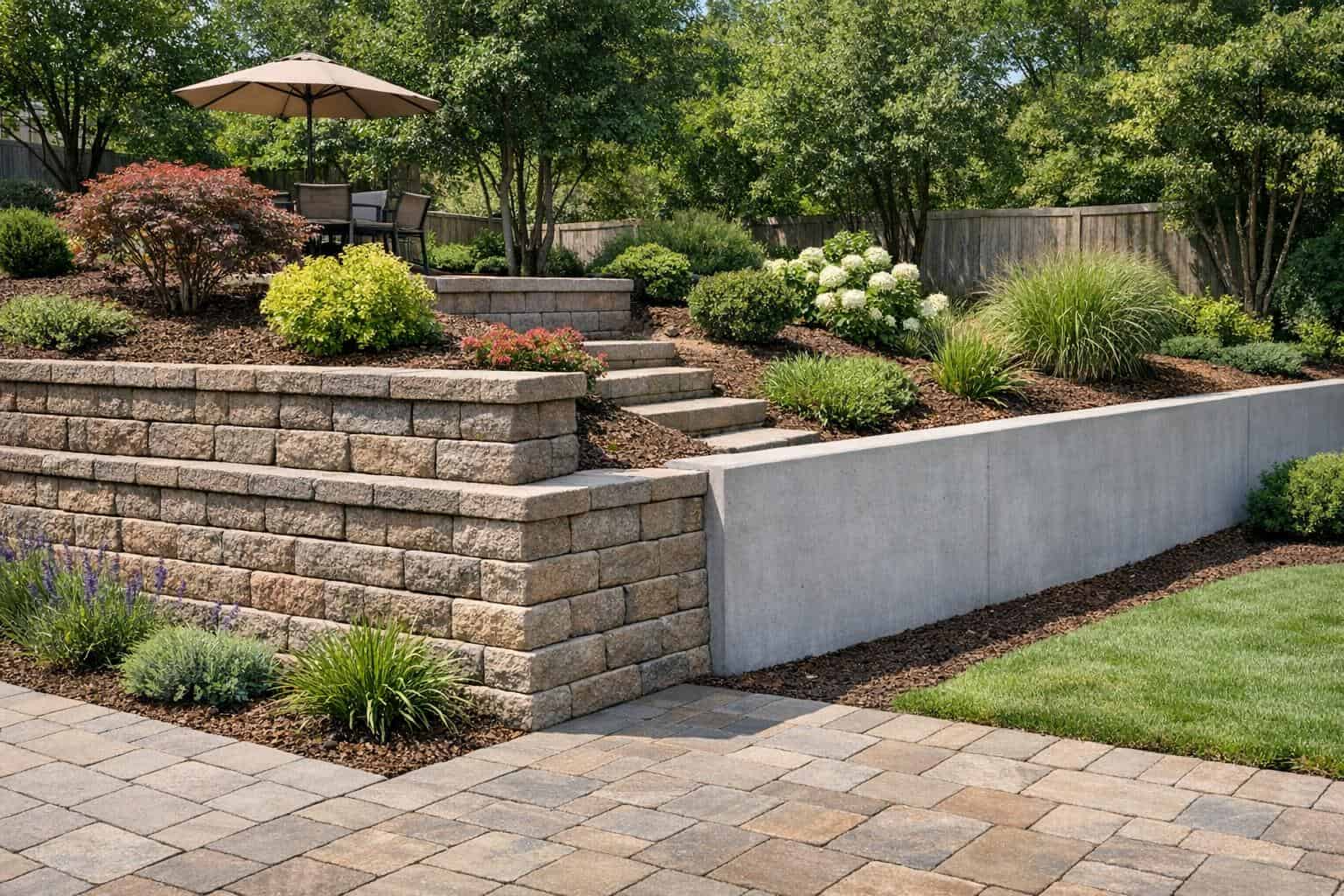
    Segmental retaining wall block used in a residential yard with structured grade change and landscaping.
    Segmental wall block often gives homeowners more flexibility in appearance, layout, and phased installation.

    Segmental retaining walls are built from interlocking or stacked concrete blocks installed over a prepared base with drainage considerations behind the wall. They are common in residential work because they come in many sizes and finishes, can look natural or contemporary, and often integrate well with planting and patio design. The modular system can make curves, steps, and terraced layouts easier to achieve.

    Block systems still require proper excavation, base prep, drainage stone, and the right construction method. Homeowners should not assume they are simple just because they are modular. The broader retaining wall guide explains the installation basics and when a wall may need engineering or permits.

    How poured concrete retaining walls differ

    Poured concrete walls usually create a smoother, more monolithic appearance. They are often chosen for modern aesthetics or for projects where the design calls for crisp lines and a continuous structural form. Depending on the wall, reinforcement and formwork may be part of the build, which can increase complexity and labor.

    Poured concrete can perform very well, but drainage and waterproofing detail still matter. A strong-looking wall can still fail if water pressure is allowed to build behind it. That is why retaining wall decisions often overlap with the drainage planning process.

    Appearance and design flexibility

    Segmental block tends to offer more visual texture and more finish options right out of the box. It can work in rustic, traditional, and many contemporary yards depending on the block style. It is also well suited to tiered gardens, curved beds, and blended planting zones.

    Poured concrete generally creates a cleaner and more minimal look. In the right design, that can feel architectural and upscale. But some homeowners find it too stark unless it is softened by planting, lighting, or surrounding hardscape. If appearance is the main driver, ask contractors to show examples of completed walls in yards similar to yours.

    Drainage and site performance

    Residential retaining wall installation with drainage planning and structured slope support behind the wall.
    Drainage planning matters just as much as wall material when the goal is long-term retaining wall performance.

    Drainage is one of the biggest practical differences homeowners should discuss. Segmental systems are often designed with drainage stone and can be more forgiving visually if small movement occurs over time. Poured concrete walls can be very durable, but poor drainage detailing behind the wall can create serious pressure issues.

    Retaining Wall Block vs Poured Concrete Guide for Homeowners related example showing Retaining wall detail relevant to planning mistakes, drainage, and grade behavior
    This retaining wall example gives homeowners a visual reference for comparing layout, materials, and maintenance tradeoffs before starting the project.

    If runoff or slope water is already a concern, it is worth reviewing the erosion control guide and the drainage vs regrading comparison before choosing a wall system in isolation.

    Cost and construction complexity

    Costs vary by wall height, access, drainage demands, engineering, finish choice, and labor conditions. Some block walls are very cost-effective for residential sites. Some poured concrete walls become expensive because of forming, reinforcement, and finish detail. Conversely, a highly detailed block wall with curves and terraces can also become a major project.

    The key is comparing complete scope, not just wall material. Ask whether the estimate includes excavation, export, drainage stone, backfill, engineering, geogrid if needed, permits, and final grading. That will give you a more useful comparison than material pricing alone.

    Which choice fits which kind of project

    Segmental block often makes sense for decorative-yet-functional garden walls, terracing, and residential slopes where homeowners want texture and design flexibility. Poured concrete may make more sense where the desired look is very clean and modern or where the design and engineering call for that system specifically. Neither choice is automatically better in every yard.

    • Choose block when you want texture, modular flexibility, and a system commonly used in residential garden and slope projects.
    • Choose poured concrete when the design requires a cleaner monolithic appearance or when a structural approach points in that direction.
    • In either case, make drainage, base preparation, and overall site design part of the conversation from the beginning.

    For most homeowners, the best decision comes from looking at the whole site: water, grade, wall purpose, and the surrounding yard design. A retaining wall should solve a problem and still feel like it belongs in the landscape.

    More Comparison and Decision Guides

    Estimate retaining wall cost by wall assumptions

    Use this calculator to test wall face area, material type, drainage complexity, and access before comparing block, concrete, and engineered wall scopes.

    Retaining Wall Cost Calculator

    Estimate retaining wall pricing with wall size, material type, drainage, and access assumptions.


  • Artificial Turf vs Natural Grass Guide for Homeowners

    Artificial Turf vs Natural Grass Guide for Homeowners

    Homeowners comparing artificial turf and natural grass are usually trying to solve a mix of issues at once: maintenance, water use, appearance, mud, patchiness, and how much time they want to spend caring for the yard. Both options can make sense, but they come with different tradeoffs in cost, feel, drainage behavior, and long-term expectations.

    This guide breaks that decision into practical homeowner terms.

    How artificial turf and natural grass differ

    • Artificial turf: reduces mowing and day-to-day lawn care, but has a higher installation cost and a more constructed feel.
    • Natural grass: offers a classic living surface and often a lower upfront installation cost, but needs irrigation, seasonal care, and ongoing maintenance.
    • Key tradeoff: turf can reduce routine work, while natural grass offers a softer living landscape experience if you are willing to maintain it.

    Upfront cost versus long-term upkeep

    Artificial turf usually costs more to install than sod or seed, especially when the base, drainage, edging, and finish details are handled properly. Natural grass often costs less upfront but carries recurring maintenance, irrigation, fertilization, and repair costs over time.

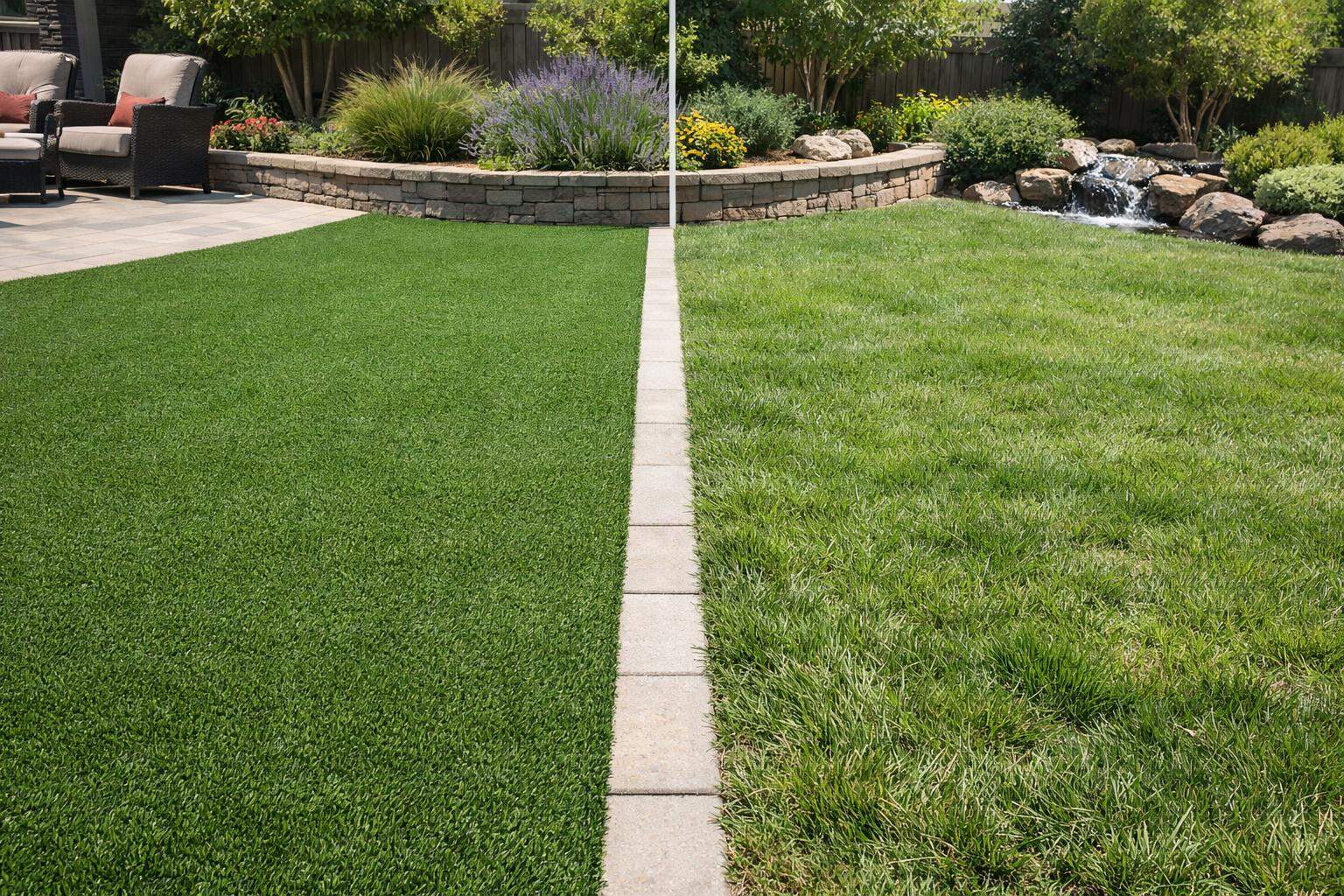
    Artificial Turf vs Natural Grass Guide for Homeowners related example showing Lawn detail relevant to thinning, irrigation stress, and warning signs
    This lawn example gives homeowners a visual reference for comparing layout, materials, and maintenance tradeoffs before starting the project.

    If you are also weighing lawn establishment, our sod and lawn installation guide is useful alongside this page.

    Drainage, heat, and feel underfoot

    These differences matter more than many homeowners expect. Artificial turf behaves differently with heat and surface feel, and its drainage depends heavily on the base and installation quality. Natural grass changes seasonally and can become muddy or patchy when drainage or irrigation is poor. That is why this decision often connects to broader water-management planning.

    Questions to ask before choosing

    • What is the real problem I am trying to solve: water use, maintenance, mud, durability, or appearance?
    • How much seasonal lawn care am I realistically willing to keep up with?
    • How will drainage be handled with this option?
    • How will the surface feel and look in the climate where I live?
    • What will long-term upkeep actually look like for this choice?

    What homeowners should remember

    The best choice is usually the one that matches how you actually want to live with the yard. Some properties benefit from real grass, some benefit from artificial turf, and some benefit from reducing lawn area altogether. If you want that broader perspective, read our low-maintenance landscaping guide too.

    Artificial Turf vs Natural Grass Guide for Homeowners related example showing Lawn detail relevant to planning mistakes, prep, and irrigation decisions
    This related lawn detail helps show how site conditions and finish choices can change the homeowner's plan.

    Service guide: The Artificial Turf Installation Guide explains how base prep, drainage, and edge detail shape the finished result.

    More Decision and Planning Guides


  • Concrete vs Paver Driveway Guide for Homeowners

    Concrete vs Paver Driveway Guide for Homeowners

    Homeowners comparing concrete and paver driveways are usually trying to balance cost, appearance, maintenance, and long-term performance. Both options can work well, but they solve those priorities differently. The best choice depends on budget, climate, design goals, and how much upkeep you are willing to take on over time.

    This guide breaks the decision into practical homeowner terms so you can compare more than just the surface look.

    How concrete and pavers differ at a glance

    • Concrete driveways: often offer a cleaner monolithic look and a lower upfront cost in many markets.
    • Paver driveways: offer modular flexibility, pattern variety, and easier spot repair when installed well.
    • Key tradeoff: concrete can be simpler and more budget-friendly, while pavers often provide more design range and repair flexibility at a higher installation cost.

    Cost and installation differences

    Concrete often wins on initial price, especially for straightforward pours with good access. Pavers usually cost more because the installation is more labor-intensive and material pricing can rise quickly depending on style and pattern complexity.

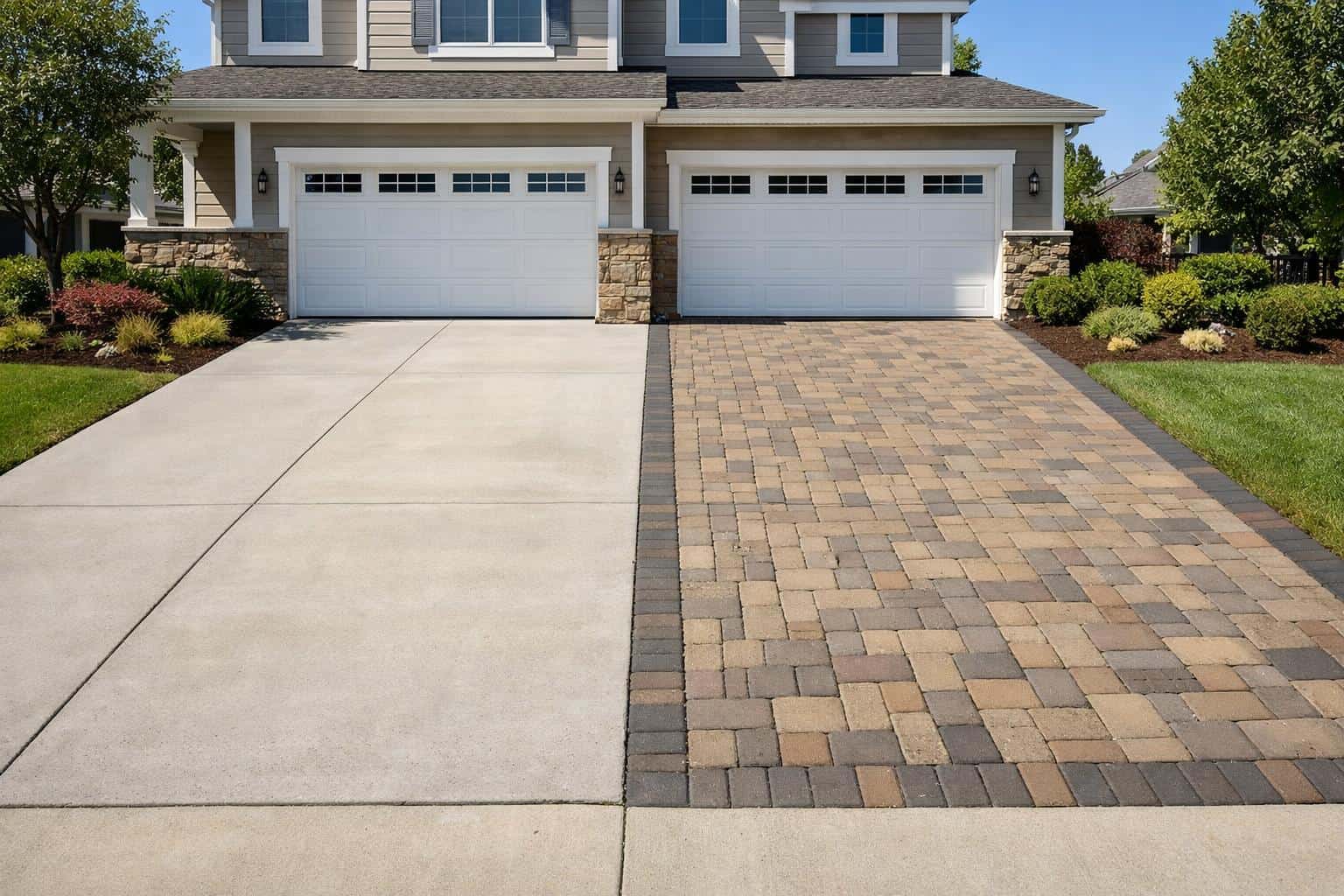
    Concrete vs Paver Driveway Guide for Homeowners related example showing Concrete, paver, and stone outdoor surfaces showing common patio and walkway material choices for homeowners
    This patio example gives homeowners a visual reference for comparing layout, materials, and maintenance tradeoffs before starting the project.

    However, base preparation matters for both. If you are comparing bids, read our landscaping cost guide and concrete driveway installation guide so you can compare scope accurately.

    Appearance and design flexibility

    Pavers offer more visual variety through color, pattern, border detail, and texture. Concrete can still look excellent, especially with broom, exposed aggregate, or decorative finish choices, but it usually presents a more unified surface.

    Maintenance and repair

    Pavers are often easier to repair in localized areas because individual units can be lifted and reset. Concrete repairs can be more visible, especially if color or aging makes patches stand out. On the other hand, pavers may need periodic joint-sand attention or weed management depending on the system and upkeep.

    For concrete-specific care, see our maintenance and sealing guide.

    Questions homeowners should ask

    • What look fits the house and surrounding hardscape better?
    • How does the local climate affect each option?
    • What maintenance am I realistically willing to handle?
    • What prep work is included for each estimate?

    What homeowners should remember

    Concrete and pavers can both perform well when the installation is planned correctly. The best choice is usually the one that aligns with your budget, repair expectations, and overall landscape style rather than whichever material sounds more premium on paper.

    Concrete vs Paver Driveway Guide for Homeowners related example showing Backyard patio comparison showing paver surface and stamped concrete surface
    This related patio detail helps show how site conditions and finish choices can change the homeowner's plan.

    Materials guide: The Patio and Walkway Materials Guide is useful if you want to compare pavers, concrete, and stone across more than one project type.

    More Comparison and Decision Guides


  • Broom Finish vs Stamped Concrete Driveways

    Broom Finish vs Stamped Concrete Driveways

    Driveway finish affects more than appearance. It changes traction, maintenance, cost, and how the concrete fits the style of the home. For many homeowners, the first real design decision is whether to choose a simple broom finish or spend more for a stamped surface.

    Neither option is automatically better. The right choice depends on how important low maintenance, decorative detail, budget control, and long-term upkeep are for the property.

    What a broom finish offers

    A broom finish is the classic textured driveway surface most homeowners recognize. After the concrete is placed and floated, the surface is brushed to create light traction lines. The result is clean, practical, and usually the most budget-friendly choice.

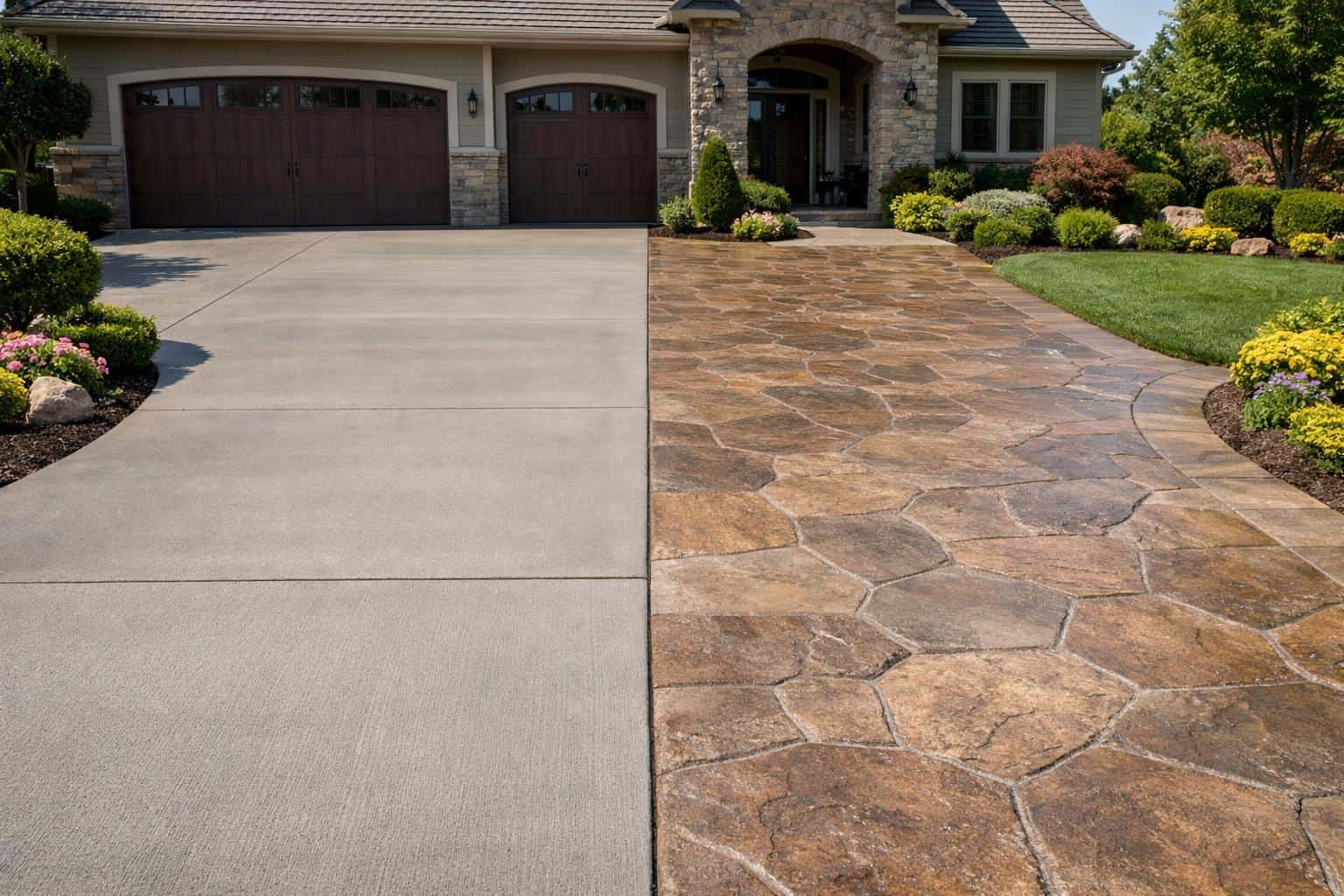
    Broom Finish vs Stamped Concrete Driveways related example showing Concrete, paver, and stone outdoor surfaces showing common patio and walkway material choices for homeowners
    This patio example gives homeowners a visual reference for comparing layout, materials, and maintenance tradeoffs before starting the project.
    • Good traction for everyday vehicle and foot traffic.
    • Simple appearance that suits many homes.
    • Lower installation cost than stamped decorative work.
    • Easier touch-ups and straightforward maintenance.

    For homeowners who care most about durability, function, and cost control, broom finish is often the easiest answer to justify.

    What stamped concrete adds

    Stamped concrete is chosen for style. It can mimic stone, pavers, slate, or other decorative looks while still being a poured slab. That makes it attractive for homeowners who want the driveway to contribute more strongly to curb appeal.

    • More decorative character and visual texture.
    • Better alignment with custom hardscape design goals.
    • Potential to tie together patios, walkways, and entry areas.

    The tradeoff is that stamped work is more detail-sensitive. Pattern, coloring, release products, and sealing all matter more than they do on a standard broom-finished driveway.

    Cost and maintenance differences

    Stamped concrete usually costs more because it requires more labor, tools, timing, and finishing control. Homeowners should also expect more ongoing attention if they want the decorative surface to keep its best appearance over time. Sealing is often more important on stamped work than on a basic broom finish.

    Broom Finish vs Stamped Concrete Driveways related example showing Backyard patio comparison showing paver surface and stamped concrete surface
    This related patio detail helps show how site conditions and finish choices can change the homeowner's plan.

    Broom finish is simpler to maintain and easier to evaluate from a functional standpoint. Stamped concrete can be worth the premium when appearance is a top priority, but it should be chosen with clear expectations about care and budget.

    Questions to ask before deciding

    • Is the driveway mainly a practical surface, or is it a major curb-appeal feature?
    • How important is slip resistance in the specific climate and location?
    • Does the budget allow for decorative work and future resealing?
    • Will the finish still suit the home several years from now?

    Bottom line

    Broom finish is usually the best choice for homeowners who want a proven, practical, lower-maintenance driveway. Stamped concrete is a design-forward option for homeowners willing to spend more for a more decorative result. If you are also comparing lifespan and upkeep, read our maintenance and sealing guide and our breakdown of driveway lifespan.

    Plan the Bigger Project

    Concrete work is often just one part of a broader exterior upgrade. If you are still mapping out the full project, also read our landscaping services guide, questions to ask before hiring a landscaper, what to expect during a landscaping project, and our landscaping costs guide for homeowners.