Materials and Finish Choices

Material and finish comparison guides for homeowners deciding between surface options, appearance, maintenance, and long-term durability.

Start with the service type

Landscaping Services Guideposts

Use these guides to understand what each service includes before comparing providers or requesting quotes.

Core service explainers

Start here when you are still deciding what kind of landscaper or outdoor contractor you need.

Compare before you hire

Use these pages when two services or surface choices sound similar but lead to different scopes.

Hire smarter

Planning And Contractor Comparison

Use this hub when you are moving from ideas into estimates, bids, and contractor conversations.

Before requesting estimates

These guides help define scope and compare companies before the first site visit.

Budget with better assumptions

Cost Guides And Calculators

Use this hub to move from rough budget ranges into the details that usually change quotes.

Calculator starting points

Open the calculator hub or a cost guide when you need a quick planning range.

High-impact cost decisions

These pages help compare choices where price, lifespan, and maintenance tradeoffs matter.

Understand the build

Installation And Site-Work Pathways

Use these guides to understand sequencing, site prep, access, and the details that affect long-term performance.

Hardscape and site prep

These projects often depend on base prep, demolition, grading, drainage, and access.

Drainage and retaining work

Use these when water, grade, or slope stability is part of the project.

Choose materials with ownership in mind

Material And Finish Decision Paths

Use these guides when appearance, maintenance, replacement, and budget all affect the right material choice.

Surface and finish comparisons

Compare outdoor surfaces before committing to a driveway, patio, or lawn direction.

Landscape material planning

Use these pages when quantity, delivery, or long-term maintenance are the main concern.

Protect the investment

Maintenance And Ownership Next Steps

Use these guides to understand ongoing care, seasonal refreshes, and when maintenance points to a bigger fix.

Maintenance planning

These guides help compare recurring service, seasonal work, and refresh projects.

When upkeep becomes repair

Use these when repeated maintenance problems suggest drainage, surface, or material issues.

  • Retaining Wall Drainage and Backfill Guide for Homeowners

    Retaining Wall Drainage and Backfill Guide for Homeowners

    A retaining wall is only as reliable as the drainage and backfill behind it. These hidden details often matter more than the wall’s visible face.

    Why drainage behind the wall matters so much

    • Water pressure is one of the most common reasons walls move or fail.
    • Even attractive wall systems can struggle if trapped water builds behind them.
    • Wall longevity depends on water having a clear path out.

    Why backfill choice matters

    • The material behind the wall affects stability, drainage behavior, and pressure load.
    • Improper backfill can trap moisture or add unnecessary weight.
    • Good backfill supports both the wall and the landscape above it.

    What homeowners should confirm

    • How water will escape from behind the wall.
    • What type of backfill the plan assumes and why.
    • Whether the wall design reflects the site’s real runoff and slope conditions.

    Bottom line

    The wall you can trust is the one with drainage and backfill designed as seriously as the face you can see.

    For the broader overview, continue with Retaining Wall Guide for Homeowners.

  • Best Patio Materials Guide for Homeowners

    Best Patio Materials Guide for Homeowners

    The best patio material depends on how the space will be used, how formal you want it to feel, and how much movement, maintenance, and climate stress the site will put on it over time.

    What homeowners usually compare

    • Pavers, poured concrete, stamped concrete, natural stone looks, and modular hardscape systems.
    • Materials that feel more formal versus softer or more textured.
    • Options that differ in repair style, upkeep, and long-term appearance.

    What makes one patio material fit better

    • Traffic level, climate, drainage, and how the patio ties into the rest of the yard.
    • Whether you value spot repair, lower upfront cost, or a specific finish look.
    • How the material will age next to the home and nearby walkways or walls.

    How to choose well

    • Match the material to the way you will really use the patio.
    • Think beyond day-one appearance and ask how the surface will look in a few seasons.
    • Do not separate the material from the site’s water movement and base requirements.

    Bottom line

    The best patio material is the one that fits the site’s conditions and the ownership experience you actually want.

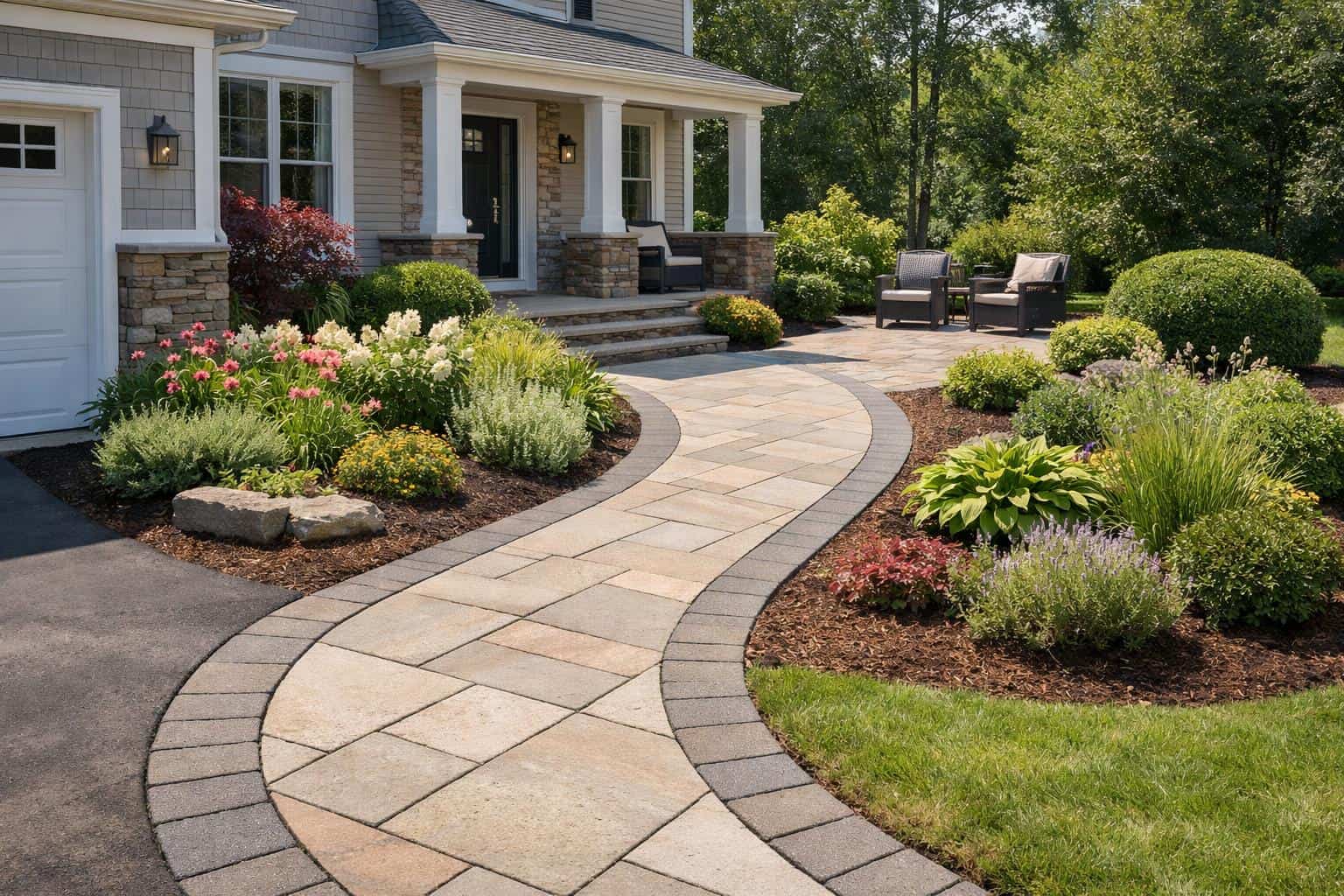
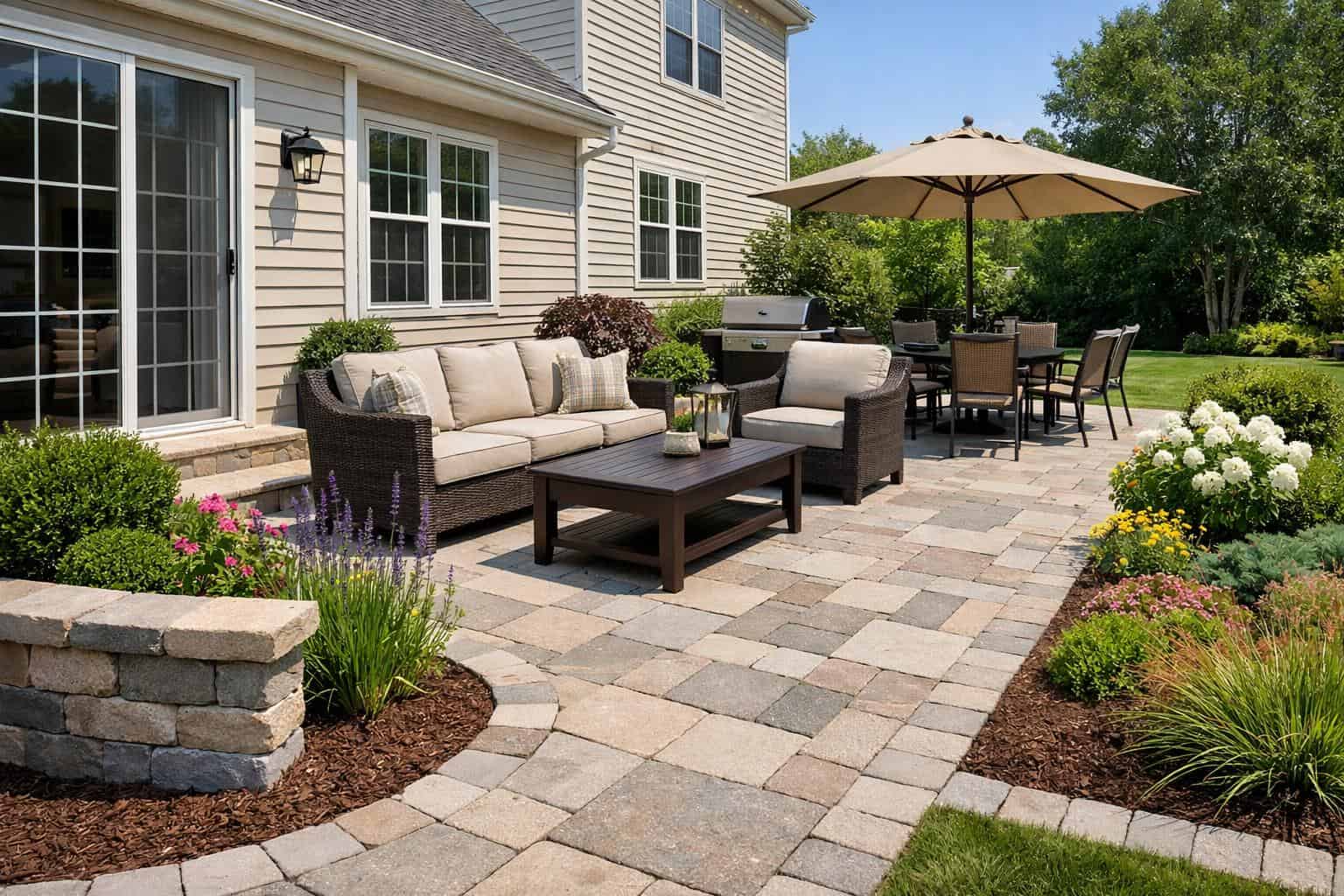
    Best Patio Materials Guide for Homeowners related example showing Concrete, paver, and stone outdoor surfaces showing common patio and walkway material choices for homeowners
    This patio example gives homeowners a visual reference for comparing layout, materials, and maintenance tradeoffs before starting the project.

    For the broader overview, continue with Patio Installation Guide for Homeowners.

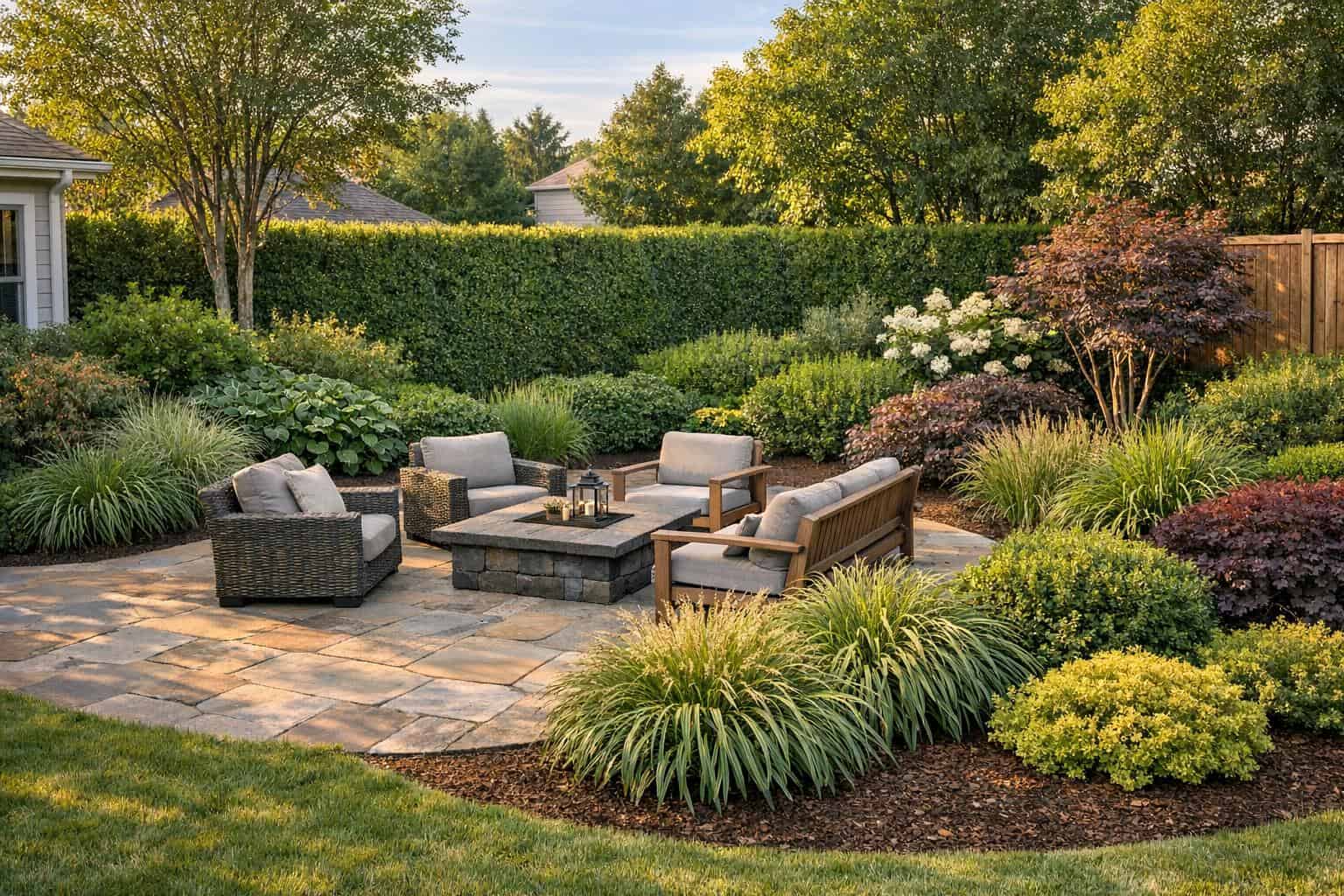
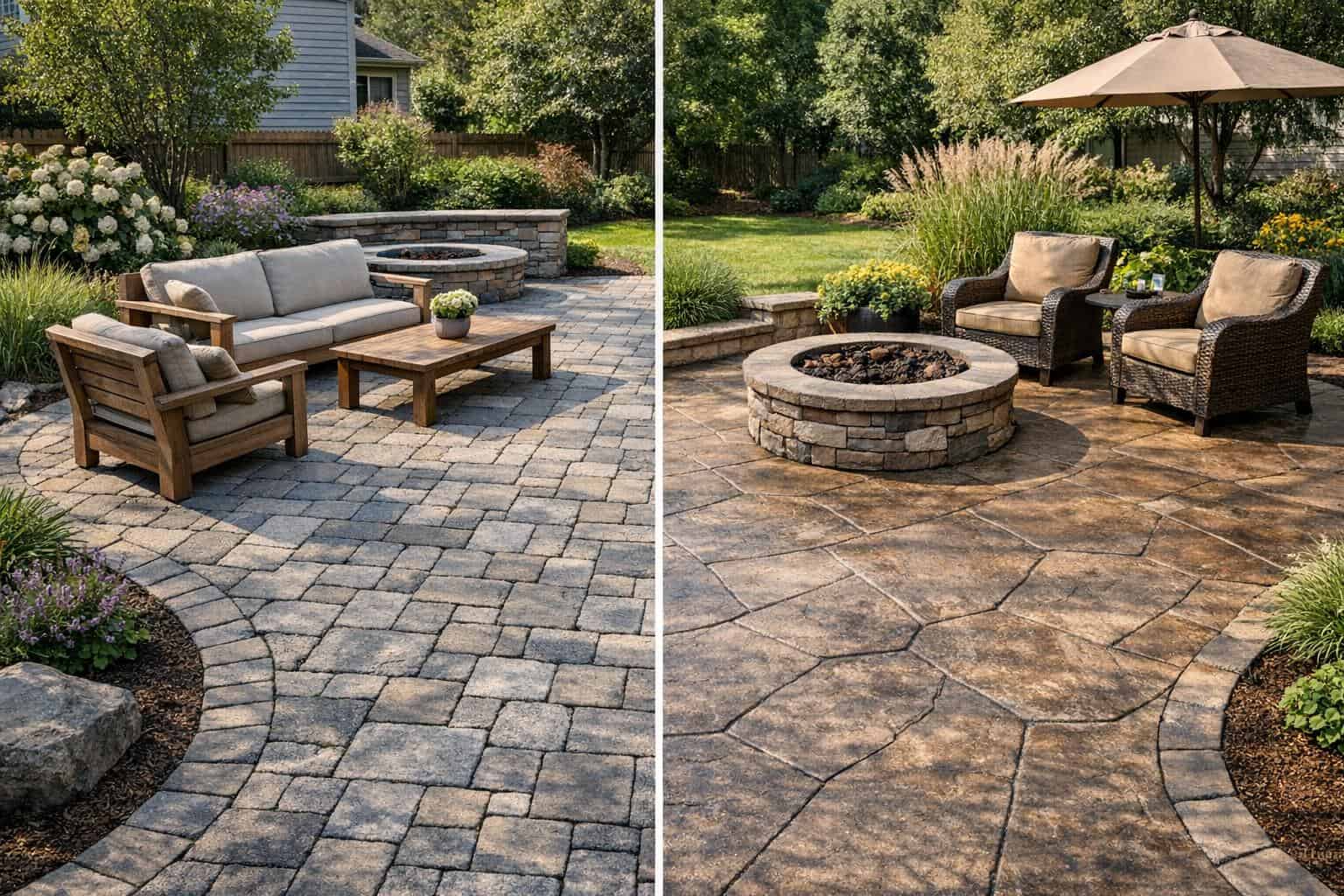
    Best Patio Materials Guide for Homeowners related example showing Backyard patio comparison showing paver surface and stamped concrete surface
    This related patio detail helps show how site conditions and finish choices can change the homeowner's plan.

  • Best Walkway Materials Guide for Homeowners

    Best Walkway Materials Guide for Homeowners

    The best walkway material depends on how the path is used, how formal you want it to feel, and how much movement, drainage, and upkeep the site will put on it over time.

    What homeowners usually compare

    • Pavers, poured concrete, stepping surfaces, gravel-style paths, and natural stone looks.
    • Surface options that feel more formal versus softer garden-path styles.
    • Materials that handle different traffic and maintenance expectations.

    What makes one material fit better than another

    • Traffic level, slope, and drainage behavior.
    • How the walkway connects to patios, driveways, and the home’s style.
    • Whether repairability or simplicity matters more to you.

    How to choose wisely

    • Match the material to the job of the path, not just the look of a photo.
    • Think about slip, cleanup, and edge stability as much as appearance.
    • Keep the wider hardscape language of the yard in mind.

    Bottom line

    The best walkway material is the one that fits the path’s function and the site’s conditions while still supporting the look of the yard.

    For the broader overview, continue with Walkway and Pathway Installation Guide for Homeowners.


  • Smart Irrigation Controller vs Basic Timer Guide for Homeowners

    Smart Irrigation Controller vs Basic Timer Guide for Homeowners

    Controller choice affects more than convenience. It shapes how well the irrigation system can adapt to season, weather, and yard complexity over time.

    Why homeowners consider smart controllers

    • More flexible scheduling and adjustment.
    • Potentially better response to seasonal changes and watering needs.
    • Useful when the yard has multiple zones or the homeowner wants finer control.

    Why a basic timer can still work

    • Simpler yards with straightforward watering needs.
    • Homeowners who prefer minimal settings and hands-on seasonal adjustment.
    • Projects where budget matters more than advanced control.

    How to decide

    • Consider yard complexity, climate swings, and how often you will realistically adjust settings.
    • Do not overspend on features the layout does not need.
    • Make sure the controller choice supports the type of zones in the yard.

    Bottom line

    The right controller is the one that matches the complexity of the yard and the level of control you will actually use.

    For the broader overview, continue with Irrigation System Guide for Homeowners.


  • Drip Irrigation vs Sprinklers Guide for Homeowners

    Drip Irrigation vs Sprinklers Guide for Homeowners

    Drip and sprinklers solve different watering jobs, so the right system depends on what is being watered and how the landscape is laid out.

    Where drip usually works best

    • Planting beds, shrubs, trees, and targeted root-zone watering.
    • Lower-water landscapes where precision matters.
    • Areas where overspray and runoff need tighter control.

    Where sprinklers usually work best

    • Lawn areas that need broader surface coverage.
    • Spaces where even turf coverage matters more than pinpoint watering.
    • Large open areas where bed-style drip layout would be awkward.

    How homeowners should choose

    • Match the system to the plant type and layout, not just to habit.
    • Do not use lawn-style watering logic for shrub beds.
    • Ask whether the yard really needs both systems in different zones.

    Bottom line

    The better irrigation choice is the one that fits the planting and layout instead of forcing one watering style onto the whole yard.

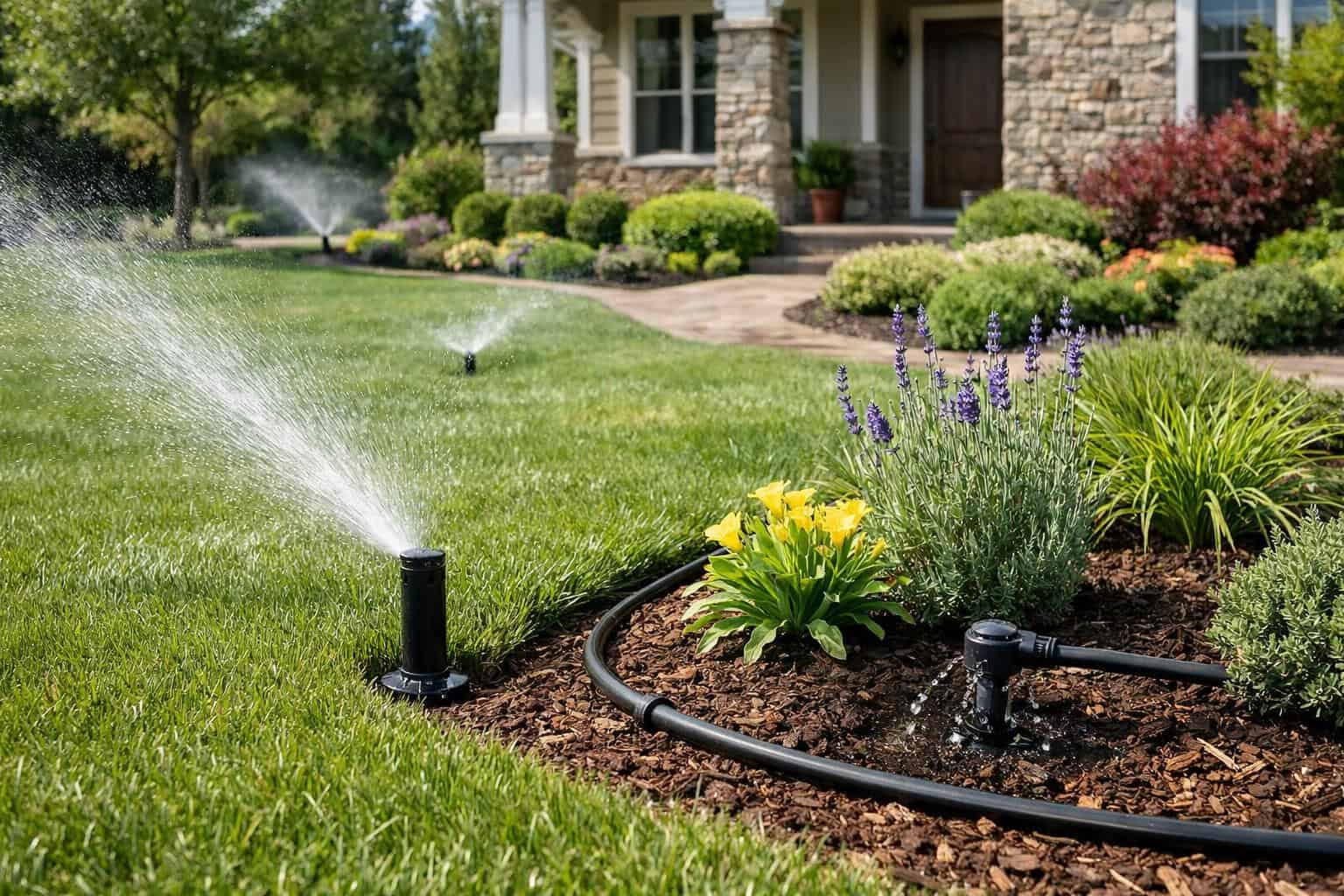
    Drip Irrigation vs Sprinklers Guide for Homeowners related example showing Irrigation detail relevant to planning mistakes, zoning, and controller decisions
    This irrigation example gives homeowners a visual reference for comparing layout, materials, and maintenance tradeoffs before starting the project.

    For the broader overview, continue with Irrigation System Guide for Homeowners.

    Drip Irrigation vs Sprinklers Guide for Homeowners related example showing Residential yard showing irrigation zones, sprinklers, and planting areas that affect project cost
    This related irrigation detail helps show how site conditions and finish choices can change the homeowner's plan.

    Estimate irrigation cost by system type

    Use the irrigation calculator to compare rough spray, drip, and mixed-system ranges before choosing the layout that fits your planting and lawn areas.

    Irrigation Cost Calculator

    Estimate irrigation pricing based on area, system style, number of zones, and controller choice.


  • Low-Voltage vs Line-Voltage Landscape Lighting Guide for Homeowners

    Low-Voltage vs Line-Voltage Landscape Lighting Guide for Homeowners

    Low-voltage and line-voltage lighting can both work outdoors, but they are used differently and homeowners should understand what each system is better at before planning a build.

    Where low-voltage usually shines

    • Most residential path, accent, and ambient lighting plans.
    • Projects that need flexibility, layered fixtures, and easier scaling.
    • Yards where subtle residential lighting is the main goal.

    Where line-voltage may still matter

    • Specific high-output or specialty fixtures where the design truly calls for it.
    • Situations driven by equipment requirements rather than general landscape lighting needs.
    • Projects coordinated tightly with broader electrical work.

    How homeowners should think about the choice

    • Start with the effect you want, then confirm what power approach supports it.
    • Do not assume more voltage automatically means a better outdoor result.
    • Ask how safety, maintenance, and expandability differ between the options.

    Bottom line

    Most homeowners should choose the system that fits the lighting effect and scale of the yard rather than chasing higher-output hardware by default.

    For the broader overview, continue with Landscape Lighting Guide for Homeowners.


  • Best Plants for Privacy Landscaping Guide for Homeowners

    Best Plants for Privacy Landscaping Guide for Homeowners

    The best privacy plant is not just the fastest grower. It has to fit the space, the maintenance level, the local climate, and how much screening you really need year-round.

    What makes a privacy plant actually useful

    • Growth habit that matches the screening goal without constant pruning.
    • Mature size that fits the bed depth and distance from structures.
    • Climate and water needs that the site can realistically support.

    Common privacy-plant categories homeowners compare

    • Evergreen screens for year-round coverage.
    • Layered shrub mixes for softer screening and design flexibility.
    • Tree-and-understory combinations where height and depth both matter.

    How to choose well

    • Start with the amount of width and height you truly have.
    • Think about how formal or natural you want the screen to feel.
    • Avoid plants that will become a trimming burden just to stay inside the property lines.

    Bottom line

    The best privacy planting is the one that delivers the screening you want without creating a future maintenance problem.

    For the broader overview, continue with Privacy Landscaping Guide for Homeowners.


  • Best Low-Maintenance Planting Styles Guide for Homeowners

    Best Low-Maintenance Planting Styles Guide for Homeowners

    Low-maintenance planting is not just about picking tough plants. It is also about choosing a planting style that does not set you up for constant trimming, cleanup, or replacement.

    Planting approaches that often stay easier

    • Layered shrub-and-perennial groupings with realistic mature spacing.
    • Mass plantings that simplify irrigation and reduce fussy one-off care.
    • Plant palettes matched closely to sun, water, and local climate.

    Why style matters as much as species

    • A good style reduces clutter and repetitive maintenance tasks.
    • Grouping by similar needs simplifies watering and care.
    • Cleaner structure makes the yard feel more finished with less effort.

    What to avoid in a low-maintenance plan

    • Overplanting just because the beds look sparse at installation.
    • Mixing too many water needs and growth habits together.
    • Using showy but demanding plants in the highest-visibility, lowest-tolerance spots.

    Bottom line

    The easiest planting style is the one that stays visually intentional as it grows without needing constant intervention.

    For the broader overview, continue with Low-Maintenance Landscaping Guide for Homeowners.


  • Best Low-Maintenance Landscape Materials Guide for Homeowners

    Best Low-Maintenance Landscape Materials Guide for Homeowners

    Low-maintenance landscaping starts with materials that stay stable, look intentional between cleanup days, and do not create more upkeep than they save.

    Materials that often reduce upkeep

    • Stable edging systems, durable hardscape, and finishes that suit the site’s drainage and traffic.
    • Mulch or rock choices that make sense for the planting and climate.
    • Walkable surfaces that clean easily and do not constantly shift or trap debris.

    What makes a material truly low maintenance

    • It fits the site’s water movement and sun exposure.
    • It does not create constant migration, staining, or cleanup headaches.
    • It supports the planting plan instead of fighting it.

    What homeowners should avoid

    • Materials chosen only for trend value without considering heat, debris, or weed pressure.
    • Finish combinations that multiply cleanup points.
    • Any surface that solves one chore but creates two new ones.

    Bottom line

    The best low-maintenance material is the one that works with the yard’s real conditions and use pattern, not just the one advertised as easy.

    For the broader overview, continue with Low-Maintenance Landscaping Guide for Homeowners.


  • Paver Patio vs Stamped Concrete Look and Durability Guide for Homeowners

    Paver Patio vs Stamped Concrete Look and Durability Guide for Homeowners

    Pavers and stamped concrete can both create strong visual results, but they age differently and homeowners should think about that aging pattern before deciding.

    How pavers tend to age

    • The surface keeps its unit-based pattern even as some pieces shift or weather differently.
    • Color variation can help repairs blend in when done well.
    • Edges and joints matter a lot to the long-term appearance.

    How stamped concrete tends to age

    • The surface reads as one decorative slab, so visible cracks or finish breakdown can feel more noticeable.
    • Color and sealer performance shape how long the decorative effect looks sharp.
    • Good installation and drainage strongly influence durability.

    How to judge the finish honestly

    • Decide whether you prefer a unit-based look or a decorative slab look.
    • Think about how visible future repairs would feel to you.
    • Compare the finish to the house, nearby hardscape, and overall yard style.

    Bottom line

    The better-looking patio over time is the one whose aging pattern you are more comfortable living with, not just the one that looks best on day one.

    Paver Patio vs Stamped Concrete Look and Durability Guide for Homeowners related example showing Concrete, paver, and stone outdoor surfaces showing common patio and walkway material choices for homeowners
    This patio example gives homeowners a visual reference for comparing layout, materials, and maintenance tradeoffs before starting the project.

    For the broader overview, continue with Paver Patio vs Stamped Concrete Patio Guide for Homeowners.

    Paver Patio vs Stamped Concrete Look and Durability Guide for Homeowners related example showing Paver patio surface with color and finish detail relevant to homeowner material-selection decisions
    This related patio detail helps show how site conditions and finish choices can change the homeowner's plan.