Landscaping Guru

  • Flowering vs Evergreen Screen Guide for Homeowners

    Flowering vs Evergreen Screen Guide for Homeowners

    Some homeowners want a privacy screen that blooms and changes with the seasons. Others want year-round coverage and stronger structural screening. The best choice depends on how much privacy is needed, how formal or soft the yard should feel, and what maintenance the site can realistically support.

    Use flowering screens when seasonal character matters

    Flowering screens can add softness and color, especially where full year-round privacy is not essential.

    Use evergreens when coverage is the priority

    If the main goal is consistent screening, evergreens often make more sense. Pair this with our Evergreen vs Deciduous Privacy Screen Guide for Homeowners if you are comparing multiple screening directions.

    Think about cleanup and growth habit too

    Bloom, leaf drop, and pruning needs can matter just as much as privacy when the screen sits near patios, pools, or walkways.

    What homeowners should remember

    The best screening choice usually balances visual character with the level of privacy and upkeep the yard actually needs.


  • Patio Shade Structure Ideas Guide for Homeowners

    Patio Shade Structure Ideas Guide for Homeowners

    Shade can change how often a patio gets used. Without it, an otherwise attractive space may be uncomfortable during the very hours homeowners want to enjoy it most. The best shade ideas match the patio layout, sun pattern, and how the space is actually used.

    Start with where the patio gets hottest

    Some patios only need selective shade during one part of the day. Others need more coverage around seating or dining zones. The shade solution should follow the problem area, not just the patio outline.

    Match the shade type to the patio use

    Dining, lounging, and cooking spaces often benefit from different kinds of coverage. If the patio itself is still being shaped, pair this with our Backyard Patio Layout Ideas Guide for Homeowners.

    Keep circulation and openness in mind

    The best shade structures make the patio more comfortable without making it feel low, blocked, or awkward to move around.

    What homeowners should remember

    The best patio-shade ideas improve comfort in a way that still supports the openness and flow of the outdoor space.


  • Privacy Planting for Pool Areas Guide for Homeowners

    Privacy Planting for Pool Areas Guide for Homeowners

    Pool privacy planting has to balance screening with airflow, debris control, and the overall feel of the space. The best ideas create comfort around the pool or lounge area without making the entire yard feel overly enclosed.

    Screen the seating and lounge views first

    Not every edge of a pool area needs the same treatment. Focus on the sightlines that affect comfort when people are actually using the space.

    Choose plants with maintenance in mind

    Pool areas are less forgiving of plants that drop heavy debris or need constant cleanup. Use this with our Privacy Landscaping Guide for Homeowners if you are comparing different screening approaches.

    Keep the pool zone breathable

    Good privacy should still allow the area to feel open, sunny, and easy to move through.

    What homeowners should remember

    The best pool privacy planting ideas make the space feel more comfortable without turning it into a fully enclosed room.


  • Front Yard Entry Bed Ideas Guide for Homeowners

    Front Yard Entry Bed Ideas Guide for Homeowners

    Entry beds do a lot of visual work in the front yard. They soften the approach to the door, frame the path, and help connect the house to the surrounding planting. The best entry-bed ideas feel intentional without making the front walk feel crowded or overdesigned.

    Use the bed to guide the walk to the door

    Entry beds should help define the arrival path and make the front door easier to read from the curb or driveway.

    Keep plant size honest near the walk

    Plants that spill too aggressively into the entry route can make the whole front of the house feel tighter. Pair this with our Front Entry Landscaping Ideas Guide for Homeowners if the overall entry layout still needs work.

    Repeat a few dependable forms

    Entry beds usually look stronger when a few shrubs or perennials are repeated instead of using many unrelated accents.

    What homeowners should remember

    The best front-entry bed ideas make the approach feel clearer, softer, and more intentional at the same time.


  • Front Yard Symmetry vs Asymmetry Guide for Homeowners

    Front Yard Symmetry vs Asymmetry Guide for Homeowners

    Front yard symmetry and asymmetry each create a different mood. Symmetry often feels orderly, formal, and calm. Asymmetry can feel more natural, layered, or modern. The right direction depends on the architecture, the entry layout, and how controlled or relaxed you want the front yard to feel.

    Use symmetry when the house and entry already want order

    Centered doors, formal facades, and strong axial walkways often pair naturally with symmetrical planting and repeated elements.

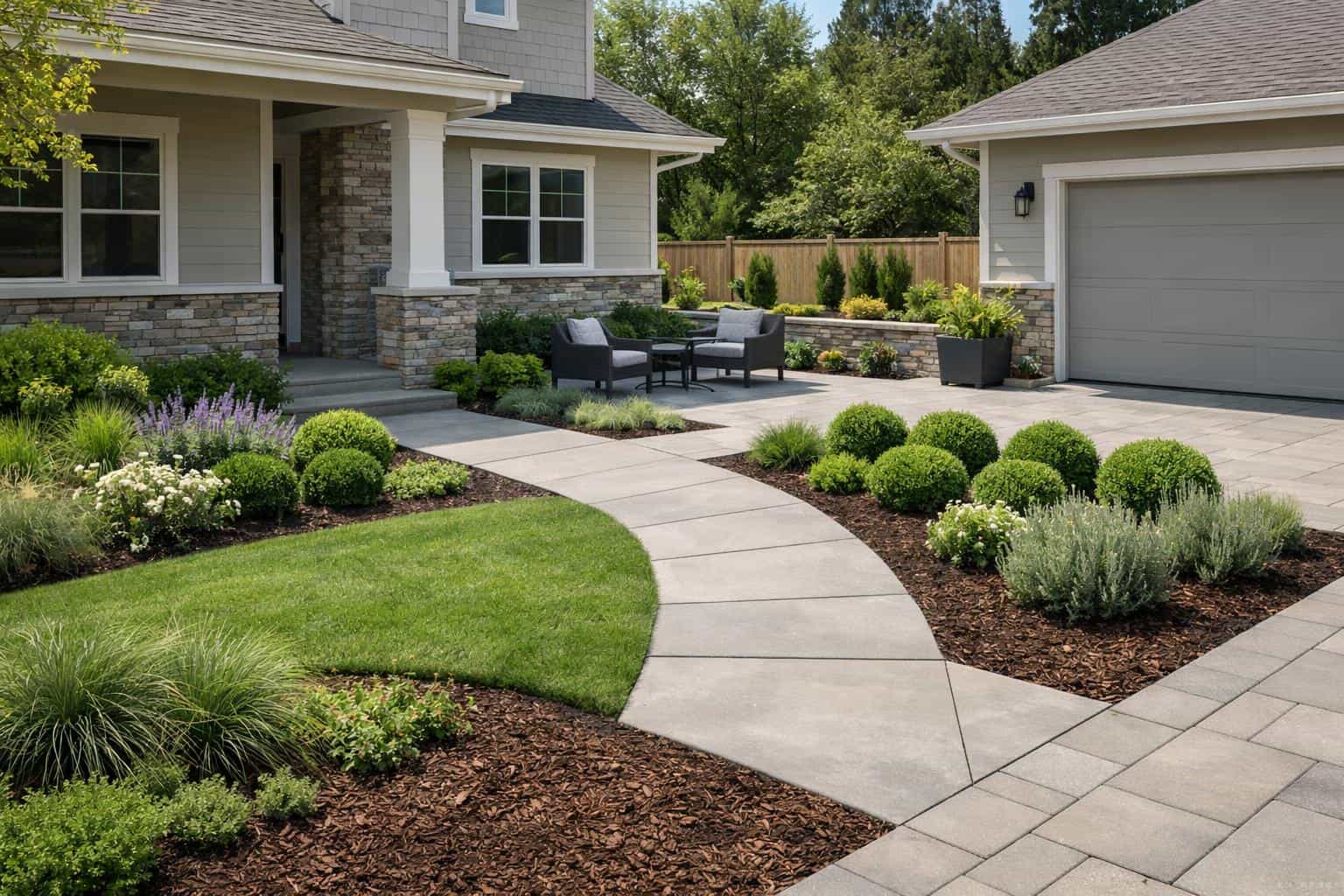
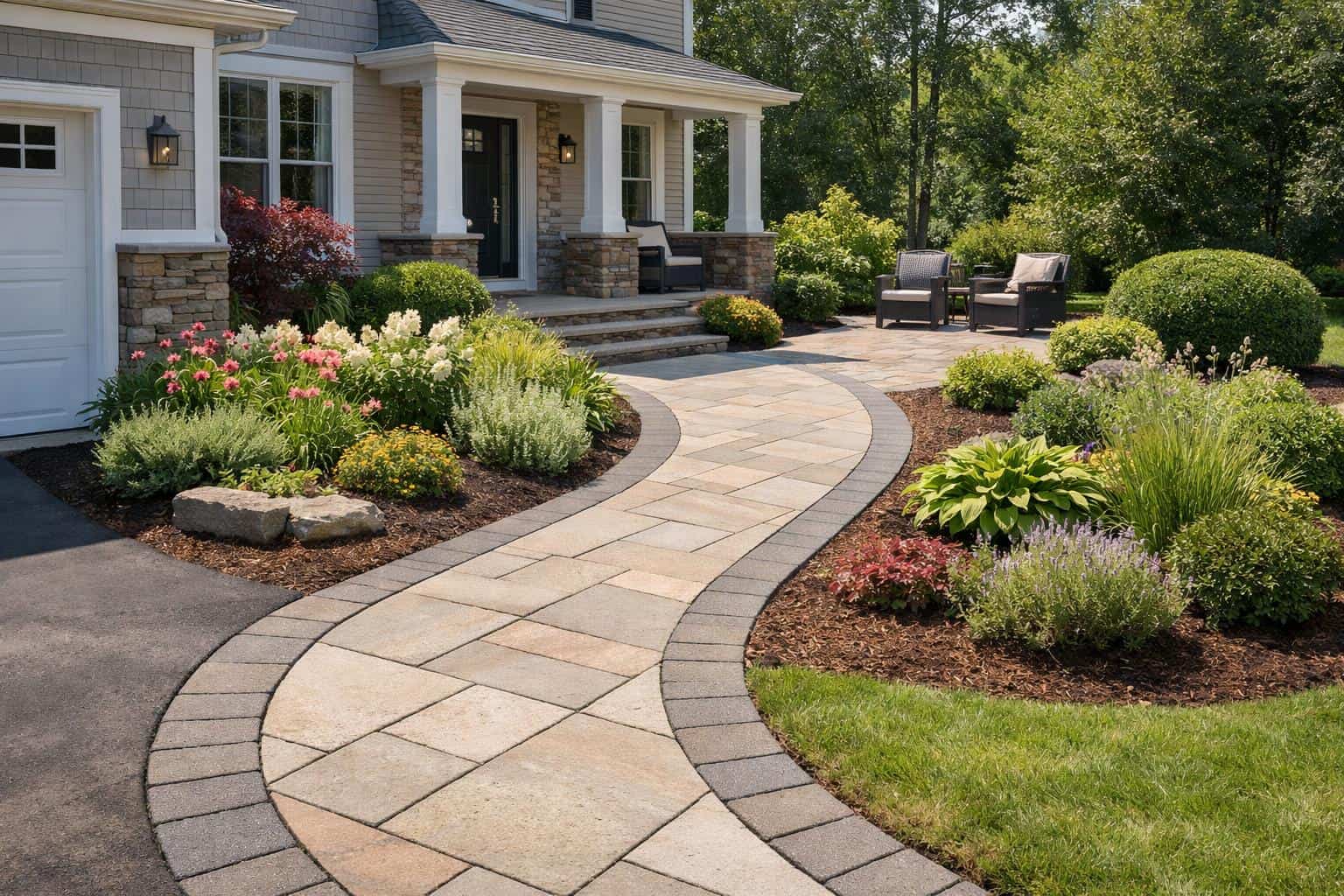
    Front Yard Symmetry vs Asymmetry Guide for Homeowners related example showing Front entry landscape materials relevant to choosing surfaces and finishes for a smaller yard
    This front yard example gives homeowners a visual reference for comparing layout, materials, and maintenance tradeoffs before starting the project.

    Use asymmetry when the site benefits from softer movement

    Asymmetry can work well on less formal homes, corner lots, and yards where the walkway, driveway, or planting zones do not line up on a central axis. Pair this with our Modern Front Yard Landscaping Ideas Guide for Homeowners if you are leaning toward a cleaner, more contemporary look.

    Front Yard Symmetry vs Asymmetry Guide for Homeowners related example showing Small front yard hardscape and planting materials relevant to curb-appeal planning
    This related front yard detail helps show how site conditions and finish choices can change the homeowner's plan.

    Do not mix the two randomly

    Many front yards feel unresolved because some elements are highly symmetrical and others are not, without a clear reason. The better approach is to choose a dominant design language and let the rest support it.

    What homeowners should remember

    The best front-yard designs usually feel coherent because the planting, entry path, and house all support the same level of formality.


  • Stepping Stone Path Ideas Guide for Homeowners

    Stepping Stone Path Ideas Guide for Homeowners

    Stepping stone paths can add charm and softness to a yard, but they still need to be planned like real circulation routes. The best stepping-stone ideas balance appearance with comfort, spacing, and how the path fits the surrounding landscape.

    Use stepping stones where the route can be slower and more informal

    They often work well in garden transitions, side-yard routes, or softer backyard connections. They are usually less appropriate where the path needs to handle fast, direct everyday traffic.

    Get spacing and landing right

    The path has to feel natural to walk. If spacing is awkward or the surrounding surface is unstable, the whole path becomes less appealing to use. For the broader path-planning context, see our Gravel Path Ideas Guide for Homeowners and the main walkway guide together.

    Let the surrounding planting support the path

    Stepping-stone paths usually look strongest when nearby planting and ground treatment reinforce the softer character of the route.

    What homeowners should remember

    The best stepping-stone ideas create a natural-feeling route that still works comfortably as part of the yard.


  • Outdoor Kitchen Prep Zone Layout Guide for Homeowners

    Outdoor Kitchen Prep Zone Layout Guide for Homeowners

    Outdoor kitchen layouts often focus heavily on the grill, but the prep zone is what makes the space easier to use in real life. Counter space, staging room, and circulation around the prep area all affect how functional the kitchen feels once people actually start cooking.

    Give prep space its own clear zone

    Prep should not be whatever counter space is left over after appliances are placed. Homeowners usually get better results when the prep zone is treated as a core part of the layout.

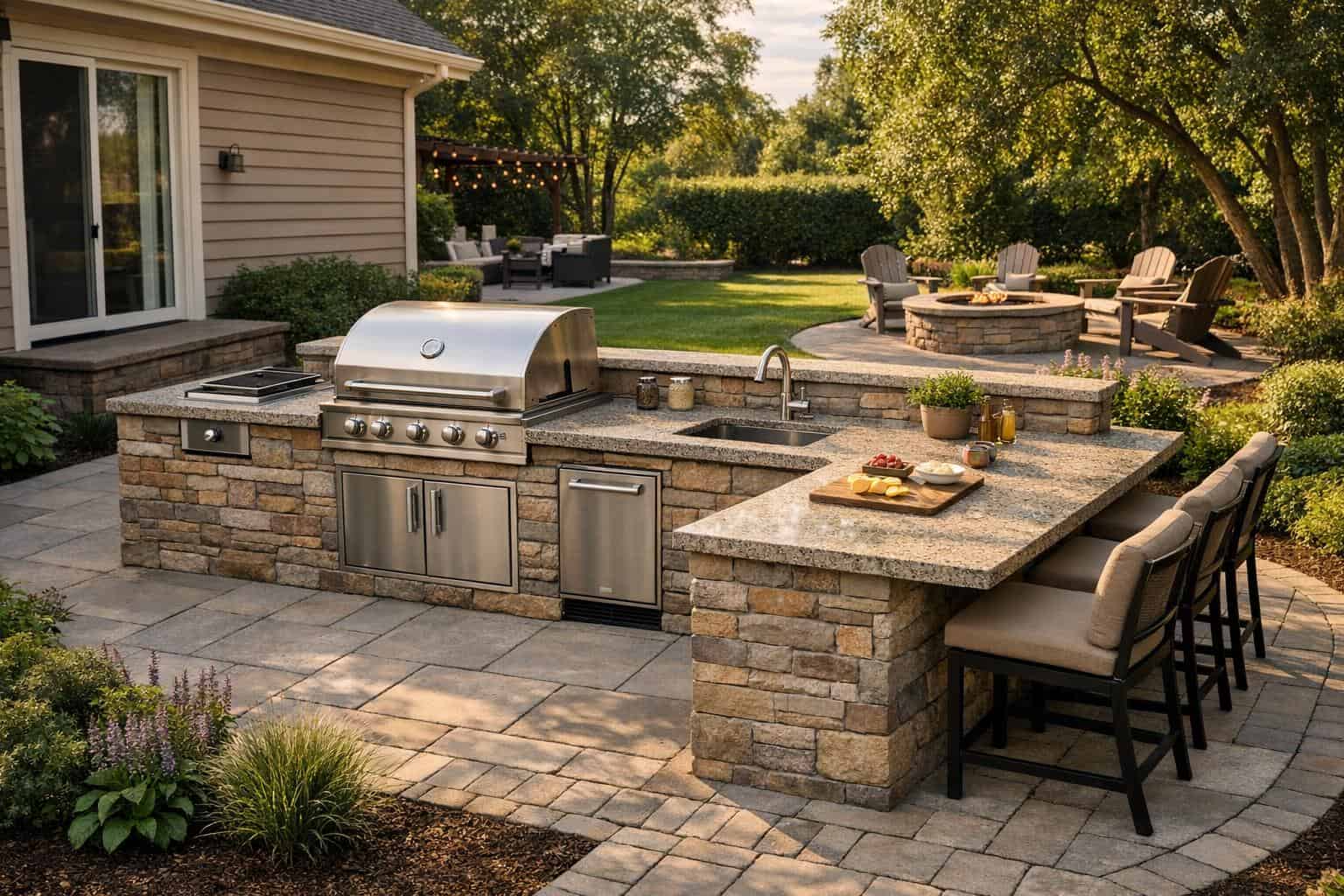
    Outdoor Kitchen Prep Zone Layout Guide for Homeowners related example showing Outdoor kitchen construction detail relevant to utility work, finish scope, and quote comparison for homeowners
    This outdoor kitchen example gives homeowners a visual reference for comparing layout, materials, and maintenance tradeoffs before starting the project.

    Keep the prep zone connected to serving and seating

    The best prep layouts make it easy to move between food storage, cooking, plating, and guest interaction. Pair this with our Outdoor Kitchen Seating Layout Ideas Guide if the surrounding dining and gathering zones are part of the same project.

    Outdoor Kitchen Prep Zone Layout Guide for Homeowners related example showing Residential outdoor kitchen with grill, counters, patio, and features that affect project cost
    This related outdoor kitchen detail helps show how site conditions and finish choices can change the homeowner's plan.

    Protect circulation around the cook

    Prep zones feel much better when guests are not constantly crossing through them. The outdoor kitchen should host people comfortably without disrupting the person using it.

    What homeowners should remember

    The best prep-zone layouts make an outdoor kitchen easier to cook in, easier to serve from, and more pleasant to use day to day.


  • Low-Maintenance Backyard Border Ideas Guide

    Low-Maintenance Backyard Border Ideas Guide

    Backyard borders can either simplify the yard or quietly become one of its biggest maintenance burdens. The best low-maintenance border ideas organize edges in a way that looks intentional while staying practical to trim, clean, and live with.

    Keep the edge treatment simple

    Too many little transitions, scattered plant choices, or narrow awkward beds usually create more upkeep than they are worth.

    Choose border plants for access and scale

    Property edges often work better with fewer dependable plants than with a mixed collection that constantly needs reshaping. If the whole yard is leaning toward easier care, pair this with the Low-Maintenance Landscaping Guide for Homeowners.

    Use the border to support the backyard layout

    A backyard border should help define the yard, not just fill leftover space. The edge can support privacy, soften fences, or frame activity zones without becoming visually busy.

    What homeowners should remember

    The best low-maintenance border ideas usually make the yard feel more composed because the perimeter is cleaner and easier to manage.


  • Evergreen vs Deciduous Privacy Screen Guide for Homeowners

    Evergreen vs Deciduous Privacy Screen Guide for Homeowners

    Privacy screening does not always need to be evergreen, but it often depends on what kind of privacy the yard actually needs. Evergreens usually offer more year-round coverage. Deciduous screens can feel lighter, softer, and sometimes more appropriate for the site.

    Use evergreen when privacy needs to hold all year

    If the problem is an exposed patio, a close neighbor, or a year-round view into the yard, evergreens often make the most sense.

    Use deciduous screening when a lighter edge fits the site

    Some homeowners prefer a softer, more seasonal edge, especially where winter openness is acceptable. Pair this with our Evergreen Screen Ideas Guide for Homeowners if you are leaning toward evergreen structure but still comparing options.

    Think beyond privacy alone

    Screening also changes light, airflow, maintenance, and how enclosed the yard feels. The best choice is usually the one that balances privacy with the overall character of the yard.

    What homeowners should remember

    The strongest screening decisions usually start with the privacy need, then adjust for maintenance, spacing, and the mood you want the yard to have.


  • Patio Perimeter Planting Ideas Guide for Homeowners

    Patio Perimeter Planting Ideas Guide for Homeowners

    Patio perimeter planting helps the outdoor space feel more grounded in the landscape. Without it, even a well-built patio can feel exposed or dropped into the yard. The right planting can soften edges, support privacy, and create better transitions into lawn or surrounding beds.

    Use plants to soften the edge, not hide the patio

    The goal is usually to support the patio visually, not surround it so tightly that circulation and sightlines suffer.

    Let the patio use shape guide the planting

    Dining areas, lounge corners, and transitions into lawn often need different planting approaches. If the patio layout itself is still evolving, use this with our Backyard Patio Layout Ideas Guide for Homeowners.

    Keep maintenance in mind

    Plants along a patio edge should not constantly spill into walking areas or drop debris where people sit and dine. A cleaner palette often performs better.

    What homeowners should remember

    The best patio-edge planting ideas make the patio feel more connected to the yard without making the outdoor room harder to use.