Costs and Expectations

Cost and expectation guides focused on budgeting, lifespan, replacement decisions, and the real factors that shape landscaping quotes.

Start with the service type

Landscaping Services Guideposts

Use these guides to understand what each service includes before comparing providers or requesting quotes.

Core service explainers

Start here when you are still deciding what kind of landscaper or outdoor contractor you need.

Compare before you hire

Use these pages when two services or surface choices sound similar but lead to different scopes.

Hire smarter

Planning And Contractor Comparison

Use this hub when you are moving from ideas into estimates, bids, and contractor conversations.

Before requesting estimates

These guides help define scope and compare companies before the first site visit.

Budget with better assumptions

Cost Guides And Calculators

Use this hub to move from rough budget ranges into the details that usually change quotes.

Calculator starting points

Open the calculator hub or a cost guide when you need a quick planning range.

High-impact cost decisions

These pages help compare choices where price, lifespan, and maintenance tradeoffs matter.

Understand the build

Installation And Site-Work Pathways

Use these guides to understand sequencing, site prep, access, and the details that affect long-term performance.

Hardscape and site prep

These projects often depend on base prep, demolition, grading, drainage, and access.

Drainage and retaining work

Use these when water, grade, or slope stability is part of the project.

Choose materials with ownership in mind

Material And Finish Decision Paths

Use these guides when appearance, maintenance, replacement, and budget all affect the right material choice.

Surface and finish comparisons

Compare outdoor surfaces before committing to a driveway, patio, or lawn direction.

Landscape material planning

Use these pages when quantity, delivery, or long-term maintenance are the main concern.

Protect the investment

Maintenance And Ownership Next Steps

Use these guides to understand ongoing care, seasonal refreshes, and when maintenance points to a bigger fix.

Maintenance planning

These guides help compare recurring service, seasonal work, and refresh projects.

When upkeep becomes repair

Use these when repeated maintenance problems suggest drainage, surface, or material issues.

  • Layered Screening vs Single-Row Hedge Guide for Homeowners

    Layered Screening vs Single-Row Hedge Guide for Homeowners

    Privacy screens can feel very different depending on whether they are built as a single consistent hedge or as a layered mix of trees, shrubs, and lower planting. The right choice depends on how formal the yard should feel, how much space is available, and how fast the screening needs to work.

    Use a single-row hedge for more formal structure

    A hedge can work well when the yard wants order, consistency, and a simpler visual line.

    Use layered screening for depth and softness

    Layered planting often feels more natural and flexible, especially around patios and backyard edges. Pair this with our Evergreen vs Deciduous Privacy Screen Guide for Homeowners if plant type is still part of the decision.

    Match the method to the available depth

    Layered screens usually need more room, while a hedge may fit tighter sites better if the formal look suits the property.

    What homeowners should remember

    The best privacy-edge choice usually balances the look you want with the room and maintenance the site can realistically support.
  • Outdoor Kitchen Grill vs Prep Space Balance Guide

    Outdoor Kitchen Grill vs Prep Space Balance Guide

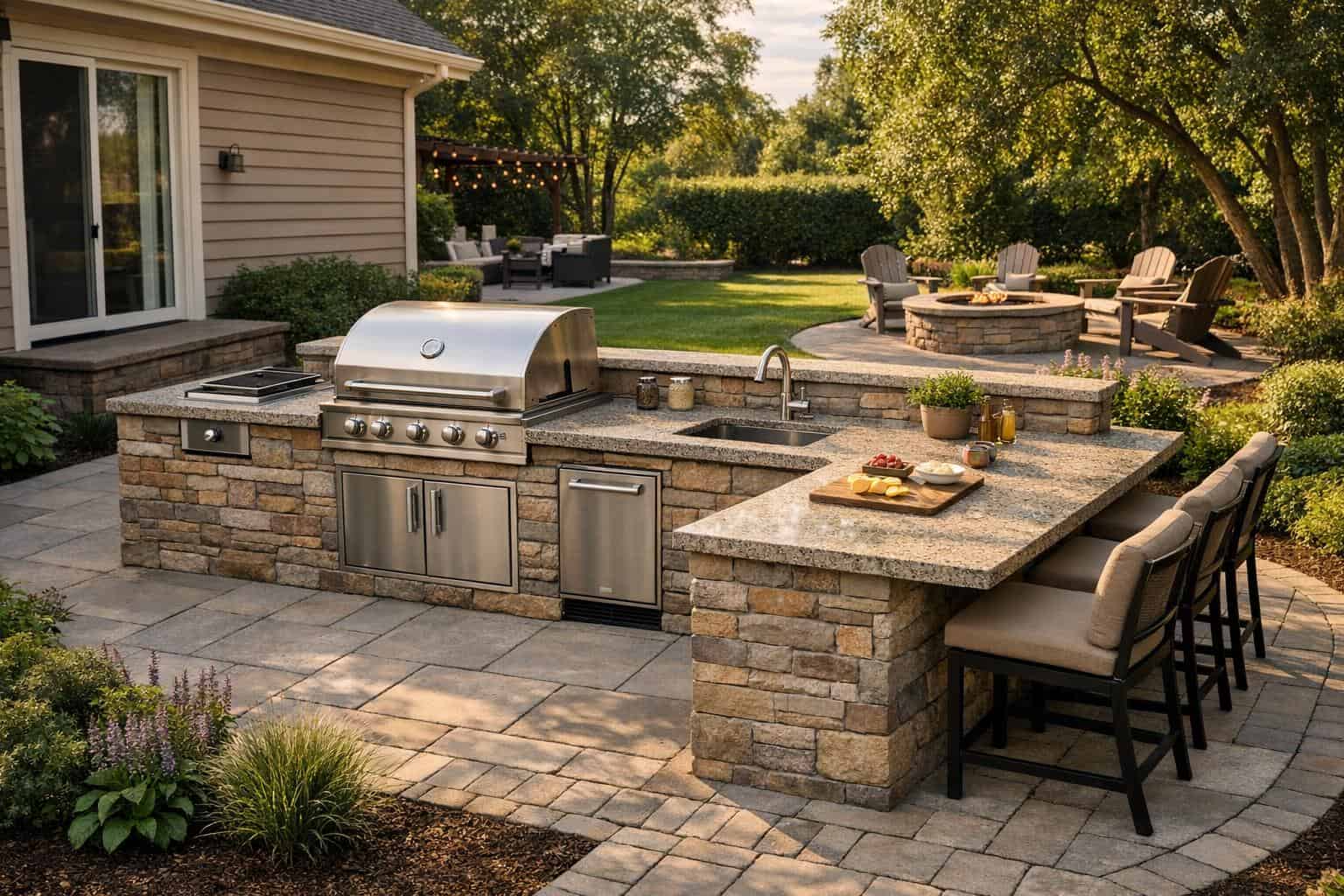
    Outdoor kitchens often get over-designed around appliance count and under-designed around workflow. The balance between grill presence and prep space matters because it determines how the kitchen actually feels to use once people start cooking and serving.

    Do not let the grill take over the whole plan

    A large grill may be the visual centerpiece, but prep space is what often makes the kitchen function well in everyday use.

    Plan for staging and serving, not just cooking

    Prep, plating, and guest interaction all need room. Pair this with our Outdoor Kitchen Prep Zone Layout Guide for Homeowners if you are refining workflow in the same project.

    Let the kitchen size match how you entertain

    The right balance depends on whether the space is for frequent cooking, casual hosting, or occasional use as part of a larger patio setup.

    What homeowners should remember

    The best outdoor-kitchen layouts balance appliance goals with enough prep room to keep the space comfortable and functional.


  • Flowering vs Evergreen Screen Guide for Homeowners

    Flowering vs Evergreen Screen Guide for Homeowners

    Some homeowners want a privacy screen that blooms and changes with the seasons. Others want year-round coverage and stronger structural screening. The best choice depends on how much privacy is needed, how formal or soft the yard should feel, and what maintenance the site can realistically support.

    Use flowering screens when seasonal character matters

    Flowering screens can add softness and color, especially where full year-round privacy is not essential.

    Use evergreens when coverage is the priority

    If the main goal is consistent screening, evergreens often make more sense. Pair this with our Evergreen vs Deciduous Privacy Screen Guide for Homeowners if you are comparing multiple screening directions.

    Think about cleanup and growth habit too

    Bloom, leaf drop, and pruning needs can matter just as much as privacy when the screen sits near patios, pools, or walkways.

    What homeowners should remember

    The best screening choice usually balances visual character with the level of privacy and upkeep the yard actually needs.


  • Front Yard Symmetry vs Asymmetry Guide for Homeowners

    Front Yard Symmetry vs Asymmetry Guide for Homeowners

    Front yard symmetry and asymmetry each create a different mood. Symmetry often feels orderly, formal, and calm. Asymmetry can feel more natural, layered, or modern. The right direction depends on the architecture, the entry layout, and how controlled or relaxed you want the front yard to feel.

    Use symmetry when the house and entry already want order

    Centered doors, formal facades, and strong axial walkways often pair naturally with symmetrical planting and repeated elements.

    Front Yard Symmetry vs Asymmetry Guide for Homeowners related example showing Front entry landscape materials relevant to choosing surfaces and finishes for a smaller yard
    This front yard example gives homeowners a visual reference for comparing layout, materials, and maintenance tradeoffs before starting the project.

    Use asymmetry when the site benefits from softer movement

    Asymmetry can work well on less formal homes, corner lots, and yards where the walkway, driveway, or planting zones do not line up on a central axis. Pair this with our Modern Front Yard Landscaping Ideas Guide for Homeowners if you are leaning toward a cleaner, more contemporary look.

    Front Yard Symmetry vs Asymmetry Guide for Homeowners related example showing Small front yard hardscape and planting materials relevant to curb-appeal planning
    This related front yard detail helps show how site conditions and finish choices can change the homeowner's plan.

    Do not mix the two randomly

    Many front yards feel unresolved because some elements are highly symmetrical and others are not, without a clear reason. The better approach is to choose a dominant design language and let the rest support it.

    What homeowners should remember

    The best front-yard designs usually feel coherent because the planting, entry path, and house all support the same level of formality.


  • Evergreen vs Deciduous Privacy Screen Guide for Homeowners

    Evergreen vs Deciduous Privacy Screen Guide for Homeowners

    Privacy screening does not always need to be evergreen, but it often depends on what kind of privacy the yard actually needs. Evergreens usually offer more year-round coverage. Deciduous screens can feel lighter, softer, and sometimes more appropriate for the site.

    Use evergreen when privacy needs to hold all year

    If the problem is an exposed patio, a close neighbor, or a year-round view into the yard, evergreens often make the most sense.

    Use deciduous screening when a lighter edge fits the site

    Some homeowners prefer a softer, more seasonal edge, especially where winter openness is acceptable. Pair this with our Evergreen Screen Ideas Guide for Homeowners if you are leaning toward evergreen structure but still comparing options.

    Think beyond privacy alone

    Screening also changes light, airflow, maintenance, and how enclosed the yard feels. The best choice is usually the one that balances privacy with the overall character of the yard.

    What homeowners should remember

    The strongest screening decisions usually start with the privacy need, then adjust for maintenance, spacing, and the mood you want the yard to have.


  • Curved Walkway vs Straight Walkway Guide for Homeowners

    Curved Walkway vs Straight Walkway Guide for Homeowners

    Walkway shape changes how the front or backyard feels before you ever choose the surface material. A straight path can feel direct and formal. A curved path can feel softer and more landscape-driven. The right choice depends on the house, the available space, and how people are meant to move.

    Use straight paths for direct movement

    Straight walkways often work well where the route is obvious and the architecture is clean or formal. They can also feel more efficient in tighter spaces where there is no room for a softer sweep.

    Use curves when the landscape needs gentler movement

    Curved walkways can help the yard feel less rigid and can create better relationships with planting beds or naturalized areas. That said, curves should still feel purposeful. They should not wander without a reason.

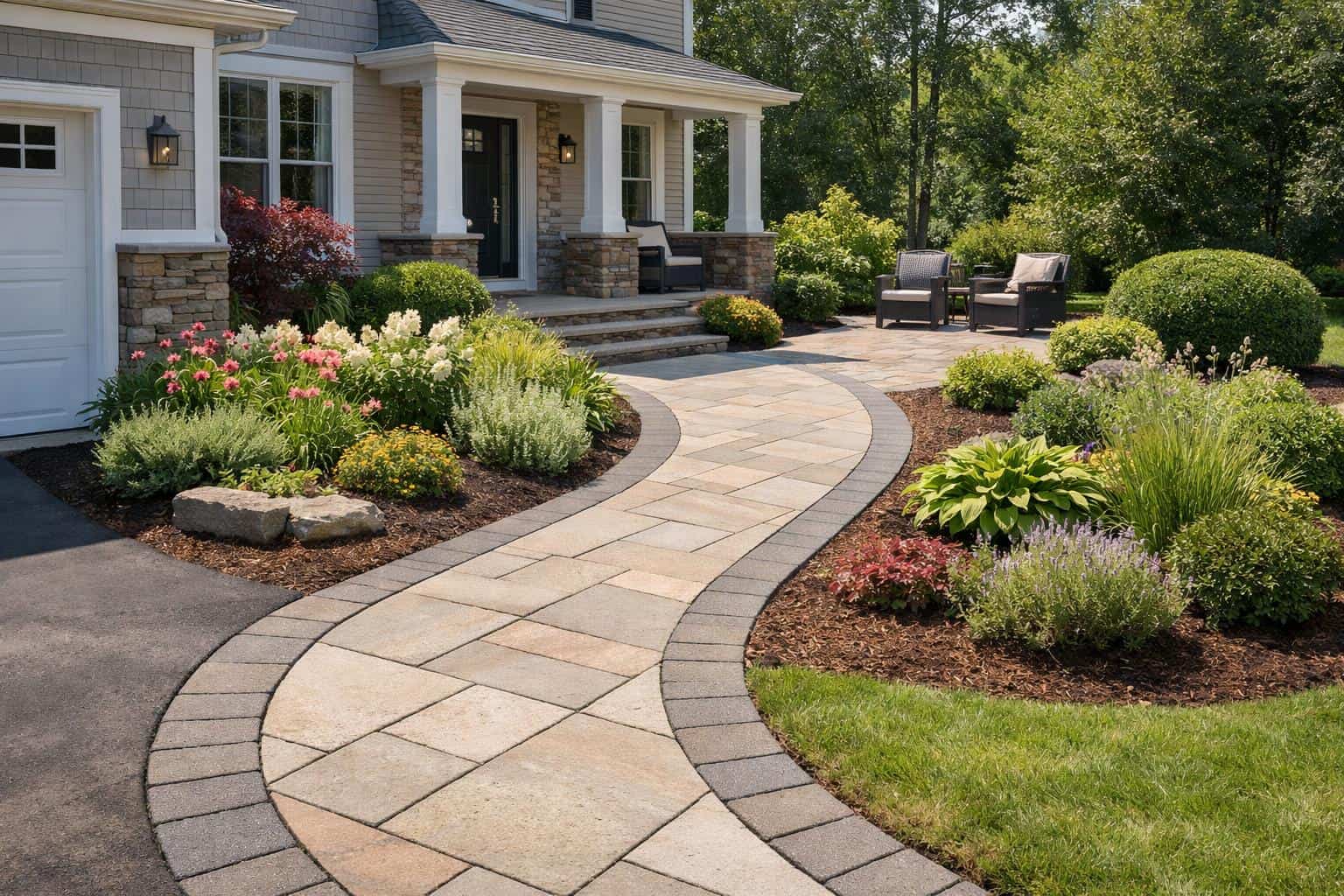
    Curved Walkway vs Straight Walkway Guide for Homeowners related example showing Front entry walkway with edging, planting beds, and material detail relevant to pathway cost planning
    This walkway example gives homeowners a visual reference for comparing layout, materials, and maintenance tradeoffs before starting the project.

    Let the house and site lead the decision

    If you are still building the broader circulation plan, use this with our Walkway and Pathway Installation Guide for Homeowners before locking in the final route.

    Curved Walkway vs Straight Walkway Guide for Homeowners related example showing Walkway detail relevant to settling, edge wear, and warning signs
    This related walkway detail helps show how site conditions and finish choices can change the homeowner's plan.

    What homeowners should remember

    The best walkway shape is usually the one that makes movement feel natural while matching the character of the house and yard.


  • Easy Upgrades for Better Curb Appeal Guide for Homeowners

    Easy Upgrades for Better Curb Appeal Guide for Homeowners

    Better curb appeal does not always require a full front-yard redesign. In many homes, the first visible improvement comes from tightening a few important details: entry clarity, bed definition, planting cleanup, and material refresh.

    Start with cleanup and definition

    Fresh mulch, trimmed overgrowth, better bed edges, and a cleaner walkway can create a noticeable improvement without major construction. These changes also make it easier to see what bigger upgrades might matter later.

    Focus on the entry sequence

    The path to the front door, the plants around the entrance, and the first view from the curb influence curb appeal more than many homeowners realize. If you need a broader framework, pair this guide with our Does Landscaping Increase Home Value Guide.

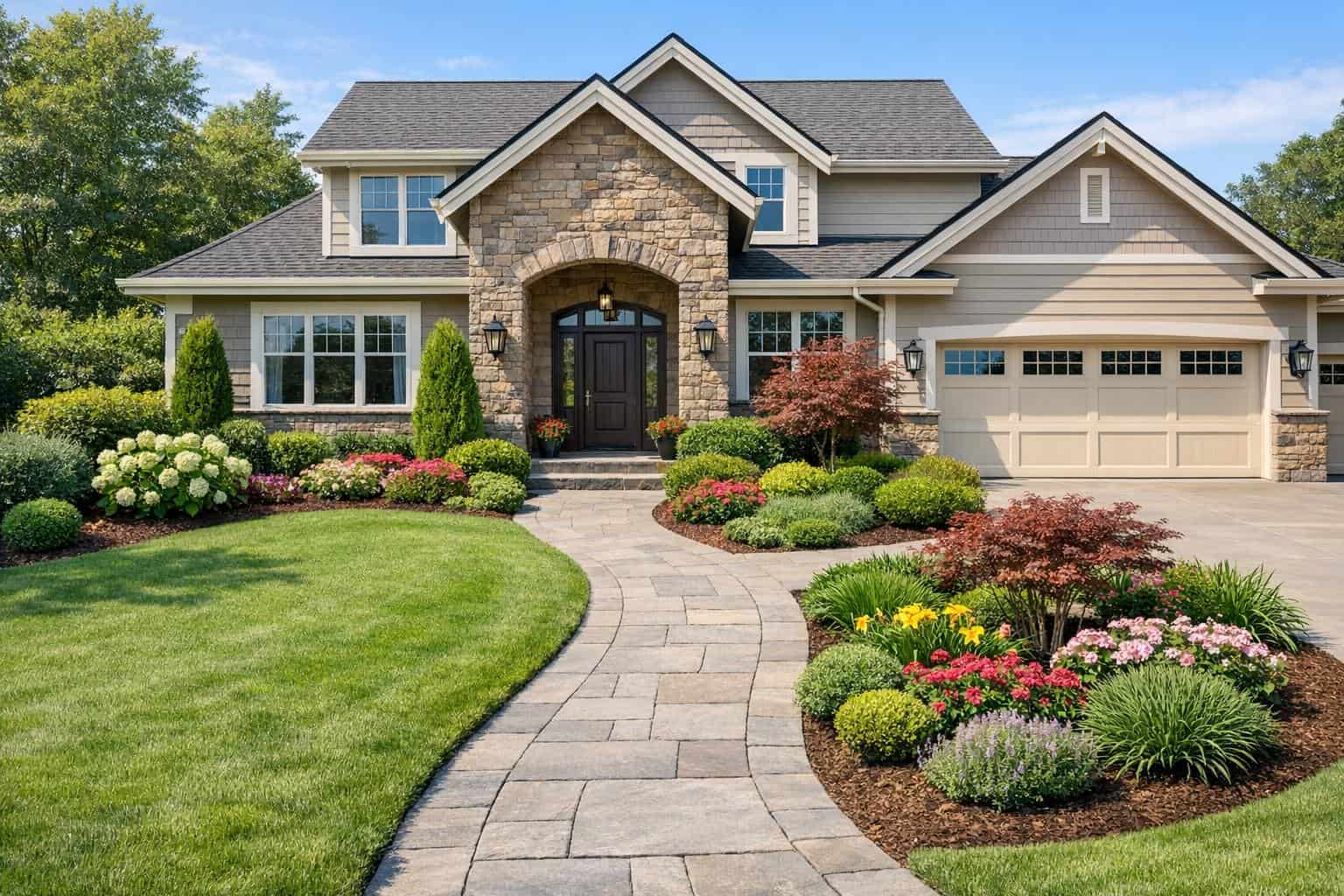
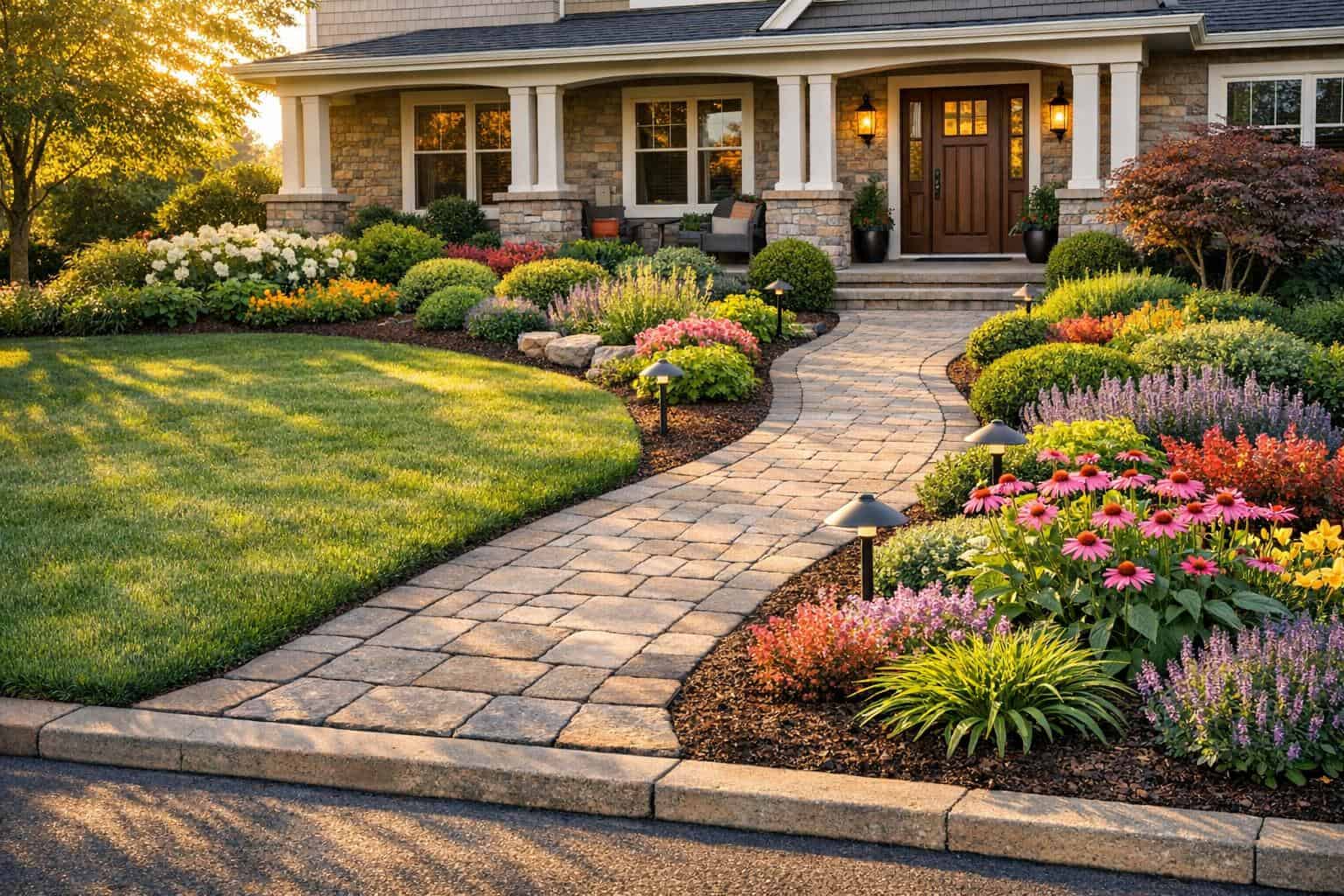
    Easy Upgrades for Better Curb Appeal Guide for Homeowners related example showing Attractive residential front yard with walkway, planting beds, lawn, and curb appeal landscaping
    This front yard example gives homeowners a visual reference for comparing layout, materials, and maintenance tradeoffs before starting the project.

    Make one or two stronger visual improvements

    That might mean a specimen plant, a cleaner lighting plan, a refreshed walkway edge, or a simpler planting palette. Concentrated changes often look better than many scattered purchases.

    What homeowners should remember

    The easiest curb appeal upgrades are usually the ones that improve order, clarity, and maintenance before they chase bigger decorative statements.

    Easy Upgrades for Better Curb Appeal Guide for Homeowners related example showing Front entry landscape materials relevant to choosing surfaces and finishes for a smaller yard
    This related front yard detail helps show how site conditions and finish choices can change the homeowner's plan.

  • Landscaping ROI for Front Yard vs Backyard Guide

    Landscaping ROI for Front Yard vs Backyard Guide

    Front and backyard investments create value differently. One shapes first impressions and curb appeal, while the other often drives use and lifestyle value once someone is already interested in the property.

    Where front-yard ROI often shows up

    • Curb appeal, entry clarity, and stronger initial perception of the property.
    • Quick visual trust that the home has been cared for.
    • Better photography and drive-by appeal.

    Where backyard ROI often shows up

    • Usefulness, comfort, and the feeling that the property has livable outdoor space.
    • A stronger reason to stay outside and picture real life in the yard.
    • Higher payoff when the backyard solves a meaningful functional gap.

    How to prioritize between them

    • Fix the front if first impressions are holding the property back.
    • Invest in the backyard when it clearly adds lifestyle value and function.
    • Let the current weakness of the property decide where the next dollar goes.

    Bottom line

    The better ROI target depends on whether the property most needs stronger first impression or stronger outdoor-living function.

    For the broader overview, continue with Does Landscaping Increase Home Value Guide.


  • Landscaping That Looks Expensive but Adds Little Value Guide

    Landscaping That Looks Expensive but Adds Little Value Guide

    Some projects look premium but do little to improve how the property functions, feels, or appeals to future buyers. Those are often the landscaping spends that feel hardest to justify later.

    Where homeowners often overspend

    • Highly personalized features with narrow appeal.
    • Decorative upgrades added before drainage, layout, or usability are solved.
    • Luxury elements that overpower the scale or value of the property.

    Why these projects underperform

    • They can feel like one owner’s preference rather than a broadly useful property improvement.
    • They often increase maintenance or repair expectations without improving core function.
    • They may compete with more practical upgrades for the same budget.

    How to spot the weak-value spend

    • Ask whether the project improves function, first impression, or ease of ownership.
    • Notice whether the feature fits the home and the rest of the landscape.
    • Compare it to more practical projects the same budget could solve instead.

    Bottom line

    The landscaping that adds the least value is usually the work that looks impressive in isolation but does not improve the property’s overall experience in a meaningful way.

    Landscaping That Looks Expensive but Adds Little Value Guide related example showing Landscape beds and groundcover materials relevant to homeowner quantity planning for mulch, soil, and decorative rock
    This materials example gives homeowners a visual reference for comparing layout, materials, and maintenance tradeoffs before starting the project.

    For the broader overview, continue with Does Landscaping Increase Home Value Guide.

    Landscaping That Looks Expensive but Adds Little Value Guide related example showing Landscape beds and groundcover materials relevant to homeowner quantity planning for mulch, soil, and decorative rock
    This related materials detail helps show how site conditions and finish choices can change the homeowner's plan.

  • Landscaping That Adds Value Fast Guide for Homeowners

    Landscaping That Adds Value Fast Guide for Homeowners

    Some landscaping changes create visible improvement quickly because they affect first impressions, usability, and the sense that the property is well cared for without requiring a full landscape overhaul.

    What often adds visible value quickly

    • Front-yard cleanup, walkway or entry improvements, lighting, and targeted planting refreshes.
    • Fixes that reduce obvious neglect or awkward approach to the home.
    • Backyard changes that create one strong functional gathering zone.

    Why these moves tend to work

    • They improve perception without requiring buyers to imagine future work.
    • They suggest consistent ownership and lower maintenance burden.
    • They often blend appearance and function instead of relying on novelty.

    How to choose fast-value projects

    • Look for the upgrades that most improve first impression and daily use.
    • Favor high-visibility improvements over overly specialized features.
    • Choose projects that feel finished and easy to maintain.

    Bottom line

    The fastest value-adding landscaping usually comes from improvements buyers and homeowners understand immediately and appreciate without explanation.

    For the broader overview, continue with Does Landscaping Increase Home Value Guide.