Costs and Expectations

Cost and expectation guides focused on budgeting, lifespan, replacement decisions, and the real factors that shape landscaping quotes.

Start with the service type

Landscaping Services Guideposts

Use these guides to understand what each service includes before comparing providers or requesting quotes.

Core service explainers

Start here when you are still deciding what kind of landscaper or outdoor contractor you need.

Compare before you hire

Use these pages when two services or surface choices sound similar but lead to different scopes.

Hire smarter

Planning And Contractor Comparison

Use this hub when you are moving from ideas into estimates, bids, and contractor conversations.

Before requesting estimates

These guides help define scope and compare companies before the first site visit.

Budget with better assumptions

Cost Guides And Calculators

Use this hub to move from rough budget ranges into the details that usually change quotes.

Calculator starting points

Open the calculator hub or a cost guide when you need a quick planning range.

High-impact cost decisions

These pages help compare choices where price, lifespan, and maintenance tradeoffs matter.

Understand the build

Installation And Site-Work Pathways

Use these guides to understand sequencing, site prep, access, and the details that affect long-term performance.

Hardscape and site prep

These projects often depend on base prep, demolition, grading, drainage, and access.

Drainage and retaining work

Use these when water, grade, or slope stability is part of the project.

Choose materials with ownership in mind

Material And Finish Decision Paths

Use these guides when appearance, maintenance, replacement, and budget all affect the right material choice.

Surface and finish comparisons

Compare outdoor surfaces before committing to a driveway, patio, or lawn direction.

Landscape material planning

Use these pages when quantity, delivery, or long-term maintenance are the main concern.

Protect the investment

Maintenance And Ownership Next Steps

Use these guides to understand ongoing care, seasonal refreshes, and when maintenance points to a bigger fix.

Maintenance planning

These guides help compare recurring service, seasonal work, and refresh projects.

When upkeep becomes repair

Use these when repeated maintenance problems suggest drainage, surface, or material issues.

  • Irrigation Cost vs Water Savings Guide for Homeowners

    Irrigation Cost vs Water Savings Guide for Homeowners

    Irrigation upgrades often get sold as water-saving by default, but the real value depends on how inefficient the existing watering is and how well the new layout matches the landscape.

    Where irrigation investment can pay off

    • When current watering wastes water through overspray, runoff, or wrong-zone coverage.
    • When plant health suffers because the yard is being watered too broadly or too unevenly.
    • When a better controller or zone layout can reduce chronic overwatering.

    Why some upgrades disappoint

    • A new system still wastes water if the zones are wrong for the planting.
    • Hardware alone does not fix poor scheduling or bad layout.
    • Savings can be modest if the existing system was already reasonably efficient.

    How to compare the value

    • Look at zone design, controller choice, and watering behavior together.
    • Ask where water is actually being wasted now.
    • Make sure the upgrade improves both plant performance and water direction.

    Bottom line

    The better irrigation investment is the one that aligns the system with the real planting needs of the yard, not just the one with newer hardware.

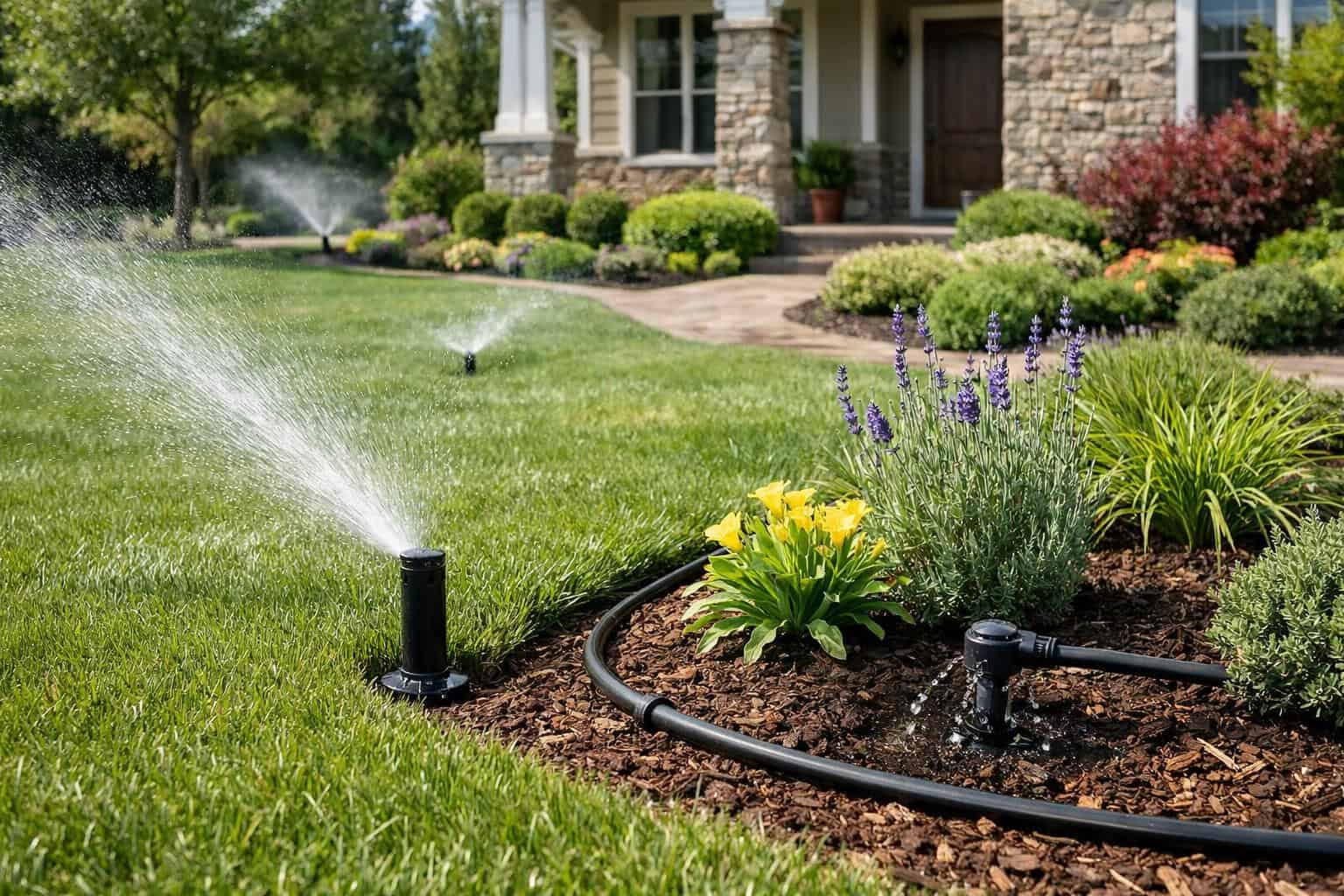
    Irrigation Cost vs Water Savings Guide for Homeowners related example showing Irrigation detail relevant to planning mistakes, zoning, and controller decisions
    This irrigation example gives homeowners a visual reference for comparing layout, materials, and maintenance tradeoffs before starting the project.

    For the broader overview, continue with Irrigation System Guide for Homeowners.

    Irrigation Cost vs Water Savings Guide for Homeowners related example showing Irrigation detail relevant to controller checks, head alignment, and maintenance
    This related irrigation detail helps show how site conditions and finish choices can change the homeowner's plan.

  • Landscape Lighting Cost vs Coverage Guide for Homeowners

    Landscape Lighting Cost vs Coverage Guide for Homeowners

    Lighting costs climb quickly when homeowners try to light every possible feature instead of the parts of the yard that matter most at night.

    What usually drives lighting cost

    • Fixture count, transformer capacity, wiring routes, and install access.
    • Whether the plan is functional only or includes layered accent and entertainment lighting.
    • The durability and finish quality of the selected fixtures.

    Why more fixtures is not always better

    • Over-lighting can flatten the yard and reduce the nighttime effect.
    • Extra fixtures may add cost without improving navigation or ambiance much.
    • A few well-placed lights usually outperform a crowded plan.

    How to compare coverage intelligently

    • Prioritize entries, circulation, and the main gathering zone first.
    • Ask what areas will truly change the way you use the yard after dark.
    • Separate must-have safety lighting from optional visual upgrades.

    Bottom line

    The best lighting value comes from strategic coverage, not from turning every part of the yard into a bright zone.

    For the broader overview, continue with Landscape Lighting Guide for Homeowners.


  • Privacy Landscaping Cost vs Coverage Guide for Homeowners

    Privacy Landscaping Cost vs Coverage Guide for Homeowners

    Privacy landscaping costs can vary widely because the price depends on how quickly you want coverage, how dense the screen should feel, and whether the project is built from planting alone or a layered design.

    What usually drives privacy-landscaping cost

    • Plant size and quantity.
    • Whether irrigation, grading, bed preparation, or edging are part of the build.
    • How much instant visual screening you want on day one.

    Why cheaper privacy plans can disappoint

    • Small plant material may take years to create real screening.
    • Thin spacing can leave the yard exposed longer than homeowners expected.
    • Budget-only decisions can ignore long-term health and mature spread.

    How to compare value

    • Ask how much screening the plan creates now versus later.
    • Look at plant count, size, irrigation support, and maintenance expectations together.
    • Decide whether immediate privacy or gradual fill-in matters more for your situation.

    Bottom line

    The better privacy-landscaping value is the one that matches your timeline for real screening, not just the lowest plant bill.

    For the broader overview, continue with Privacy Landscaping Guide for Homeowners.


  • Best Front Yard Upgrades for Resale Guide for Homeowners

    Best Front Yard Upgrades for Resale Guide for Homeowners

    The best front-yard resale upgrades are usually the ones that make the house look better cared for and easier to approach, not the ones that feel most elaborate.

    Upgrades that often help most

    • Entry and walkway improvements.
    • Clean planting refreshes with realistic maintenance needs.
    • Lighting and cleanup that make the front yard feel finished and safe.

    Why these projects tend to perform well

    • They improve first impressions fast.
    • They help photos and drive-by appeal without requiring a total redesign.
    • They suggest consistent property care rather than flashy spending.

    What to be careful about

    • Highly personal design choices with narrow appeal.
    • Overly complex beds that signal heavy upkeep.
    • Spending heavily on style while leaving obvious drainage or access issues untouched.

    Bottom line

    The best resale-oriented front-yard upgrades make the property feel cleaner, more welcoming, and easier to maintain.

    For the broader overview, continue with Front Yard Landscaping Guide for Homeowners.


  • Low-Maintenance Landscaping Upfront Cost vs Long-Term Effort Guide

    Low-Maintenance Landscaping Upfront Cost vs Long-Term Effort Guide

    Low-maintenance landscaping often costs more to build than a quick cosmetic refresh, but the goal is to trade some upfront spend for less recurring work and fewer correction projects later.

    Why upfront cost can be higher

    • Better irrigation planning, cleanup, simplification, and durable material choices.
    • Removing problem areas instead of covering them up temporarily.
    • Choosing plants and surfaces that will age better over time.

    Where long-term effort usually drops

    • Less repetitive trimming, lawn repair, or constant cleanup.
    • More stable edges, surfaces, and plant groupings.
    • Fewer zones that need special handling every season.

    How to think about the tradeoff

    • Ask what work the design is eliminating, not just what it costs to install.
    • Compare today’s project price to the chores and repair cycles you want to escape.
    • Do not assume cheaper now means cheaper later.

    Bottom line

    The better investment is the one that actually removes recurring work instead of just changing the look of the same old problems.

    For the broader overview, continue with Low-Maintenance Landscaping Guide for Homeowners.


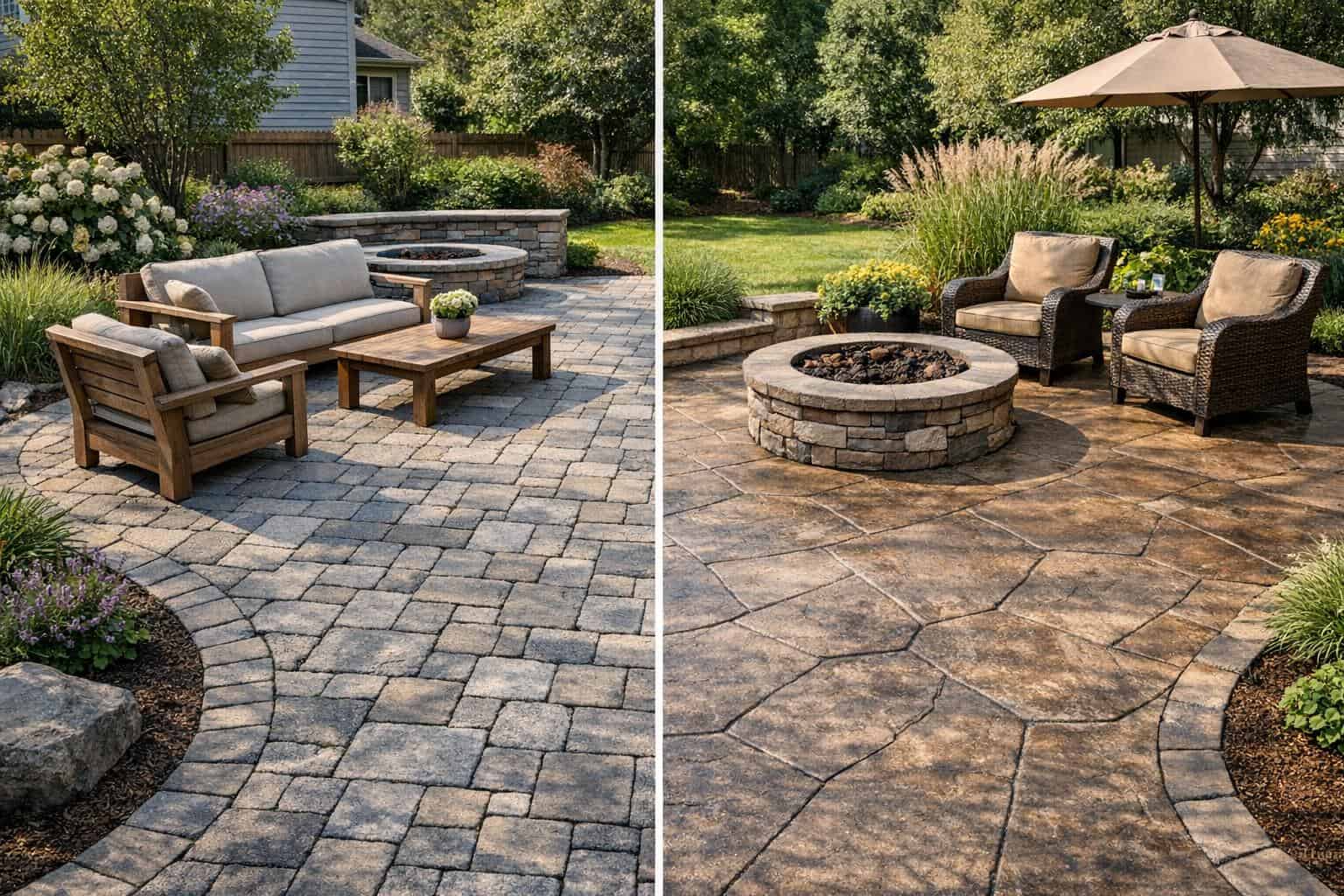
  • Paver Patio vs Stamped Concrete Cost Guide for Homeowners

    Paver Patio vs Stamped Concrete Cost Guide for Homeowners

    Pavers and stamped concrete can create a similar design impression from a distance, but the cost structure behind each system is very different.

    Where paver patio cost usually changes

    • Material tier, pattern complexity, edge restraint, and detailed base work.
    • Labor for setting, cutting, and compacting many individual units.
    • Borders, curves, stairs, and transitions that add visual detail.

    Where stamped concrete cost usually changes

    • Forming, reinforcement, finish complexity, coloring, and sealing.
    • The skill level needed on pour day to get the pattern and timing right.
    • How much demolition, access, and surface prep the site needs.

    How to compare fairly

    • Match the visual ambition, not just the square footage.
    • Check what base work, sealing, and decorative detail are included.
    • Ask about repair expectations before using price as the deciding factor.

    Bottom line

    The better value depends on whether you prioritize unit-based repair flexibility or a lower-cost decorative concrete look.

    For the broader overview, continue with Paver Patio vs Stamped Concrete Patio Guide for Homeowners.


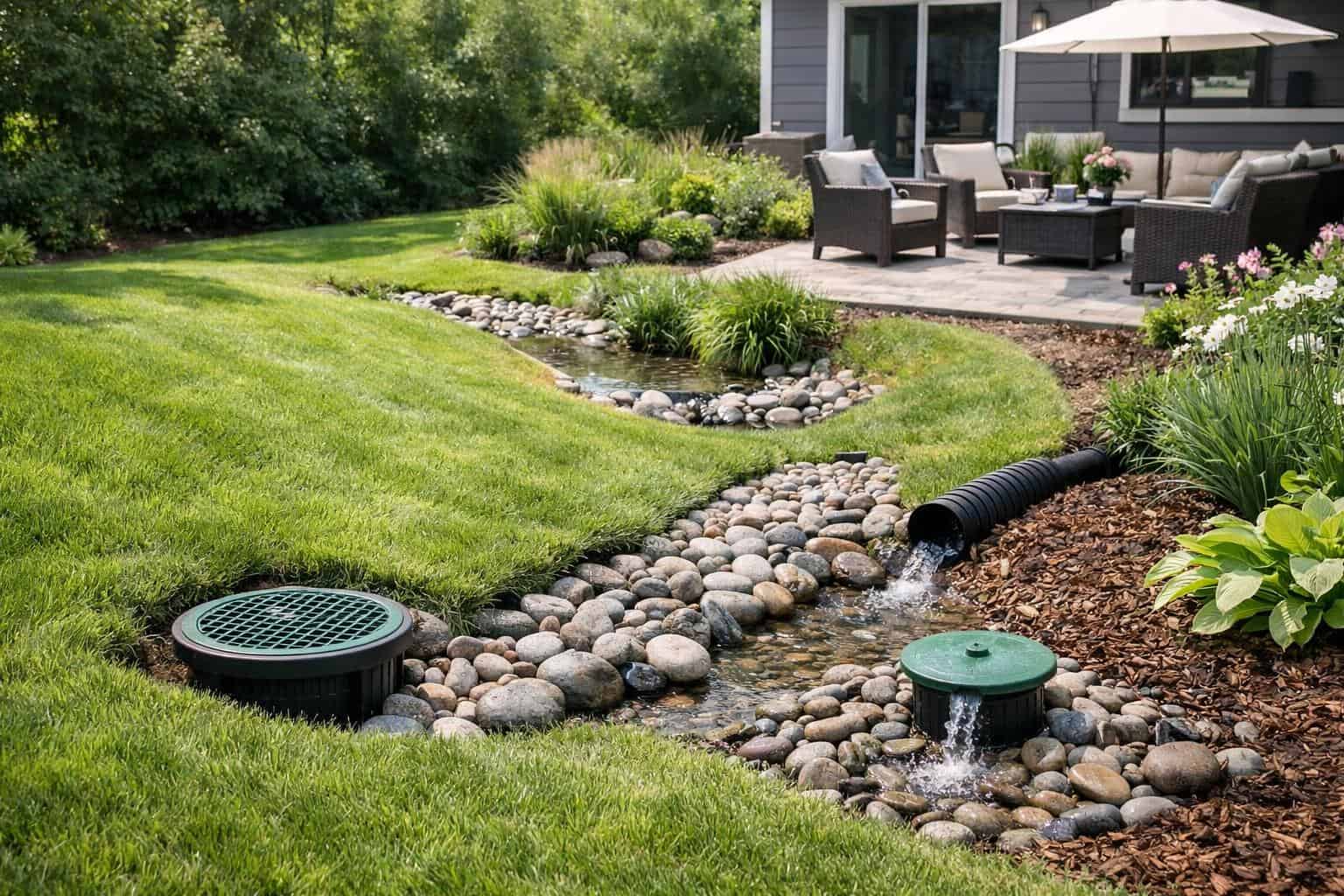
  • Drainage vs Regrading Cost Guide for Homeowners

    Drainage vs Regrading Cost Guide for Homeowners

    Drainage systems and regrading solve different water problems, so cost comparisons only make sense when homeowners understand what the site actually needs.

    What drives drainage-system cost

    • Pipe runs, catch basins, outlet locations, and excavation complexity.
    • How much runoff needs to be collected and redirected.
    • Tie-ins to downspouts, swales, or existing site features.

    What drives regrading cost

    • Volume of soil movement, access, retaining needs, and finish restoration.
    • How the new shape affects irrigation, planting, lawn, and hardscape.
    • Whether the grade change is local or yard-wide.

    How to compare the spend correctly

    • First identify whether the problem is collection, flow, slope, or all three.
    • Ask if one solution alone is enough or if both are needed together.
    • Include restoration cost after the water-management work is done.

    Bottom line

    The lower-cost answer is the one that actually fixes the water problem the first time, not the one with the smallest isolated bid.

    For the broader overview, continue with Drainage vs Regrading Guide for Homeowners.


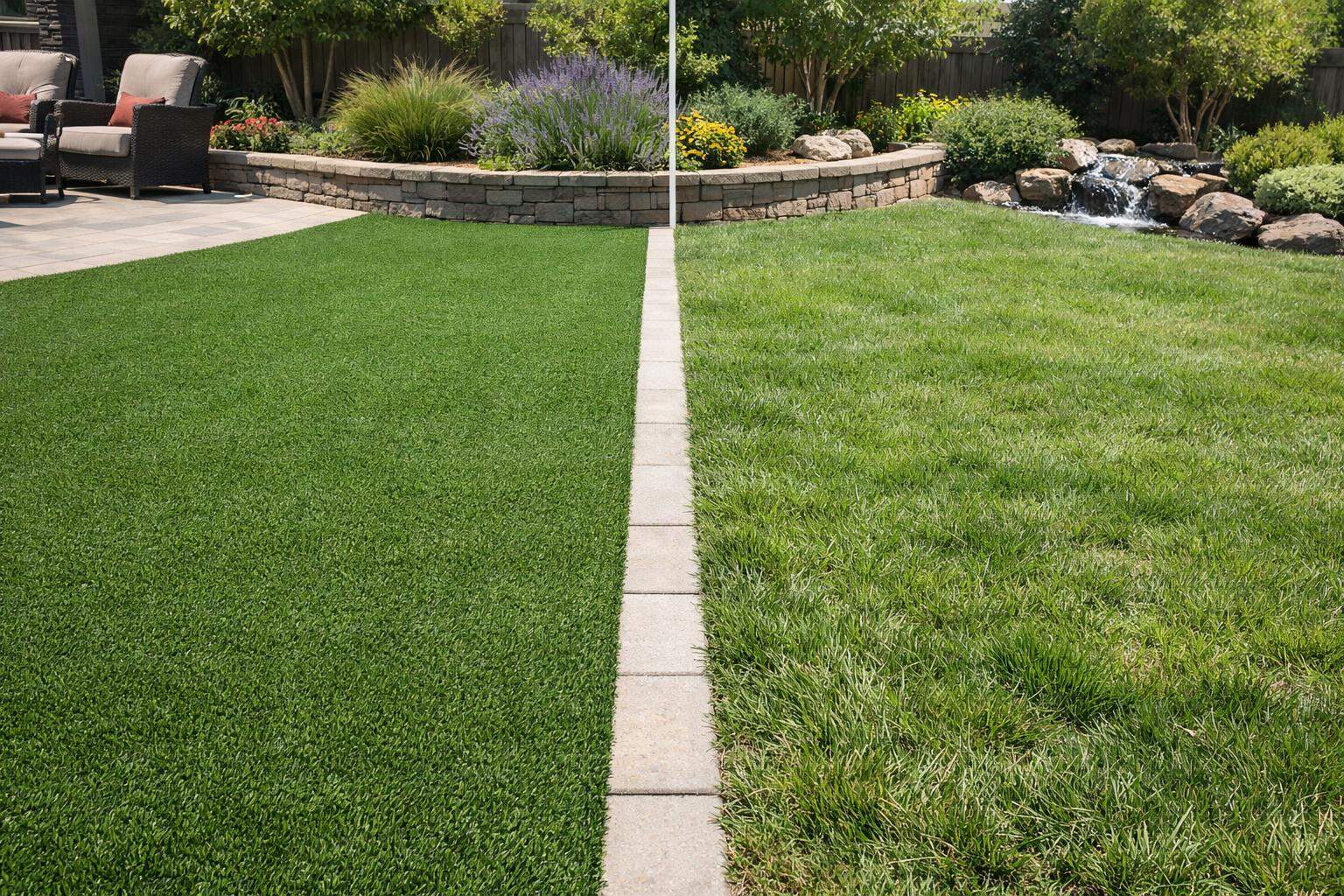
  • Artificial Turf vs Natural Grass Cost Guide for Homeowners

    Artificial Turf vs Natural Grass Cost Guide for Homeowners

    Artificial turf and natural grass create very different cost patterns because one front-loads material and installation while the other spreads cost over watering, mowing, treatment, and replacement cycles.

    Where turf cost usually climbs

    • Removal, base prep, edging, infill, and drainage detail.
    • Premium turf products designed for a more realistic look or heavier use.
    • Extra shaping or transitions where the turf meets planting, patios, or walkways.

    Where natural grass cost usually changes

    • Soil prep, irrigation, sod or seed choice, and ongoing lawn-care inputs.
    • Repair cycles for worn or damaged areas.
    • Water use and seasonal upkeep over time.

    How homeowners should compare the spend

    • Look at installation plus five-year ownership, not just day-one price.
    • Ask what upkeep costs will remain either way.
    • Be realistic about water, repairs, and how heavily the lawn area will be used.

    Bottom line

    The cheaper option depends on whether you care more about lower upfront spend or lower ongoing lawn-management effort.

    Artificial Turf vs Natural Grass Cost Guide for Homeowners related example showing Lawn detail relevant to thinning, irrigation stress, and warning signs
    This lawn example gives homeowners a visual reference for comparing layout, materials, and maintenance tradeoffs before starting the project.

    For the broader overview, continue with Artificial Turf vs Natural Grass Guide for Homeowners.

    Artificial Turf vs Natural Grass Cost Guide for Homeowners related example showing Residential lawn installation scene with fresh sod, prepared soil, and yard conditions that affect cost
    This related lawn detail helps show how site conditions and finish choices can change the homeowner's plan.

    Compare turf and lawn establishment ranges

    Use these calculators to compare artificial turf with sod, seed, and hydroseed ranges for the same lawn area before choosing a direction.

    Artificial Turf Cost Calculator

    Estimate artificial turf pricing with turf grade, removal needs, access, and install complexity.

    Sod vs Seed Cost Calculator

    Compare rough installed cost ranges for sod, seed, and hydroseed on the same lawn area.


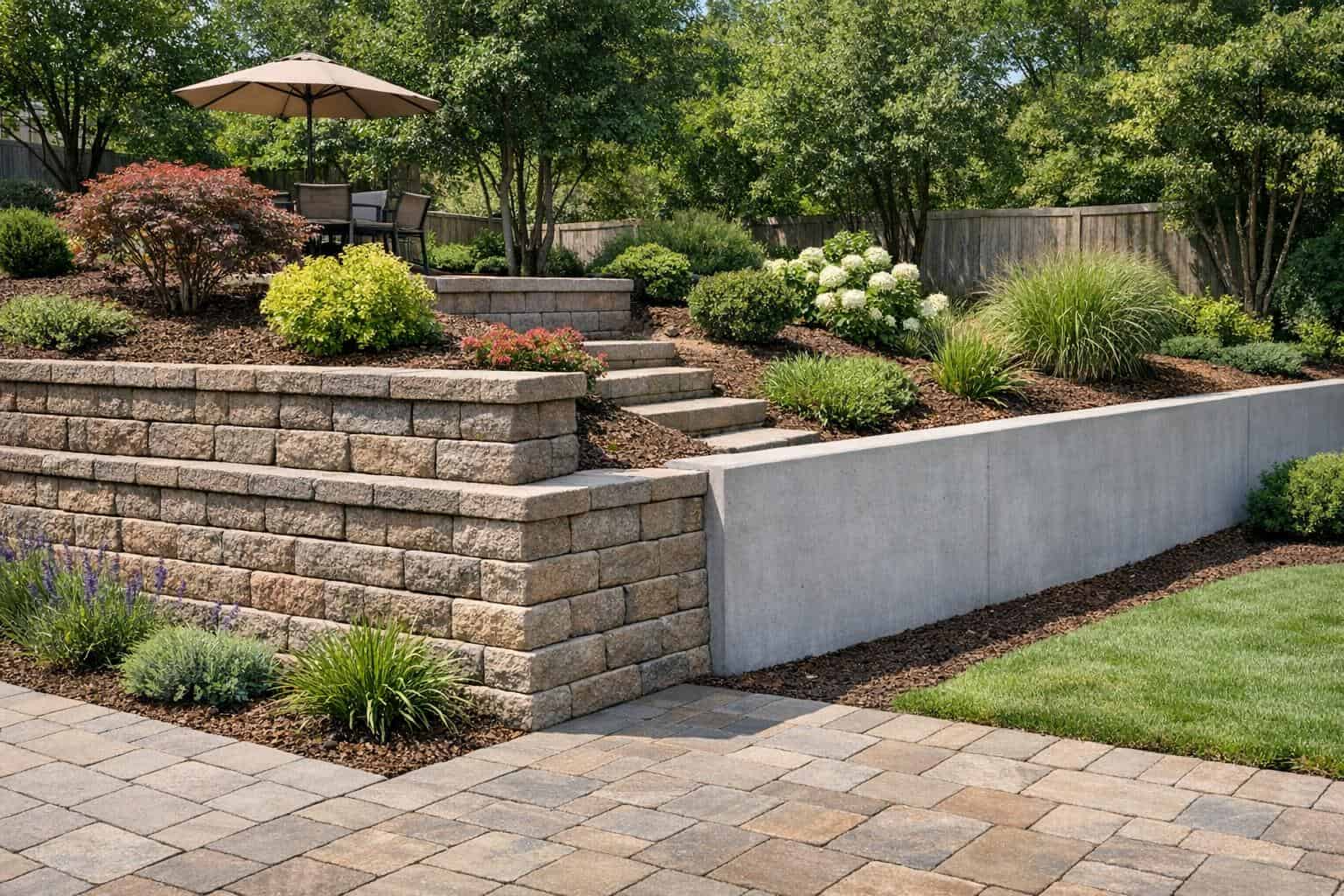
  • Retaining Wall Block vs Poured Concrete Cost Guide for Homeowners

    Retaining Wall Block vs Poured Concrete Cost Guide for Homeowners

    Block and poured concrete retaining walls can both be major investments, but the cost story changes with wall height, engineering needs, access, finish expectations, and drainage complexity.

    Where block wall cost changes

    • Unit choice, wall size, cap details, base work, and reinforcement strategy.
    • Labor for setting, leveling, and handling many individual components.
    • Corners, curves, stairs, and stepped grades that increase complexity.

    Where poured concrete cost changes

    • Formwork, reinforcement, engineering, finish level, and access for the pour.
    • Wall height and the complexity of tying the structure into the site.
    • Decorative facing or finish work if the raw concrete look is not the end goal.

    How to compare fairly

    • Match drainage handling, structural scope, and finish expectations.
    • Ask what engineering or permit requirements are assumed in each quote.
    • Compare how each system handles the site’s height and pressure demands.

    Bottom line

    The cost winner depends on structure, finish goals, and site access as much as on the wall system itself.

    For the broader overview, continue with Retaining Wall Block vs Poured Concrete Guide for Homeowners.


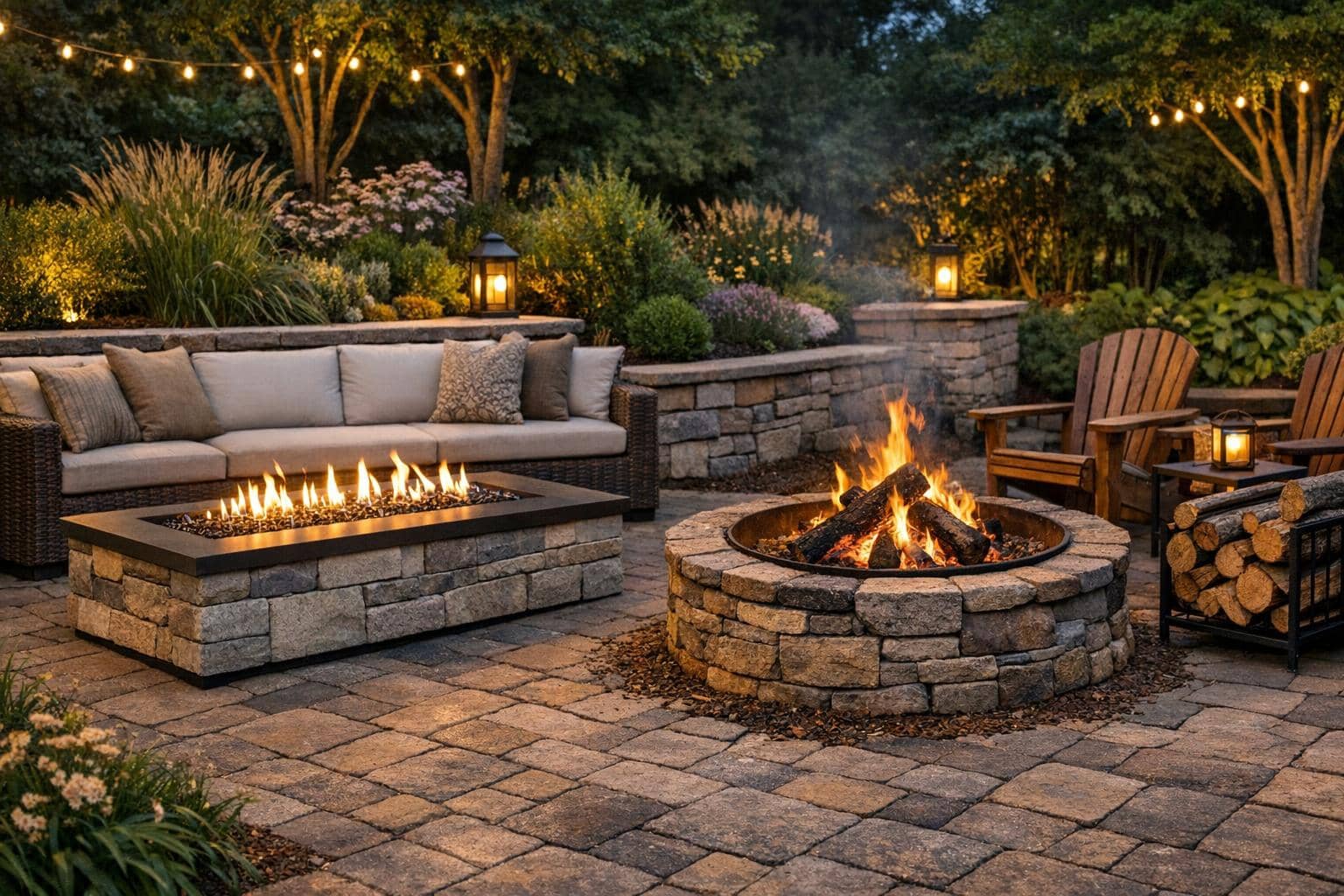
  • Gas vs Wood Fire Pit Cost Guide for Homeowners

    Gas vs Wood Fire Pit Cost Guide for Homeowners

    Gas and wood fire pits create very different cost patterns because one may need fuel-line work and controls while the other leans more on simpler build structure and fuel handling.

    What can make gas cost more

    • Gas-line routing, permits, ignition systems, and finish details.
    • Coordination between hardscape and utility work.
    • Premium burners and integrated controls.

    What can make wood cost more

    • Larger masonry builds, spark-control needs, and more robust surrounding clearances.
    • Storage and cleanup expectations that influence the design.
    • Site-specific code or setback issues.

    How to compare the spend

    • Look at installation plus how you plan to use the fire feature over time.
    • Ask what code, fuel, and safety requirements apply on your property.
    • Separate core function from premium finish and seating add-ons.

    Bottom line

    The lower-cost option depends on utility access, desired convenience, and how elaborate the fire-pit design is meant to be.

    For the broader overview, continue with Fire Pit Gas vs Wood Guide for Homeowners.