Maintenance and Ownership

Maintenance and ownership guides that explain what happens after installation, from cleaning and sealing to ongoing care and protection.

Start with the service type

Landscaping Services Guideposts

Use these guides to understand what each service includes before comparing providers or requesting quotes.

Core service explainers

Start here when you are still deciding what kind of landscaper or outdoor contractor you need.

Compare before you hire

Use these pages when two services or surface choices sound similar but lead to different scopes.

Hire smarter

Planning And Contractor Comparison

Use this hub when you are moving from ideas into estimates, bids, and contractor conversations.

Before requesting estimates

These guides help define scope and compare companies before the first site visit.

Budget with better assumptions

Cost Guides And Calculators

Use this hub to move from rough budget ranges into the details that usually change quotes.

Calculator starting points

Open the calculator hub or a cost guide when you need a quick planning range.

High-impact cost decisions

These pages help compare choices where price, lifespan, and maintenance tradeoffs matter.

Understand the build

Installation And Site-Work Pathways

Use these guides to understand sequencing, site prep, access, and the details that affect long-term performance.

Hardscape and site prep

These projects often depend on base prep, demolition, grading, drainage, and access.

Drainage and retaining work

Use these when water, grade, or slope stability is part of the project.

Choose materials with ownership in mind

Material And Finish Decision Paths

Use these guides when appearance, maintenance, replacement, and budget all affect the right material choice.

Surface and finish comparisons

Compare outdoor surfaces before committing to a driveway, patio, or lawn direction.

Landscape material planning

Use these pages when quantity, delivery, or long-term maintenance are the main concern.

Protect the investment

Maintenance And Ownership Next Steps

Use these guides to understand ongoing care, seasonal refreshes, and when maintenance points to a bigger fix.

Maintenance planning

These guides help compare recurring service, seasonal work, and refresh projects.

When upkeep becomes repair

Use these when repeated maintenance problems suggest drainage, surface, or material issues.

  • Low-Maintenance Front Bed Mulch Refresh Guide

    Low-Maintenance Front Bed Mulch Refresh Guide

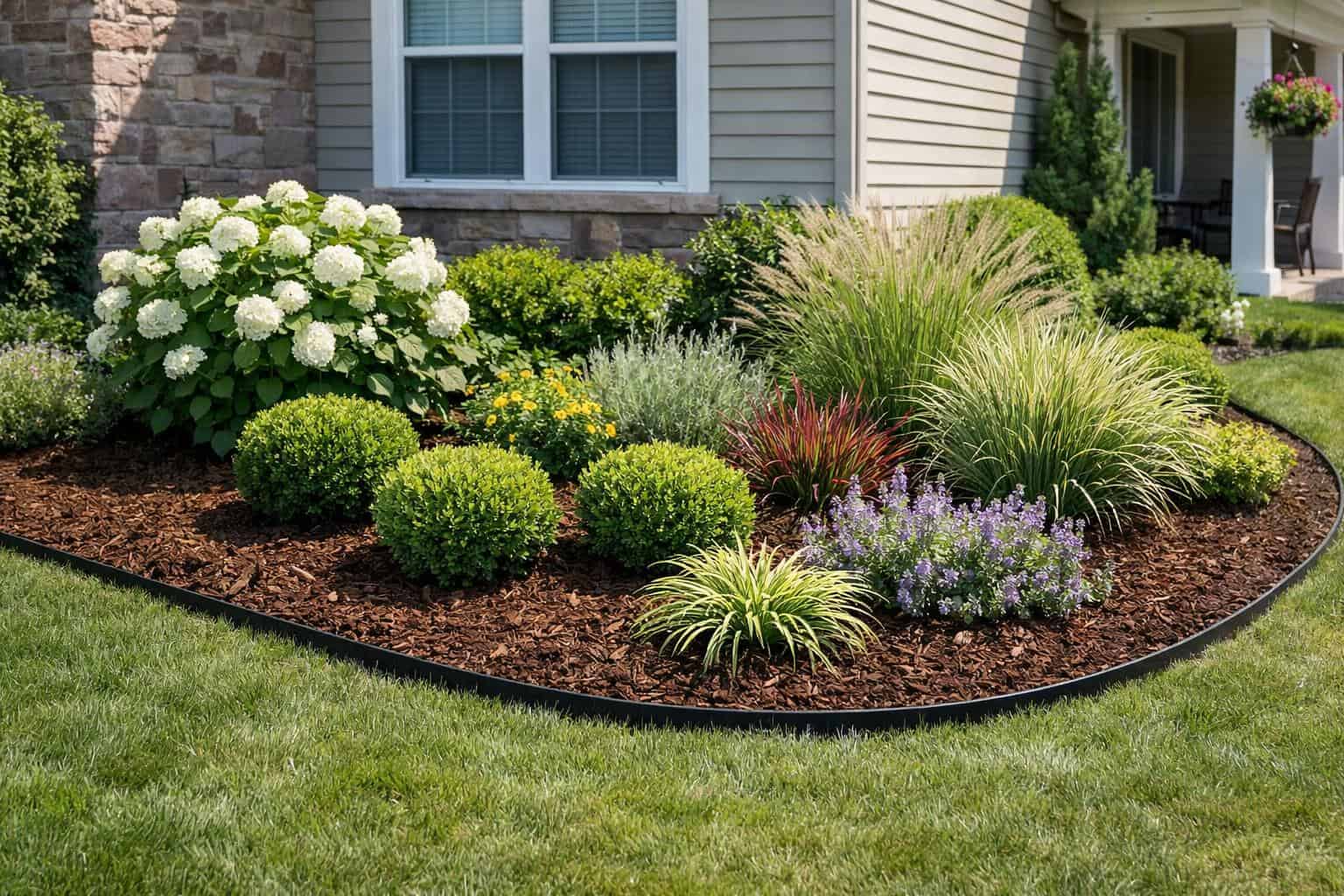
    A mulch refresh can make front beds look much better quickly, but only if it is done in a way that supports the overall bed condition. The best results come when mulch is part of a cleaner maintenance pass, not a shortcut that hides deeper design or spacing problems.

    Refresh mulch after the structure is cleaned up

    Mulch looks better when pruning, edging, and cleanup are handled first, not after the new layer is already in place.

    Use mulch to support the bed, not rescue it

    The best mulch refreshes still depend on a bed that more or less works structurally. Pair this with our Front Yard Bed Cleanup vs Full Refresh Guide if you are deciding how much the bed really needs.

    Keep the refresh simple and repeatable

    Lower-maintenance front beds usually benefit from a practical mulch strategy that can be repeated easily each season.

    What homeowners should remember

    The best mulch refreshes improve appearance because they support a bed that is also cleaner, clearer, and easier to maintain overall.
  • Evergreen Screen Root Zone Care Guide for Homeowners

    Evergreen Screen Root Zone Care Guide for Homeowners

    The visible part of an evergreen screen may get most of the attention, but the root zone often determines whether the planting establishes well and stays healthy over time. Good root-zone care helps screens fill in more evenly and handle stress better.

    Protect the area where new roots need to establish

    Compaction, inconsistent moisture, and poor surrounding conditions can slow down or weaken a screen even when the plants looked fine at installation.

    Match care to the stage of establishment

    Root-zone priorities may shift as the plants settle in. Pair this with our Evergreen Screen Watering After Installation Guide if watering is the main immediate concern.

    Do not ignore what happens below the screen

    Surface appearance can be misleading. The root-zone environment often tells you more about long-term screen health.

    What homeowners should remember

    The best evergreen screens are supported not only by good spacing and pruning but also by healthier root-zone conditions.


  • Front Yard Bed Overcrowding Signs Guide for Homeowners

    Front Yard Bed Overcrowding Signs Guide for Homeowners

    Front beds can become overcrowded gradually, so the problem often shows up as a general sense that the yard feels messy rather than one obvious failure. The best time to fix overcrowding is before the planting becomes expensive to correct and the bed loses its intended shape.

    Watch for plants losing their individual form

    When repeated shrubs or perennials can no longer read as separate groupings, the bed often starts to feel cluttered and overgrown.

    Notice when maintenance gets harder than it should be

    Overcrowding often shows up in edging, pruning, and cleanup first. Pair this with our Front Yard Plant Spacing Mistakes Guide for Homeowners if spacing choices are likely part of the problem.

    Pay attention to what the house looks like behind the planting

    If windows, step edges, or the route to the entry start to feel visually blocked, the bed may need more than routine trimming.

    What homeowners should remember

    The best way to handle overcrowding is usually to catch it before the bed loses its structure and becomes a constant correction project.


  • Low-Maintenance Mailbox Bed Guide for Homeowners

    Low-Maintenance Mailbox Bed Guide for Homeowners

    Mailbox beds often look simple, but they can become surprisingly fussy if the planting is too busy, too tall, or too thirsty for the site. The best low-maintenance mailbox beds keep the design clean, scaled correctly, and easy to edge and refresh.

    Keep the bed small and legible

    Because the mailbox sits at the curb edge, the surrounding bed usually works best when it has a clean shape and a limited plant palette.

    Use durable plants and easy-care materials

    Street-edge conditions are often harsher than the rest of the front yard. Pair this with our Front Yard Planting Around Mailbox Guide for Homeowners if you still need broader design ideas before narrowing the maintenance strategy.

    Avoid creating a tiny high-maintenance showcase

    The best mailbox bed usually supports the rest of the front yard rather than demanding constant special attention.

    What homeowners should remember

    The best low-maintenance mailbox beds add polish at the curb without turning into an annoying little project all year.


  • Evergreen Screen Installation Mistakes Guide

    Evergreen Screen Installation Mistakes Guide

    Evergreen screens can fail for reasons that are set in motion on installation day: bad spacing, poor soil prep, weak watering follow-through, or unrealistic expectations about immediate privacy. The best screening results usually come from getting the basics right early.

    Do not rush spacing and layout decisions

    Planting too tightly or in the wrong line can create long-term problems that pruning later does not really fix.

    Support the screen after installation

    The establishment period matters as much as the day the plants go in. Pair this with our Evergreen Screen Watering After Installation Guide if the care phase is also part of the decision.

    Match the installation to the site conditions

    Sun, wind, soil, and slope all influence how a screen should be laid out and cared for.

    What homeowners should remember

    The best evergreen screens usually succeed because the installation choices matched the long-term goal from the start.


  • Low-Maintenance Front Corner Bed Ideas Guide

    Low-Maintenance Front Corner Bed Ideas Guide

    Front corner beds often help anchor the whole front-yard layout, but they can become overplanted quickly. The best low-maintenance corner-bed ideas create visual weight where it is needed without turning the corners of the yard into bulky maintenance zones.

    Use the corner bed to support the larger composition

    The best corner beds usually reinforce the house shape, entry path, or front-yard outline rather than acting like isolated planters.

    Choose plants that can hold the corner without taking over

    A corner bed often needs one or two reliable anchors, not a crowded mix. Pair this with our Front Yard Anchor Plant Ideas Guide for Homeowners if the structure of the corner is still being decided.

    Keep the maintenance route practical

    The better the edge and spacing are handled, the easier it will be to keep the corner looking sharp over time.

    What homeowners should remember

    The best low-maintenance corner-bed ideas make the front yard feel more grounded without creating a constant upkeep issue.


  • Patio Planting for Low-Mess Landscaping Guide

    Patio Planting for Low-Mess Landscaping Guide

    Patio planting should add comfort and softness to the outdoor room, but it can also become frustrating if the plants constantly drop debris into seating areas, stain paving, or require heavy cleanup around dining zones. The best low-mess choices still look good while staying practical to live with.

    Choose plants that support the way the patio is used

    A dining area may need cleaner surrounding plants than a looser garden seating nook, especially where food and traffic are involved.

    Keep debris, sap, and overhang in mind

    Plants that drop heavily or spread into the usable surface can quickly turn a good patio edge into a maintenance annoyance. Pair this with our Patio Planting for Sun vs Shade Guide if exposure conditions are also part of the selection problem.

    Use planting to soften, not clutter

    A cleaner patio usually benefits from simpler groupings that stay in bounds instead of a mixed assortment of fussy edges.

    What homeowners should remember

    The best low-mess patio planting makes the outdoor room more pleasant because it supports the space without making cleanup harder.


  • Low-Maintenance Entry Bed Refresh Guide for Homeowners

    Low-Maintenance Entry Bed Refresh Guide for Homeowners

    An entry bed refresh can make the front of a house feel noticeably better without requiring a full redesign. The best lower-maintenance refreshes simplify plant choices, sharpen the bed edge, and focus attention on the route to the door.

    Refresh the bed structure before adding more plants

    In many front yards, cleanup, edging, and selective plant replacement do more than adding a lot of new material all at once.

    Use fewer stronger planting moves

    Lower-maintenance entry beds often improve when the palette is narrowed and repeated. Pair this with our Front Yard Entry Bed Ideas Guide for Homeowners if the bed layout also needs more design direction.

    Protect the arrival route

    The bed should still support a clear and comfortable walk to the front door.

    What homeowners should remember

    The best entry bed refreshes make the front approach feel cleaner and more intentional without increasing the upkeep burden.


  • Evergreen Screen Watering After Installation Guide

    Evergreen Screen Watering After Installation Guide

    New privacy screens often struggle not because the plants were wrong, but because the watering during the establishment period was inconsistent or poorly matched to site conditions. The first stretch after installation is when evergreen screening needs the most attention.

    Watering needs change after installation

    The schedule that helps a new screen establish is not the same as what a mature privacy edge may need later.

    Match watering to soil, exposure, and plant size

    Newly planted screens can dry out or stay too wet depending on the site. Pair this with our Evergreen Screen Spacing Guide for Homeowners if plant size and spacing are also part of the installation plan.

    Do not assume the irrigation is already right

    Even when irrigation is present, a new screen may need closer monitoring than an established yard area.

    What homeowners should remember

    The best post-install watering helps the screen settle in more evenly so privacy and plant health develop together.


  • Front Yard Plant Spacing Mistakes Guide for Homeowners

    Front Yard Plant Spacing Mistakes Guide for Homeowners

    Plant spacing mistakes often do not show up right away. A bed can look great when everything is newly planted, then become crowded, awkward, or hard to maintain a few seasons later. The best front-yard layouts think about how plants will grow together over time, not just how full the bed looks on day one.

    Do not plant for the nursery size

    Many front-yard problems start when spacing decisions are based on how small the plants look at purchase time instead of how they will mature.

    Give repeated plants room to read clearly

    Repetition looks stronger when individual groupings still have room to form their intended shape. Pair this with our Front Yard Repetition in Planting Guide for Homeowners if rhythm and grouping are also part of the plan.

    Leave maintenance access in the design

    Proper spacing also helps with pruning, cleanup, and keeping edges readable over time.

    What homeowners should remember

    The best plant-spacing decisions make the front yard easier to live with because the bed can mature without constantly being corrected.