Maintenance and Ownership

Maintenance and ownership guides that explain what happens after installation, from cleaning and sealing to ongoing care and protection.

Start with the service type

Landscaping Services Guideposts

Use these guides to understand what each service includes before comparing providers or requesting quotes.

Core service explainers

Start here when you are still deciding what kind of landscaper or outdoor contractor you need.

Compare before you hire

Use these pages when two services or surface choices sound similar but lead to different scopes.

Hire smarter

Planning And Contractor Comparison

Use this hub when you are moving from ideas into estimates, bids, and contractor conversations.

Before requesting estimates

These guides help define scope and compare companies before the first site visit.

Budget with better assumptions

Cost Guides And Calculators

Use this hub to move from rough budget ranges into the details that usually change quotes.

Calculator starting points

Open the calculator hub or a cost guide when you need a quick planning range.

High-impact cost decisions

These pages help compare choices where price, lifespan, and maintenance tradeoffs matter.

Understand the build

Installation And Site-Work Pathways

Use these guides to understand sequencing, site prep, access, and the details that affect long-term performance.

Hardscape and site prep

These projects often depend on base prep, demolition, grading, drainage, and access.

Drainage and retaining work

Use these when water, grade, or slope stability is part of the project.

Choose materials with ownership in mind

Material And Finish Decision Paths

Use these guides when appearance, maintenance, replacement, and budget all affect the right material choice.

Surface and finish comparisons

Compare outdoor surfaces before committing to a driveway, patio, or lawn direction.

Landscape material planning

Use these pages when quantity, delivery, or long-term maintenance are the main concern.

Protect the investment

Maintenance And Ownership Next Steps

Use these guides to understand ongoing care, seasonal refreshes, and when maintenance points to a bigger fix.

Maintenance planning

These guides help compare recurring service, seasonal work, and refresh projects.

When upkeep becomes repair

Use these when repeated maintenance problems suggest drainage, surface, or material issues.

  • Low-Maintenance Foundation Bed Guide for Homeowners

    Low-Maintenance Foundation Bed Guide for Homeowners

    Foundation beds often become higher maintenance than they need to be because plant size, spacing, and material choices are made for immediate appearance instead of long-term upkeep. A lower-maintenance foundation bed should still look intentional while staying easier to manage.

    Start with the mature size problem

    Many foundation beds become work-intensive because shrubs quickly outgrow the available space and need constant correction.

    Use a cleaner palette with stronger repetition

    Fewer dependable plants often perform better than a bed full of small mixed choices. Pair this with our Foundation Planting Ideas Guide for Homeowners if the visual layout still needs more structure.

    Keep the bed easy to edge and clean

    The more practical the bed is to maintain, the more likely it is to keep looking intentional over time.

    What homeowners should remember

    The best low-maintenance foundation beds make the house feel more grounded without creating a constant pruning problem.

  • Evergreen Screen Pruning and Shape Guide for Homeowners

    Evergreen Screen Pruning and Shape Guide for Homeowners

    Even privacy planting that starts out well can become a maintenance problem if pruning is handled poorly. The best evergreen screens hold their intended shape because homeowners or contractors manage them consistently and with the plant’s long-term size in mind.

    Prune for the mature shape you actually want

    A privacy screen tends to perform better when it is guided toward the right form early instead of cut back aggressively only after it gets too large.

    Shape affects light and fullness

    Pruning style can influence whether lower growth stays healthy and whether the screen keeps a useful visual density. Pair this with our Evergreen Screen Spacing Guide for Homeowners if spacing and long-term fill-in are still part of the plan.

    Do not wait until the screen is out of control

    Corrective pruning on an oversized hedge or screen is usually harder than maintaining a reasonable shape over time.

    What homeowners should remember

    The best pruning approach protects privacy, plant health, and manageable scale at the same time.


  • Low-Maintenance Narrow Bed Landscaping Guide

    Low-Maintenance Narrow Bed Landscaping Guide

    Narrow beds are easy to overplant because the space feels small and homeowners often want it to do too much. The best low-maintenance narrow-bed designs keep the palette simpler, the scale appropriate, and the maintenance demands realistic.

    Keep the planting proportional to the bed depth

    Narrow beds usually work better with fewer, more controlled plant forms than with a mixed collection of shrubs that quickly outgrow the space.

    Use the bed to support the edge, not steal the route

    Many narrow beds sit next to a walk, fence, or house wall, so their planting has to respect how the adjacent space is used. Use this with our Low-Maintenance Fence Line Landscaping Guide if the bed is part of a longer boundary condition.

    Choose easy-care materials carefully

    Mulch, edging, and plant repetition can all help narrow beds look cleaner and stay easier to manage.

    What homeowners should remember

    The best narrow-bed landscaping looks intentional because it works with the limits of the space instead of fighting them.


  • Low-Maintenance Backyard Corner Landscaping Guide

    Low-Maintenance Backyard Corner Landscaping Guide

    Backyard corners often become overlooked because they feel separate from the main patio or lawn, but they still influence how finished the yard feels. The best low-maintenance corner ideas simplify these edges so they support the whole backyard without turning into cluttered filler zones.

    Decide whether the corner should be active or quiet

    Some corners work better as simple planted edges. Others support a small seating zone or visual anchor. The right approach depends on how the rest of the yard is used.

    Keep the planting calm and durable

    Corners often benefit from fewer, more dependable materials and plants. Pair this with our Backyard Corner Seating Ideas Guide for Homeowners if the corner might also become a usable retreat.

    Let the corner support the whole yard

    The best corner treatments reinforce the overall backyard structure instead of feeling like isolated decorative leftovers.

    What homeowners should remember

    The strongest low-maintenance corner ideas make the yard feel more complete without creating extra work.


  • Low-Maintenance Fence Line Landscaping Guide

    Low-Maintenance Fence Line Landscaping Guide

    Fence lines can either help organize the yard or quietly become some of the highest-maintenance areas on the property. The best low-maintenance fence-line landscaping keeps the edge simple, accessible, and visually consistent.

    Keep the border easy to trim and clean

    A fence line is harder to maintain when the bed is too narrow, too busy, or planted with aggressive forms that quickly crowd the edge.

    Use the fence line to support the yard layout

    Long edges often look stronger when the planting repeats rhythmically instead of constantly changing. Use this with our Low-Maintenance Backyard Border Ideas Guide if you are refining the broader perimeter strategy.

    Avoid building a maintenance trap

    The best fence-line ideas still allow room for access, cleanup, and the occasional repair or inspection.

    What homeowners should remember

    The best low-maintenance fence-line landscaping usually makes the whole backyard feel cleaner because the perimeter becomes simpler and more consistent.


  • Low-Maintenance Backyard Border Ideas Guide

    Low-Maintenance Backyard Border Ideas Guide

    Backyard borders can either simplify the yard or quietly become one of its biggest maintenance burdens. The best low-maintenance border ideas organize edges in a way that looks intentional while staying practical to trim, clean, and live with.

    Keep the edge treatment simple

    Too many little transitions, scattered plant choices, or narrow awkward beds usually create more upkeep than they are worth.

    Choose border plants for access and scale

    Property edges often work better with fewer dependable plants than with a mixed collection that constantly needs reshaping. If the whole yard is leaning toward easier care, pair this with the Low-Maintenance Landscaping Guide for Homeowners.

    Use the border to support the backyard layout

    A backyard border should help define the yard, not just fill leftover space. The edge can support privacy, soften fences, or frame activity zones without becoming visually busy.

    What homeowners should remember

    The best low-maintenance border ideas usually make the yard feel more composed because the perimeter is cleaner and easier to manage.


  • Low-Maintenance Side Yard Ideas Guide for Homeowners

    Low-Maintenance Side Yard Ideas Guide for Homeowners

    Side yards often become some of the most neglected parts of a property because they are narrow, hard to access, and easy to ignore. The best low-maintenance side-yard ideas simplify the layout so these spaces feel intentional without demanding constant cleanup or watering.

    Decide whether the side yard is for access, utility, or appearance

    Some side yards need to move people and equipment. Others need to hide service areas or just look cleaner from adjacent views. The right design usually starts with being honest about what the side yard is actually for.

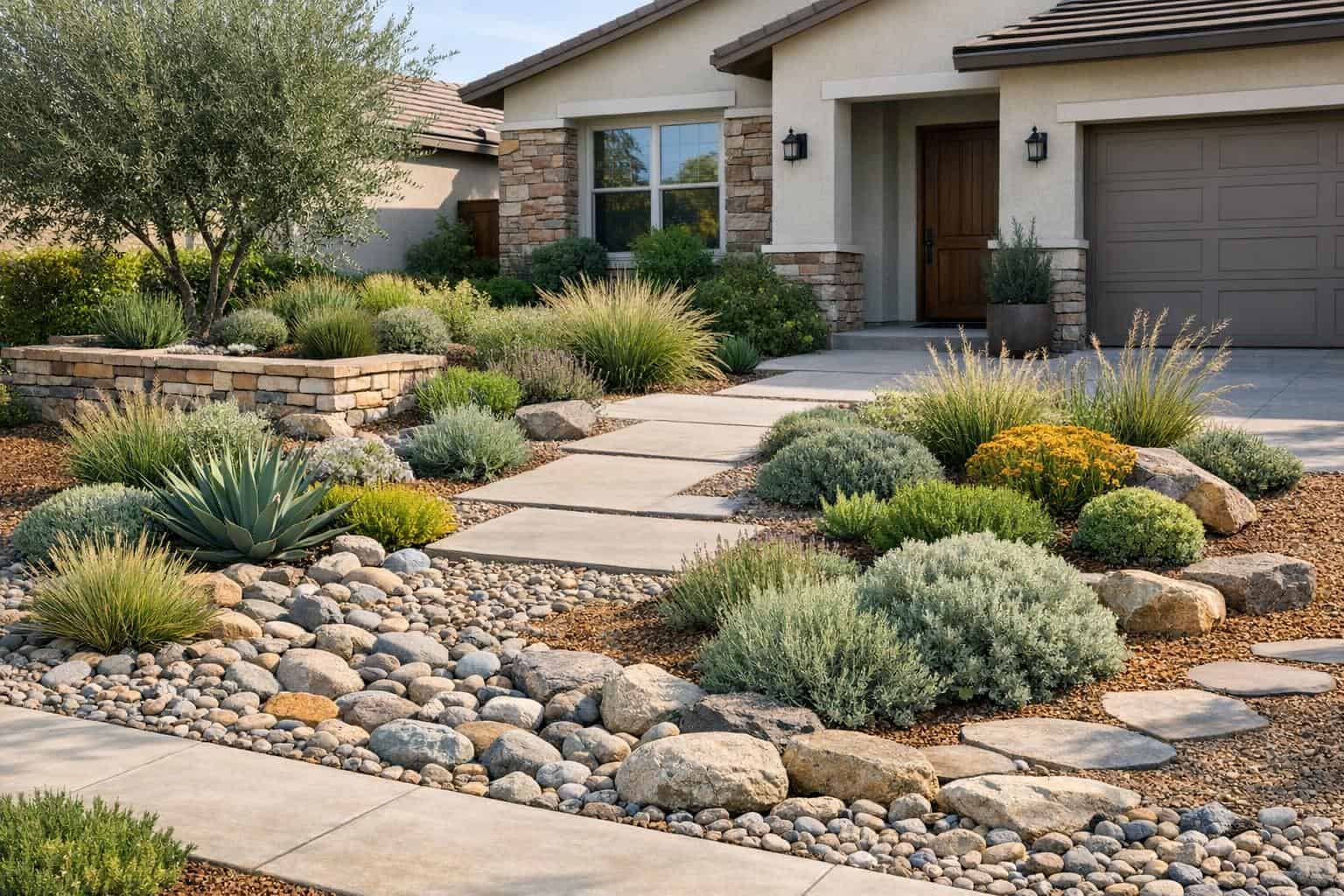
    Low-Maintenance Side Yard Ideas Guide for Homeowners related example showing Groundcover and hardscape materials relevant to comparing real long-term maintenance demands
    This low maintenance example gives homeowners a visual reference for comparing layout, materials, and maintenance tradeoffs before starting the project.

    Use simpler materials and planting

    Side yards often improve when they use fewer materials, cleaner edges, and plants that do not require constant shaping. For more on choosing easier-care finishes, see our What Makes a Landscape Material Low Maintenance Guide.

    Low-Maintenance Side Yard Ideas Guide for Homeowners related example showing Low-water landscape bed materials including rock and mulch relevant to drought-conscious groundcover selection
    This related low maintenance detail helps show how site conditions and finish choices can change the homeowner's plan.

    Make circulation easy

    If the side yard is the main route to the backyard, the path should feel clear and durable. A side space that is easy to walk through often becomes easier to maintain too.

    What homeowners should remember

    The best low-maintenance side-yard ideas usually reduce clutter, clarify movement, and make a narrow space feel more purposeful.


  • Drought-Tolerant Front Yard Ideas Guide for Homeowners

    Drought-Tolerant Front Yard Ideas Guide for Homeowners

    Drought-tolerant front yards can still feel polished, welcoming, and well-designed. The best ideas go beyond just removing turf. They balance water-saving plant choices with layout, entry clarity, and materials that make the front of the home feel intentional.

    Replace weak lawn areas first

    Awkward strips of turf, dry corners, and hard-to-irrigate zones are often the best candidates for conversion. Those areas usually offer the fastest water savings with the least effect on how the yard functions.

    Use stronger plant grouping and repetition

    Lower-water planting tends to look better when similar species are grouped intentionally. For the broader strategy, pair this with our Low-Water Landscaping Guide for Homeowners.

    Keep the front entry legible

    Even in lower-water designs, the path to the front door should remain the visual priority. A drought-tolerant yard should still feel like a front yard first, not just a water-reduction exercise.

    What homeowners should remember

    The best drought-tolerant front yard ideas usually improve both water use and curb appeal because the design gets cleaner and more purposeful.


  • Low-Water Backyard Landscaping Ideas Guide

    Low-Water Backyard Landscaping Ideas Guide

    Low-water backyard landscaping does not have to mean giving up comfort or visual interest. In many cases, a lower-water yard becomes more usable because the layout is more intentional and the plant and material choices match the climate better.

    Reduce lawn where it is not helping

    Backyards often have turf in awkward strips or underused corners that consume water without adding much value. Replacing those areas with functional patio space, planting, or simplified ground treatment can lower water use while improving layout.

    Low-Water Backyard Landscaping Ideas Guide related example showing Small Backyard Landscaping detail relevant to warning signs, wear, and maintenance decisions
    This backyard example gives homeowners a visual reference for comparing layout, materials, and maintenance tradeoffs before starting the project.

    Use drought-tolerant planting with stronger grouping

    When lower-water plants are grouped intentionally, the yard feels more designed and easier to maintain. For the bigger strategy, our Low-Water Landscaping Guide for Homeowners is a good starting point.

    Design the backyard for how it is used

    If the backyard is meant for dining, pets, kids, or relaxing, those needs should shape where lower-water planting, hardscape, and circulation go. That usually creates a better result than replacing everything evenly.

    What homeowners should remember

    The best low-water backyard ideas usually feel like layout improvements first and water-saving measures second. When the yard works better, the lower-water choices make more sense visually too.

    Low-Water Backyard Landscaping Ideas Guide related example showing Small Backyard Landscaping detail relevant to planning mistakes, layout, and upkeep expectations
    This related backyard detail helps show how site conditions and finish choices can change the homeowner's plan.

  • Low-Maintenance Front Yard Landscaping Ideas Guide

    Low-Maintenance Front Yard Landscaping Ideas Guide

    Low-maintenance front yard landscaping should still feel intentional. The goal is not to remove everything that gives the yard character. The goal is to choose materials, plantings, and layout decisions that reduce constant upkeep while keeping the front of the home attractive.

    Use simpler bed shapes and stronger plant groupings

    Complicated bed outlines often create more edging and cleanup work. Simpler shapes with repeated shrubs, grasses, or durable ground covers usually save time and still look polished.

    Reduce thirsty lawn where it is not helping

    Many front yards have more turf than they really need. Shrinking awkward lawn strips or converting hard-to-water areas into easier planting zones can reduce mowing and irrigation work while improving appearance.

    Pick materials that age cleanly

    Mulch, decorative rock, edging, and walkway surfaces all affect maintenance. Our What Makes a Landscape Material Low Maintenance Guide and Best Landscape Materials for Small Front Yards Guide are useful if you are deciding where lower-upkeep materials make the biggest difference.

    Low-Maintenance Front Yard Landscaping Ideas Guide related example showing Groundcover and hardscape materials relevant to comparing real long-term maintenance demands
    This low maintenance example gives homeowners a visual reference for comparing layout, materials, and maintenance tradeoffs before starting the project.

    Plan for mature plant size

    A front yard becomes high maintenance quickly when shrubs need constant pruning away from windows, walks, or the entry. Choosing the right size at the start is one of the most practical maintenance decisions you can make.

    What homeowners should remember

    Low-maintenance front yard ideas work best when they balance curb appeal with long-term reality. A cleaner layout, right-sized planting, and smarter material choices usually reduce work more than any single decorative product.

    Low-Maintenance Front Yard Landscaping Ideas Guide related example showing Low-water landscape bed materials including rock and mulch relevant to drought-conscious groundcover selection
    This related low maintenance detail helps show how site conditions and finish choices can change the homeowner's plan.