Maintenance and Ownership

Maintenance and ownership guides that explain what happens after installation, from cleaning and sealing to ongoing care and protection.

Start with the service type

Landscaping Services Guideposts

Use these guides to understand what each service includes before comparing providers or requesting quotes.

Core service explainers

Start here when you are still deciding what kind of landscaper or outdoor contractor you need.

Compare before you hire

Use these pages when two services or surface choices sound similar but lead to different scopes.

Hire smarter

Planning And Contractor Comparison

Use this hub when you are moving from ideas into estimates, bids, and contractor conversations.

Before requesting estimates

These guides help define scope and compare companies before the first site visit.

Budget with better assumptions

Cost Guides And Calculators

Use this hub to move from rough budget ranges into the details that usually change quotes.

Calculator starting points

Open the calculator hub or a cost guide when you need a quick planning range.

High-impact cost decisions

These pages help compare choices where price, lifespan, and maintenance tradeoffs matter.

Understand the build

Installation And Site-Work Pathways

Use these guides to understand sequencing, site prep, access, and the details that affect long-term performance.

Hardscape and site prep

These projects often depend on base prep, demolition, grading, drainage, and access.

Drainage and retaining work

Use these when water, grade, or slope stability is part of the project.

Choose materials with ownership in mind

Material And Finish Decision Paths

Use these guides when appearance, maintenance, replacement, and budget all affect the right material choice.

Surface and finish comparisons

Compare outdoor surfaces before committing to a driveway, patio, or lawn direction.

Landscape material planning

Use these pages when quantity, delivery, or long-term maintenance are the main concern.

Protect the investment

Maintenance And Ownership Next Steps

Use these guides to understand ongoing care, seasonal refreshes, and when maintenance points to a bigger fix.

Maintenance planning

These guides help compare recurring service, seasonal work, and refresh projects.

When upkeep becomes repair

Use these when repeated maintenance problems suggest drainage, surface, or material issues.

  • Landscape Maintenance Plans Guide for Homeowners

    Landscape Maintenance Plans Guide for Homeowners

    Landscape maintenance plans can keep a property looking intentional long after the installation crew leaves. For many homeowners, maintenance is the difference between a landscape that matures well and one that slowly becomes overgrown, uneven, or harder to manage every season. The right plan should match the type of landscape you have and how involved you want to be day to day.

    This guide explains what residential maintenance plans often include, how to think about value, and what homeowners should ask when comparing recurring service options.

    What maintenance plans usually include

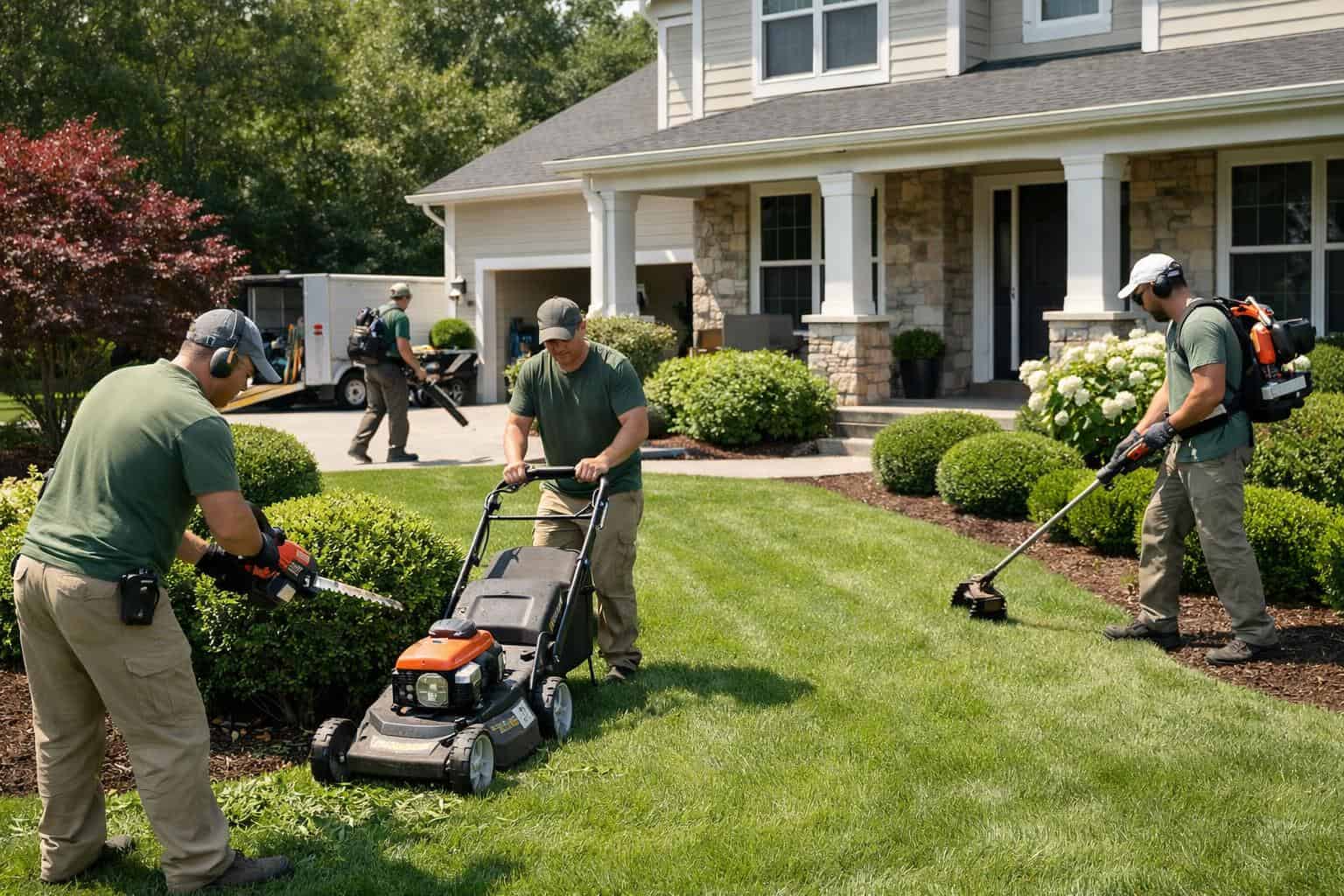
    Landscape maintenance can range from simple lawn care to broader recurring service that includes pruning, seasonal cleanup, mulch refreshes, irrigation checks, weed control, and care for planting beds. Some plans are designed for basic appearance. Others are meant to protect a larger investment in patios, lighting, walls, lawn, and planting work.

    Landscape Maintenance Plans Guide for Homeowners related example showing Groundcover and hardscape materials relevant to comparing real long-term maintenance demands
    This low maintenance example gives homeowners a visual reference for comparing layout, materials, and maintenance tradeoffs before starting the project.
    • Common services: mowing, edging, pruning, bed cleanup, mulch refreshes, irrigation observation, seasonal trimming, and debris removal.
    • Common plan goals: keep the property consistent, reduce catch-up work, protect installations, and make seasonal transitions easier.
    • Main planning factors: property size, plant maturity, lawn area, irrigation needs, and how hands-on the homeowner wants to be.

    Why maintenance should be part of the project plan

    Homeowners often think about maintenance only after installation, but the long-term care plan should influence decisions earlier. A planting scheme that looks great on day one may not suit a homeowner who wants lower upkeep. A new concrete or patio installation still benefits from cleaning, joint observation, and surrounding bed care over time.

    This is why maintenance belongs in the same conversation as the larger plan described in our services guide.

    What affects maintenance-plan cost

    Recurring service pricing depends on visit frequency, property size, lawn area, pruning needs, bed complexity, seasonal cleanup volume, irrigation oversight, and whether the plan includes consumables like mulch or fertilizer. A simple mow-and-edge plan is very different from a full-service maintenance program for a recently renovated landscape.

    Homeowners comparing ongoing ownership costs should also review our landscaping cost guide.

    Maintenance and new installations

    Fresh sod, new planting beds, recently sealed concrete, and lighting systems all have early-stage care needs that differ from mature landscape maintenance. The more a contractor explains that transition, the easier it is for homeowners to avoid early problems caused by under-watering, over-pruning, or neglected cleanup.

    Related reading includes our guides on planting installation, sod and lawn installation, and concrete driveway maintenance.

    Questions to ask before choosing a maintenance plan

    • What is included at each visit, and what is billed separately?
    • How often will the property be serviced during peak growing season?
    • How is pruning handled for shrubs, perennials, and ornamental grasses?
    • Will the crew monitor irrigation issues or only report visible problems?
    • How does the plan change seasonally?

    Our hiring guide is also useful when comparing recurring service providers.

    What homeowners should remember

    A maintenance plan should support the landscape you actually own, not a generic checklist. The best plans feel preventative rather than reactive. When a contractor explains visit scope, seasonal changes, and how the maintenance supports the investment over time, it becomes much easier to judge the real value of recurring service.

    Landscape Maintenance Plans Guide for Homeowners related example showing Low-water landscape bed materials including rock and mulch relevant to drought-conscious groundcover selection
    This related low maintenance detail helps show how site conditions and finish choices can change the homeowner's plan.

    If your bigger goal is reducing upkeep across the whole property, pair this page with our low-maintenance landscaping guide for homeowners.

    Related guide: If you are optimizing the yard for pets, kids, or lower water use, the Small Backyard Landscaping Ideas Guide can help keep the layout efficient and manageable.

    Seasonal guide: Homeowners looking for a year-round upkeep rhythm can use the Spring Landscaping Checklist and Summer Landscaping Maintenance Guide to structure recurring work.

    Quote guide: The planting and garden bed quote guide makes it easier to compare plant size, bed prep, mulch, and irrigation assumptions.

    More Service Planning Guides

    Estimate seasonal refresh and material costs

    Maintenance planning often includes cleanup, mulch, planting-bed refreshes, and small improvements. Use these calculators to frame a rough range before comparing service plans.

    Landscaping Cost Range Calculator

    Estimate a broad landscaping budget range for common homeowner project types before comparing quotes.

    Mulch Cost Calculator

    Estimate mulch quantity plus material and installation cost ranges for planting beds.


  • Concrete Driveway Maintenance and Sealing Guide

    Concrete Driveway Maintenance and Sealing Guide

    A concrete driveway does not need constant attention, but it does reward consistent care. Homeowners usually get the best long-term results when they treat maintenance as a routine part of ownership instead of waiting until stains, cracks, or surface wear become obvious.

    The goal is not to make concrete look perfect forever. The goal is to keep water, heavy contamination, and small surface issues from turning into larger repair problems. A simple maintenance plan is often enough to extend appearance and service life.

    What routine maintenance actually includes

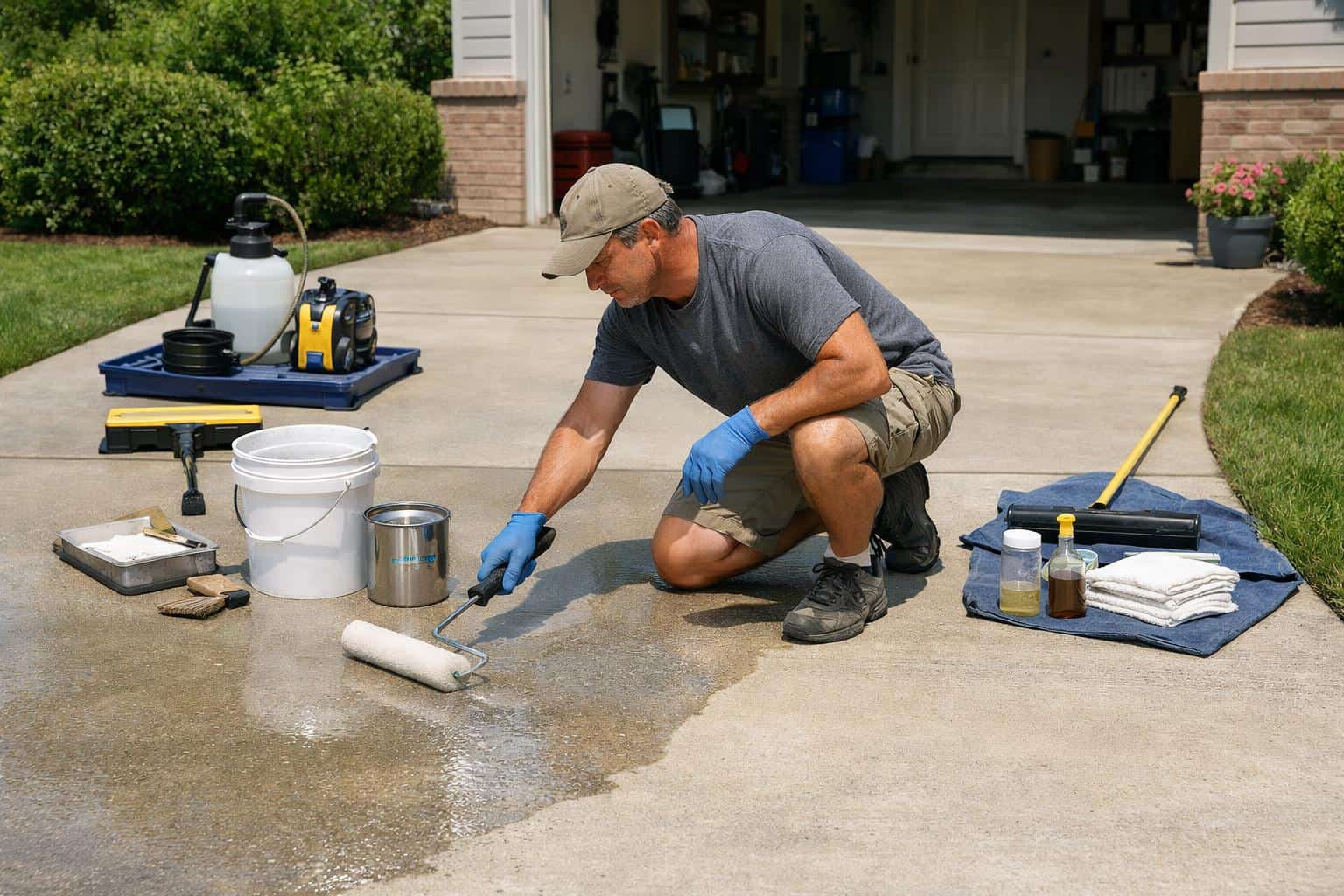
    Regular maintenance starts with keeping the surface clean and watching how water behaves on the slab. Dirt and leaves can trap moisture, while oil and rust stains become harder to remove the longer they sit. Seasonal cleaning also gives homeowners a chance to notice new cracking, edge breakdown, or drainage changes early.

    Concrete Driveway Maintenance and Sealing Guide related example showing Concrete, paver, and stone outdoor surfaces showing common patio and walkway material choices for homeowners
    This patio example gives homeowners a visual reference for comparing layout, materials, and maintenance tradeoffs before starting the project.
    • Sweep debris off the driveway regularly.
    • Rinse off dirt, mud, and fertilizer residue before it bakes in.
    • Clean automotive fluids quickly so they do not set deeply.
    • Watch for standing water after rain or irrigation.
    • Inspect joints, edges, and previously repaired areas once or twice a year.

    When sealing helps and when it is overhyped

    Sealing can help reduce staining and slow water penetration, especially on decorative concrete or in driveways that see frequent moisture, leaf tannins, or oil exposure. It can also refresh the appearance of some surfaces. What sealing does not do is fix structural problems, stop major movement, or substitute for proper thickness and drainage.

    That is why sealing works best as a protection step on a sound driveway, not as a rescue plan for a failing one. If the slab is badly cracked or settling, a sealer may improve appearance for a short time while doing nothing to address the real cause.

    How often should a concrete driveway be sealed?

    There is no universal schedule that fits every driveway. The right timing depends on the product used, the local climate, traffic, and the type of finish. Some homeowners reseal every few years, while others only need it occasionally. Decorative finishes and exposed surfaces often benefit from more attention than a plain broom-finished driveway.

    Instead of sealing on autopilot, look for signs such as fading appearance, reduced water beading, easier staining, or a surface that is harder to clean than it used to be. Those signs are more useful than a one-size-fits-all calendar rule.

    Common maintenance mistakes

    • Using harsh de-icing habits without checking whether the product is safe for the surface.
    • Ignoring drainage issues that repeatedly hold water on the slab.
    • Assuming every crack is cosmetic and never worth monitoring.
    • Applying sealer over a dirty or damp surface.
    • Expecting sealer to correct spalling, settling, or structural weakness.

    When to bring in a contractor

    Routine cleaning is a homeowner task. Evaluating widening cracks, surface scaling, trip edges, or drainage failure is different. If the driveway is changing shape, not just changing color, it is worth getting a professional opinion before spending money on products that do not solve the underlying issue.

    Concrete Driveway Maintenance and Sealing Guide related example showing Backyard patio comparison showing paver surface and stamped concrete surface
    This related patio detail helps show how site conditions and finish choices can change the homeowner's plan.

    Homeowners who want the clearest long-term plan should pair maintenance decisions with an honest assessment of the slab’s age, thickness, and condition. If you are trying to decide whether upkeep still makes sense or whether replacement is the better investment, compare this guide with our breakdown of driveway replacement versus new concrete.

    Bottom line

    Good driveway maintenance is mostly about consistency: keep the surface clean, watch how it drains, address stains early, and use sealing as a protective step instead of a miracle fix. When a driveway is structurally sound, those habits can preserve appearance and help you get more years out of the slab.

    Plan the Bigger Project

    Concrete work is often just one part of a broader exterior upgrade. If you are still mapping out the full project, also read our landscaping services guide, questions to ask before hiring a landscaper, what to expect during a landscaping project, and our landscaping costs guide for homeowners.

    More Planning and Decision Guides