Materials and Finish Choices

Material and finish comparison guides for homeowners deciding between surface options, appearance, maintenance, and long-term durability.

Start with the service type

Landscaping Services Guideposts

Use these guides to understand what each service includes before comparing providers or requesting quotes.

Core service explainers

Start here when you are still deciding what kind of landscaper or outdoor contractor you need.

Compare before you hire

Use these pages when two services or surface choices sound similar but lead to different scopes.

Hire smarter

Planning And Contractor Comparison

Use this hub when you are moving from ideas into estimates, bids, and contractor conversations.

Before requesting estimates

These guides help define scope and compare companies before the first site visit.

Budget with better assumptions

Cost Guides And Calculators

Use this hub to move from rough budget ranges into the details that usually change quotes.

Calculator starting points

Open the calculator hub or a cost guide when you need a quick planning range.

High-impact cost decisions

These pages help compare choices where price, lifespan, and maintenance tradeoffs matter.

Understand the build

Installation And Site-Work Pathways

Use these guides to understand sequencing, site prep, access, and the details that affect long-term performance.

Hardscape and site prep

These projects often depend on base prep, demolition, grading, drainage, and access.

Drainage and retaining work

Use these when water, grade, or slope stability is part of the project.

Choose materials with ownership in mind

Material And Finish Decision Paths

Use these guides when appearance, maintenance, replacement, and budget all affect the right material choice.

Surface and finish comparisons

Compare outdoor surfaces before committing to a driveway, patio, or lawn direction.

Landscape material planning

Use these pages when quantity, delivery, or long-term maintenance are the main concern.

Protect the investment

Maintenance And Ownership Next Steps

Use these guides to understand ongoing care, seasonal refreshes, and when maintenance points to a bigger fix.

Maintenance planning

These guides help compare recurring service, seasonal work, and refresh projects.

When upkeep becomes repair

Use these when repeated maintenance problems suggest drainage, surface, or material issues.

  • How Much Mulch, Soil, and Rock Do You Need Guide for Homeowners

    How Much Mulch, Soil, and Rock Do You Need Guide for Homeowners

    Estimating landscaping materials can feel trickier than it should because products are sold in several different units. Mulch and soil may be discussed by the cubic yard. Decorative rock may be sold by the ton or yard. Bagged materials are sold by volume. The result is that homeowners often know roughly what area they want to cover but are not sure how that converts into an order.

    The most practical way to think about it is area plus depth, not just the footprint of the bed or path.

    Landscape material coverage example showing why depth and surface area matter when estimating mulch, soil, and rock
    Homeowners usually get cleaner orders when they estimate by coverage area, desired depth, and a little waste factor instead of guessing by eye.

    Depth matters as much as square footage

    A bed that needs a thin refresh and a bed that needs full build-back may cover the same footprint but require very different amounts of material. That is why homeowners should think about how deep the product actually needs to be, whether old material remains in place, and whether the project includes grading or bed reshaping.

    How Much Mulch, Soil, and Rock Do You Need Guide for Homeowners related example showing Landscape beds and groundcover materials relevant to homeowner quantity planning for mulch, soil, and decorative rock
    This materials example gives homeowners a visual reference for comparing layout, materials, and maintenance tradeoffs before starting the project.

    Leave room for waste and settling

    Orders that are exactly on paper often end up short in practice. Material can settle, coverage may be uneven, and shaped beds usually do not behave like perfect rectangles. A reasonable buffer can save a second order or trip.

    Estimate before comparing suppliers

    It is much easier to compare bulk delivery, bagged pricing, and contractor-supplied material once homeowners know roughly how much product the job needs. The bulk mulch vs bagged mulch guide and where-to-buy guide are natural next reads.

  • Bulk Mulch vs Bagged Mulch Guide for Homeowners

    Bulk Mulch vs Bagged Mulch Guide for Homeowners

    Homeowners often compare bulk mulch and bagged mulch as if they are the same product in two different packages, but the buying experience can feel very different. The right choice usually depends on project size, delivery options, labor tolerance, access, cleanup expectations, and how much flexibility the homeowner wants during installation.

    For smaller refreshes, bagged mulch may be easier to manage. For bigger bed areas, bulk mulch often makes more financial and practical sense.

    Mulched planting bed showing practical landscape application relevant to mulch quantity and delivery decisions
    Mulch buying decisions usually come down to project size, delivery logistics, cleanup tolerance, and whether homeowners need convenience or lower per-yard cost.

    When bulk mulch usually works better

    Bulk mulch often becomes the stronger value when the project covers a meaningful amount of square footage. Delivery can save trips, the per-unit cost is usually lower, and the material is easier to spread efficiently once it is on-site. But it also requires a delivery location, staging space, and a plan for cleanup if too much arrives.

    When bagged mulch may make more sense

    Bagged mulch can be useful for smaller projects, touch-up work, and homes where delivery access is awkward. It may also feel simpler for homeowners doing the work themselves because quantities are easier to control in small increments.

    Compare the whole job, not just sticker price

    Homeowners should compare travel time, delivery fees, leftover material, and labor effort along with unit price. The where-to-buy guide and materials cost guide help make that comparison more realistic.

    Bulk Mulch vs Bagged Mulch Guide for Homeowners related example showing Landscape beds and groundcover materials relevant to homeowner quantity planning for mulch, soil, and decorative rock
    This materials example gives homeowners a visual reference for comparing layout, materials, and maintenance tradeoffs before starting the project.

  • Patio and Walkway Materials Guide for Homeowners

    Patio and Walkway Materials Guide for Homeowners

    Patios and walkways can be built from several different materials that may look similar at first glance but behave very differently over time. Some are easier to repair. Some are more forgiving around movement or settlement. Some feel more formal, while others fit looser, more natural-looking landscape styles. That is why homeowners should compare patio and walkway materials with day-to-day use in mind, not just curb appeal.

    A material that looks great in a photo may not be the best fit for your climate, maintenance preferences, or the way the space will actually be used.

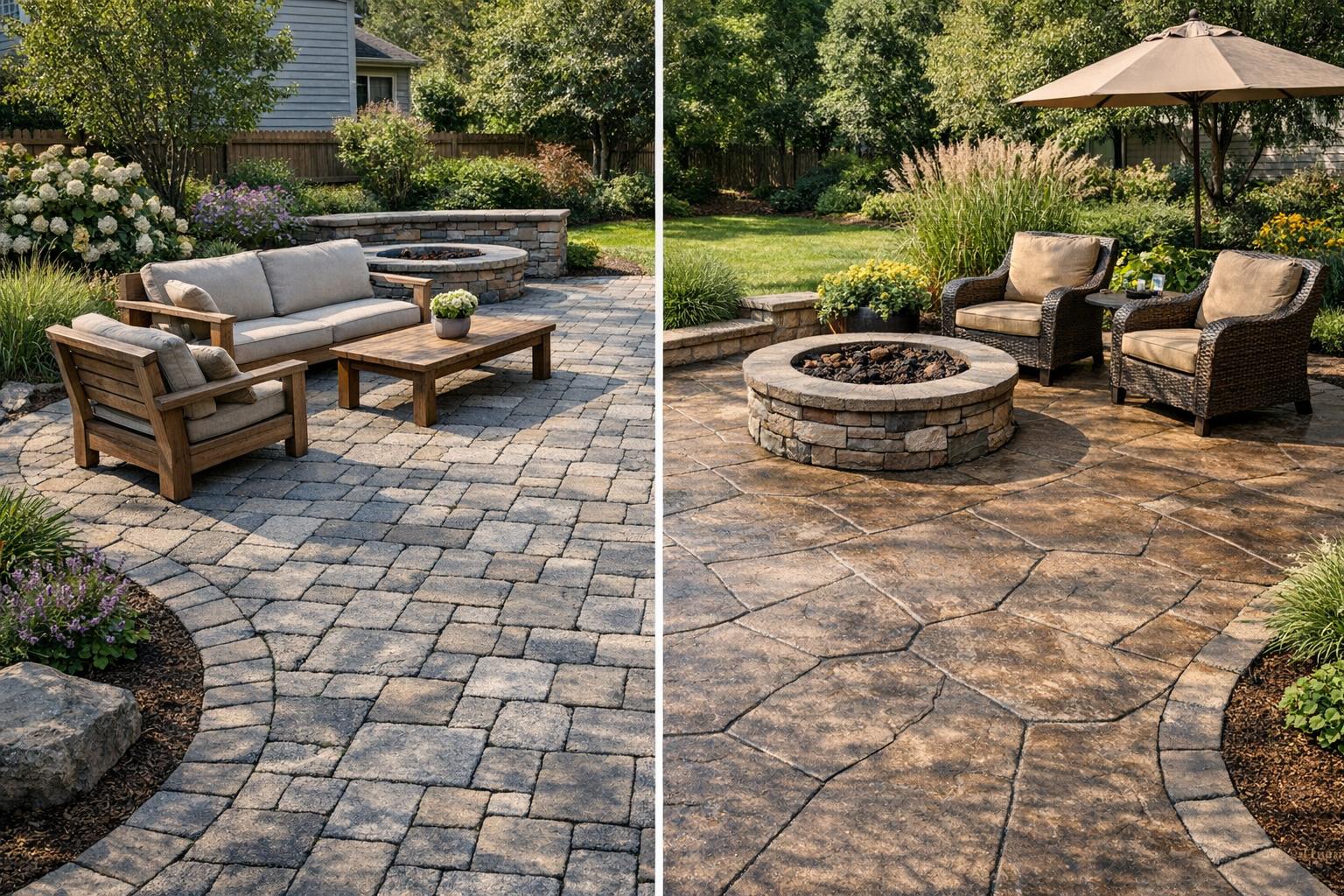
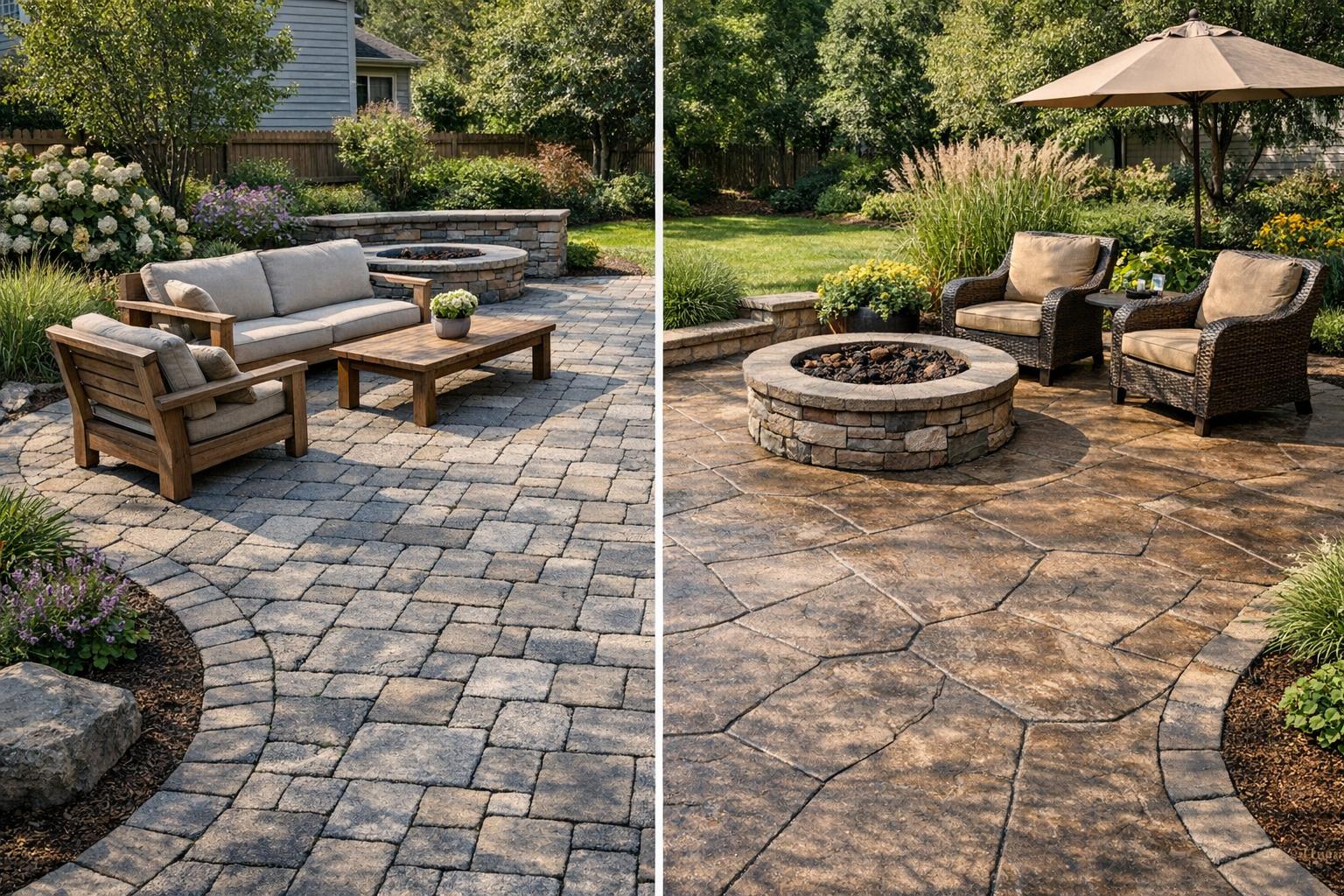
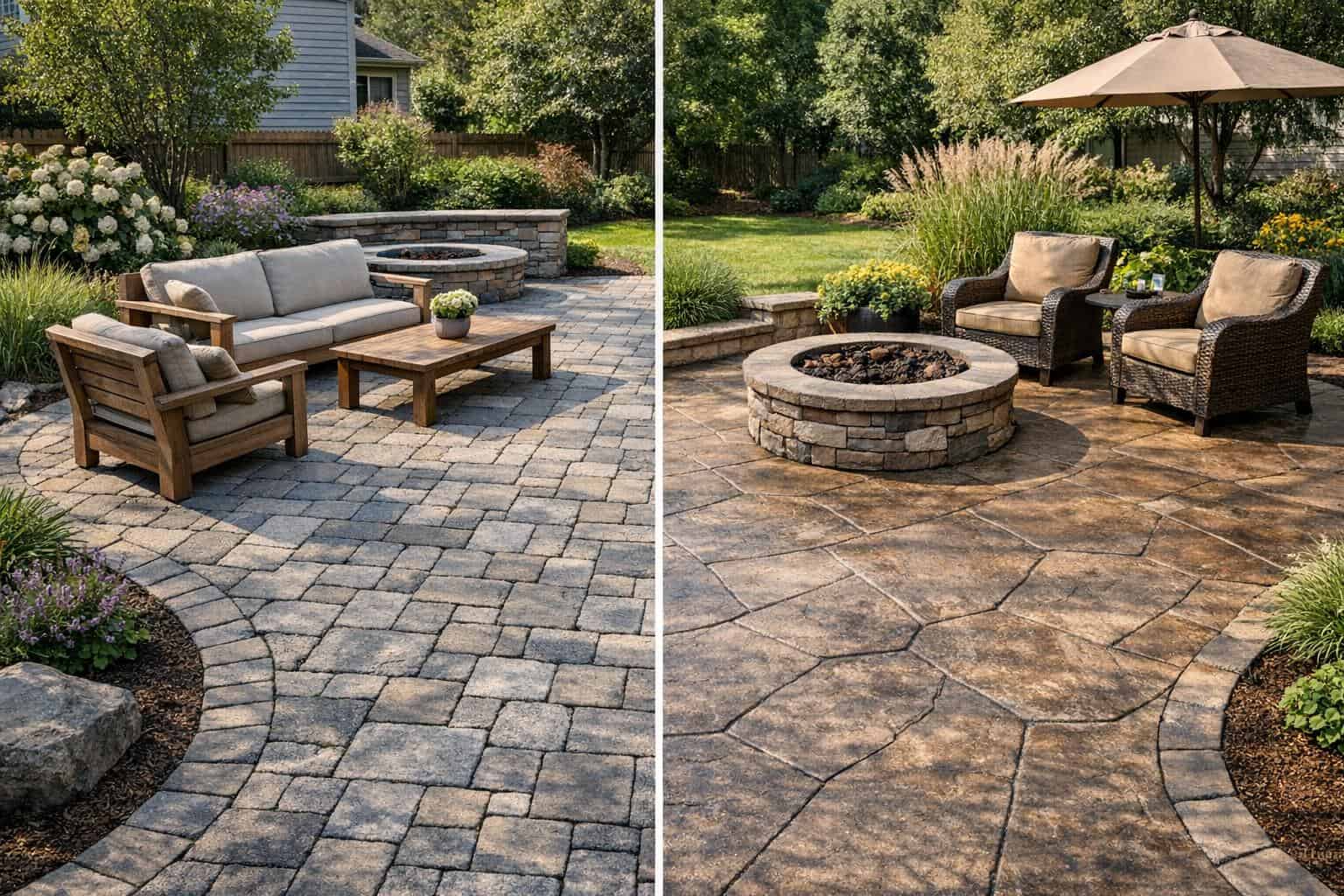
    Concrete, paver, and stone outdoor surfaces showing common patio and walkway material choices for homeowners
    Patio and walkway material decisions are usually strongest when homeowners compare comfort, repairability, drainage response, and appearance together instead of focusing on one feature alone.

    Pavers and manufactured concrete products

    Pavers are popular because they offer a wide range of styles and can often be repaired in sections if a problem develops. They also work well in many design styles. But they depend heavily on good base preparation, edge restraint, and thoughtful layout planning.

    Poured concrete and decorative flatwork

    Poured concrete can be simpler and more economical in some projects, especially when the design is straightforward. Decorative finishes like stamped or colored concrete can change the look significantly, but they also add finish detail and maintenance considerations.

    Natural stone, gravel, and looser-surface options

    Natural stone can create a more custom or higher-end feel, but material and labor requirements may increase. Gravel or decomposed-granite style surfaces may suit some paths well, but they behave differently under foot traffic, furniture, edging, and runoff.

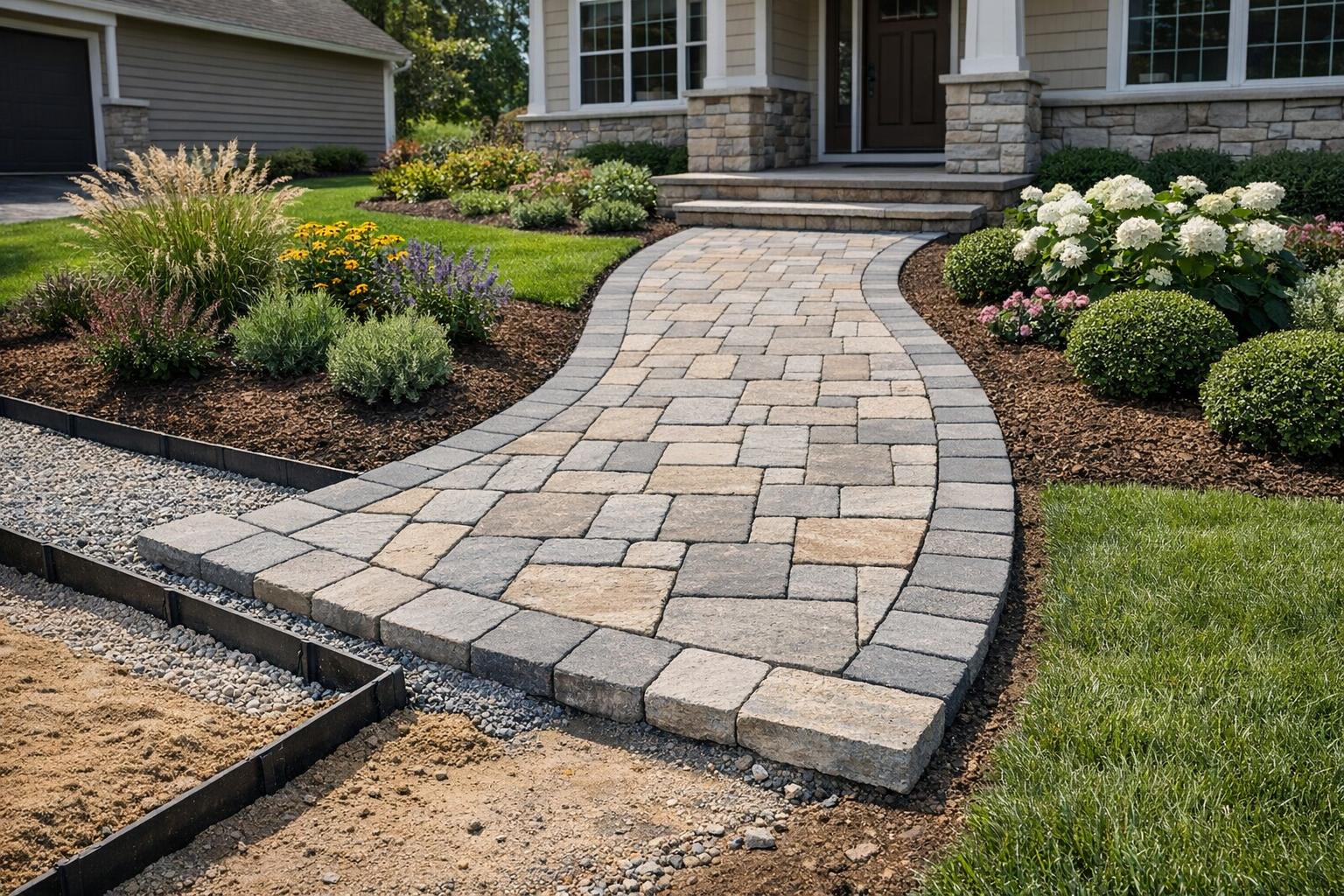
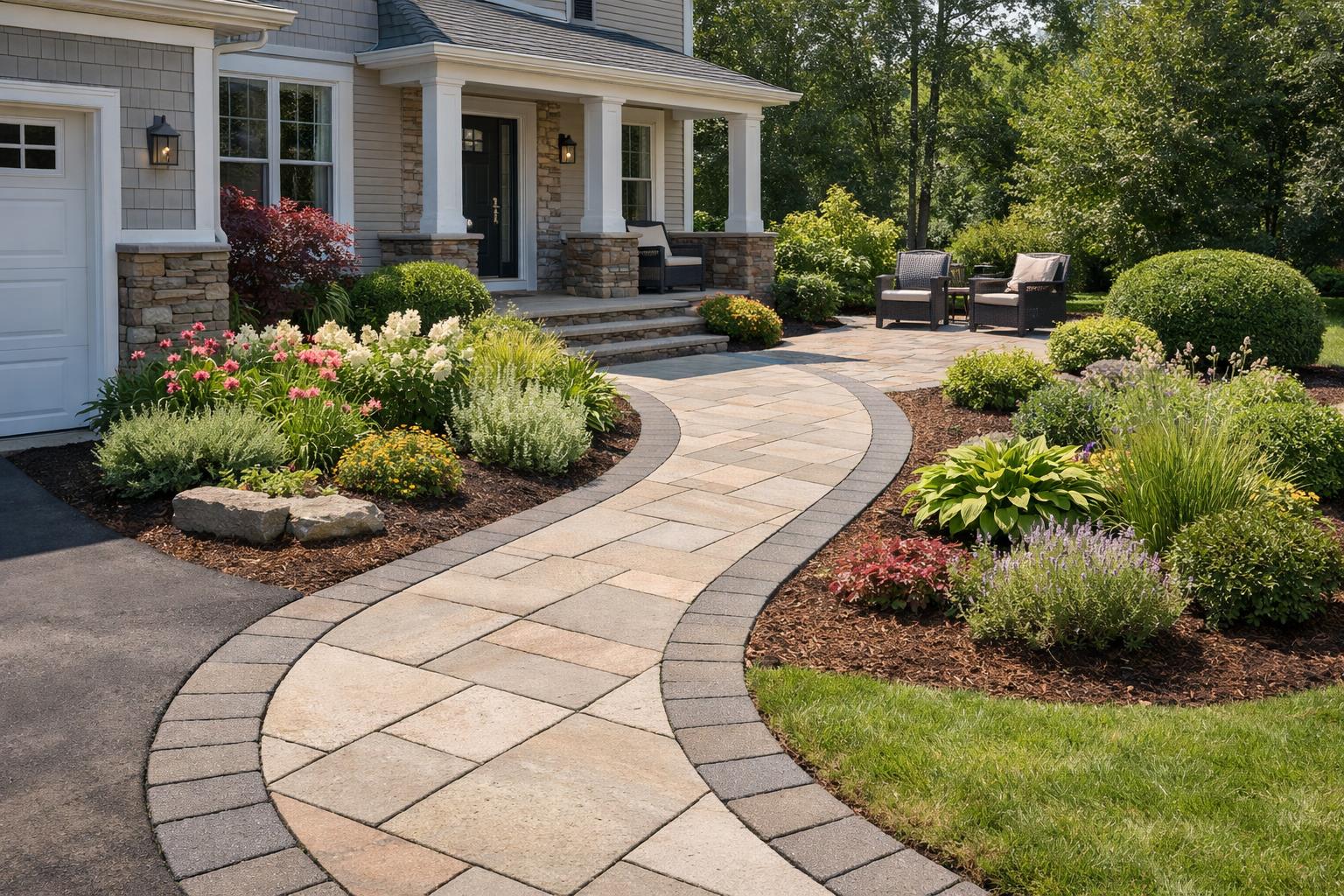
    Patio and Walkway Materials Guide for Homeowners related example showing Front entry walkway with edging, planting beds, and material detail relevant to pathway cost planning
    This walkway example gives homeowners a visual reference for comparing layout, materials, and maintenance tradeoffs before starting the project.

    The paver patio vs stamped concrete guide, concrete vs paver guide, and walkway cost guide all help homeowners compare these decisions more closely.

    Finish guide: Homeowners comparing hardscape appearance can also review the Paver Colors and Finishes Guide before making final selections.


  • What Landscaping Materials Cost Guide for Homeowners

    What Landscaping Materials Cost Guide for Homeowners

    Landscaping material pricing is one of the most confusing parts of outdoor projects because homeowners are often seeing several types of pricing at once. Some materials are sold by the bag, some by the pallet, some by the square foot, and others by the cubic yard or ton. Delivery charges, waste factor, color or style upgrades, and local availability can all shift the final number.

    That is why it helps to think of material cost in terms of both the product itself and the quantity format it is usually sold in.

    Landscape surface materials and groundcover choices relevant to homeowner pricing comparisons
    Material pricing often changes quickly once homeowners compare bulk delivery, installation waste, edge detail, and the amount of preparation needed underneath the visible finish.

    Bulk materials versus packaged materials

    Mulch, soil, compost, gravel, and decorative rock are often far more economical in bulk for larger projects, while bagged material may make sense for small refreshes or touch-up work. Homeowners should compare not just the sticker price, but also how much material is actually needed and whether delivery or pickup costs erase the apparent savings.

    What Landscaping Materials Cost Guide for Homeowners related example showing Landscape beds and groundcover materials relevant to homeowner quantity planning for mulch, soil, and decorative rock
    This materials example gives homeowners a visual reference for comparing layout, materials, and maintenance tradeoffs before starting the project.

    Hardscape material price differences can be substantial

    Pavers, natural stone, concrete products, wall block, and specialty finishes often sit in very different pricing tiers. Pallet counts, special-order colors, pattern complexity, and regional availability all affect budget. A material that looks similar in a photo can land in a very different installed-price range once labor and waste are included.

    Plants and specialty materials vary by size and season

    Plant pricing often changes with size, container volume, species, and seasonal availability. The same is true for turf, seed blends, lighting fixtures, and irrigation components. Homeowners comparing prices should always ask what size, grade, or product level the quote actually assumes.

    The materials overview guide, where-to-buy guide, and patio and walkway materials guide are useful companion reads when homeowners want a more practical buying plan.

    Estimating guide: The quantity-estimating guide helps translate material pricing into a more realistic order plan.


  • Where to Buy Landscaping Materials Guide for Homeowners

    Where to Buy Landscaping Materials Guide for Homeowners

    Homeowners usually have more buying options for landscaping materials than they first realize. Materials may come from big-box stores, local nurseries, dedicated stone or paver yards, mulch suppliers, bulk soil yards, irrigation suppliers, or directly through the contractor. The best source depends on what the material is, how much is needed, and whether quality, availability, delivery, or convenience matters most.

    That means the right buying source for shrubs is not always the right source for pavers, drainage stone, or bulk mulch.

    Residential planting and landscape materials that reflect homeowner choices between nurseries, yards, and bulk suppliers
    Planting materials, mulch, soil, pavers, and stone often come from different suppliers, so homeowners usually benefit from knowing which vendor type fits each need best.

    Where common materials usually come from

    Plants and smaller garden materials often come from nurseries and garden centers. Pavers, wall block, natural stone, gravel, and larger hardscape materials often come from masonry yards or local landscape supply yards. Bulk mulch, soil, compost, and decorative rock may come from landscape yards that deliver by the yard. Smaller convenience purchases may come from home-improvement stores, but bulk-value and selection often improve when homeowners compare local suppliers.

    Contractor-provided materials versus homeowner-supplied materials

    Some homeowners want to source everything themselves. Others prefer the contractor to handle material ordering. In many cases, contractor-managed sourcing is simpler because it coordinates delivery timing, quantities, substitutions, and accountability. But homeowners still benefit from knowing what the material source is and whether they are comparing like-for-like products across bids.

    Buying decisions should connect back to the project plan

    Before choosing where to buy, homeowners should know what quantities they need, whether delivery is required, and whether the product quality fits the project. The materials cost guide, quote comparison guide, and questions-to-ask guide help make those conversations more useful.

    Where to Buy Landscaping Materials Guide for Homeowners related example showing Landscape beds and groundcover materials relevant to homeowner quantity planning for mulch, soil, and decorative rock
    This materials example gives homeowners a visual reference for comparing layout, materials, and maintenance tradeoffs before starting the project.

    Decision guide: The Bulk Mulch vs Bagged Mulch Guide helps homeowners compare delivery convenience against smaller-lot buying flexibility.

    Bulk-order guide: Homeowners ordering by the yard or ton can use the bulk material questions guide before scheduling delivery.

    Shopping prep: The material shopping prep guide helps homeowners show up with the details suppliers actually need.


  • Landscaping Materials Guide for Homeowners

    Landscaping Materials Guide for Homeowners

    Landscaping materials do much more than change how a yard looks. They influence drainage, surface durability, weed pressure, maintenance needs, comfort underfoot, and how finished the property feels over time. That is why homeowners often get better results when they compare materials by function first and appearance second.

    Some materials are best for structure and hard use. Others work better for planting beds, softer transitions, or low-water goals. The smartest choice is usually the one that fits the site conditions and the amount of upkeep the household can realistically support.

    Landscape bed with stone, mulch, and hardscape materials illustrating common residential landscaping choices
    Homeowners usually get better results when mulch, stone, pavers, soil amendments, and planting materials are chosen as part of one coordinated yard plan.

    Common hardscape materials homeowners compare

    Pavers, poured concrete, natural stone, gravel, decomposed granite, and decorative rock are some of the most common hardscape-related materials used in patios, walkways, driveways, and outdoor-living spaces. Each one has different strengths around cost, appearance, repairability, and surface feel.

    Common softscape and ground-cover materials

    How to Compare Plant Material at a Nursery Guide for Homeowners
    Comparing plant material, mulch, and ground-cover options helps homeowners choose materials that fit both the site and the maintenance plan.

    Mulch, soil blends, compost, decorative rock, sod, seed, turf products, and plant material all play a different role in the landscape. Homeowners often think of these as cosmetic add-ons, but they directly affect moisture retention, weed suppression, root health, yard comfort, and long-term maintenance.

    Think about material systems, not isolated items

    Most landscaping projects work best when materials are selected together. A patio finish affects border detail. Ground-cover choices affect irrigation and maintenance. Soil and mulch choices affect planting performance. The more connected the materials are, the more finished the project tends to feel.

    The guides on where to buy landscaping materials, what landscaping materials cost, and patio and walkway materials help homeowners move from general ideas into more practical decisions.

    Sourcing guide: The contractor-vs-homeowner sourcing guide helps clarify who should handle material ordering on different project types.

    More Landscaping Materials Guides


  • Paver Patio vs Stamped Concrete Patio Guide for Homeowners

    Paver Patio vs Stamped Concrete Patio Guide for Homeowners

    Paver patios and stamped concrete patios can both create attractive outdoor living space, but they perform differently over time. Homeowners usually compare them on appearance first, yet the more useful questions are about maintenance, repair, movement, drainage, and how the surface fits the style of the yard.

    Because patios often become the center of backyard use, the material decision has an outsized effect on long-term satisfaction. It is worth slowing down here before choosing a finish based only on a sample board.

    Why homeowners choose pavers

    Pavers are popular because they offer strong visual flexibility and can be easier to repair in sections if an area settles or needs adjustment. They can work in classic, rustic, or more modern landscapes depending on the pattern and material selected. For homeowners who value detail and repairability, pavers often feel like the safer long-term choice.

    Paver Patio vs Stamped Concrete Patio Guide for Homeowners related example showing Concrete, paver, and stone outdoor surfaces showing common patio and walkway material choices for homeowners
    This patio example gives homeowners a visual reference for comparing layout, materials, and maintenance tradeoffs before starting the project.

    The full construction side is covered in the patio installation guide, which explains why base prep and drainage matter no matter which finish is chosen.

    Why stamped concrete appeals to some homeowners

    Stamped concrete can create a broad, unified surface with decorative pattern and color. Some homeowners like the cleaner continuous look, and in the right design it can feel sleek and cost-effective. It can also suit spaces where fewer joints are visually preferred.

    The tradeoff is that repairs and cracking behavior are different from pavers. If issues develop, the fix may be less seamless than replacing individual units in a paver system.

    Maintenance and repair differences

    Paver patios may need occasional re-leveling, joint maintenance, or weed attention depending on the system and environment. Stamped concrete may need sealing and can show wear or cracking differently over time. Neither option is maintenance-free, but the type of maintenance is not the same.

    Appearance and design fit

    Pavers usually offer more texture and pattern variation. Stamped concrete can create a more continuous field with decorative imprint. The best fit depends on the house style, surrounding planting, and whether the patio connects to retaining walls, walkways, or other hardscape. If you are also deciding between outdoor gathering formats, the patio vs deck guide is worth comparing too.

    Cost and site conditions

    Cost depends on pattern choice, site prep, access, drainage needs, border detail, and installation complexity. Homeowners should compare complete scope rather than headline material price. A less expensive surface can still be the wrong choice if the site is more prone to movement or if repairability matters later.

    Paver Patio vs Stamped Concrete Patio Guide for Homeowners related example showing Paver patio surface with color and finish detail relevant to homeowner material-selection decisions
    This related patio detail helps show how site conditions and finish choices can change the homeowner's plan.

    The best patio choice is the one that fits the whole yard plan, not just the showroom sample. Homeowners who compare base prep, maintenance expectations, and style together usually make the most durable decision.

    Materials guide: Homeowners comparing finishes can also review the Patio and Walkway Materials Guide for a broader surface-choice breakdown.

    More Decision and Planning Guides


  • Sod vs Seed Guide for Homeowners

    Sod vs Seed Guide for Homeowners

    Sod and seed can both create a healthy lawn, but they ask different things from a homeowner. Some households want a faster finished look and are willing to invest more upfront. Others are comfortable with a longer establishment process if it helps control cost. The better choice depends on budget, timing, watering discipline, yard conditions, and how quickly the space needs to be usable.

    This is especially important on new builds or major yard renovations where irrigation, grading, and drainage may all affect lawn success.

    Why homeowners choose sod

    Sod gives a lawn an immediate finished appearance, which is one of its biggest advantages. It can make a newly built or renovated yard feel complete much faster than seed. In many cases it also helps control surface soil movement while the lawn establishes, which can be useful after grading work.

    That faster visual result is why sod often pairs well with the broader sod and lawn installation guide for homeowners who want a quick transformation.

    Why some homeowners prefer seed

    Seed can cost less upfront and may make sense when the project area is large, the budget is tighter, or the timeline is flexible. It can also be a reasonable path when homeowners are prepared to follow watering and establishment requirements carefully. The tradeoff is that the lawn takes longer to fill in, and results can be more sensitive to weather and care during the early stages.

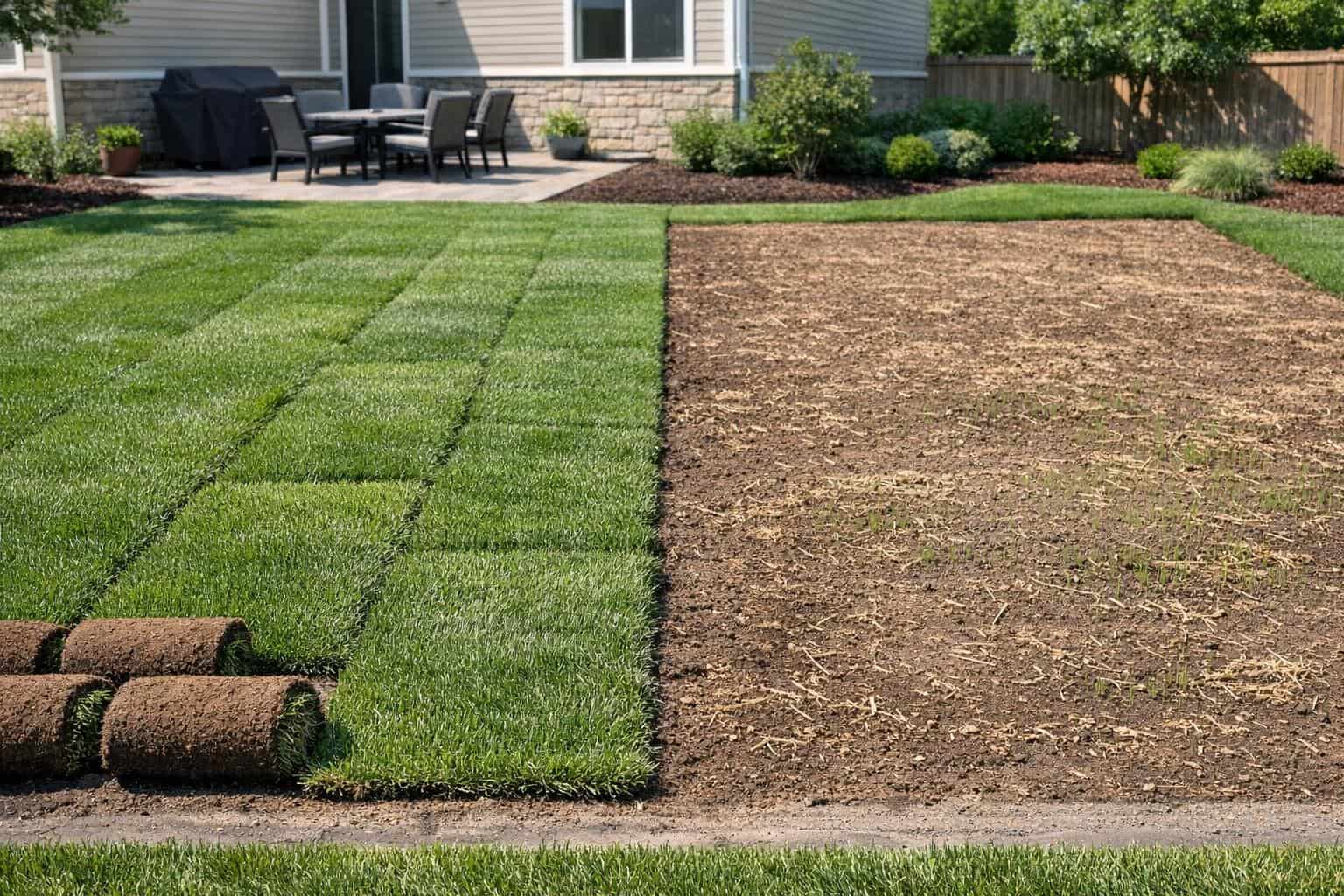
    Sod vs Seed Guide for Homeowners related example showing Lawn detail relevant to thinning, irrigation stress, and warning signs
    This lawn example gives homeowners a visual reference for comparing layout, materials, and maintenance tradeoffs before starting the project.

    Watering and establishment differences

    Both sod and seed need attentive watering early on, but the pattern and risk are different. Sod needs moisture to root in successfully, while seed needs the surface conditions to stay supportive long enough for germination and young growth. In either case, poor irrigation planning can undercut the result. That is why lawn-installation decisions often connect directly to the irrigation system guide.

    Durability, timing, and use

    If the yard needs to look finished sooner or handle activity earlier, sod is often the stronger fit. Seed usually requires more patience before the lawn looks complete and more caution before heavy use. Timing within the season also matters, since weather can help or hurt establishment.

    Cost tradeoffs

    Sod usually costs more upfront because homeowners are paying for a ready-grown product plus installation. Seed may lower initial cost, but it can demand more time, follow-up attention, and sometimes patching if establishment is uneven. The most useful cost comparison is not just material price, but the level of risk and time each path carries in your yard.

    Sod vs Seed Guide for Homeowners related example showing Lawn detail relevant to planning mistakes, prep, and irrigation decisions
    This related lawn detail helps show how site conditions and finish choices can change the homeowner's plan.

    Homeowners should also compare this decision with the broader artificial turf vs natural grass guide if they are still deciding whether a natural lawn is the right long-term direction in the first place.

    More Comparison and Decision Guides

    Compare sod, seed, and hydroseed ranges

    Use this calculator to compare rough lawn establishment ranges for the same area before choosing between faster results, lower upfront cost, and watering requirements.

    Sod vs Seed Cost Calculator

    Compare rough installed cost ranges for sod, seed, and hydroseed on the same lawn area.


  • Mulch vs Rock Landscaping Guide for Homeowners

    Mulch vs Rock Landscaping Guide for Homeowners

    Mulch and rock can both finish landscape beds cleanly, but they do not behave the same over time. Homeowners often compare them as if the decision is purely visual, yet the better choice also depends on climate, maintenance tolerance, plant type, weed pressure, and how the bed connects to the rest of the yard.

    In many landscapes, the right answer is not one material everywhere. Some yards benefit from mulch around planting-heavy areas and rock in sections where a more durable, lower-disturbance finish makes sense.

    Why mulch works well in many planting beds

    Mulched planting bed around a home with shrubs and flowers showing organic coverage and finished edges.
    Mulch often works well where plant health, soil improvement, and a softer garden look matter most.

    Mulch is often favored because it looks natural, helps moderate soil temperature, and works well around many shrubs, perennials, and young plantings. It can also make a bed feel softer and more connected to the garden, especially when the design leans toward a planted, layered look.

    Mulch does need refreshing over time, which is part of the long-term maintenance picture. For homeowners building new beds, the planting installation guide helps frame where mulch often fits best.

    Why rock appeals to some homeowners

    Rock can offer a cleaner, more permanent-looking finish and may suit modern or low-water landscape styles. It usually does not break down the way mulch does, so some homeowners see it as a lower-renewal option. In dry-climate or architectural landscapes, that can be a strong aesthetic and practical match.

    The tradeoff is that rock can hold heat, shift over time, and still require weed management. It is not automatically maintenance-free just because it lasts longer as a material.

    Weeds, cleanup, and upkeep

    Both mulch and rock can have weed issues if the bed is not prepared well. Mulch may need periodic topping up and cleanup, while rock can collect debris and become harder to tidy once leaves and organic matter settle into it. What feels like “less work” depends a lot on the yard and the owner’s expectations.

    Homeowners focused on simpler upkeep should also compare the broader low-maintenance landscaping approach, because plant selection and irrigation often affect labor just as much as ground cover choice.

    Heat, plant health, and appearance

    Mulch usually supports a softer planted look and can be friendlier around certain root zones. Rock can visually sharpen a bed and may fit drought-tolerant schemes, but in hotter climates it can intensify reflected heat around some plants. That is why material should be chosen with plant palette and exposure in mind, not just color preference.

    Cost and long-term value

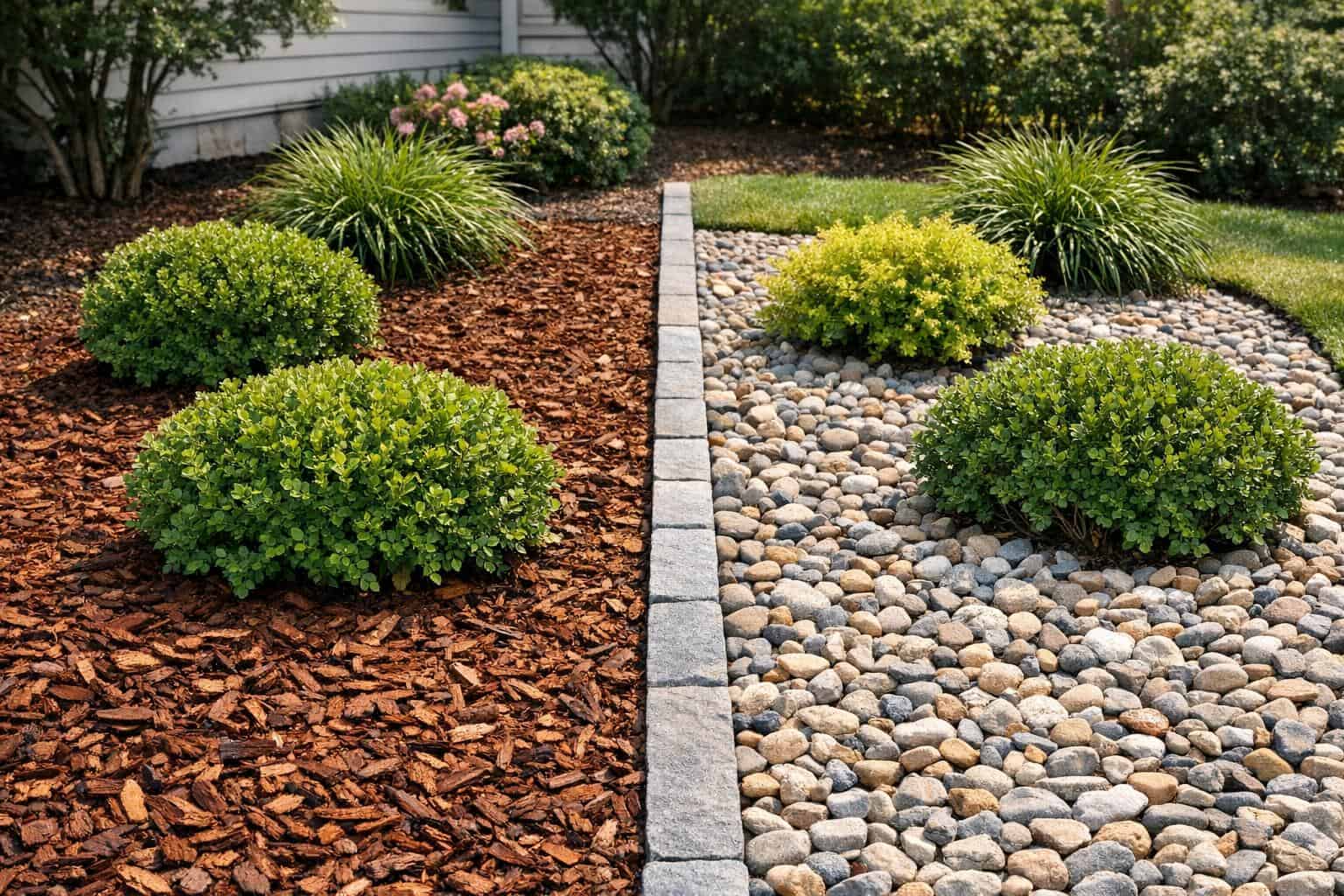
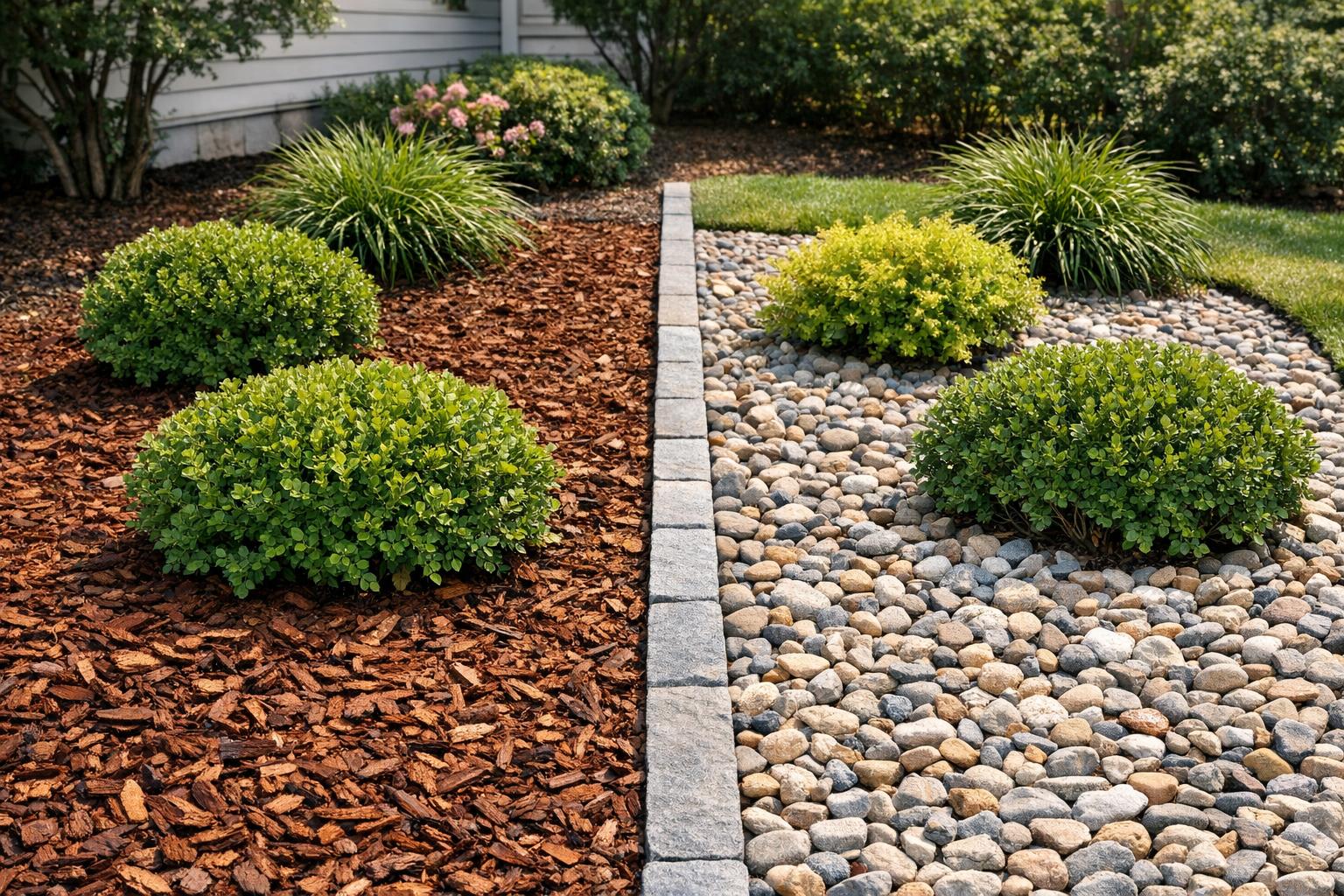
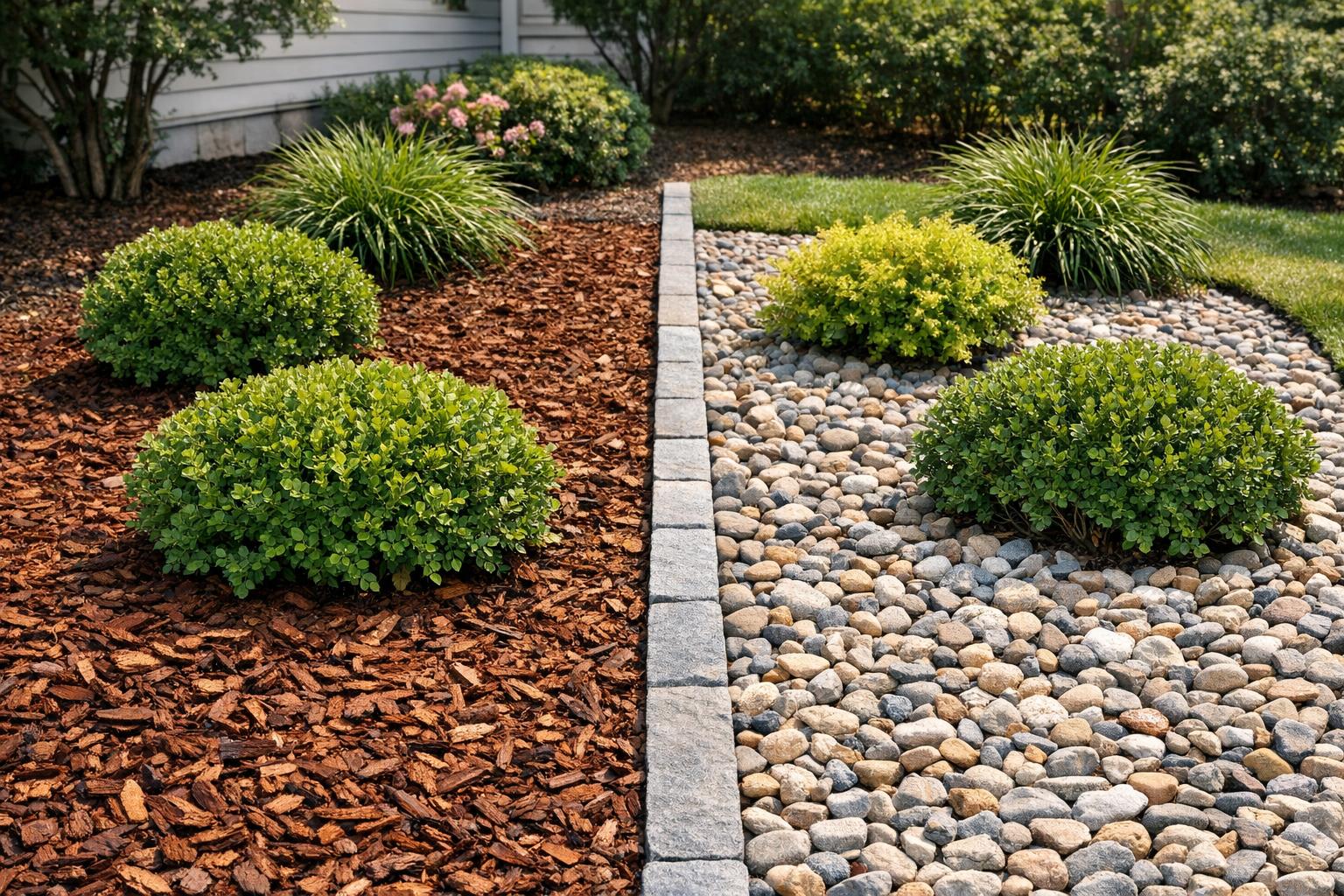
    Decorative rock and mulch materials compared in a residential landscape based on appearance and replacement needs.
    Mulch and rock have different long-term value once replacement cycles, cleanup, and plant performance are considered.

    Mulch may cost less upfront in some projects, while rock can cost more to supply and install depending on the material and depth. Over time, the cost picture shifts because mulch often needs replenishment and rock may need periodic cleanup or resetting. The best comparison is how each material performs in the exact part of the yard where you plan to use it.

    Homeowners who think about appearance, heat, maintenance, and plant health together usually make a better long-term choice than those who pick ground cover on looks alone.

    Buying guide: Homeowners trying to source bed and ground-cover products can use the Where to Buy Landscaping Materials Guide before pricing local suppliers.

    Lifespan guide: The ground-cover lifespan guide helps homeowners connect material choice to refresh timing and long-term upkeep.

    More Comparison and Decision Guides


  • Fire Pit Gas vs Wood Guide for Homeowners

    Fire Pit Gas vs Wood Guide for Homeowners

    Gas and wood fire pits can both create a strong backyard focal point, but they deliver very different day-to-day experiences. Some homeowners want instant ambiance with clean ignition and simple shutdown. Others care more about the sound, smell, and ritual of a real wood fire. The right choice depends on how the space will be used, how much maintenance you want, and how the fire feature fits into the larger yard plan.

    This is one of the best decisions to make before final design starts. Once the patio, seating layout, and utility path are planned around one type of fire feature, switching later can become more expensive and less convenient.

    Why homeowners choose gas fire pits

    Gas fire pits are popular because they are easy to use. Many can be turned on quickly, deliver steady flame with less smoke, and shut off with minimal cleanup. That convenience makes them attractive for homeowners who want to use the feature often, especially on patios close to the house or in entertaining spaces where people want a clean, predictable setup.

    Gas units often pair naturally with more polished outdoor-living builds. If the fire area is being planned alongside an outdoor kitchen or upgraded lighting, gas may fit the same low-friction design direction.

    Why homeowners choose wood fire pits

    Wood fire pits appeal to homeowners who want the traditional feel of a live fire. The smell, crackle, and stronger campfire atmosphere can be hard to replicate. In the right backyard, that experience can feel more casual, social, and memorable than a gas feature.

    The tradeoff is that wood typically means more smoke, more cleanup, more storage, and more attention during and after use. That is not necessarily a drawback for every household, but it should be an intentional choice rather than a surprise after installation.

    Convenience, cleanup, and maintenance

    Gas usually wins on convenience. There is no wood stack to maintain, no ash to remove, and less mess around the seating area. Wood requires more routine cleanup and may affect nearby cushions, surfaces, or planting if smoke exposure is frequent. For homeowners who want easier upkeep across the whole yard, the low-maintenance landscaping guide aligns more naturally with gas-style convenience.

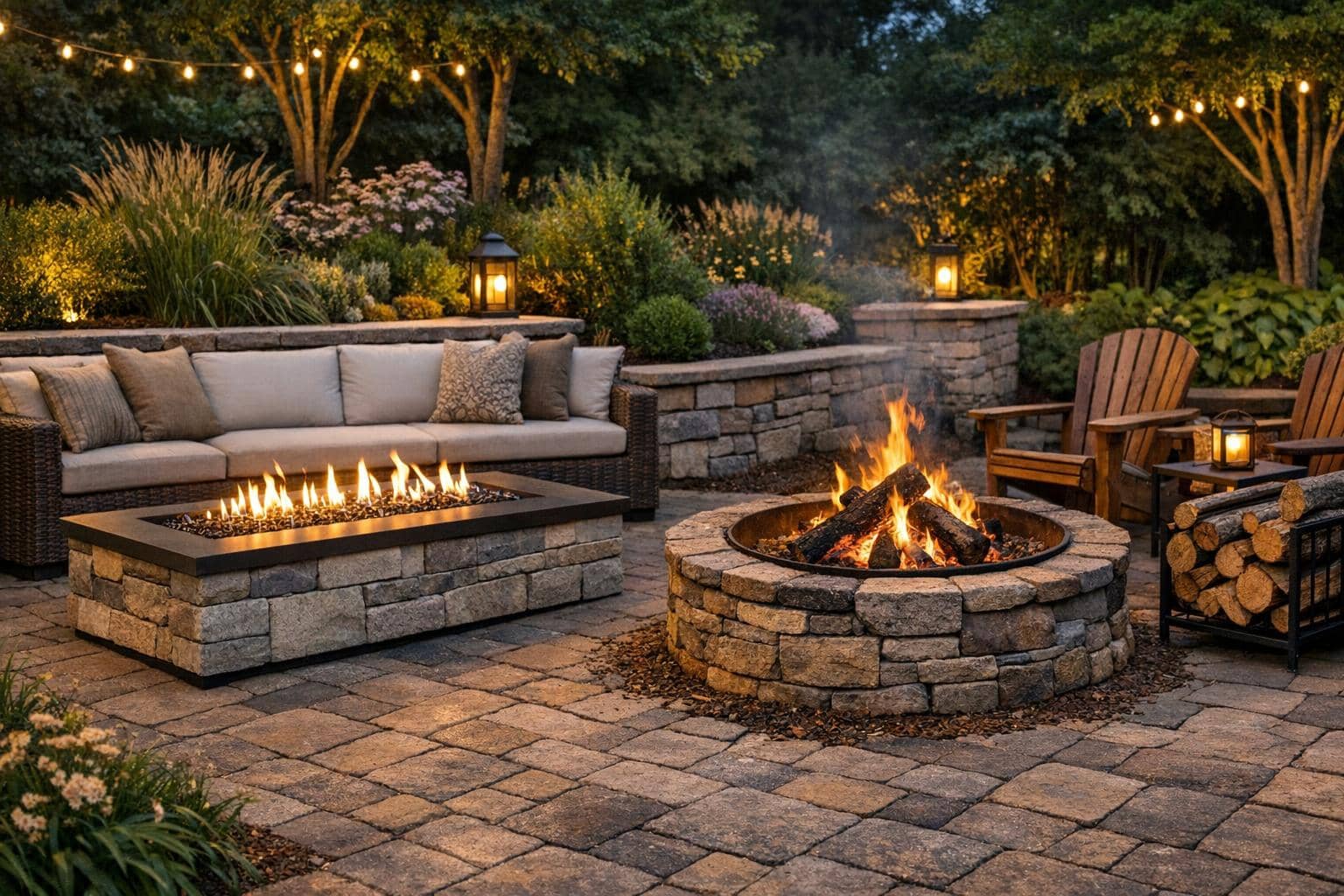
    Fire Pit Gas vs Wood Guide for Homeowners related example showing Landscape beds and groundcover materials relevant to homeowner quantity planning for mulch, soil, and decorative rock
    This materials example gives homeowners a visual reference for comparing layout, materials, and maintenance tradeoffs before starting the project.

    Cost considerations

    The right cost comparison is not just the unit itself. Gas may require utility work, trenching, and coordination with licensed trades. Wood may avoid that infrastructure, but it can still involve material, construction, and ongoing fuel handling. If the fire pit is part of a larger project, it helps to compare complete scope in the broader landscaping costs guide.

    Safety and backyard fit

    Both options need smart placement, proper clearances, and good materials around the feature. Gas can feel easier to manage in tighter entertaining spaces. Wood may need more attention to smoke direction, nearby structures, and surface protection. Homeowners should also think about whether the surrounding patio, seating, and planting plan support the way the feature will actually be used.

    Fire Pit Gas vs Wood Guide for Homeowners related example showing Landscape beds and groundcover materials relevant to homeowner quantity planning for mulch, soil, and decorative rock
    This related materials detail helps show how site conditions and finish choices can change the homeowner's plan.

    For the full project-side view, the fire pit installation guide covers design and construction expectations in more detail.

    More Comparison and Decision Guides