Hiring and Planning

Hiring and planning guides that help homeowners compare contractors, ask better questions, and understand project expectations before work begins.

Start with the service type

Landscaping Services Guideposts

Use these guides to understand what each service includes before comparing providers or requesting quotes.

Core service explainers

Start here when you are still deciding what kind of landscaper or outdoor contractor you need.

Compare before you hire

Use these pages when two services or surface choices sound similar but lead to different scopes.

Hire smarter

Planning And Contractor Comparison

Use this hub when you are moving from ideas into estimates, bids, and contractor conversations.

Before requesting estimates

These guides help define scope and compare companies before the first site visit.

Budget with better assumptions

Cost Guides And Calculators

Use this hub to move from rough budget ranges into the details that usually change quotes.

Calculator starting points

Open the calculator hub or a cost guide when you need a quick planning range.

High-impact cost decisions

These pages help compare choices where price, lifespan, and maintenance tradeoffs matter.

Understand the build

Installation And Site-Work Pathways

Use these guides to understand sequencing, site prep, access, and the details that affect long-term performance.

Hardscape and site prep

These projects often depend on base prep, demolition, grading, drainage, and access.

Drainage and retaining work

Use these when water, grade, or slope stability is part of the project.

Choose materials with ownership in mind

Material And Finish Decision Paths

Use these guides when appearance, maintenance, replacement, and budget all affect the right material choice.

Surface and finish comparisons

Compare outdoor surfaces before committing to a driveway, patio, or lawn direction.

Landscape material planning

Use these pages when quantity, delivery, or long-term maintenance are the main concern.

Protect the investment

Maintenance And Ownership Next Steps

Use these guides to understand ongoing care, seasonal refreshes, and when maintenance points to a bigger fix.

Maintenance planning

These guides help compare recurring service, seasonal work, and refresh projects.

When upkeep becomes repair

Use these when repeated maintenance problems suggest drainage, surface, or material issues.

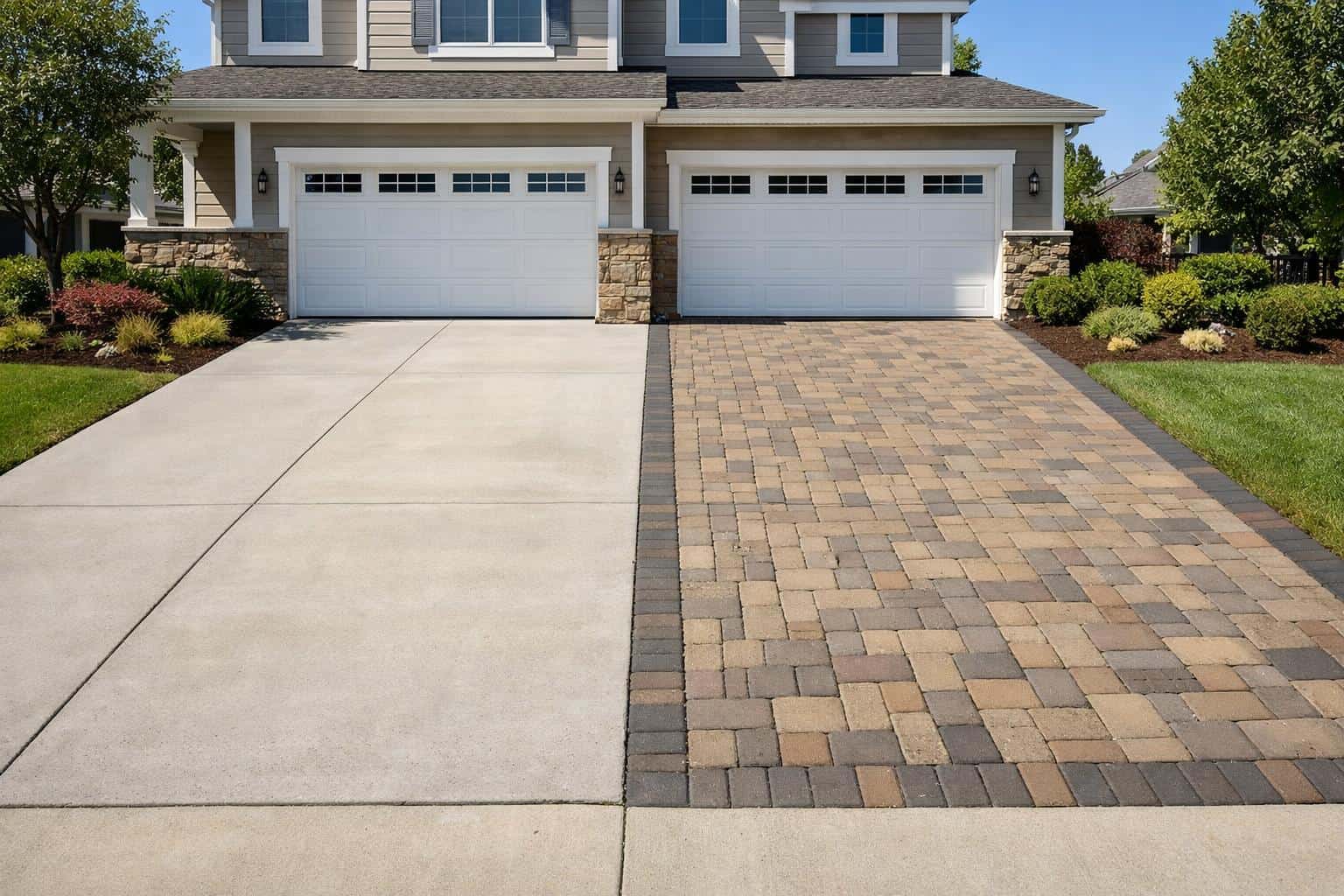
  • How to Choose Between Concrete and Paver Driveways Guide

    How to Choose Between Concrete and Paver Driveways Guide

    The best driveway choice usually becomes clearer when homeowners stop asking which material is better in general and start asking which one fits their budget, maintenance tolerance, and design goals better.

    Questions that make the decision easier

    • Do you want the lowest upfront cost or more decorative flexibility?
    • Would you rather repair isolated sections or maintain a simpler one-piece surface?
    • How much site movement, root pressure, or drainage stress does the driveway face?

    When concrete usually makes more sense

    • You want a cleaner, simpler appearance and a lower starting cost.
    • The layout is straightforward and decorative detailing is limited.
    • You prefer fewer joints and less unit-by-unit upkeep.

    When pavers usually make more sense

    • You care about pattern, color variation, and premium visual detail.
    • You want easier spot repair if sections shift or stain.
    • You are comfortable with more joint and edge maintenance over time.

    Bottom line

    The right answer is the one that fits the site’s conditions and the owner’s priorities, not the one that wins in one isolated category.

    How to Choose Between Concrete and Paver Driveways Guide related example showing Concrete, paver, and stone outdoor surfaces showing common patio and walkway material choices for homeowners
    This patio example gives homeowners a visual reference for comparing layout, materials, and maintenance tradeoffs before starting the project.

    For the broader overview, continue with Concrete vs Paver Driveway Guide for Homeowners.

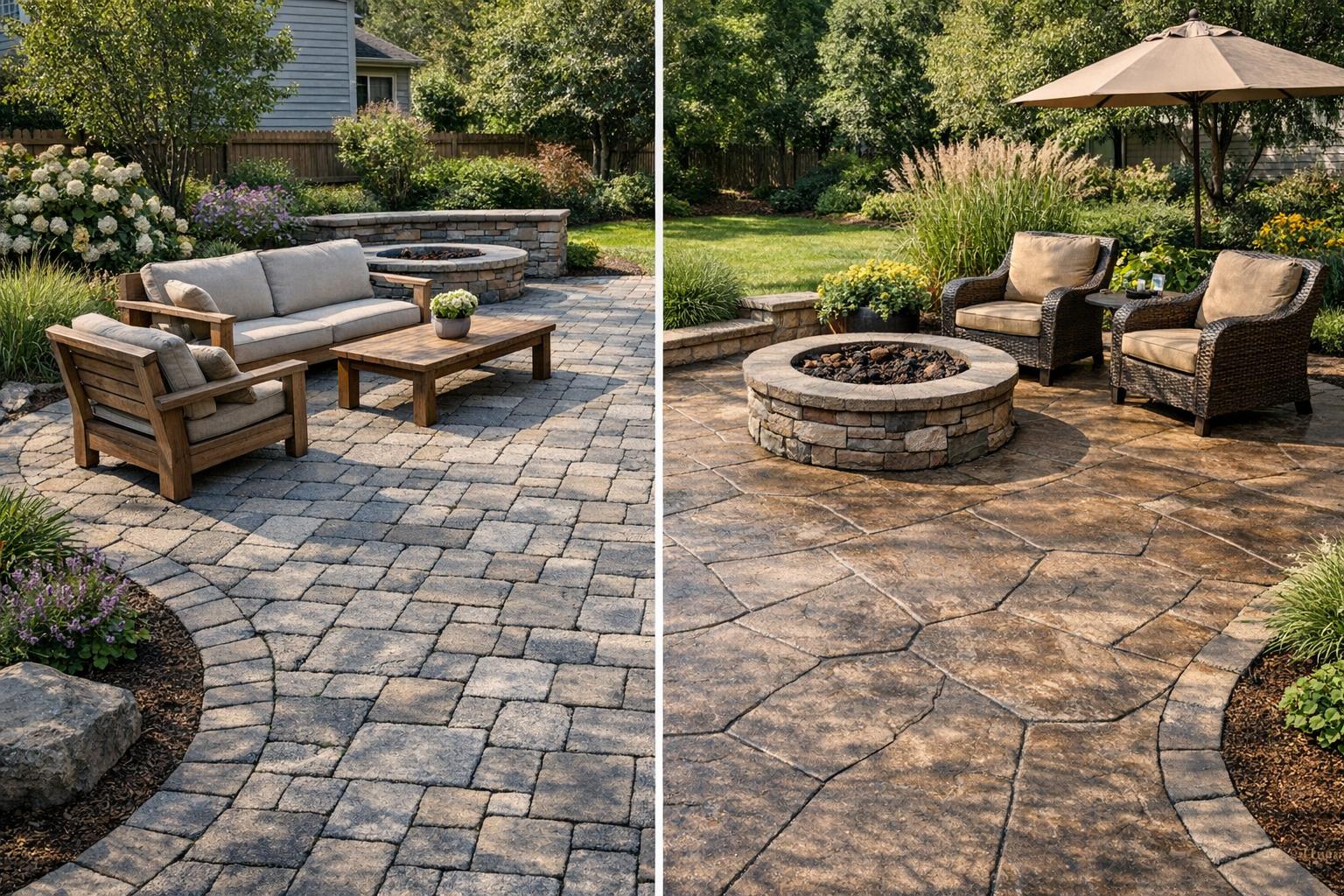
    How to Choose Between Concrete and Paver Driveways Guide related example showing Backyard patio comparison showing paver surface and stamped concrete surface
    This related patio detail helps show how site conditions and finish choices can change the homeowner's plan.

    Estimate the driveway range before choosing a surface

    Use this calculator to test how surface type, removal, edge detail, and access affect the rough range before choosing concrete, pavers, asphalt, or gravel.

    Driveway Cost Calculator

    Estimate driveway material plus labor ranges for gravel, asphalt, concrete, or paver installs.


  • How to Keep a Phased Landscaping Plan Cohesive Guide

    How to Keep a Phased Landscaping Plan Cohesive Guide

    One of the hardest parts of phased landscaping is avoiding a yard that looks pieced together. Cohesion comes from carrying the same planning logic through every phase, even when years separate the work.

    What creates cohesion across phases

    • A clear layout plan that already shows where future zones will connect
    • Consistent material families, edge details, and plant language
    • Infrastructure planning that supports later additions without awkward patching
    • A realistic sense of scale so each phase feels like part of the same property story

    How homeowners lose cohesion

    Cohesion usually breaks when each phase is designed in isolation or when homeowners chase a different look every time a new project starts.

    How to Keep a Phased Landscaping Plan Cohesive Guide related example showing Landscape beds and groundcover materials relevant to homeowner quantity planning for mulch, soil, and decorative rock
    This materials example gives homeowners a visual reference for comparing layout, materials, and maintenance tradeoffs before starting the project.
    • Changing materials or styles too aggressively from one phase to the next
    • Ignoring sightlines and how one area relates to another
    • Adding features without checking how they affect circulation and maintenance

    Ways to protect the bigger vision

    • Keep a master plan, even if the schedule is phased
    • Save material notes, plant palettes, and finish decisions from earlier work
    • Ask new contractors to work from the long-term plan rather than only the current phase scope

    Bottom line

    Phased landscaping works best when every stage is treated like part of one yard, not six unrelated projects.

    How to Keep a Phased Landscaping Plan Cohesive Guide related example showing Landscape beds and groundcover materials relevant to homeowner quantity planning for mulch, soil, and decorative rock
    This related materials detail helps show how site conditions and finish choices can change the homeowner's plan.

    If you want more context, continue with the main How to Phase a Landscaping Project Guide.


  • What to Do Now vs Later in a Phased Yard Plan Guide

    What to Do Now vs Later in a Phased Yard Plan Guide

    Phasing gets easier when you decide what absolutely belongs in the current budget and what can wait without hurting the long-term plan.

    Projects that usually belong in the current phase

    • Any work that fixes water movement, grade, safety, or access issues
    • Infrastructure that future phases will depend on
    • Work in the part of the yard you use most right now
    • High-impact cleanup that helps the yard feel functional immediately

    Projects that often make sense later

    Later phases are a better home for upgrades that are primarily aesthetic, highly optional, or easy to add without disturbing completed work.

    What to Do Now vs Later in a Phased Yard Plan Guide related example showing Landscape beds and groundcover materials relevant to homeowner quantity planning for mulch, soil, and decorative rock
    This materials example gives homeowners a visual reference for comparing layout, materials, and maintenance tradeoffs before starting the project.
    • Secondary seating or specialty feature zones
    • Extra lighting layers beyond the core functional plan
    • Decorative upgrades that can wait until the main structure is finished

    How to make the split wisely

    • Ask whether future work would damage or duplicate the current phase
    • Plan rough-ins now if they will save money later
    • Keep the current phase visually intentional even if the full dream plan is years away

    Bottom line

    A smart phased plan creates a yard that feels complete enough today while still leaving room for a stronger future buildout.

    What to Do Now vs Later in a Phased Yard Plan Guide related example showing Landscape beds and groundcover materials relevant to homeowner quantity planning for mulch, soil, and decorative rock
    This related materials detail helps show how site conditions and finish choices can change the homeowner's plan.

    If you want more context, continue with the main How to Phase a Landscaping Project Guide.


  • Which Landscaping Projects Should Happen First Guide

    Which Landscaping Projects Should Happen First Guide

    If the yard needs several improvements, the order matters. Good sequencing keeps new work from being torn up, reworked, or blocked by unfinished infrastructure.

    The usual priority order

    • Drainage, grading, erosion, and structural site corrections
    • Major hardscape layout and circulation decisions
    • Utility and irrigation work that supports later phases
    • Planting, lawn, and decorative finish work after the heavy construction is settled

    Why sequence changes from yard to yard

    The best order depends on access, slope, existing conditions, and what parts of the yard you plan to keep. A sloped backyard with drainage issues does not phase the same way as a flat front entry refresh.

    Which Landscaping Projects Should Happen First Guide related example showing Landscape beds and groundcover materials relevant to homeowner quantity planning for mulch, soil, and decorative rock
    This materials example gives homeowners a visual reference for comparing layout, materials, and maintenance tradeoffs before starting the project.
    • Look for the issue that can damage other work if ignored
    • Ask which phase will create the most access disruption and plan around it
    • Protect any existing features that must survive later construction

    Projects that usually belong later

    • Finish plantings that could be damaged by later heavy work
    • Decorative materials that depend on settled grades and edges
    • Optional features that do not change the basic functionality of the yard

    Bottom line

    The right first project is usually the one that stabilizes the site and clears the path for everything else.

    Which Landscaping Projects Should Happen First Guide related example showing Landscape beds and groundcover materials relevant to homeowner quantity planning for mulch, soil, and decorative rock
    This related materials detail helps show how site conditions and finish choices can change the homeowner's plan.

    If you want more context, continue with the main How to Phase a Landscaping Project Guide.


  • How to Prioritize Landscaping Phases by Budget Guide

    How to Prioritize Landscaping Phases by Budget Guide

    A phased landscaping plan works best when the first dollars solve the biggest functional problems and protect the future work you want to add later.

    Where budget should usually go first

    • Drainage, grading, and site issues that can undermine everything else
    • Core circulation such as walkways, access, and patio relationships
    • Infrastructure like irrigation and lighting rough-in when it will support later phases
    • High-visibility cleanup that improves everyday use right away

    How to separate essentials from nice-to-haves

    A strong phase-one budget protects the bigger plan. It is usually smarter to solve underlying problems first than to spend phase-one money on finish details that may need to be disturbed later.

    How to Prioritize Landscaping Phases by Budget Guide related example showing Landscape beds and groundcover materials relevant to homeowner quantity planning for mulch, soil, and decorative rock
    This materials example gives homeowners a visual reference for comparing layout, materials, and maintenance tradeoffs before starting the project.
    • Mark items as structural, functional, visual, or lifestyle upgrades
    • Ask what work must happen first so future phases are not duplicated
    • Keep optional features clearly listed outside the must-do foundation scope

    What homeowners often get backwards

    • Starting with decorative finishes before infrastructure is ready
    • Installing planting before drainage or circulation is settled
    • Choosing phase order based only on excitement instead of dependency

    Bottom line

    The best phased budgets make later work easier, not more expensive.

    How to Prioritize Landscaping Phases by Budget Guide related example showing Landscape beds and groundcover materials relevant to homeowner quantity planning for mulch, soil, and decorative rock
    This related materials detail helps show how site conditions and finish choices can change the homeowner's plan.

    If you want more context, continue with the main How to Phase a Landscaping Project Guide.


  • Should You Landscape Before Selling Your Home Guide

    Should You Landscape Before Selling Your Home Guide

    Landscaping before selling can be worthwhile, but the best pre-sale work is usually targeted, not massive. Buyers respond to a yard that feels maintained and usable more than one packed with expensive upgrades.

    When landscaping before selling usually makes sense

    • The front yard currently weakens the home’s first impression
    • Visible maintenance issues suggest neglect even if the house itself is strong
    • The backyard feels unfinished, messy, or less functional than competing homes
    • Simple updates could make photos, drive-by appeal, and showings much stronger

    What sellers should usually prioritize

    Pre-sale landscaping should focus on cleanup, repair, and clarity. The goal is not to build your dream yard right before moving out.

    Should You Landscape Before Selling Your Home Guide related example showing Landscape beds and groundcover materials relevant to homeowner quantity planning for mulch, soil, and decorative rock
    This materials example gives homeowners a visual reference for comparing layout, materials, and maintenance tradeoffs before starting the project.
    • Cleanup, trimming, edging, mulch refresh, and dead plant removal
    • Fixes for obvious drainage, walkway, or irrigation problems
    • Selective front-yard and entry improvements that improve first impressions quickly

    When to skip a big landscaping spend

    • When the project would be highly personalized or expensive to maintain
    • When interior repairs or listing prep offer a better return
    • When the market is unlikely to reward a large outdoor investment

    Bottom line

    Before selling, landscaping is most effective when it makes the property look cared for, easier to understand, and easier to maintain.

    Should You Landscape Before Selling Your Home Guide related example showing Landscape beds and groundcover materials relevant to homeowner quantity planning for mulch, soil, and decorative rock
    This related materials detail helps show how site conditions and finish choices can change the homeowner's plan.

    If you want more context, continue with the main Does Landscaping Increase Home Value Guide.


  • What a Landscaping Materials Delivery Should Include Guide

    What a Landscaping Materials Delivery Should Include Guide

    Material delivery day is one of the easiest moments for confusion to creep into a project. Homeowners should know what was ordered, where it will be placed, and how to spot obvious problems before installation starts.

    What to confirm when the delivery arrives

    • The correct material type, color, size, and quantity
    • The agreed drop location and whether access is still workable
    • Visible damage, torn bags, broken pallets, or obvious batch variation
    • Whether the delivered material matches the samples or selections you approved

    Details that matter more than homeowners expect

    Small delivery issues turn into bigger installation problems when they are not noticed until after material has been spread, cut, or mixed into the project.

    What a Landscaping Materials Delivery Should Include Guide related example showing Landscape beds and groundcover materials relevant to homeowner quantity planning for mulch, soil, and decorative rock
    This materials example gives homeowners a visual reference for comparing layout, materials, and maintenance tradeoffs before starting the project.
    • Batch consistency for pavers, stone, mulch, or decorative aggregate
    • Delivery placement that will not create extra labor or block the project sequence
    • Protection for nearby pavement, curbs, plantings, and irrigation components

    What to do if something looks wrong

    • Take clear photos before the material is moved or used
    • Pause installation on the questionable items until the supplier or contractor responds
    • Confirm whether replacement, credit, or re-delivery is the next step

    Bottom line

    The goal of delivery day is simple: make sure the right materials arrived in usable condition and landed in the right place for the project to stay on track.

    What a Landscaping Materials Delivery Should Include Guide related example showing Landscape beds and groundcover materials relevant to homeowner quantity planning for mulch, soil, and decorative rock
    This related materials detail helps show how site conditions and finish choices can change the homeowner's plan.

    If you want more context, continue with the main Landscaping Materials Guide for Homeowners.


  • How to Store Landscaping Materials Before Installation Guide

    How to Store Landscaping Materials Before Installation Guide

    If materials arrive before installation day, the storage plan matters. Poor storage can create broken pavers, soaked bag goods, contaminated aggregate, plant stress, or access problems before the project even begins.

    What homeowners should protect

    • Keep bagged material dry and off bare soil when possible
    • Store pavers, stone, and edging on stable ground where pallets will not sink or tip
    • Protect plant material from full-day stress, wind exposure, and missed watering
    • Keep bulk deliveries from blocking garages, drainage routes, and emergency access

    How to avoid damage and jobsite headaches

    Materials should be staged where they are easy to access without creating a second round of labor just to move them again.

    How to Store Landscaping Materials Before Installation Guide related example showing Landscape beds and groundcover materials relevant to homeowner quantity planning for mulch, soil, and decorative rock
    This materials example gives homeowners a visual reference for comparing layout, materials, and maintenance tradeoffs before starting the project.
    • Confirm the drop zone with the contractor before delivery day
    • Ask whether the storage surface can handle the weight of pallets or bulk piles
    • Cover and secure items that can shift, soak, or blow around

    When to let the contractor manage storage

    • When access is tight or material weight could damage driveways and curbs
    • When live plant material needs more careful timing and handling
    • When staged materials could interfere with family use, HOA rules, or neighbors

    Bottom line

    A good storage plan protects the materials and keeps the installation sequence cleaner once the crew is ready to work.

    How to Store Landscaping Materials Before Installation Guide related example showing Landscape beds and groundcover materials relevant to homeowner quantity planning for mulch, soil, and decorative rock
    This related materials detail helps show how site conditions and finish choices can change the homeowner's plan.

    If you want more context, continue with the main Landscaping Materials Guide for Homeowners.


  • Landscaping Materials Planning Mistakes Homeowners Should Avoid Guide

    Landscaping Materials Planning Mistakes Homeowners Should Avoid Guide

    Material decisions shape cost, appearance, maintenance, and how long a project lasts. Many expensive landscaping mistakes begin with materials that were chosen too quickly or without enough site context.

    Mistakes that cause the most rework

    • Choosing materials by appearance before checking sun, slope, drainage, and traffic demands
    • Ordering quantities before the base prep and final dimensions are confirmed
    • Mixing finishes that clash with the home, existing hardscape, or neighborhood context
    • Ignoring how heat, glare, dust, or runoff will affect everyday use
    • Assuming all suppliers are providing the same quality or grade of material

    How to make stronger material decisions

    Materials should be chosen after the project goals are clear. The right option for a shaded side yard may be a bad fit for a sunny play area or a sloped front bed.

    Landscaping Materials Planning Mistakes Homeowners Should Avoid Guide related example showing Landscape beds and groundcover materials relevant to homeowner quantity planning for mulch, soil, and decorative rock
    This materials example gives homeowners a visual reference for comparing layout, materials, and maintenance tradeoffs before starting the project.
    • Match materials to the use pattern, not just the inspiration image
    • Confirm maintenance expectations before ordering
    • Ask to see samples next to the home and any existing hardscape you plan to keep

    Questions to settle before ordering

    • How will this material age in the actual site conditions?
    • What base, edging, or installation detail does it need to perform well?
    • Will the color, texture, and scale still make sense when installed across the full area?

    Bottom line

    Material planning gets easier when you slow down long enough to align appearance, performance, maintenance, and delivery logistics before money is spent.

    Landscaping Materials Planning Mistakes Homeowners Should Avoid Guide related example showing Landscape beds and groundcover materials relevant to homeowner quantity planning for mulch, soil, and decorative rock
    This related materials detail helps show how site conditions and finish choices can change the homeowner's plan.

    If you want more context, continue with the main Landscaping Materials Guide for Homeowners.


  • What to Expect During a Concrete Driveway Project Guide

    What to Expect During a Concrete Driveway Project Guide

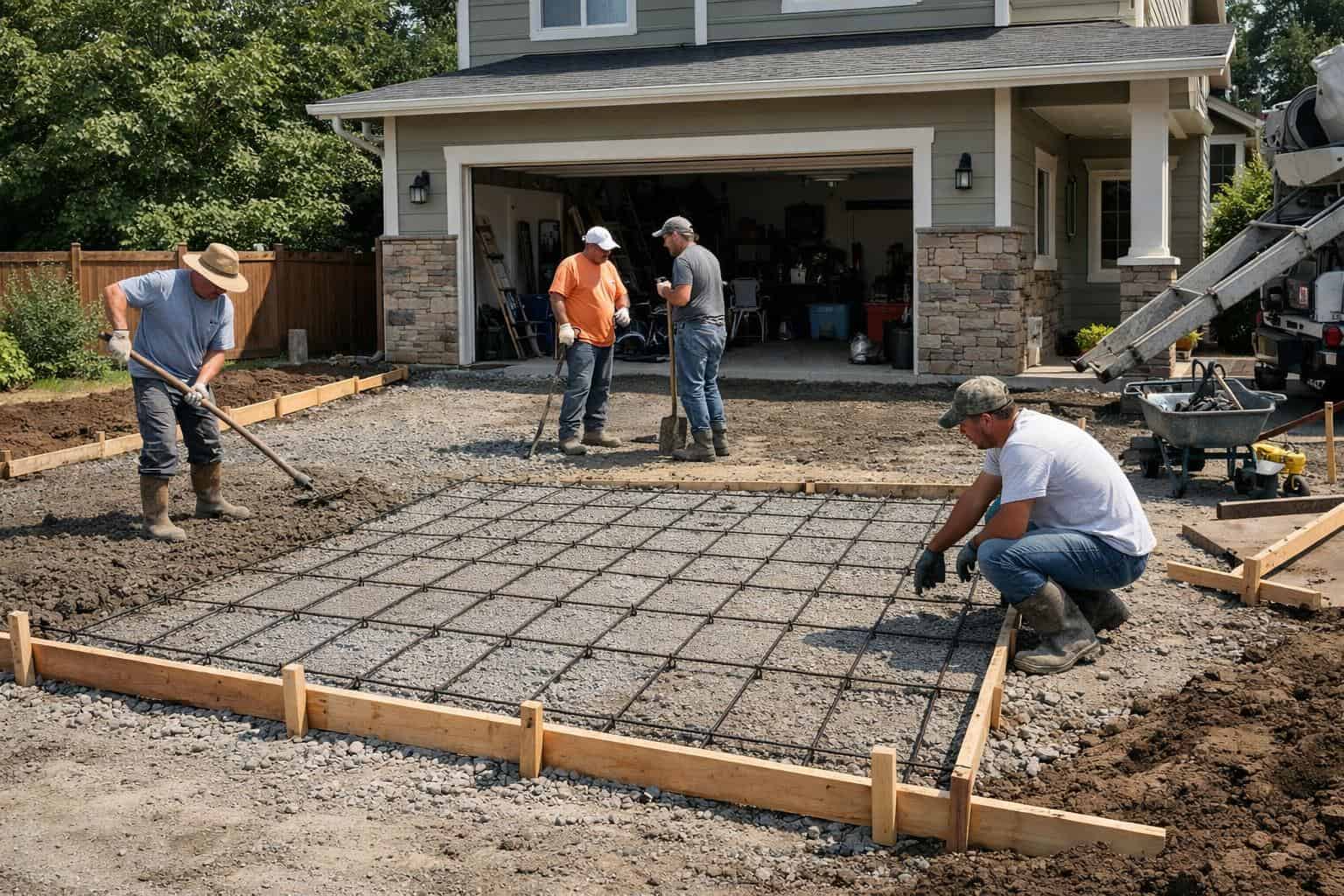
    A concrete driveway project usually moves through demolition or excavation, base work, forming, pour day, finishing, curing, and final cleanup. Knowing that sequence helps homeowners plan access and avoid surprises.

    What usually happens first

    Most crews start by protecting nearby areas, confirming layout, and preparing the site for removal or excavation.

    What to Expect During a Concrete Driveway Project Guide related example showing Concrete, paver, and stone outdoor surfaces showing common patio and walkway material choices for homeowners
    This patio example gives homeowners a visual reference for comparing layout, materials, and maintenance tradeoffs before starting the project.
    • Access changes while the old driveway is removed or the site is excavated
    • Noise, debris, and truck movement during demolition and base work
    • Layout checks for width, slope, tie-ins, and expansion or control joints

    What homeowners should expect during the main work

    • Forming and reinforcement installation before concrete is placed
    • A concentrated pour-and-finish day where crew timing matters a lot
    • Surface finishing, edging, and joint work that can change how soon the slab is ready for the next step
    • Restricted use while curing happens even after the crew appears to be finished

    What the closeout stage should include

    • A walkthrough covering cure time, sealing if included, and when to allow foot and vehicle traffic
    • Cleanup around edges, walkways, and street tie-ins
    • Explanation of normal early appearance changes versus real problems to monitor

    Bottom line

    The smoother your concrete driveway project is, the more likely it is that layout, site conditions, materials, and cleanup expectations were discussed in advance.

    What to Expect During a Concrete Driveway Project Guide related example showing Backyard patio comparison showing paver surface and stamped concrete surface
    This related patio detail helps show how site conditions and finish choices can change the homeowner's plan.

    For the broader overview, revisit the main Concrete Driveway Installation Process Explained Step-by-Step.