Hiring and Planning

Hiring and planning guides that help homeowners compare contractors, ask better questions, and understand project expectations before work begins.

Start with the service type

Landscaping Services Guideposts

Use these guides to understand what each service includes before comparing providers or requesting quotes.

Core service explainers

Start here when you are still deciding what kind of landscaper or outdoor contractor you need.

Compare before you hire

Use these pages when two services or surface choices sound similar but lead to different scopes.

Hire smarter

Planning And Contractor Comparison

Use this hub when you are moving from ideas into estimates, bids, and contractor conversations.

Before requesting estimates

These guides help define scope and compare companies before the first site visit.

Budget with better assumptions

Cost Guides And Calculators

Use this hub to move from rough budget ranges into the details that usually change quotes.

Calculator starting points

Open the calculator hub or a cost guide when you need a quick planning range.

High-impact cost decisions

These pages help compare choices where price, lifespan, and maintenance tradeoffs matter.

Understand the build

Installation And Site-Work Pathways

Use these guides to understand sequencing, site prep, access, and the details that affect long-term performance.

Hardscape and site prep

These projects often depend on base prep, demolition, grading, drainage, and access.

Drainage and retaining work

Use these when water, grade, or slope stability is part of the project.

Choose materials with ownership in mind

Material And Finish Decision Paths

Use these guides when appearance, maintenance, replacement, and budget all affect the right material choice.

Surface and finish comparisons

Compare outdoor surfaces before committing to a driveway, patio, or lawn direction.

Landscape material planning

Use these pages when quantity, delivery, or long-term maintenance are the main concern.

Protect the investment

Maintenance And Ownership Next Steps

Use these guides to understand ongoing care, seasonal refreshes, and when maintenance points to a bigger fix.

Maintenance planning

These guides help compare recurring service, seasonal work, and refresh projects.

When upkeep becomes repair

Use these when repeated maintenance problems suggest drainage, surface, or material issues.

  • Fast-Growing vs Low-Maintenance Privacy Landscaping Guide

    Fast-Growing vs Low-Maintenance Privacy Landscaping Guide

    Homeowners often want privacy plants that grow fast and stay easy forever, but those goals can pull in opposite directions. Faster growth often means more pruning, tighter spacing pressure, or shorter-term headaches.

    Why fast growth can be tempting

    • Quicker screening from neighbors or the street.
    • Faster sense of completion after installation.
    • Better short-term privacy in exposed yards.

    Why low maintenance can matter more later

    • Less constant trimming, cleanup, and reshaping.
    • Better long-term fit for narrow beds and property lines.
    • Lower risk of the screen becoming oversized or uneven.

    How to choose the right tradeoff

    • Be honest about how patient you can be.
    • Choose growth rate based on bed size and maintenance tolerance, not just urgency.
    • Consider mixing plant types so some provide early cover while others age better long term.

    Bottom line

    The right privacy strategy often balances early coverage with a mature screen you can actually live with.

    For the broader overview, continue with Privacy Landscaping Guide for Homeowners.

  • How to Prioritize Backyard Zones and Budget Guide

    How to Prioritize Backyard Zones and Budget Guide

    A backyard budget goes further when homeowners decide which zone matters most right now instead of trying to fully build every idea at once.

    What usually deserves first priority

    • The zone used most often or causing the biggest frustration today.
    • Any issue tied to drainage, access, or layout dysfunction.
    • The one destination area that would make the yard feel most complete.

    How to rank backyard zones

    • List daily-use, seasonal-use, and rarely-used areas separately.
    • Look for zones that unlock the rest of the yard once fixed.
    • Spend on function first, then on secondary embellishment.

    What homeowners often do backwards

    • Spreading the budget across too many low-impact improvements.
    • Building a specialty feature before basic gathering space works well.
    • Ignoring how phase-one choices affect future zones.

    Bottom line

    The smartest backyard budget usually starts with one strong destination and the infrastructure that supports it, not a dozen partially finished ideas.

    For the broader overview, continue with Backyard Landscaping Ideas and Planning Guide for Homeowners.


  • Kid-Friendly vs Adult Gathering Backyard Guide for Homeowners

    Kid-Friendly vs Adult Gathering Backyard Guide for Homeowners

    Some backyards lean toward play, others toward entertaining, and many households need a yard that supports both. The key is zoning, not trying to make every corner do everything.

    What kid-focused backyards usually need

    • Open movement, durable surfaces, clear supervision lines, and safe circulation.
    • Shade, flexible play areas, and fewer delicate finish choices in high-use zones.
    • Less clutter competing with movement and safety.

    What adult-gathering backyards usually need

    • Seating comfort, lighting, dining or lounge space, and stronger visual structure.
    • Defined arrival and circulation into the entertaining area.
    • Materials and planting that support ambiance and lower cleanup around seating.

    How to make one yard serve both

    • Create zones instead of forcing overlap everywhere.
    • Let the main gathering area keep adult comfort while nearby space supports play.
    • Choose materials that tolerate real-life use from both groups.

    Bottom line

    The most successful family backyards usually feel balanced because they separate uses intelligently rather than picking one group to design for exclusively.

    For the broader overview, continue with Backyard Landscaping Ideas and Planning Guide for Homeowners.


  • Backyard Lawn vs Patio Space Guide for Homeowners

    Backyard Lawn vs Patio Space Guide for Homeowners

    One of the biggest backyard decisions is how much room should stay lawn and how much should shift to patio or other hardscape. The right split depends on how the yard gets used, not on habit alone.

    When more lawn makes sense

    • Open play, pets, cooling effect, and a softer backyard feel matter most.
    • You have the time and conditions to maintain healthy grass.
    • The household uses the open space regularly enough to justify it.

    When more patio space makes sense

    • Dining, seating, entertaining, and lower mow area are higher priorities.
    • The existing lawn struggles or feels underused.
    • The backyard needs a stronger destination space to function better.

    How to decide the split

    • Watch how the yard is actually used now.
    • Keep enough open space for what the household truly values.
    • Avoid leaving lawn just because it has always been there.

    Bottom line

    The better backyard balance is the one that gives each square foot a clear job instead of spreading space thinly across too many half-used zones.

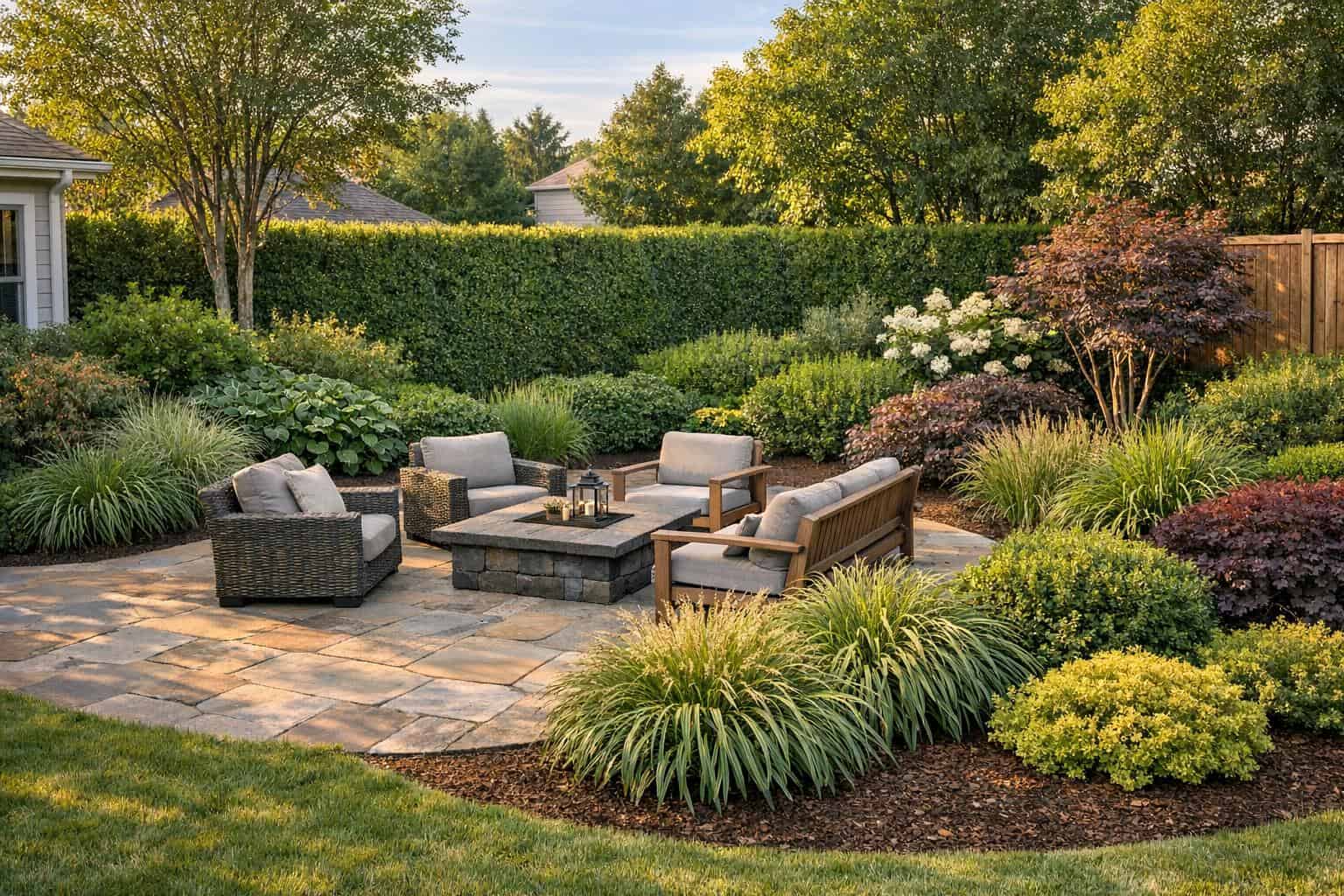
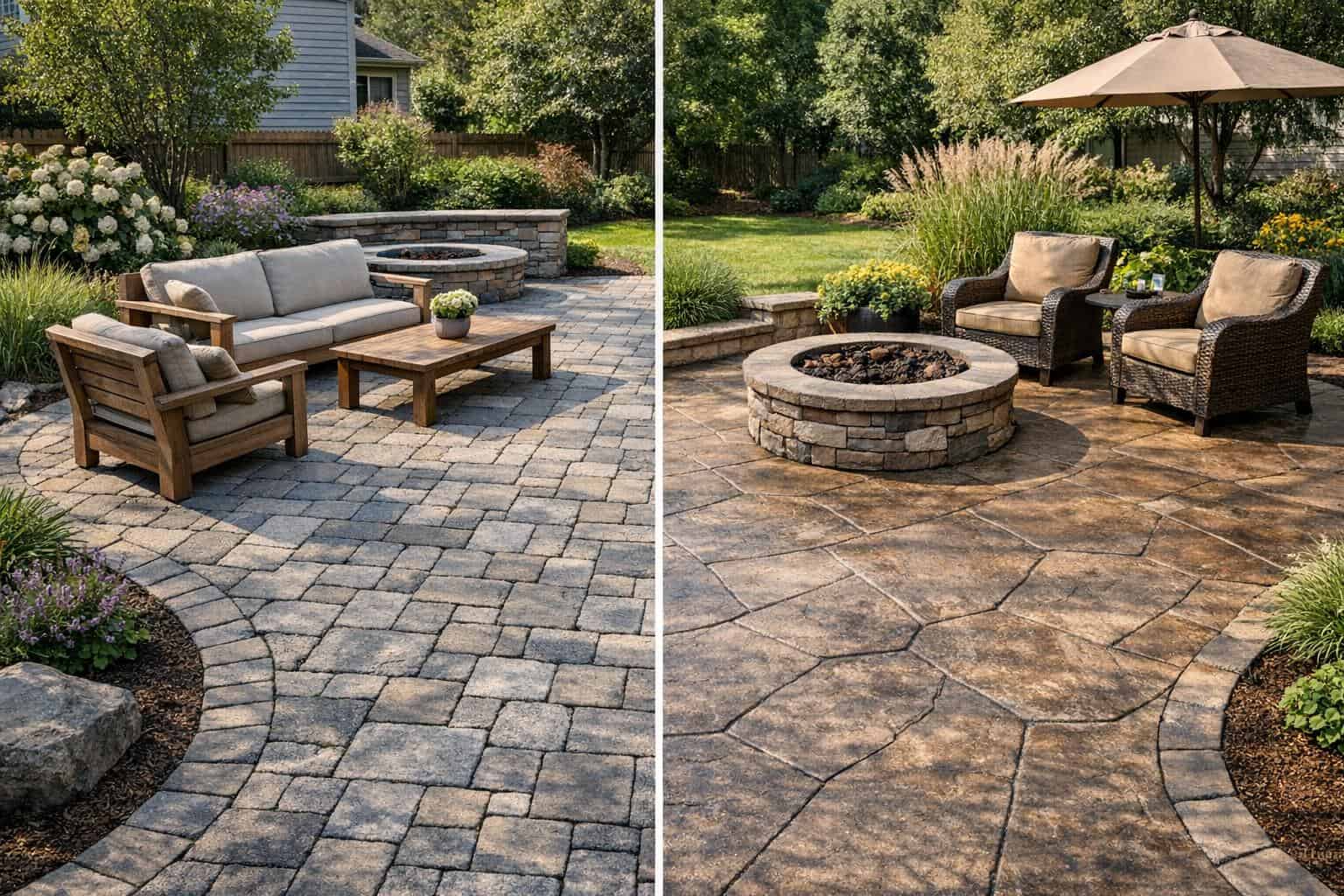
    Backyard Lawn vs Patio Space Guide for Homeowners related example showing Concrete, paver, and stone outdoor surfaces showing common patio and walkway material choices for homeowners
    This patio example gives homeowners a visual reference for comparing layout, materials, and maintenance tradeoffs before starting the project.

    For the broader overview, continue with Backyard Landscaping Ideas and Planning Guide for Homeowners.

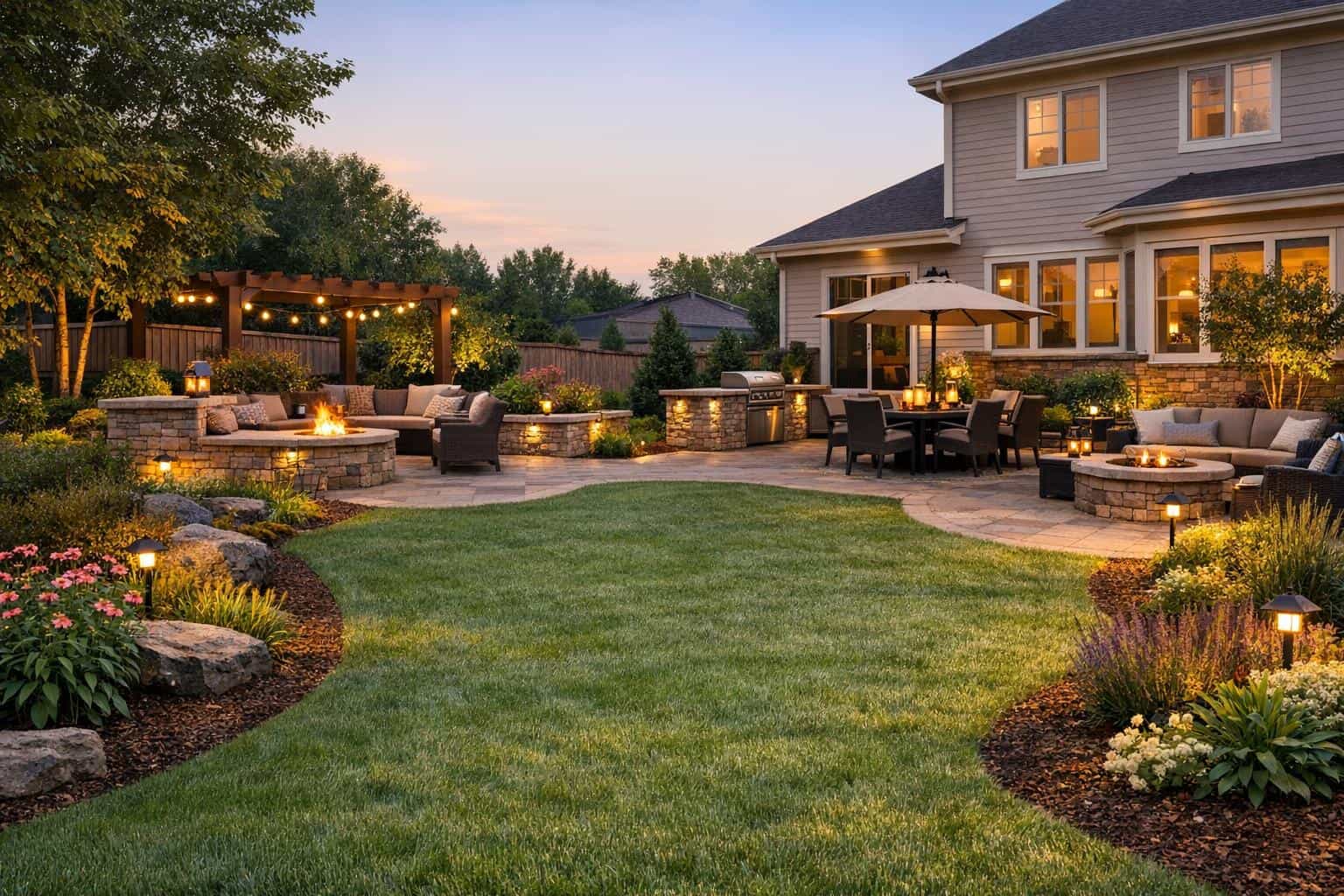
    Backyard Lawn vs Patio Space Guide for Homeowners related example showing Backyard patio comparison showing paver surface and stamped concrete surface
    This related patio detail helps show how site conditions and finish choices can change the homeowner's plan.

  • Backyard Entertaining vs Low Maintenance Guide for Homeowners

    Backyard Entertaining vs Low Maintenance Guide for Homeowners

    Many backyards try to be both entertainment-focused and low-maintenance, but the best results come from deciding which areas need to work hardest and which areas should stay simple.

    What entertainment-focused yards usually need

    • Defined seating, circulation, lighting, and durable surfaces for gathering.
    • Stronger integration between patio, grilling, shade, and views.
    • More thoughtful transitions between active and quiet zones.

    What low-maintenance yards usually need

    • Simpler zoning, fewer fussy transitions, and easier-care planting.
    • Materials and layouts that still look stable between cleanups.
    • Reduced lawn stress and less repetitive repair work.

    How to balance both

    • Put effort where people actually gather most.
    • Simplify the supporting zones so the entertainment area can shine.
    • Do not overbuild the whole backyard when one strong destination area may be enough.

    Bottom line

    The best backyard plan gives social spaces the detail they need while keeping the rest of the yard easy to live with.

    For the broader overview, continue with Backyard Landscaping Ideas and Planning Guide for Homeowners.


  • How to Prioritize Your Front Yard Budget Guide

    How to Prioritize Your Front Yard Budget Guide

    A front-yard budget works best when homeowners focus first on the improvements that shape first impressions and daily approach to the home.

    What usually deserves first budget

    • Entry, path, and curb-appeal cleanup.
    • Fixes for drainage, access, or obvious maintenance problems.
    • High-visibility planting and material refreshes.

    How to separate essentials from extras

    • Start with the view from the street and the walk to the door.
    • Prioritize anything that makes the property feel neglected or hard to approach.
    • Treat highly decorative items as phase-two upgrades if needed.

    Where homeowners often overspend

    • Feature planting or decorative details before basic cleanup and layout clarity.
    • Too many small upgrades that never add up to one strong first impression.
    • Luxury touches that ignore the front yard’s structural weak spots.

    Bottom line

    The best front-yard budget improves entry, clarity, and care signals before it chases extra decoration.

    For the broader overview, continue with Front Yard Landscaping Guide for Homeowners.

  • Front Yard Privacy vs Openness Guide for Homeowners

    Front Yard Privacy vs Openness Guide for Homeowners

    Some front yards feel best when they are open and welcoming, while others need more screening to feel comfortable. The right balance depends on the house, the street, and how the front yard is used.

    When openness often works better

    • The home benefits from visible architecture and a clear approach to the entry.
    • The lot already feels comfortable and does not need screening.
    • You want the front yard to support broad curb appeal and easy maintenance.

    When privacy often helps more

    • The house sits close to the street or has exposed sitting areas.
    • Traffic, neighbors, or sightlines reduce comfort.
    • Layered screening can improve use without closing the yard off completely.

    How to choose the right balance

    • Protect comfort without hiding the home’s strengths.
    • Use layered planting instead of abrupt visual walls where possible.
    • Keep entry clarity and maintenance in mind while screening.

    Bottom line

    The best front yard feels comfortable and intentional without sacrificing approach, visibility, or ease of care.

    For the broader overview, continue with Front Yard Landscaping Guide for Homeowners.


  • Front Yard Curb Appeal vs Low Maintenance Guide for Homeowners

    Front Yard Curb Appeal vs Low Maintenance Guide for Homeowners

    Homeowners often feel like they have to choose between curb appeal and low maintenance, but the better front yards usually balance both rather than treating them as opposites.

    What adds curb appeal fast

    • Cleaner layout, sharper edges, healthier entry plantings, and a more intentional path to the door.
    • Lighting, material cleanup, and a front approach that feels cared for.
    • Simple upgrades that reduce visual clutter.

    What keeps the front yard easier to own

    • Right-sized plants, stable materials, and less fussy bed layout.
    • Fewer awkward lawn edges and easier irrigation zones.
    • A design that still looks organized between maintenance visits.

    How to balance both goals

    • Use the highest-visibility areas to make a strong first impression.
    • Avoid plants and materials that instantly raise upkeep pressure.
    • Build around clarity and neatness rather than complexity.

    Bottom line

    The strongest front-yard design looks polished from the street without turning into a constant maintenance project.

    For the broader overview, continue with Front Yard Landscaping Guide for Homeowners.


  • How to Decide Where to Simplify Your Yard First Guide

    How to Decide Where to Simplify Your Yard First Guide

    The best low-maintenance projects usually start with the part of the yard that causes the most frustration, not with a full-property redesign on day one.

    Areas that often deserve first attention

    • High-visibility spaces that always look messy or overgrown.
    • Zones that eat the most watering, trimming, or repair time.
    • Problem spots where drainage, access, or poor layout undermine the rest of the yard.

    How to choose the first simplification target

    • Track where your time and money actually go now.
    • Look for the space that affects your daily experience of the yard most.
    • Choose a phase that improves function immediately without blocking future plans.

    What homeowners often get wrong

    • Starting in a low-impact area because it feels safer.
    • Simplifying one bed while leaving the real infrastructure problem untouched.
    • Trying to improve everything a little instead of fixing one zone well.

    Bottom line

    The smartest place to simplify first is usually the one that removes the most recurring frustration and makes later phases easier.

    For the broader overview, continue with Low-Maintenance Landscaping Guide for Homeowners.


  • How to Choose Between a Paver Patio and Stamped Concrete Guide

    How to Choose Between a Paver Patio and Stamped Concrete Guide

    The strongest patio choice usually becomes clearer when homeowners compare repair style, visual goals, maintenance, and site conditions instead of just chasing the trendier finish.

    Questions to ask first

    • Do you want easier spot repair or a monolithic decorative surface?
    • How much movement, drainage stress, or freeze-thaw exposure does the site see?
    • Which look fits the house and the rest of the hardscape better?

    When pavers usually make more sense

    • You want repairable units and more texture or pattern flexibility.
    • The patio will tie into other paver-based hardscape.
    • You are comfortable with joint and edge maintenance.

    When stamped concrete usually makes more sense

    • You want a decorative concrete look at a potentially lower price point than pavers.
    • The site conditions support a quality slab installation.
    • You prefer fewer joints and a more continuous surface.

    Bottom line

    The better patio is the one whose look, repair strategy, and climate fit all line up with how you plan to use the space.

    For the broader overview, continue with Paver Patio vs Stamped Concrete Patio Guide for Homeowners.