Hiring and Planning

Hiring and planning guides that help homeowners compare contractors, ask better questions, and understand project expectations before work begins.

Start with the service type

Landscaping Services Guideposts

Use these guides to understand what each service includes before comparing providers or requesting quotes.

Core service explainers

Start here when you are still deciding what kind of landscaper or outdoor contractor you need.

Compare before you hire

Use these pages when two services or surface choices sound similar but lead to different scopes.

Hire smarter

Planning And Contractor Comparison

Use this hub when you are moving from ideas into estimates, bids, and contractor conversations.

Before requesting estimates

These guides help define scope and compare companies before the first site visit.

Budget with better assumptions

Cost Guides And Calculators

Use this hub to move from rough budget ranges into the details that usually change quotes.

Calculator starting points

Open the calculator hub or a cost guide when you need a quick planning range.

High-impact cost decisions

These pages help compare choices where price, lifespan, and maintenance tradeoffs matter.

Understand the build

Installation And Site-Work Pathways

Use these guides to understand sequencing, site prep, access, and the details that affect long-term performance.

Hardscape and site prep

These projects often depend on base prep, demolition, grading, drainage, and access.

Drainage and retaining work

Use these when water, grade, or slope stability is part of the project.

Choose materials with ownership in mind

Material And Finish Decision Paths

Use these guides when appearance, maintenance, replacement, and budget all affect the right material choice.

Surface and finish comparisons

Compare outdoor surfaces before committing to a driveway, patio, or lawn direction.

Landscape material planning

Use these pages when quantity, delivery, or long-term maintenance are the main concern.

Protect the investment

Maintenance And Ownership Next Steps

Use these guides to understand ongoing care, seasonal refreshes, and when maintenance points to a bigger fix.

Maintenance planning

These guides help compare recurring service, seasonal work, and refresh projects.

When upkeep becomes repair

Use these when repeated maintenance problems suggest drainage, surface, or material issues.

  • What a Concrete Driveway Quote Should Include Guide for Homeowners

    What a Concrete Driveway Quote Should Include Guide for Homeowners

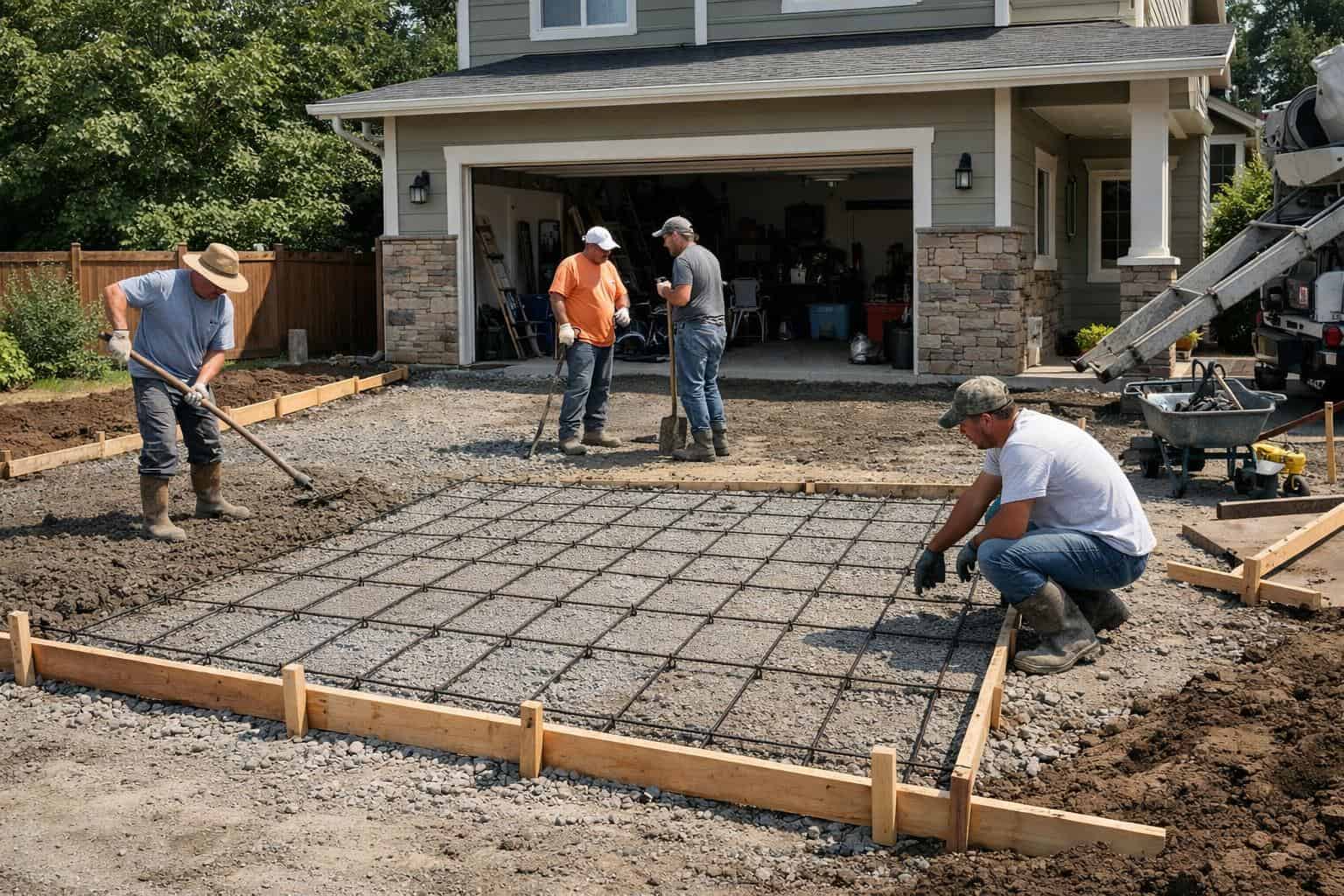
    A concrete driveway quote should explain what is being removed, built, reinforced, finished, and cleaned up so you can compare contractors without guessing.

    Items a strong quote should cover

    A good concrete driveway quote should make it easy to see what the contractor plans to build, what materials are included, and what could trigger changes later.

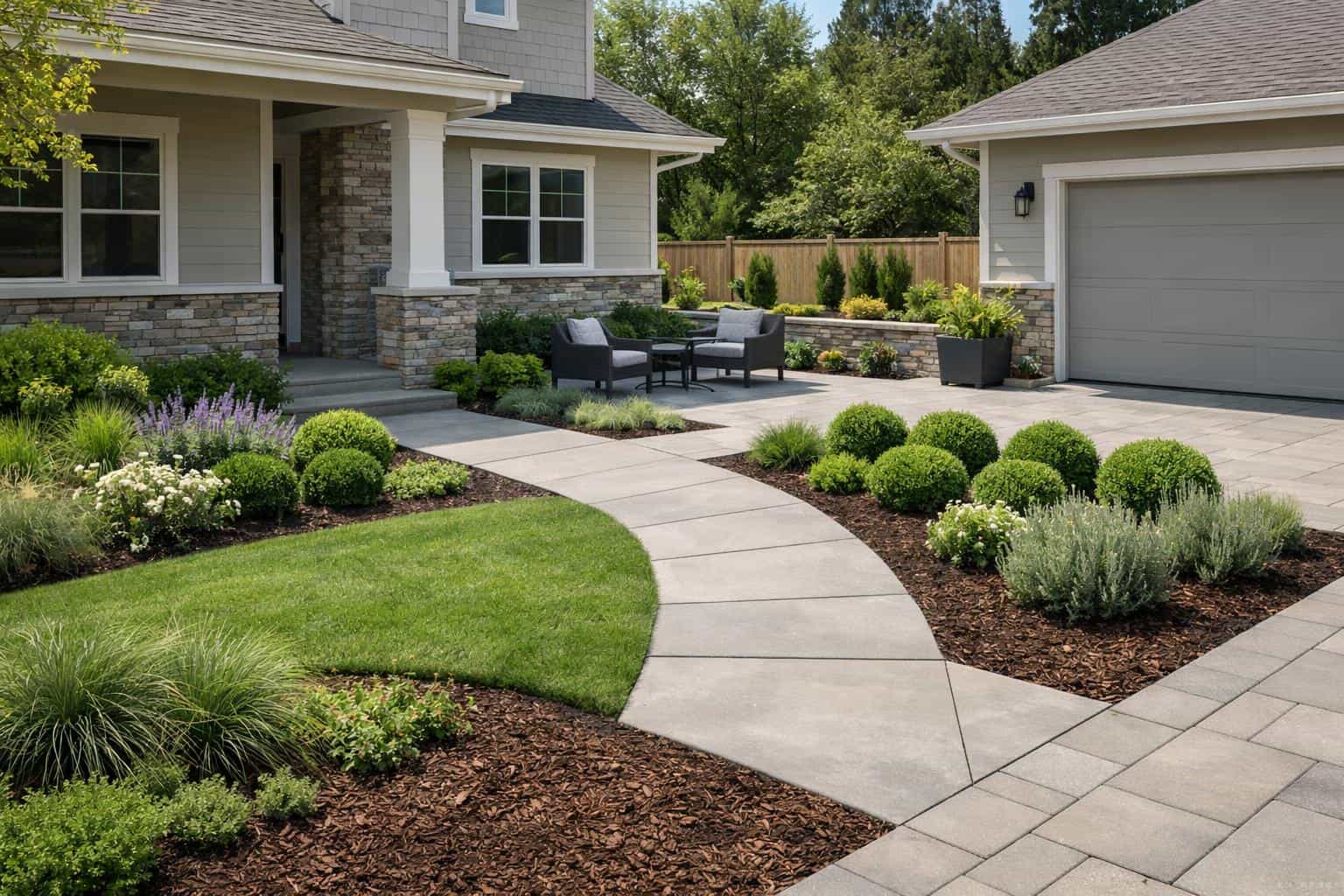
    What a Concrete Driveway Quote Should Include Guide for Homeowners related example showing Concrete, paver, and stone outdoor surfaces showing common patio and walkway material choices for homeowners
    This patio example gives homeowners a visual reference for comparing layout, materials, and maintenance tradeoffs before starting the project.
    • Driveway dimensions, thickness, reinforcement, and base preparation details
    • Demolition, disposal, grading, and subgrade correction if existing concrete is being removed
    • Joint layout, finish type, edge details, and any decorative options
    • Curing plan, sealing if included, and timeline for vehicle use after installation
    • Cleanup scope, protection of nearby areas, and who handles permits or inspections if needed

    Details homeowners should clarify

    Concrete work can look simple on the surface while still hiding important structural decisions. Homeowners should understand not just what the driveway will look like, but how it will be built.

    What a Concrete Driveway Quote Should Include Guide for Homeowners related example showing Patio construction detail relevant to base preparation, drainage, and quote scope for homeowners
    This related patio detail helps show how site conditions and finish choices can change the homeowner's plan.
    • Ask why the contractor chose that thickness and reinforcement approach
    • Confirm what happens if poor soil, drainage problems, or deeper base work are discovered
    • Find out whether sealing, saw cuts, and final cleanup are included or optional

    What weak quotes tend to miss

    • Quotes that only list square footage and a total price
    • No mention of base prep, jointing, reinforcement, or edge treatment
    • No clear guidance on curing time or when you can drive on the slab

    Bottom line

    If you cannot tell what work is included, what the finish standard is, or how problems will be handled, the quote is not ready to compare yet.

    The main Concrete Driveway Installation Process Explained Step-by-Step is a helpful companion if you want the broader service context before hiring.

  • Low-Maintenance Landscaping Planning Mistakes Homeowners Should Avoid Guide

    Low-Maintenance Landscaping Planning Mistakes Homeowners Should Avoid Guide

    Many homeowners aim for low-maintenance landscaping but accidentally recreate the same upkeep problems under a different look.

    The mistakes that cause the most trouble

    Most homeowner frustration comes from decisions made too early, assumptions that were never confirmed, or details that looked minor until installation started.

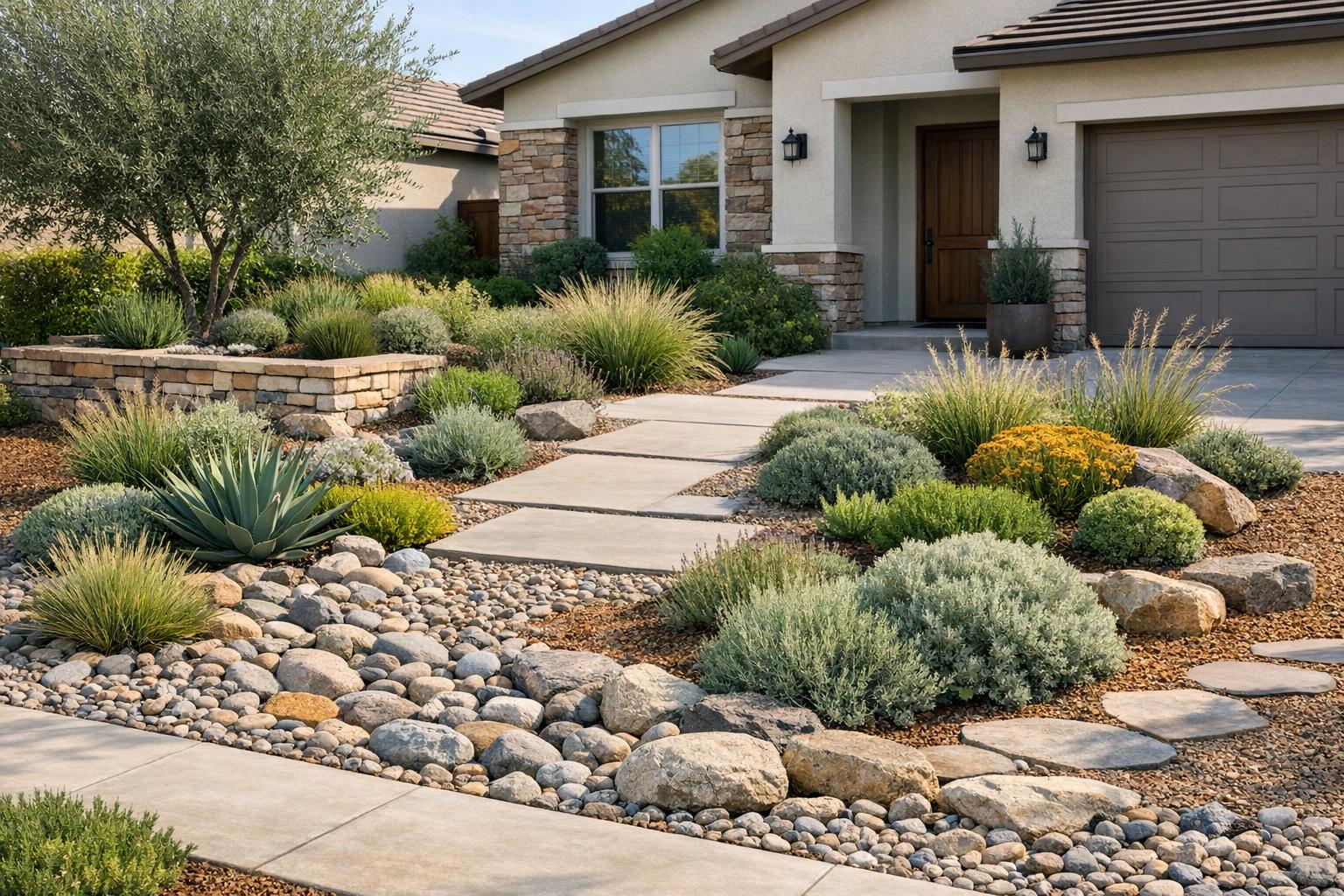
    Low-Maintenance Landscaping Planning Mistakes Homeowners Should Avoid Guide related example showing Groundcover and hardscape materials relevant to comparing real long-term maintenance demands
    This low maintenance example gives homeowners a visual reference for comparing layout, materials, and maintenance tradeoffs before starting the project.
    • Choosing plants by appearance without checking mature size, pruning needs, and water demand
    • Swapping one high-effort material for another without fixing the underlying layout problem
    • Ignoring irrigation efficiency while expecting planting beds to somehow need less care
    • Using decorative rock or turf in places where heat, glare, or drainage will become a problem
    • Trying to reduce maintenance everywhere instead of focusing on the most frustrating zones first

    How to avoid expensive rework

    True low-maintenance planning works best when you start by identifying which chores, conditions, or spaces are costing you the most time.

    Low-Maintenance Landscaping Planning Mistakes Homeowners Should Avoid Guide related example showing Low-water landscape bed materials including rock and mulch relevant to drought-conscious groundcover selection
    This related low maintenance detail helps show how site conditions and finish choices can change the homeowner's plan.
    • Prioritize layout simplification and irrigation efficiency before picking finishes
    • Use plant and material choices that match your sun, slope, drainage, and use patterns
    • Ask what each decision will require to maintain in year one and year three

    Questions to settle before work starts

    • Which parts of the yard are creating the most watering, trimming, cleanup, or replacement work now?
    • Are you reducing upkeep, or just changing the kind of upkeep you will have to do?
    • How will the chosen materials behave in your climate and on your specific site conditions?

    Bottom line

    Low-maintenance landscaping usually goes much better when homeowners slow down long enough to confirm scope, access, maintenance expectations, and how the project fits the rest of the yard.

    If you need the bigger-picture service overview, start with the main Low-Maintenance Landscaping Guide for Homeowners.


  • How Long Does a Low-Maintenance Landscaping Project Take Guide

    How Long Does a Low-Maintenance Landscaping Project Take Guide

    Low-maintenance landscaping can be quick when it is mostly cleanup and targeted replanting, but it takes longer when grading, irrigation updates, hardscape, lighting, and full material changes are involved.

    What usually sets the timeline

    Low-maintenance landscaping timelines usually move fastest when layout decisions, access, materials, and contractor scheduling are aligned before work starts.

    How Long Does a Low-Maintenance Landscaping Project Take Guide related example showing Groundcover and hardscape materials relevant to comparing real long-term maintenance demands
    This low maintenance example gives homeowners a visual reference for comparing layout, materials, and maintenance tradeoffs before starting the project.

    Homeowners often focus on the installation days only, but the total calendar window for low-maintenance landscaping also includes planning, approvals, ordering, weather delays, and cleanup.

    • How much removal is needed before the new layout can be installed
    • Whether the project includes drainage, edging, irrigation, or hardscape upgrades
    • How many planting changes are being made and whether mature material is being ordered
    • If mulch, decorative rock, turf, or ground cover choices require new base preparation
    • Whether the goal is simple maintenance reduction or a complete redesign

    A realistic homeowner schedule

    Many low-maintenance landscaping projects move through a similar rhythm even when the exact details vary by property.

    • Define where maintenance time is being spent now and which areas cause the most trouble
    • Remove or simplify high-effort zones before new materials go in
    • Install durable surfaces, efficient irrigation, and easier-care planting
    • Walk the finished yard with the contractor and confirm the upkeep plan

    How to keep the project moving

    If you want a smoother low-maintenance landscaping project, the best move is to make major design and scope choices before the crew arrives.

    How Long Does a Low-Maintenance Landscaping Project Take Guide related example showing Low-water landscape bed materials including rock and mulch relevant to drought-conscious groundcover selection
    This related low maintenance detail helps show how site conditions and finish choices can change the homeowner's plan.
    • Set priorities early so the contractor knows which maintenance headaches matter most
    • Choose plants and materials before demolition starts to avoid ordering gaps
    • Ask whether irrigation updates should happen before planting and finish materials
    • Separate must-do improvements from optional aesthetic upgrades

    Bottom line

    The best way to estimate your own low-maintenance landscaping schedule is to ask when design, ordering, site prep, installation, and punch-list work will happen, not just when the crew first shows up.

    If you are still comparing options, the main Low-Maintenance Landscaping Guide for Homeowners can help you understand the broader service before you commit to dates.


  • Kid-Friendly Backyard Landscaping Planning Mistakes Homeowners Should Avoid Guide

    Kid-Friendly Backyard Landscaping Planning Mistakes Homeowners Should Avoid Guide

    The best kid-friendly yards feel natural and flexible, but they are usually undermined by a few common planning mistakes that only become obvious after families start using the space.

    The mistakes that cause the most trouble

    Most homeowner frustration comes from decisions made too early, assumptions that were never confirmed, or details that looked minor until installation started.

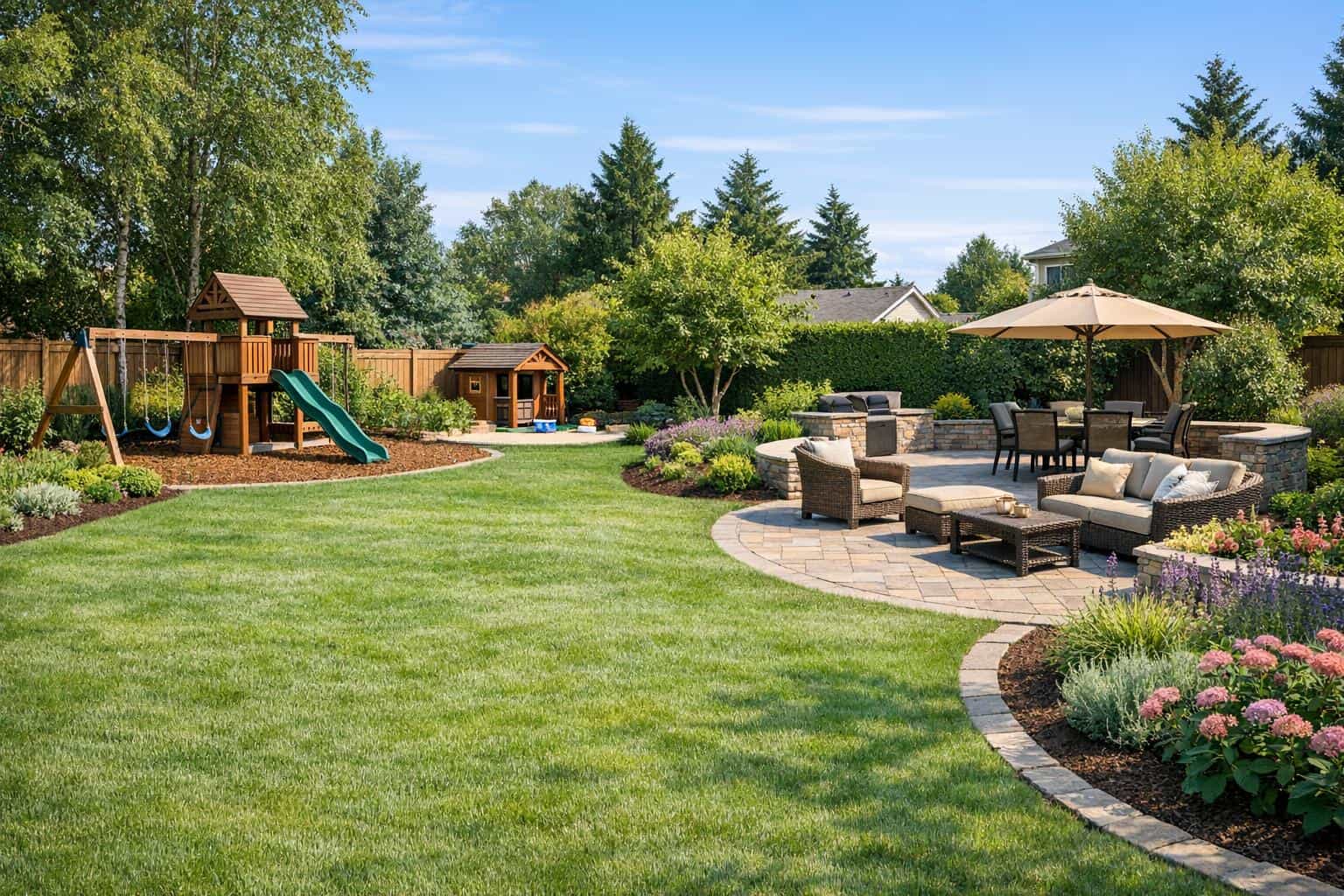
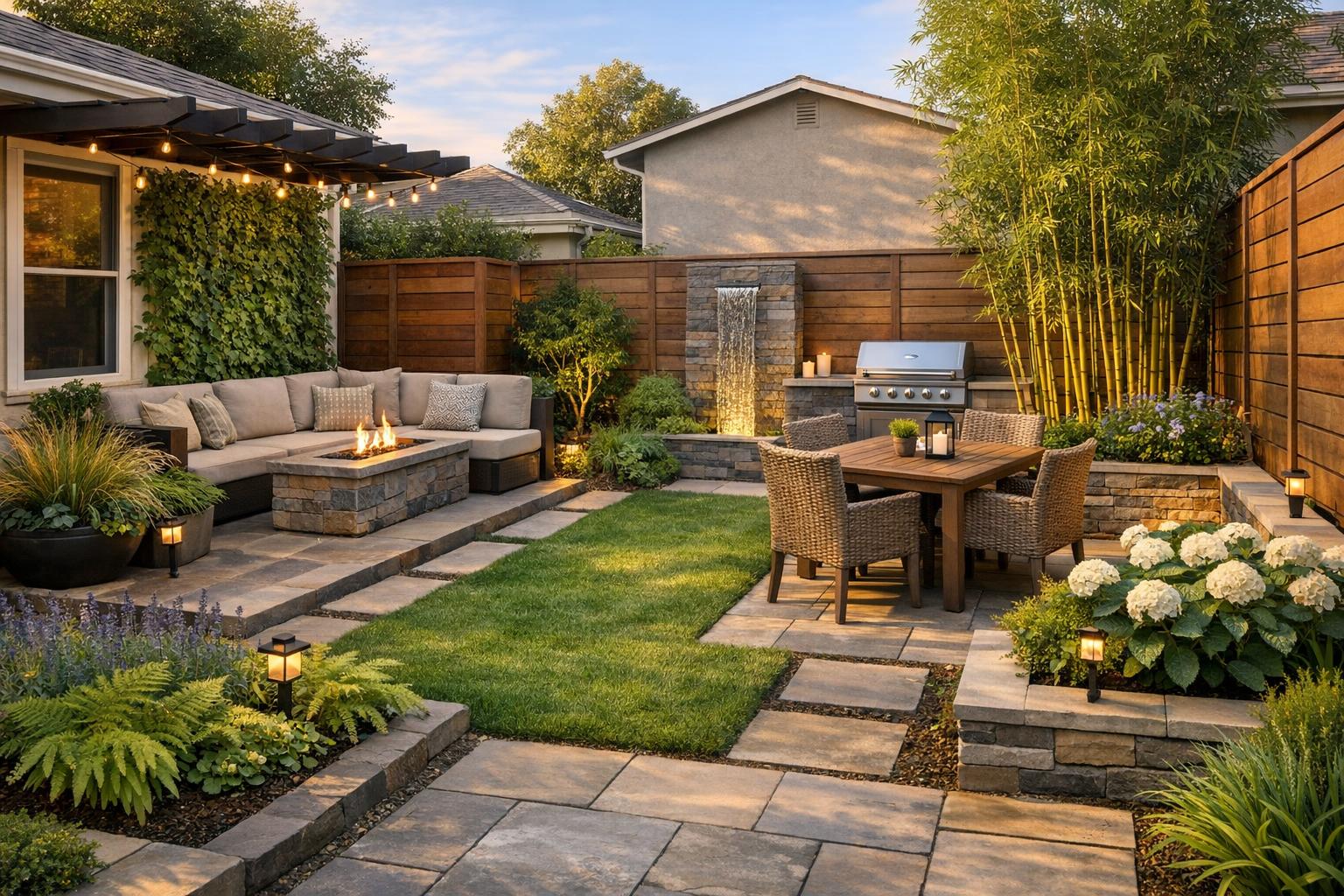
    Kid-Friendly Backyard Landscaping Planning Mistakes Homeowners Should Avoid Guide related example showing Small Backyard Landscaping detail relevant to planning mistakes, layout, and upkeep expectations
    This backyard example gives homeowners a visual reference for comparing layout, materials, and maintenance tradeoffs before starting the project.
    • Putting play features in the yard before solving drainage and circulation
    • Choosing plants with thorns, mess, toxicity concerns, or heavy maintenance near active areas
    • Forgetting shade, seating, and supervision lines for the adults using the space too
    • Mixing too many surfaces and levels without a simple traffic pattern
    • Using materials that look good at first but wear poorly under constant foot traffic

    How to avoid expensive rework

    Good family-yard planning starts with how children actually move through the yard, where adults gather, and what needs to stay visible from the house or patio.

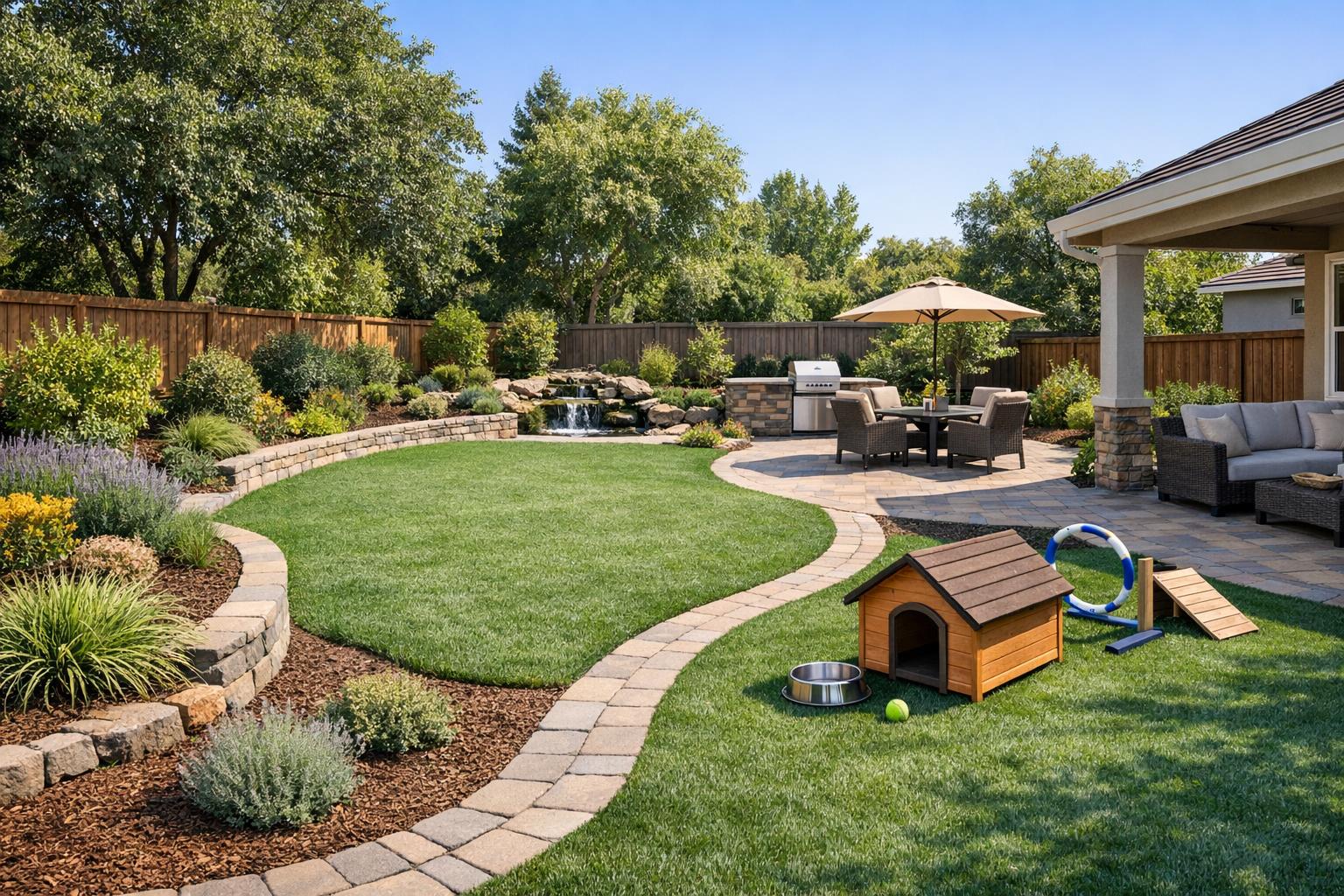
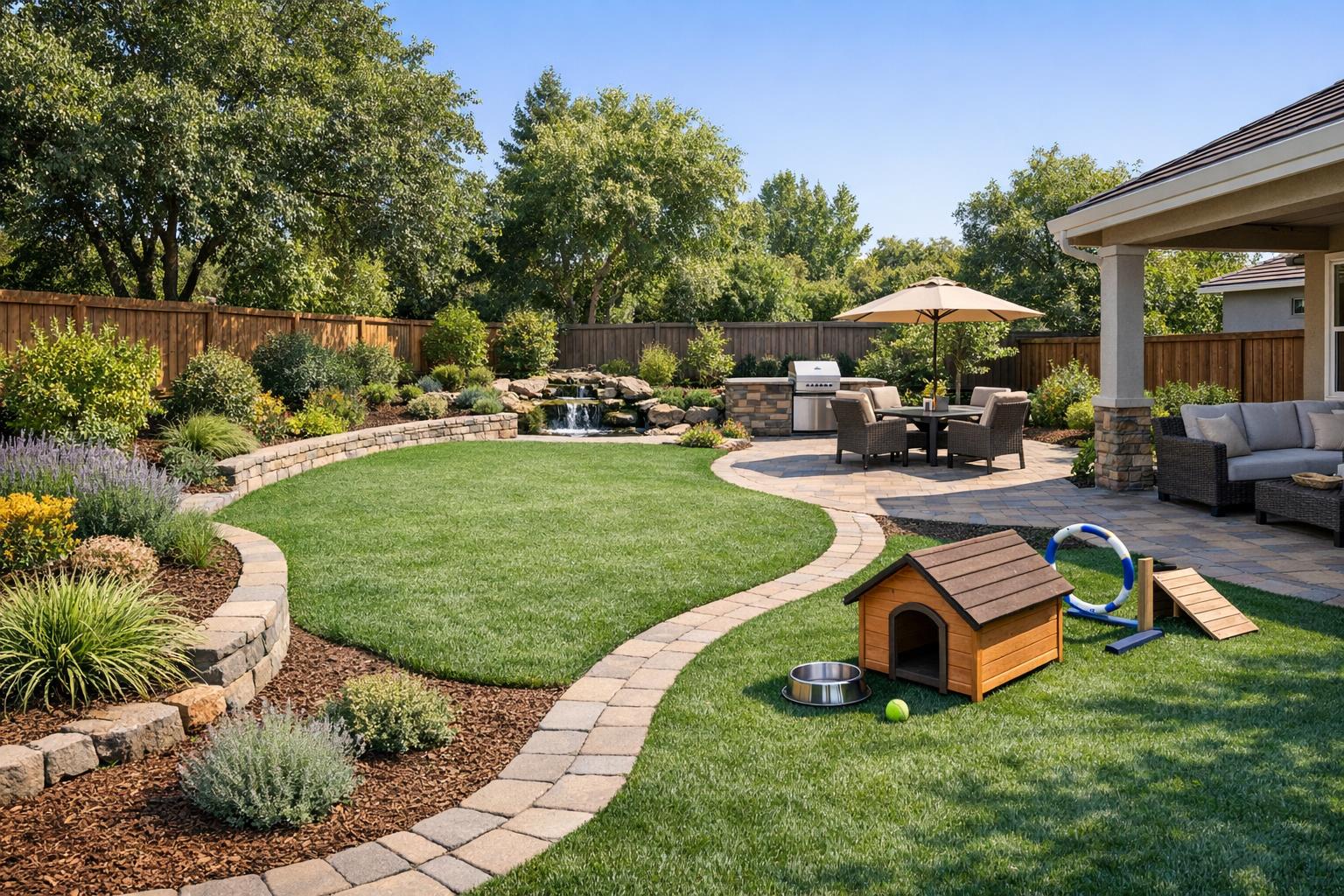
    Kid-Friendly Backyard Landscaping Planning Mistakes Homeowners Should Avoid Guide related example showing Pet-Friendly Backyard Landscaping detail relevant to planning mistakes, layout, and upkeep expectations
    This related backyard detail helps show how site conditions and finish choices can change the homeowner's plan.
    • Map active play, quiet play, dining, circulation, and planting as separate zones
    • Choose materials and plantings based on wear, cleanup, and safety, not just style
    • Confirm how irrigation, drainage, and lighting support everyday use before finalizing finishes

    Questions to settle before work starts

    • Which areas need the best supervision lines from indoors and from seating areas?
    • What surfaces will handle running, bikes, toys, or pets without becoming a maintenance headache?
    • How will the yard still work as children grow and their activities change?

    Bottom line

    Kid-friendly backyard landscaping usually goes much better when homeowners slow down long enough to confirm scope, access, maintenance expectations, and how the project fits the rest of the yard.

    If you need the bigger-picture service overview, start with the main Kid-Friendly Backyard Landscaping Guide for Homeowners.


  • How Long Does a Kid-Friendly Backyard Landscaping Project Take Guide

    How Long Does a Kid-Friendly Backyard Landscaping Project Take Guide

    A kid-friendly backyard project can move quickly when the design is simple, but the schedule expands when safety surfacing, shade, drainage, seating, planting, lighting, and circulation all need to work together.

    What usually sets the timeline

    Kid-friendly backyard landscaping timelines usually move fastest when layout decisions, access, materials, and contractor scheduling are aligned before work starts.

    How Long Does a Kid-Friendly Backyard Landscaping Project Take Guide related example showing Small Backyard Landscaping detail relevant to project timing, prep, and finish work
    This backyard example gives homeowners a visual reference for comparing layout, materials, and maintenance tradeoffs before starting the project.

    Homeowners often focus on the installation days only, but the total calendar window for kid-friendly backyard landscaping also includes planning, approvals, ordering, weather delays, and cleanup.

    • Whether you are refreshing an existing play area or reworking the whole backyard layout
    • How much grading, drainage correction, or demolition is needed before new work begins
    • Lead times for play features, shade structures, edging, sod, and specialty surfaces
    • Whether planting, lighting, irrigation, and hardscape are all part of the same scope
    • How much time the crew needs to protect the area and keep it safe during construction

    A realistic homeowner schedule

    Many kid-friendly backyard landscaping projects move through a similar rhythm even when the exact details vary by property.

    How Long Does a Kid-Friendly Backyard Landscaping Project Take Guide related example showing Pet-Friendly Backyard Landscaping detail relevant to project timing, prep, and finish work
    This related backyard detail helps show how site conditions and finish choices can change the homeowner's plan.
    • Planning and layout review so active play, seating, and circulation fit together
    • Site preparation for removal, grading, drainage, edging, and access
    • Installation of core surfaces, structures, planting, and irrigation
    • Final safety review, cleanup, and homeowner walkthrough

    How to keep the project moving

    If you want a smoother kid-friendly backyard landscaping project, the best move is to make major design and scope choices before the crew arrives.

    • Finalize ages, activities, and supervision needs before design decisions are made
    • Choose materials and play elements early so ordering does not stall the schedule
    • Ask how the crew will keep tools, excavated areas, and unfinished surfaces separated from family use
    • Keep any optional add-ons clearly separated from the must-have safety scope

    Bottom line

    The best way to estimate your own kid-friendly backyard landscaping schedule is to ask when design, ordering, site prep, installation, and punch-list work will happen, not just when the crew first shows up.

    If you are still comparing options, the main Kid-Friendly Backyard Landscaping Guide for Homeowners can help you understand the broader service before you commit to dates.


  • Pet-Friendly Backyard Landscaping Planning Mistakes Homeowners Should Avoid Guide

    Pet-Friendly Backyard Landscaping Planning Mistakes Homeowners Should Avoid Guide

    Pet-Friendly Backyard Landscaping projects often disappoint homeowners when early planning decisions do not match how the space is actually going to be used and maintained. Weak layout choices, unrealistic budget expectations, and support work or upkeep assumptions that stay vague can all create frustration that looks like an installation problem later.

    The biggest pet-friendly backyard landscaping mistakes usually start long before the crew shows up.

    Pet-Friendly Backyard Landscaping detail relevant to planning mistakes, layout, and upkeep expectations
    Many pet-friendly backyard landscaping regrets start with layout decisions, unrealistic expectations, or maintenance assumptions that did not get enough attention early.

    Layout and use patterns matter more than expected

    If the plan does not match how the yard is actually used, even an attractive result can feel awkward or less satisfying than the homeowner hoped.

    Support work and maintenance should be part of planning

    Homeowners usually benefit when maintenance, transitions, access, irrigation, drainage, or other support needs are part of the planning conversation instead of afterthoughts.

    Use service and timeline guides to pressure-test the plan

    The pet-friendly backyard landscaping guide, timeline guide, and quote comparison guide help homeowners catch these mistakes before work begins.


  • How Long Does a Pet-Friendly Backyard Landscaping Project Take Guide

    How Long Does a Pet-Friendly Backyard Landscaping Project Take Guide

    Pet-Friendly Backyard Landscaping projects often take longer than homeowners expect because the visible result is only part of the work. Planning, prep, delivery, installation, finish detail, and cleanup all affect the schedule, and each yard adds its own access and site conditions.

    Homeowners usually get the clearest timeline when the project is broken into planning, prep, installation, and finish phases instead of treated like one simple install window.

    Pet-Friendly Backyard Landscaping detail relevant to project timing, prep, and finish work
    Pet-Friendly Backyard Landscaping projects often move through planning, preparation, installation, finish work, and cleanup before the space feels complete.

    Planning and prep often shape the schedule

    Layout choices, site readiness, material delivery, access, and any supporting work often determine how smoothly the project starts. Those steps matter more than most homeowners expect.

    Finish work usually takes longer than it looks on paper

    Cleanup, detail work, small adjustments, and the last visual refinements often come after the main installation stage is already visible. Those finishing steps are part of the real timeline.

    Use service and planning guides to judge the schedule

    The pet-friendly backyard landscaping guide, quote comparison guide, and project expectations guide help homeowners understand why good projects often need more time than a quick visual estimate suggests.

    How Long Does a Pet-Friendly Backyard Landscaping Project Take Guide related example showing Small Backyard Landscaping detail relevant to project timing, prep, and finish work
    This backyard example gives homeowners a visual reference for comparing layout, materials, and maintenance tradeoffs before starting the project.

  • Small Backyard Landscaping Planning Mistakes Homeowners Should Avoid Guide

    Small Backyard Landscaping Planning Mistakes Homeowners Should Avoid Guide

    Small Backyard Landscaping projects often disappoint homeowners when early planning decisions do not match how the space is actually going to be used and maintained. Weak layout choices, unrealistic budget expectations, and support work or upkeep assumptions that stay vague can all create frustration that looks like an installation problem later.

    The biggest small backyard landscaping mistakes usually start long before the crew shows up.

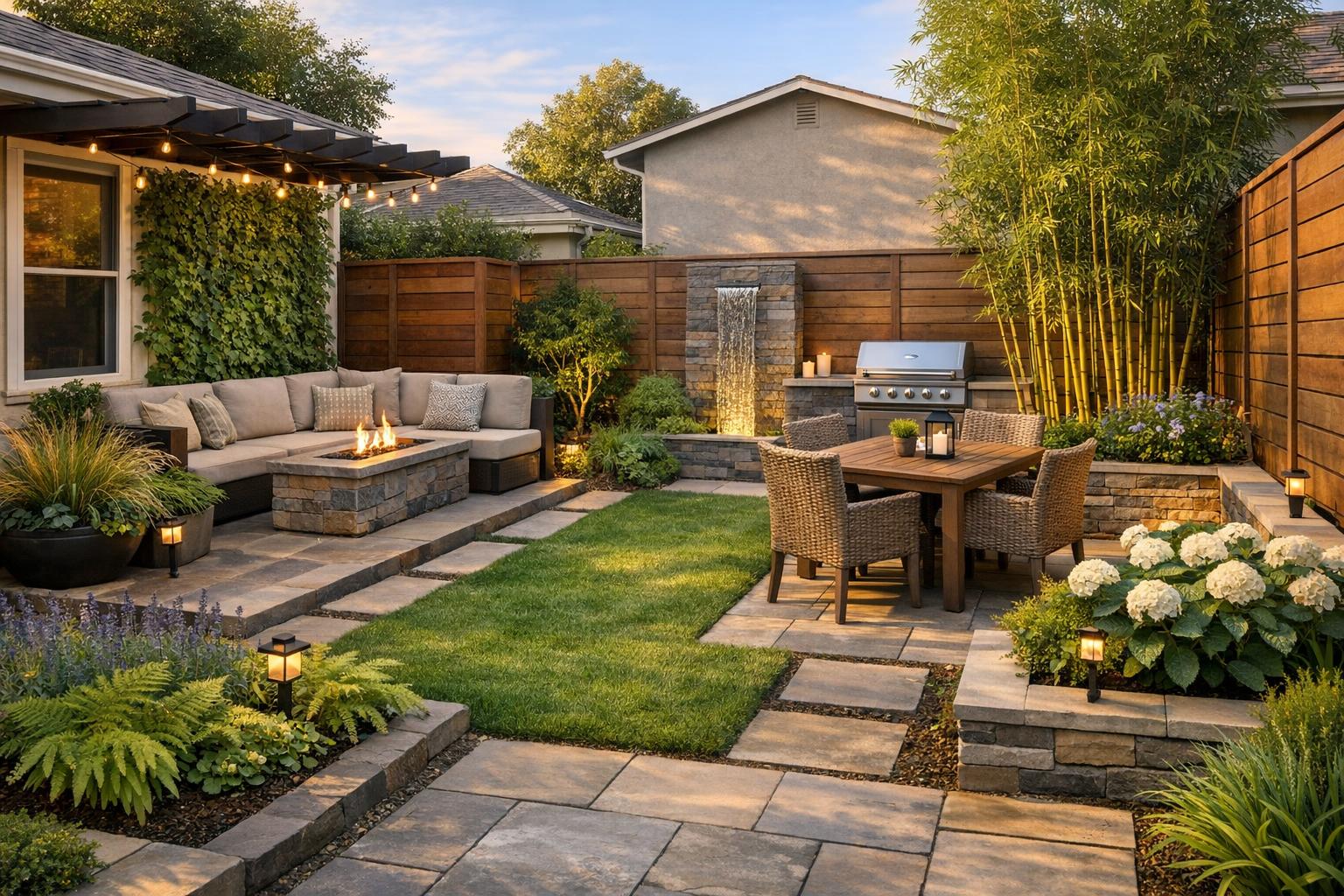
    Small Backyard Landscaping detail relevant to planning mistakes, layout, and upkeep expectations
    Many small backyard landscaping regrets start with layout decisions, unrealistic expectations, or maintenance assumptions that did not get enough attention early.

    Layout and use patterns matter more than expected

    If the plan does not match how the yard is actually used, even an attractive result can feel awkward or less satisfying than the homeowner hoped.

    Support work and maintenance should be part of planning

    Homeowners usually benefit when maintenance, transitions, access, irrigation, drainage, or other support needs are part of the planning conversation instead of afterthoughts.

    Use service and timeline guides to pressure-test the plan

    The small backyard landscaping guide, timeline guide, and quote comparison guide help homeowners catch these mistakes before work begins.


  • How Long Does a Small Backyard Landscaping Project Take Guide

    How Long Does a Small Backyard Landscaping Project Take Guide

    Small Backyard Landscaping projects often take longer than homeowners expect because the visible result is only part of the work. Planning, prep, delivery, installation, finish detail, and cleanup all affect the schedule, and each yard adds its own access and site conditions.

    Homeowners usually get the clearest timeline when the project is broken into planning, prep, installation, and finish phases instead of treated like one simple install window.

    Small Backyard Landscaping detail relevant to project timing, prep, and finish work
    Small Backyard Landscaping projects often move through planning, preparation, installation, finish work, and cleanup before the space feels complete.

    Planning and prep often shape the schedule

    Layout choices, site readiness, material delivery, access, and any supporting work often determine how smoothly the project starts. Those steps matter more than most homeowners expect.

    Finish work usually takes longer than it looks on paper

    Cleanup, detail work, small adjustments, and the last visual refinements often come after the main installation stage is already visible. Those finishing steps are part of the real timeline.

    Use service and planning guides to judge the schedule

    The small backyard landscaping guide, quote comparison guide, and project expectations guide help homeowners understand why good projects often need more time than a quick visual estimate suggests.

    How Long Does a Small Backyard Landscaping Project Take Guide related example showing Pet-Friendly Backyard Landscaping detail relevant to project timing, prep, and finish work
    This backyard example gives homeowners a visual reference for comparing layout, materials, and maintenance tradeoffs before starting the project.

  • Low-Water Landscaping Planning Mistakes Homeowners Should Avoid Guide

    Low-Water Landscaping Planning Mistakes Homeowners Should Avoid Guide

    Low-Water Landscaping projects often disappoint homeowners when early planning decisions do not match how the space is actually going to be used and maintained. Weak layout choices, unrealistic budget expectations, and support work or upkeep assumptions that stay vague can all create frustration that looks like an installation problem later.

    The biggest low-water landscaping mistakes usually start long before the crew shows up.

    Low-Water Landscaping detail relevant to planning mistakes, layout, and upkeep expectations
    Many low-water landscaping regrets start with layout decisions, unrealistic expectations, or maintenance assumptions that did not get enough attention early.

    Layout and use patterns matter more than expected

    If the plan does not match how the yard is actually used, even an attractive result can feel awkward or less satisfying than the homeowner hoped.

    Support work and maintenance should be part of planning

    Homeowners usually benefit when maintenance, transitions, access, irrigation, drainage, or other support needs are part of the planning conversation instead of afterthoughts.

    Use service and timeline guides to pressure-test the plan

    The low-water landscaping guide, timeline guide, and quote comparison guide help homeowners catch these mistakes before work begins.