Hiring and Planning

Hiring and planning guides that help homeowners compare contractors, ask better questions, and understand project expectations before work begins.

Start with the service type

Landscaping Services Guideposts

Use these guides to understand what each service includes before comparing providers or requesting quotes.

Core service explainers

Start here when you are still deciding what kind of landscaper or outdoor contractor you need.

Compare before you hire

Use these pages when two services or surface choices sound similar but lead to different scopes.

Hire smarter

Planning And Contractor Comparison

Use this hub when you are moving from ideas into estimates, bids, and contractor conversations.

Before requesting estimates

These guides help define scope and compare companies before the first site visit.

Budget with better assumptions

Cost Guides And Calculators

Use this hub to move from rough budget ranges into the details that usually change quotes.

Calculator starting points

Open the calculator hub or a cost guide when you need a quick planning range.

High-impact cost decisions

These pages help compare choices where price, lifespan, and maintenance tradeoffs matter.

Understand the build

Installation And Site-Work Pathways

Use these guides to understand sequencing, site prep, access, and the details that affect long-term performance.

Hardscape and site prep

These projects often depend on base prep, demolition, grading, drainage, and access.

Drainage and retaining work

Use these when water, grade, or slope stability is part of the project.

Choose materials with ownership in mind

Material And Finish Decision Paths

Use these guides when appearance, maintenance, replacement, and budget all affect the right material choice.

Surface and finish comparisons

Compare outdoor surfaces before committing to a driveway, patio, or lawn direction.

Landscape material planning

Use these pages when quantity, delivery, or long-term maintenance are the main concern.

Protect the investment

Maintenance And Ownership Next Steps

Use these guides to understand ongoing care, seasonal refreshes, and when maintenance points to a bigger fix.

Maintenance planning

These guides help compare recurring service, seasonal work, and refresh projects.

When upkeep becomes repair

Use these when repeated maintenance problems suggest drainage, surface, or material issues.

  • Concrete Driveway Cleaning vs Sealing Guide for Homeowners

    Concrete Driveway Cleaning vs Sealing Guide for Homeowners

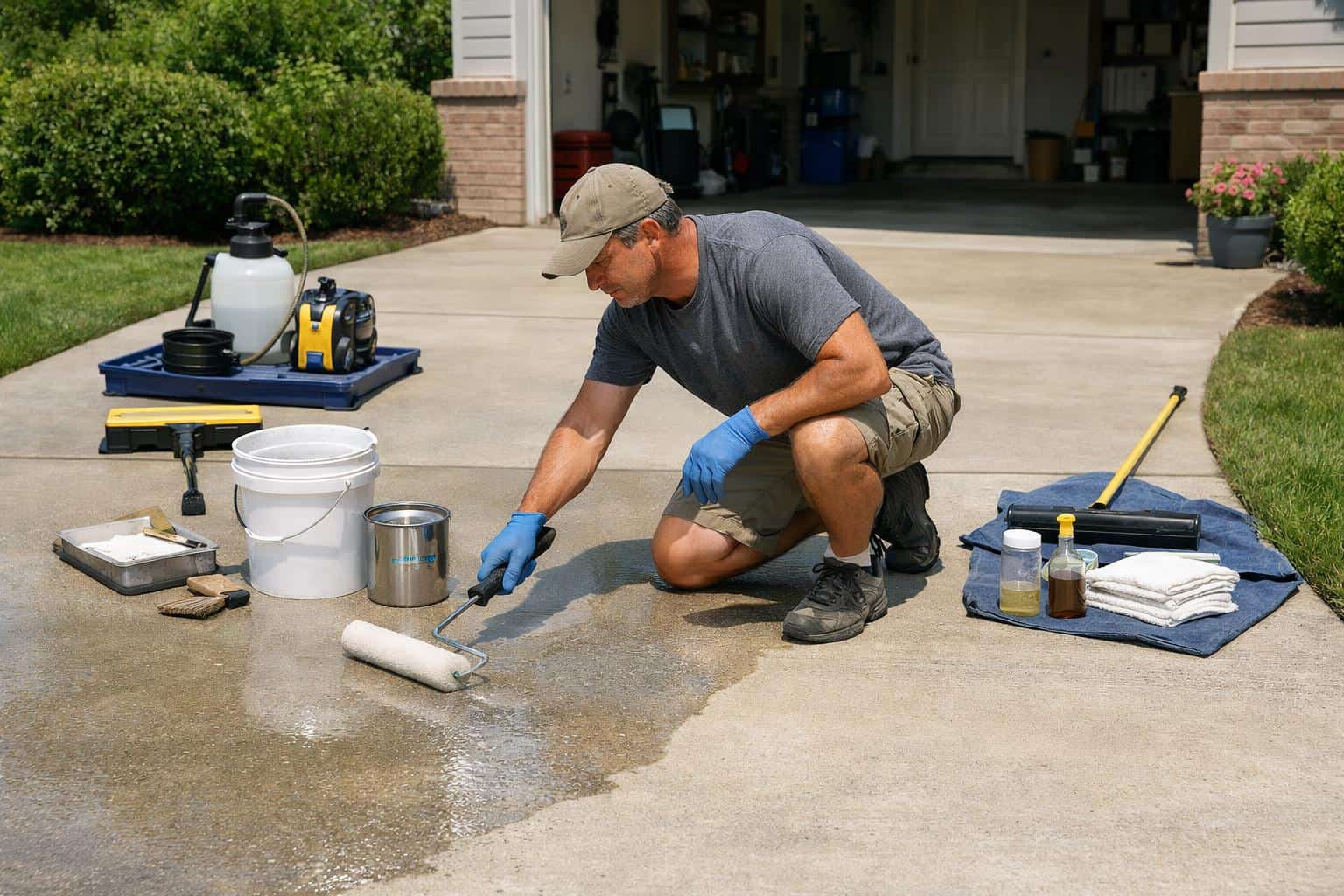
    Cleaning and sealing are often mentioned together, but they serve different purposes and homeowners should know when one is enough and when the surface may benefit from both.

    What cleaning usually solves

    • Surface dirt, debris, and many visible stains or buildup issues.
    • Improving appearance without changing the surface protection level.
    • Routine upkeep that helps you see the driveway’s real condition more clearly.

    What sealing usually adds

    • A layer of surface protection or finish support depending on product and goal.
    • Extra help against staining or weathering where that matters.
    • A stronger appearance-maintenance approach for some finishes.

    How to choose the right next step

    • Start by assessing whether the driveway simply looks dirty or needs more protection.
    • Do not use sealer as a substitute for addressing bigger condition issues.
    • Match the choice to the driveway’s age, finish, and exposure.

    Bottom line

    Cleaning restores appearance, while sealing supports ongoing protection, and the right choice depends on what problem you are actually trying to solve.

    For the broader overview, continue with Concrete Driveway Maintenance and Sealing Guide.

  • When to Seal a Concrete Driveway Guide for Homeowners

    When to Seal a Concrete Driveway Guide for Homeowners

    Sealing decisions make more sense when homeowners understand what sealing is supposed to protect against and when it is worth doing versus when it is mostly optional appearance support.

    Why homeowners seal driveways

    • To help protect surface appearance and reduce staining or weathering concerns.
    • To support the finish in climates or use patterns where extra protection matters.
    • To preserve the look of decorative or more visible driveway finishes.

    When sealing often matters more

    • When the driveway sees staining risk, visible finish expectations, or harsher exposure.
    • When the owner wants stronger appearance protection over time.
    • When the driveway finish is more decorative and less forgiving visually.

    How to decide on timing

    • Ask what condition the surface is in now and what the sealer is expected to do.
    • Do not confuse sealing with structural repair.
    • Match timing to the driveway’s use, wear, and finish goals.

    Bottom line

    The right sealing schedule depends on what you are trying to protect and how visible surface wear matters to you.

    For the broader overview, continue with Concrete Driveway Maintenance and Sealing Guide.


  • How to Choose the Right Yard-Grading Plan Guide

    How to Choose the Right Yard-Grading Plan Guide

    A grading plan should improve water flow, usability, and future landscape phases at the same time. If it only smooths a visible dip without addressing the whole slope story, it is usually too shallow.

    What a strong grading plan starts with

    • The true source of the slope or drainage problem.
    • How the corrected grade will affect access, lawn, patio, and planting zones.
    • Whether the new shape can be stabilized and maintained effectively.

    What weak grading plans often miss

    • They flatten one area while moving the problem somewhere else.
    • They ignore where water goes after the grade is changed.
    • They do not coordinate with future hardscape or planting work.

    How to choose well

    • Ask how the grading changes the whole yard, not just one low spot.
    • Make sure the plan has a stabilization and follow-up phase.
    • Choose the grading approach that supports the larger landscape direction of the property.

    Bottom line

    The best grading plan fixes the yard’s shape in a way that makes the rest of the landscape easier to build and live with afterward.

    For the broader overview, continue with Grading and Yard Leveling Guide for Homeowners.

    More specific homeowner planning guides

    Use these deeper guides when the broad project direction is clear and the next decision is about layout, materials, maintenance, or cost tradeoffs.

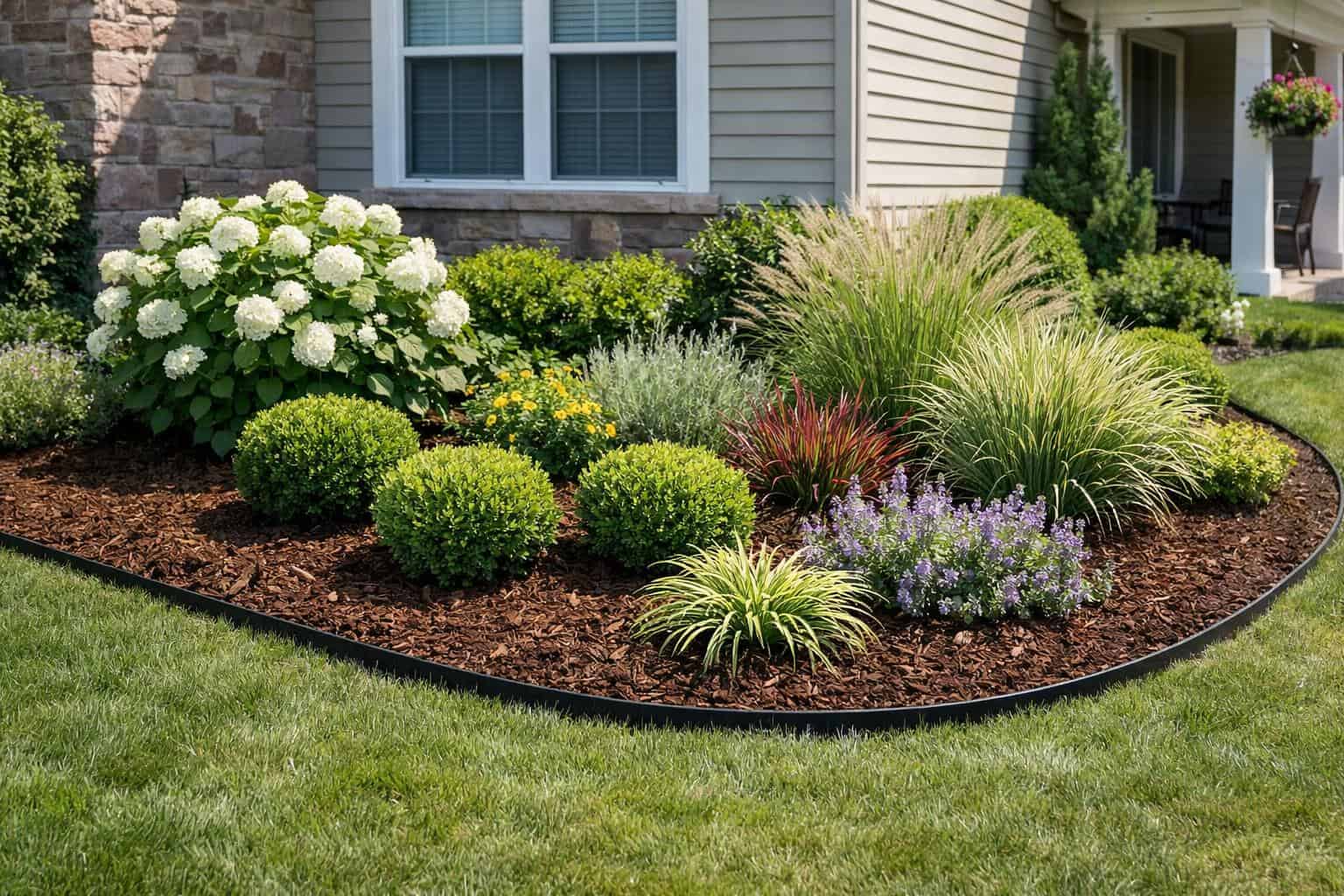
    How to Choose the Right Yard-Grading Plan Guide related example showing Landscape beds and groundcover materials relevant to homeowner quantity planning for mulch, soil, and decorative rock
    This materials example gives homeowners a visual reference for comparing layout, materials, and maintenance tradeoffs before starting the project.

    More specific homeowner planning guides

    Use these deeper guides when the broad project direction is clear and the next decision is about layout, materials, access, maintenance, or cost tradeoffs.

    How to Choose the Right Yard-Grading Plan Guide related example showing Landscape beds and groundcover materials relevant to homeowner quantity planning for mulch, soil, and decorative rock
    This related materials detail helps show how site conditions and finish choices can change the homeowner's plan.

  • Regrading vs Retaining Wall Guide for Homeowners

    Regrading vs Retaining Wall Guide for Homeowners

    Homeowners often compare regrading and retaining walls when a sloped yard needs to work better, but these options solve slope problems in very different ways.

    When regrading usually makes more sense

    • The yard can be reshaped without giving up too much usable space.
    • A smoother grade will solve runoff and circulation problems well enough.
    • The site does not need a major structural edge to hold the change.

    When a retaining wall usually makes more sense

    • The slope change is too dramatic to soften without losing yard function.
    • You need flatter usable levels in a limited footprint.
    • The grade correction must be held structurally rather than just reshaped.

    How to choose wisely

    • Start with how much flat, usable space the yard needs to gain.
    • Compare whether the slope problem is better solved by reshaping or by holding grade in place.
    • Think about drainage and how the fix affects the rest of the landscape plan.

    Bottom line

    The right choice depends on whether the yard needs a gentler shape or a structural way to hold usable levels in place.

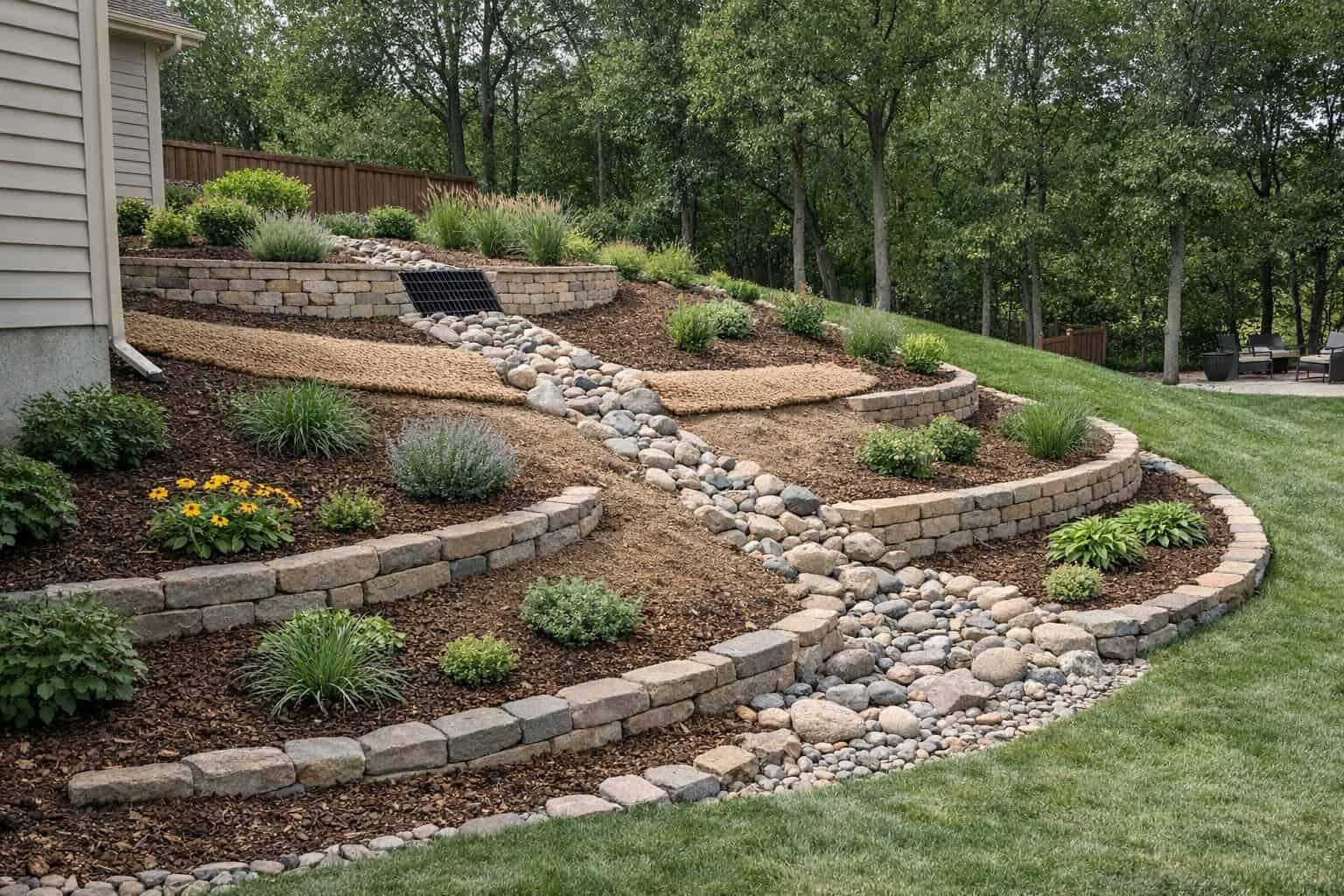
    Regrading vs Retaining Wall Guide for Homeowners related example showing Retaining wall detail relevant to planning mistakes, drainage, and grade behavior
    This retaining wall example gives homeowners a visual reference for comparing layout, materials, and maintenance tradeoffs before starting the project.

    For the broader overview, continue with Grading and Yard Leveling Guide for Homeowners.

    Regrading vs Retaining Wall Guide for Homeowners related example showing Residential retaining wall installation scene with excavation, blocks, and slope conditions
    This related retaining wall detail helps show how site conditions and finish choices can change the homeowner's plan.

    Estimate retaining wall and broader grading ranges

    Use these calculators to compare a retaining wall range with a broader landscaping range before deciding whether the slope needs retaining, regrading, or both.

    Retaining Wall Cost Calculator

    Estimate retaining wall pricing with wall size, material type, drainage, and access assumptions.

    Landscaping Cost Range Calculator

    Estimate a broad landscaping budget range for common homeowner project types before comparing quotes.


  • Best Time to Regrade a Yard Guide for Homeowners

    Best Time to Regrade a Yard Guide for Homeowners

    Timing matters with grading because soil conditions, rain patterns, and what comes next in the project all affect how well the work holds and how disruptive it feels.

    When grading often goes more smoothly

    • When soil can be shaped and compacted without turning into a muddy churn zone.
    • Before new planting, lawn, or finish work locks the yard in place.
    • During a season that gives follow-up stabilization a reasonable chance to establish.

    What timing mistakes often cause trouble

    • Regrading right before periods of heavy rain without a stabilization plan.
    • Waiting until after patios, planting, or lawn are already in place.
    • Treating grading as a cosmetic touch-up instead of a sequencing priority.

    How to choose the right window

    • Work backward from what phase comes next.
    • Look at weather patterns and how exposed the soil will be afterward.
    • Make sure the yard can be stabilized quickly once the shape is corrected.

    Bottom line

    The best time to regrade is when the soil can be shaped properly and the next landscape phase will protect the corrected grade instead of undoing it.

    Best Time to Regrade a Yard Guide for Homeowners related example showing Low-water landscape bed materials including rock and mulch relevant to drought-conscious groundcover selection
    This materials example gives homeowners a visual reference for comparing layout, materials, and maintenance tradeoffs before starting the project.

    For the broader overview, continue with Grading and Yard Leveling Guide for Homeowners.

    Best Time to Regrade a Yard Guide for Homeowners related example showing Landscape beds and groundcover materials relevant to homeowner quantity planning for mulch, soil, and decorative rock
    This related materials detail helps show how site conditions and finish choices can change the homeowner's plan.

  • How to Choose the Right Garden Bed Layout Guide

    How to Choose the Right Garden Bed Layout Guide

    The right garden-bed layout should make the home, path, patio, and planting all feel more coherent. Strong layouts respond to circulation and sightlines instead of just filling leftover yard space.

    What a good layout usually starts with

    • How the beds frame entries, patios, paths, and views.
    • How much planting depth the space can really support.
    • Whether the bed is meant to soften, screen, highlight, or organize an area.

    What weak layouts often do wrong

    • They create awkward leftover shapes that are hard to plant or maintain.
    • They ignore how the bed affects mowing, walking, and sightlines.
    • They prioritize outline shape before plant structure and use are clear.

    How to choose well

    • Design the beds as part of the yard’s circulation and visual structure.
    • Make sure the layout supports mature plant size and maintenance access.
    • Choose lines that feel intentional with the house and hardscape.

    Bottom line

    The best garden-bed layout makes the yard easier to read and easier to live with, not just more planted.

    For the broader overview, continue with Garden Bed and Planting Installation Guide for Homeowners.


  • Small Plants vs Larger Plant Material Guide for Homeowners

    Small Plants vs Larger Plant Material Guide for Homeowners

    The choice between smaller plant material and larger installs often comes down to timeline, budget, patience, and how finished the yard needs to feel right away.

    Why smaller plants can make sense

    • Lower upfront spend and easier installation flexibility.
    • A chance for the garden to grow into the space more gradually.
    • Good fit when the plan is strong and the homeowner can wait for maturity.

    Why larger plant material can make sense

    • Faster visual impact and stronger day-one presence.
    • More immediate screening or structure where the yard needs it.
    • Useful when the project needs to feel established sooner.

    How to decide

    • Be honest about your timeline for the yard to feel finished.
    • Compare cost against how much instant impact you really need.
    • Make sure the larger material still fits the long-term mature plan.

    Bottom line

    The better choice depends on whether you are buying time, presence, or flexibility in the way the planting plan matures.

    For the broader overview, continue with Garden Bed and Planting Installation Guide for Homeowners.


  • How to Choose the Right Erosion Control Strategy Guide

    How to Choose the Right Erosion Control Strategy Guide

    The right erosion-control strategy starts with understanding what is moving the soil, how fast it is happening, and whether the slope needs planting, drainage help, structural support, or a mix of all three.

    What a good strategy starts with

    • Diagnosing runoff path, soil behavior, and slope shape.
    • Knowing whether the problem is surface loss, channeling, or broader instability.
    • Understanding what nearby yard features depend on that slope staying stable.

    What weak strategies often do wrong

    • They treat exposed soil without addressing the water causing the damage.
    • They rely on one material where the site clearly needs layered measures.
    • They focus on visual coverage before real stabilization.

    How to choose well

    • Match the strategy to both the runoff and the slope condition.
    • Use temporary and long-term controls together when needed.
    • Make sure the plan still works after rain, growth, and normal maintenance cycles.

    Bottom line

    The best erosion-control strategy solves the slope’s actual failure pattern instead of only hiding it for a season.

    For the broader overview, continue with Erosion Control Guide for Homeowners.


  • How to Plan Fire Pit Seating and Layout Guide

    How to Plan Fire Pit Seating and Layout Guide

    Fire pits work best when the seating layout is planned as carefully as the feature itself. Comfort and conversation often depend more on the surrounding space than on the pit design alone.

    What a good layout usually includes

    • Enough room around the feature for seats and movement.
    • A comfortable relationship between heat, sightlines, and social distance.
    • A layout that does not force the fire pit to block other patio uses.

    What weak layouts often do wrong

    • They crowd the fire pit with too little clearance.
    • They leave seats too far out to feel connected.
    • They ignore how the fire zone fits the rest of the patio and yard circulation.

    How to choose the right setup

    • Start with how many people the space should comfortably serve.
    • Plan around the strongest evening use pattern, not just occasional parties.
    • Let the fire pit support the social zone instead of dominate it.

    Bottom line

    The best fire-pit layout makes the feature feel like a natural part of gathering, not an obstacle in the middle of it.

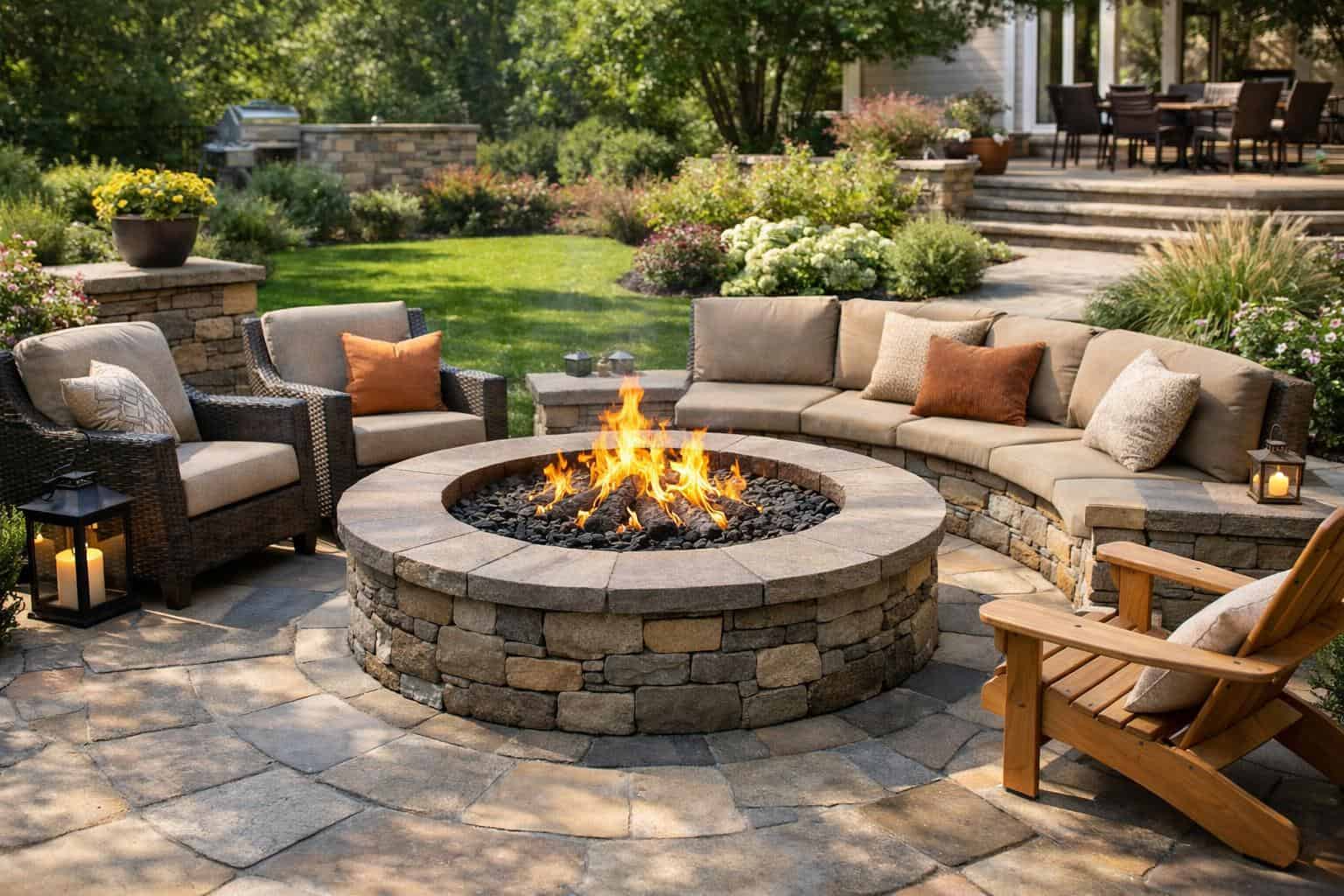
    How to Plan Fire Pit Seating and Layout Guide related example showing Concrete, paver, and stone outdoor surfaces showing common patio and walkway material choices for homeowners
    This patio example gives homeowners a visual reference for comparing layout, materials, and maintenance tradeoffs before starting the project.

    For the broader overview, continue with Fire Pit Installation Guide for Homeowners.

    How to Plan Fire Pit Seating and Layout Guide related example showing Residential fire pit area with patio, seating, and layout details that affect project cost
    This related patio detail helps show how site conditions and finish choices can change the homeowner's plan.

  • Best Fire Pit Location Guide for Homeowners

    Best Fire Pit Location Guide for Homeowners

    Location matters as much as the fire pit itself because comfort, safety, smoke behavior, and social use are all shaped by where the feature sits in the yard.

    What a good location usually does

    • Creates enough separation for comfort and safety.
    • Supports conversation and circulation instead of interrupting it.
    • Fits the wind, seating, and evening use pattern of the yard.

    What poor placement often causes

    • Smoke and heat where people do not want them.
    • Awkward movement through the patio or seating zone.
    • A feature that looks good but never becomes part of the way the yard is actually used.

    How to choose well

    • Look at wind direction, sightlines, and where people naturally gather at night.
    • Give the feature enough room to breathe in the layout.
    • Coordinate the location with surrounding surfaces, lighting, and seating.

    Bottom line

    The best fire pit location makes the feature feel inviting, comfortable, and natural in the yard instead of isolated or in the way.

    For the broader overview, continue with Fire Pit Installation Guide for Homeowners.