Hiring and Planning

Hiring and planning guides that help homeowners compare contractors, ask better questions, and understand project expectations before work begins.

Start with the service type

Landscaping Services Guideposts

Use these guides to understand what each service includes before comparing providers or requesting quotes.

Core service explainers

Start here when you are still deciding what kind of landscaper or outdoor contractor you need.

Compare before you hire

Use these pages when two services or surface choices sound similar but lead to different scopes.

Hire smarter

Planning And Contractor Comparison

Use this hub when you are moving from ideas into estimates, bids, and contractor conversations.

Before requesting estimates

These guides help define scope and compare companies before the first site visit.

Budget with better assumptions

Cost Guides And Calculators

Use this hub to move from rough budget ranges into the details that usually change quotes.

Calculator starting points

Open the calculator hub or a cost guide when you need a quick planning range.

High-impact cost decisions

These pages help compare choices where price, lifespan, and maintenance tradeoffs matter.

Understand the build

Installation And Site-Work Pathways

Use these guides to understand sequencing, site prep, access, and the details that affect long-term performance.

Hardscape and site prep

These projects often depend on base prep, demolition, grading, drainage, and access.

Drainage and retaining work

Use these when water, grade, or slope stability is part of the project.

Choose materials with ownership in mind

Material And Finish Decision Paths

Use these guides when appearance, maintenance, replacement, and budget all affect the right material choice.

Surface and finish comparisons

Compare outdoor surfaces before committing to a driveway, patio, or lawn direction.

Landscape material planning

Use these pages when quantity, delivery, or long-term maintenance are the main concern.

Protect the investment

Maintenance And Ownership Next Steps

Use these guides to understand ongoing care, seasonal refreshes, and when maintenance points to a bigger fix.

Maintenance planning

These guides help compare recurring service, seasonal work, and refresh projects.

When upkeep becomes repair

Use these when repeated maintenance problems suggest drainage, surface, or material issues.

  • How to Choose the Right Landscape Maintenance Plan Guide

    How to Choose the Right Landscape Maintenance Plan Guide

    The right maintenance plan depends on the kind of landscape you own, the standard you want to maintain, and which work you truly want off your plate.

    Questions to answer first

    • Do you want help with basic appearance control or broader plant and system care?
    • How neat does the yard need to stay between visits?
    • What tasks are you still willing to handle yourself?

    What a strong maintenance fit looks like

    • The service frequency matches the growth and cleanup pressure of the property.
    • The scope addresses the parts of the yard that frustrate you most.
    • The expectations are clear about what is included and what is not.

    What weak fits usually look like

    • Too little service for a complex yard.
    • Too much service for a simplified low-maintenance landscape.
    • A plan that keeps things tidy but never addresses recurring pain points.

    Bottom line

    The best maintenance plan is the one that fits the landscape you actually own and the ownership experience you want, not just the cheapest recurring service.

    How to Choose the Right Landscape Maintenance Plan Guide related example showing Groundcover and hardscape materials relevant to comparing real long-term maintenance demands
    This low maintenance example gives homeowners a visual reference for comparing layout, materials, and maintenance tradeoffs before starting the project.

    For the broader overview, continue with Landscape Maintenance Plans Guide for Homeowners.

    How to Choose the Right Landscape Maintenance Plan Guide related example showing Low-water landscape bed materials including rock and mulch relevant to drought-conscious groundcover selection
    This related low maintenance detail helps show how site conditions and finish choices can change the homeowner's plan.

  • Full-Service vs Basic Landscape Maintenance Guide for Homeowners

    Full-Service vs Basic Landscape Maintenance Guide for Homeowners

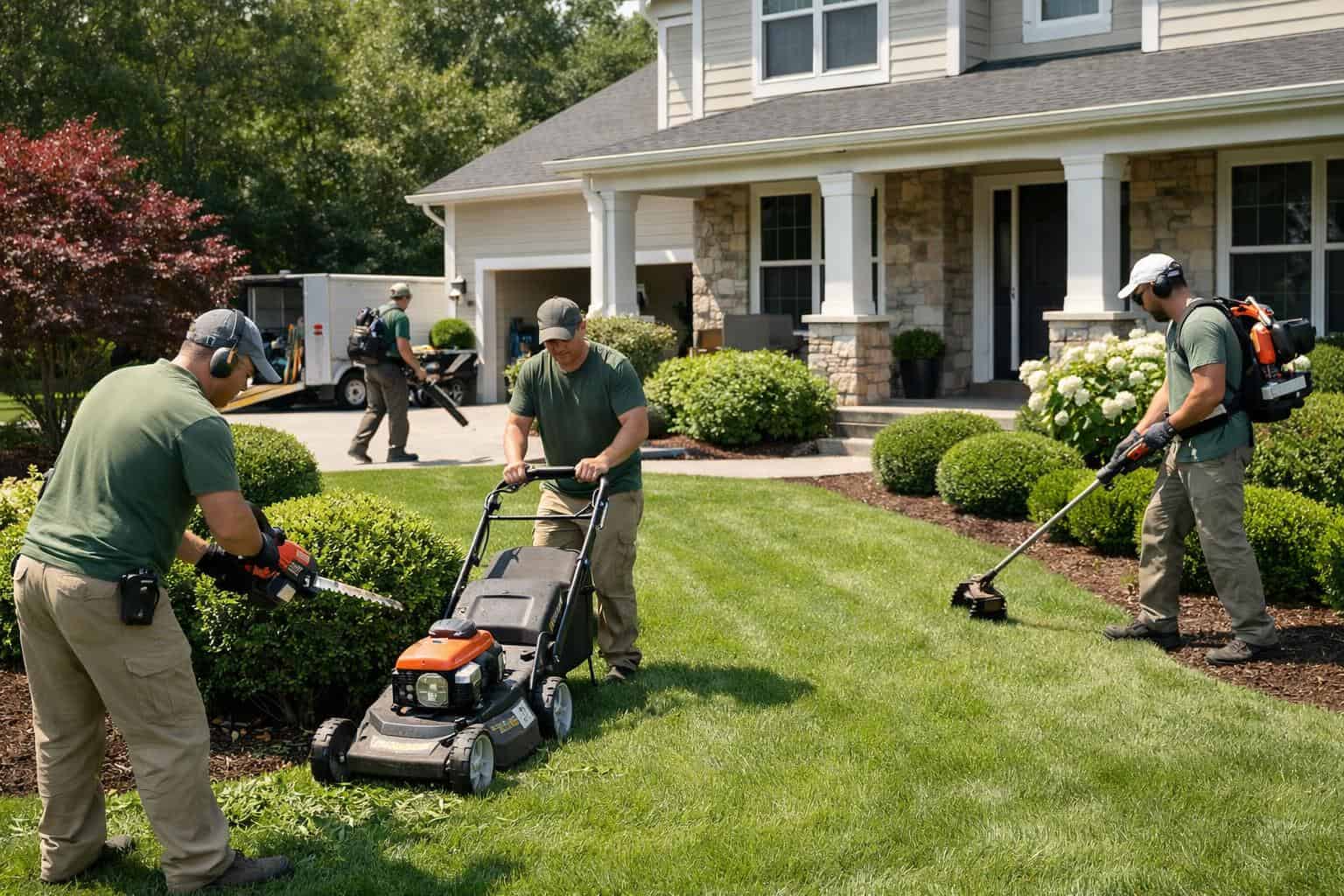
    Not every maintenance plan includes the same level of care. Some are mainly mowing and cleanup, while others handle plant health, irrigation, seasonal detail work, and more strategic upkeep.

    What basic maintenance usually includes

    • Routine mow, blow, edge, and general cleanup work.
    • Simple recurring visits focused on appearance control.
    • Limited deeper care unless added separately.

    What full-service maintenance often includes

    • Broader pruning, plant care, irrigation review, seasonal detailing, and site monitoring.
    • More proactive attention to small issues before they turn into repair work.
    • A deeper maintenance relationship with the whole yard, not just the lawn edge.

    How to choose the right level

    • Match the plan to the complexity of the landscape.
    • Ask what problems you are expecting the crew to notice and manage.
    • Do not buy a bare-bones plan for a yard that clearly needs more oversight.

    Bottom line

    The right maintenance level depends on whether you need simple appearance control or a more complete ownership-support plan for the whole landscape.

    For the broader overview, continue with Landscape Maintenance Plans Guide for Homeowners.

  • Weekly vs Monthly Landscape Maintenance Plans Guide

    Weekly vs Monthly Landscape Maintenance Plans Guide

    Maintenance frequency shapes how a yard looks between visits, how problems get caught, and how much work builds up each time the crew arrives.

    When weekly service often makes more sense

    • High-visibility yards where appearance matters constantly.
    • Properties with fast growth, significant lawn area, or frequent cleanup needs.
    • Households that want the yard to stay consistently polished.

    When monthly service can make sense

    • Simpler or lower-maintenance landscapes.
    • Yards with minimal lawn and more stable plant/material choices.
    • Homeowners willing to tolerate more change between visits.

    How to choose the cadence

    • Look at growth rate, debris pressure, and how neat the yard needs to stay.
    • Compare what work becomes harder or more expensive if visits are spaced out.
    • Choose the frequency that matches the landscape you actually have, not the idealized one.

    Bottom line

    The right maintenance frequency is the one that keeps the yard under control without paying for more visits than the landscape really needs.

    For the broader overview, continue with Landscape Maintenance Plans Guide for Homeowners.


  • How to Choose the Best Outdoor Kitchen Layout Guide

    How to Choose the Best Outdoor Kitchen Layout Guide

    Outdoor-kitchen layouts work best when they are designed as part of the backyard flow, not dropped into a patio after every other decision is already made.

    What a good layout starts with

    • Understanding the path between the indoor kitchen, the grill area, and the main seating zone.
    • Knowing where prep, serving, and cleanup actually happen.
    • Making sure smoke, heat, and utility placement fit the space.

    Common layout mistakes

    • Cramping the kitchen into the patio with poor circulation around it.
    • Putting appliances where they fight the gathering flow.
    • Overbuilding the layout before the patio and seating relationships are settled.

    How to choose well

    • Design the kitchen with the outdoor room, not separately from it.
    • Choose the footprint that supports movement and comfort.
    • Keep the most-used features closest to where people naturally gather.

    Bottom line

    The best outdoor-kitchen layout feels like part of the backyard’s natural flow rather than a bulky add-on inside it.

    For the broader overview, continue with Outdoor Kitchen Guide for Homeowners.


  • Outdoor Kitchen vs Grill Station Guide for Homeowners

    Outdoor Kitchen vs Grill Station Guide for Homeowners

    Many homeowners do not need a full outdoor kitchen to get most of the outdoor-cooking benefit. Sometimes a well-planned grill station is the smarter fit.

    When a grill station often makes more sense

    • You want outdoor cooking without a major utility-heavy build.
    • The yard already lacks enough patio, seating, or circulation to support a full kitchen.
    • The household cooks outside sometimes, not constantly.

    When a full outdoor kitchen often makes more sense

    • You host often and want real prep, serving, and storage function outdoors.
    • The patio and seating layout can support a larger feature.
    • The kitchen is intended to be a major destination zone, not just a grill corner.

    How to choose the right level

    • Start with your real cooking habits, not the aspirational version.
    • Make sure the backyard has room for the feature to breathe.
    • Do not sacrifice circulation or comfort just to fit a larger setup.

    Bottom line

    The right choice is the one that matches how the household cooks and entertains, not just the one with the biggest appliance list.

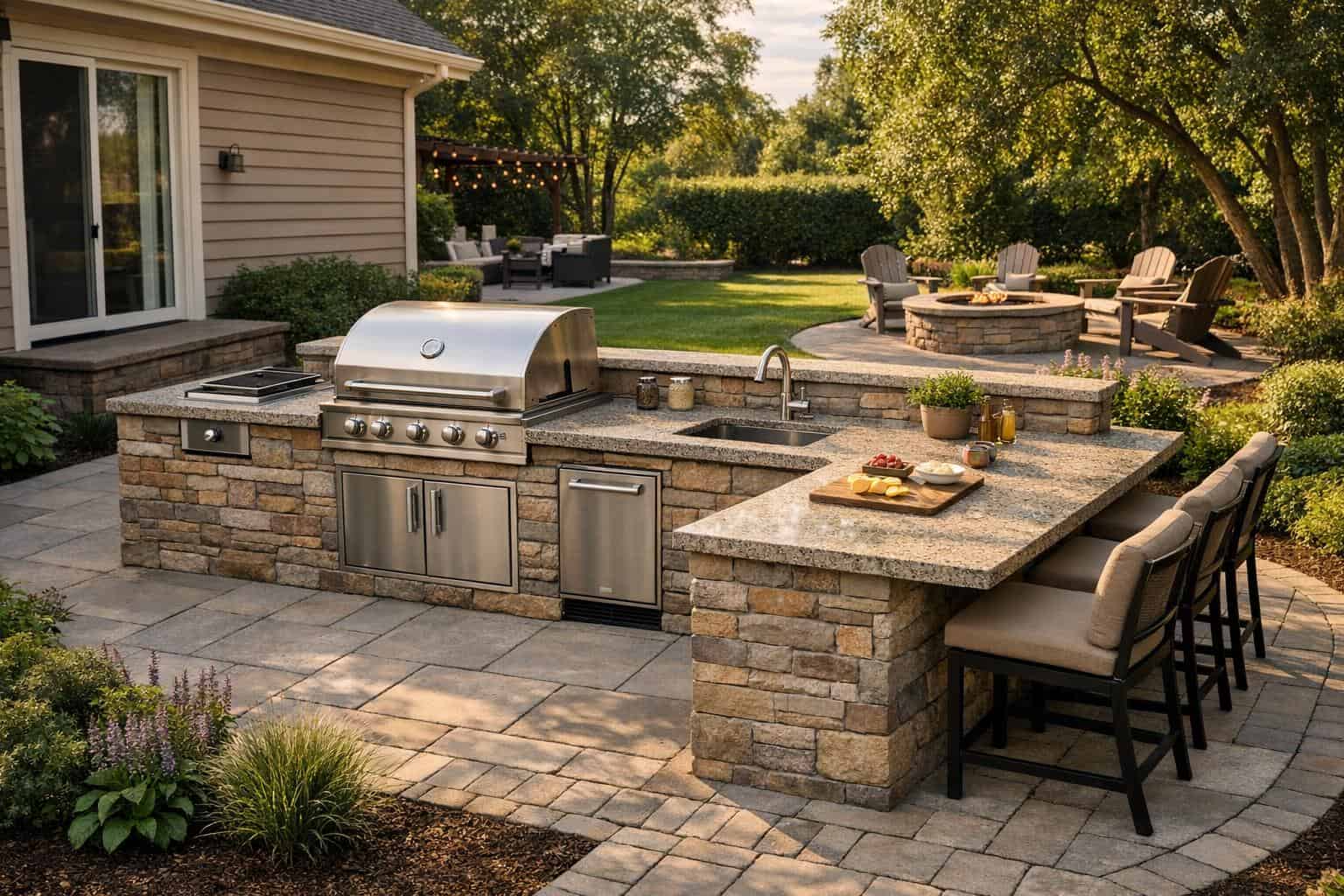
    Outdoor Kitchen vs Grill Station Guide for Homeowners related example showing Outdoor kitchen construction detail relevant to utility work, finish scope, and quote comparison for homeowners
    This outdoor kitchen example gives homeowners a visual reference for comparing layout, materials, and maintenance tradeoffs before starting the project.

    For the broader overview, continue with Outdoor Kitchen Guide for Homeowners.

    Outdoor Kitchen vs Grill Station Guide for Homeowners related example showing Residential outdoor kitchen with grill, counters, patio, and features that affect project cost
    This related outdoor kitchen detail helps show how site conditions and finish choices can change the homeowner's plan.

  • Outdoor Kitchen Features Worth Paying For Guide

    Outdoor Kitchen Features Worth Paying For Guide

    Not every outdoor-kitchen feature deserves equal budget. The smartest investments usually improve flow, durability, and actual cooking usefulness more than they chase every premium add-on at once.

    Features that often earn their keep

    • Strong prep space near the grill.
    • Storage that keeps the area functional and less cluttered.
    • Useful utility planning and weather-smart layout choices.

    Features to evaluate more carefully

    • Luxury appliances that duplicate indoor capability without matching the way you entertain.
    • Oversized builds that crowd seating or circulation.
    • Extras that increase maintenance more than convenience.

    How to prioritize wisely

    • Build around the core cooking and serving workflow first.
    • Choose features that make the space easier to use repeatedly, not just once in a while.
    • Make sure the surrounding patio, shade, and seating can support the kitchen.

    Bottom line

    The right outdoor-kitchen features are the ones that make the space easier and more enjoyable to use every time, not just the ones that look impressive on a quote.

    For the broader overview, continue with Outdoor Kitchen Guide for Homeowners.


  • How to Choose the Right Irrigation Layout Guide

    How to Choose the Right Irrigation Layout Guide

    The best irrigation layout usually starts with separating the yard into zones that want different watering, not with trying to cover everything the same way.

    What a good layout starts with

    • Grouping lawn, planting beds, trees, and low-water areas separately.
    • Understanding sun, slope, and runoff patterns.
    • Knowing where overspray would create waste or damage.

    What weak layouts often do wrong

    • They mix plant types with different water needs into the same zone.
    • They prioritize coverage maps over actual landscape behavior.
    • They create watering overlap that leads to runoff and disease pressure.

    How to choose well

    • Design around the landscape the yard has now, not just the old piping pattern.
    • Ask what each zone is intended to water and why.
    • Make sure the layout still works if the yard evolves in later phases.

    Bottom line

    The right irrigation layout makes watering simpler because each zone has a clear job that matches the yard’s real conditions.

    For the broader overview, continue with Irrigation System Guide for Homeowners.

    More specific homeowner planning guides

    Use these deeper guides when the broad project direction is clear and the next decision is about layout, materials, maintenance, or cost tradeoffs.

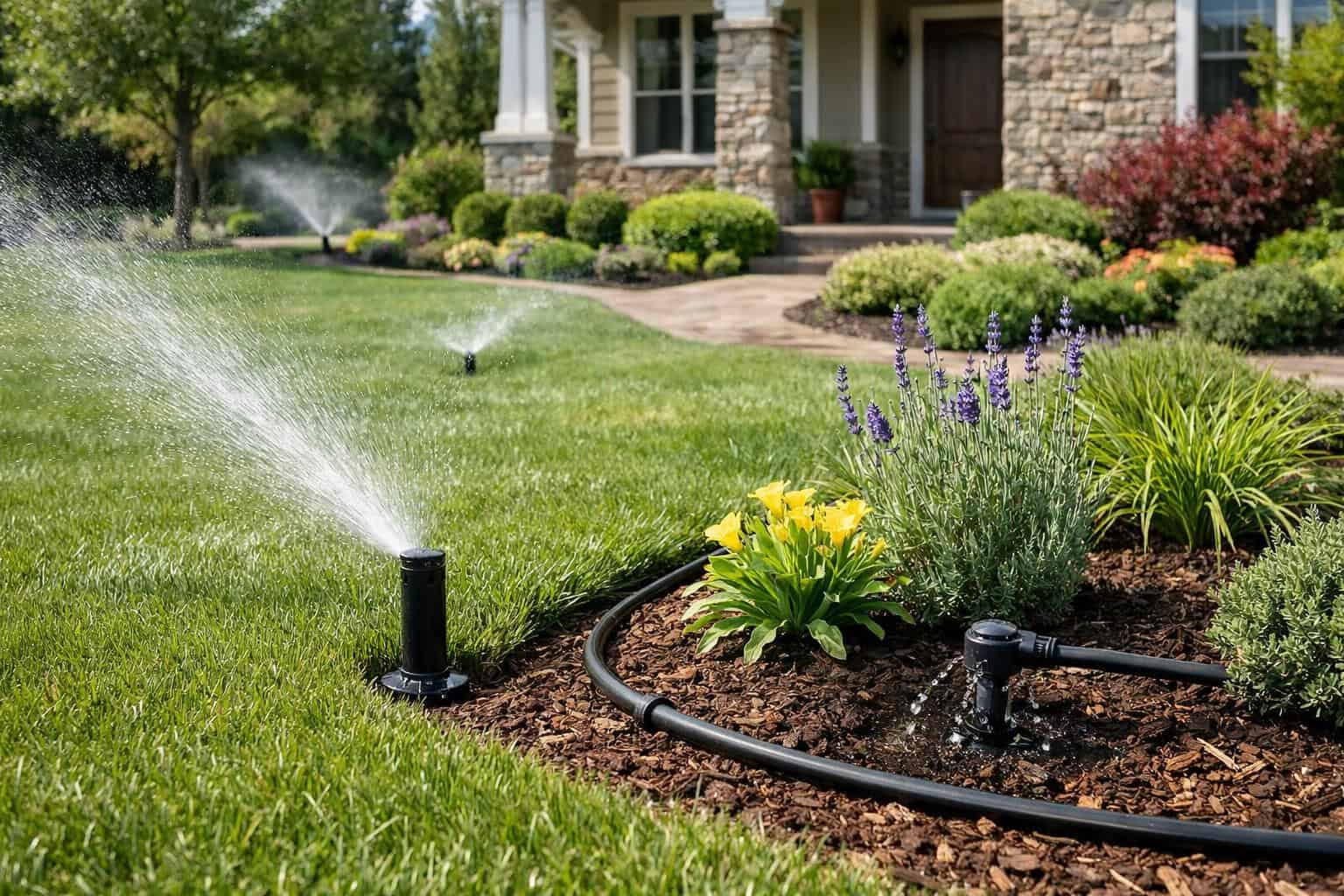
    How to Choose the Right Irrigation Layout Guide related example showing Irrigation detail relevant to planning mistakes, zoning, and controller decisions
    This irrigation example gives homeowners a visual reference for comparing layout, materials, and maintenance tradeoffs before starting the project.

    More specific homeowner planning guides

    Use these deeper guides when the broad project direction is clear and the next decision is about layout, materials, access, maintenance, or cost tradeoffs.

    How to Choose the Right Irrigation Layout Guide related example showing Irrigation detail relevant to controller checks, head alignment, and maintenance
    This related irrigation detail helps show how site conditions and finish choices can change the homeowner's plan.

  • How to Choose the Right Landscape Lighting Plan Guide

    How to Choose the Right Landscape Lighting Plan Guide

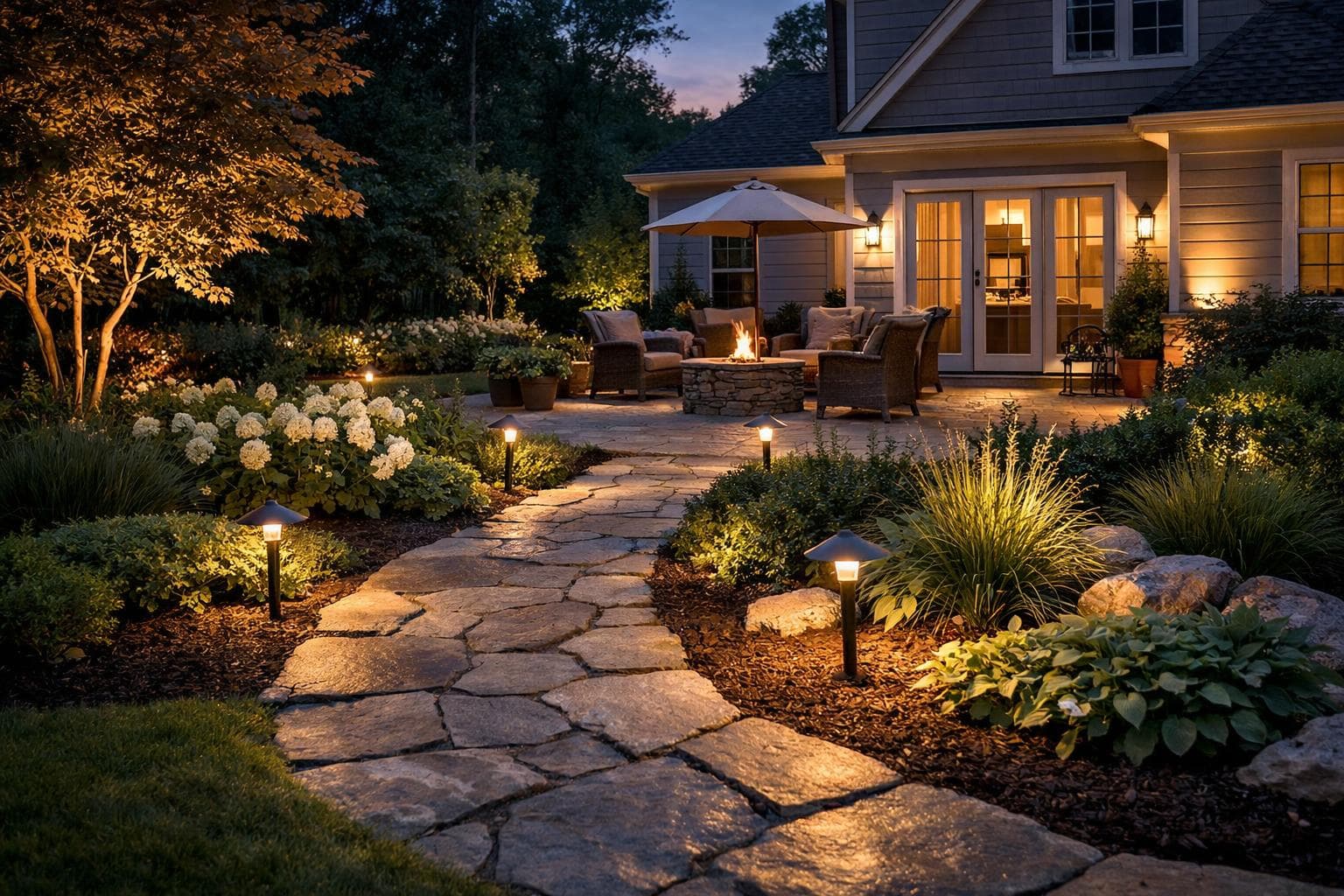
    The right lighting plan starts with how you want to use the yard at night, not with a fixture catalog. Good plans feel intentional because they are built around movement, comfort, and focal points.

    Questions to answer first

    • Which spaces need to function after dark?
    • Where do guests actually move through the yard at night?
    • What features deserve visual emphasis and which should stay quieter?

    What a strong plan usually includes

    • Path and step lighting where navigation matters.
    • Layered lighting around dining, seating, and entry points.
    • Selective accent lighting rather than blanket brightness.

    What weak plans usually miss

    • They choose fixtures before defining goals.
    • They light decorative features while leaving circulation awkward.
    • They add too much brightness in some areas and not enough clarity in the right ones.

    Bottom line

    The right lighting plan makes the yard easier and more enjoyable to use at night without feeling overdone.

    For the broader overview, continue with Landscape Lighting Guide for Homeowners.


  • Best Landscape Lighting for Safety vs Ambiance Guide

    Best Landscape Lighting for Safety vs Ambiance Guide

    Homeowners often want lighting that feels beautiful and subtle, but some areas need straightforward safety lighting first. The best plans balance the two instead of treating them as separate projects.

    Where safety lighting matters most

    • Walkways, steps, entries, and any grade change that people use at night.
    • Transitions between patio, lawn, and access paths.
    • Dark corners that feel unsafe or hard to navigate.

    Where ambiance lighting adds the most value

    • Dining and seating zones.
    • Architectural highlights and key planting areas.
    • Layered evening atmosphere around the main outdoor-living space.

    How to balance both

    • Handle navigation and entry first, then layer in visual mood.
    • Avoid blasting every zone equally bright.
    • Use fixture placement to guide the eye instead of flooding the yard.

    Bottom line

    The strongest lighting plan makes the yard feel safer and better at night without losing warmth and atmosphere.

    For the broader overview, continue with Landscape Lighting Guide for Homeowners.


  • How to Choose the Right Privacy Landscaping Layout Guide

    How to Choose the Right Privacy Landscaping Layout Guide

    Privacy landscaping works best when the layout matches what you are trying to block and what you still want to preserve, not when plants are lined up the same way all around the yard.

    What a good layout starts with

    • Understanding the exact sightline you want to soften or block.
    • Knowing how much depth you have for planting.
    • Deciding whether the screen should feel formal, layered, or lightly filtered.

    Common layout approaches

    • Straight evergreen runs for simple boundary screening.
    • Layered mixed planting for softer privacy with more visual interest.
    • Targeted screening around patios, seating, or pool zones instead of whole-property walls.

    What to avoid

    • Planting too close to fences, property lines, or windows.
    • Creating a rigid wall where a lighter layered screen would feel better.
    • Ignoring mature width and maintenance access.

    Bottom line

    The best privacy layout screens the right views while still making the yard feel balanced and usable.

    For the broader overview, continue with Privacy Landscaping Guide for Homeowners.