Landscaping Guru

  • Sod and Lawn Installation Guide for Homeowners

    Sod and Lawn Installation Guide for Homeowners

    A new lawn can make a property look instantly more complete, but lawn installation is not just about putting down sod or seed and hoping it takes. Good results depend on grading, soil prep, irrigation coverage, traffic expectations, and what kind of lawn surface actually makes sense for the property.

    This guide explains what sod and lawn installation usually includes, when homeowners should think beyond the grass itself, and what to ask before hiring.

    What lawn installation usually includes

    Residential lawn work may include removal of old turf or weeds, grading, soil preparation, amendments, irrigation adjustments, sod installation or seeding, rolling, watering instructions, and follow-up care expectations. On some properties, lawn installation is the final cosmetic layer over more important prep work like drainage correction or regrading.

    • Common lawn goals: cleaner curb appeal, a more usable backyard, improved transitions around patios, and replacement of patchy or failing turf.
    • Common project types: new sod installation, lawn renovation, spot area rebuilds, or full reshaping after other landscape work.
    • Main performance factors: grade, soil quality, water coverage, foot traffic, and realistic maintenance expectations.

    Soil and grading usually matter more than the sod itself

    Homeowners often compare grass varieties before solving the more important issues underneath. If the grade is uneven, the soil is compacted, or water collects in low spots, even good sod can struggle. That is why lawn installation often belongs later in the sequence, after drainage and grading concerns are addressed.

    Our drainage guide and project expectations guide can help explain why the prep stage matters so much.

    Sod versus seed

    Sod gives immediate visual coverage and can make a yard look finished quickly. Seed may cost less upfront in some situations, but it usually takes longer to establish and requires more patience during early growth. The right choice depends on timing, budget, site conditions, and how quickly the space needs to become usable.

    Irrigation is part of the lawn decision

    Residential lawn and planting areas organized around an irrigation plan for long-term watering support.
    Lawn installation decisions are stronger when irrigation is planned alongside turf type, grading, and how the yard will be used.

    New lawns need consistent watering during establishment, and long-term health depends on whether irrigation coverage actually matches the layout. Overspray on hardscape, dry stripes, and persistently wet zones can all create problems after installation. If irrigation performance is uncertain, read our irrigation system guide alongside this page.

    What affects lawn installation cost

    Pricing is influenced by square footage, access, removal needs, grading, soil amendments, irrigation changes, sod quality, and whether the project is part of a larger renovation. A simple open lawn area is very different from a property that needs regrading, drainage adjustments, tree-root work, or hand-carried material access.

    If you are comparing broader project budgets, our landscaping costs guide is a useful companion.

    Questions to ask before hiring for sod or lawn work

    • What grading or soil prep is included before the lawn goes in?
    • How will irrigation be adjusted for this layout?
    • Is sod or seed the better fit for this property and timing?
    • How long before the lawn can handle normal use?
    • What first-month care is essential for success?

    What homeowners should remember

    A healthy lawn is usually the result of good prep, consistent water, and realistic use expectations. The more clearly a contractor explains grade, soil, irrigation, and establishment care, the more likely the lawn is to look good beyond the first week after installation.

    Sod and Lawn Installation Guide for Homeowners related example showing Sod installation detail relevant to soil preparation, grading, irrigation, and quote comparison for homeowners
    This lawn example gives homeowners a visual reference for comparing layout, materials, and maintenance tradeoffs before starting the project.

    If you are still deciding what kind of finished lawn surface fits the property best, compare the tradeoffs in our artificial turf vs natural grass guide.

    Related comparison: If you are still deciding how to establish a natural lawn, the Sod vs Seed Guide for Homeowners compares speed, cost, and watering demands.

    Cost guide: If you are comparing lawn proposals, the What Affects Sod and Lawn Installation Cost Guide explains why prep and irrigation matter so much.

    Related guide: Homeowners unsure whether the lawn still makes sense to repair can compare symptoms in the Signs Your Lawn Needs Replacement Guide.

    Alternative surface: The Artificial Turf Installation Guide is a useful comparison if you are weighing turf against new sod installation.

    Quote guide: The landscape lighting quote guide helps homeowners compare fixture count, transformer assumptions, and adjustment scope across bids.

    Quote guide: The sod and lawn quote guide helps homeowners compare removal, grading, irrigation, and establishment scope.

    Timeline guide: The sod installation timeline guide helps homeowners compare preparation, installation day, and early establishment expectations.

    Expectations guide: The sod expectations guide helps homeowners understand prep, installation day, and early-care flow.

    Maintenance guide: The sod and lawn maintenance guide helps homeowners protect early establishment and long-term lawn performance.

    Mistakes guide: The sod planning mistakes guide helps homeowners catch prep, irrigation, and timing problems before installation.

    Warning signs guide: The sod and lawn warning signs guide helps homeowners judge thinning, stress, and irrigation trouble before the lawn declines further.


  • Garden Bed and Planting Installation Guide for Homeowners

    Garden Bed and Planting Installation Guide for Homeowners

    Planting and garden bed installation can transform a property faster than almost any other landscape service. It can soften hardscape edges, improve curb appeal, add privacy, organize the yard, and make the whole property feel more intentional. But not every planting project is planned around the same goal, and the long-term result depends on more than simply picking attractive plants.

    This guide helps homeowners understand what planting installation usually includes, what affects cost, and how to choose a plant layout that matches both the property and the level of maintenance they are willing to take on.

    What planting installation usually includes

    Garden bed and planting work may include bed layout, soil prep, plant selection, tree and shrub placement, edging, mulch or decorative stone, irrigation adjustments, and cleanup. Some projects are simple refreshes. Others are part of a larger landscape redesign tied to new patios, walls, or grading changes.

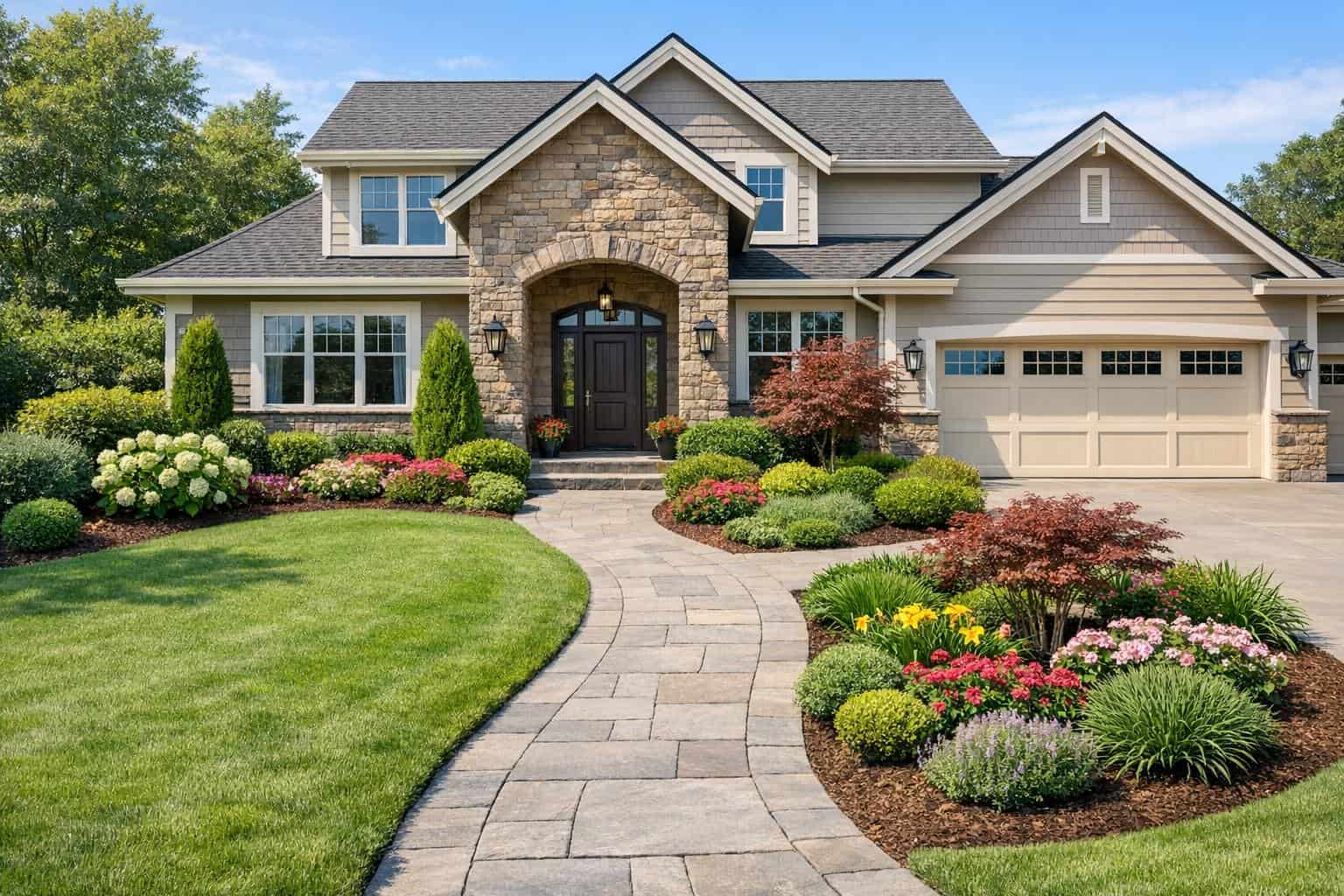
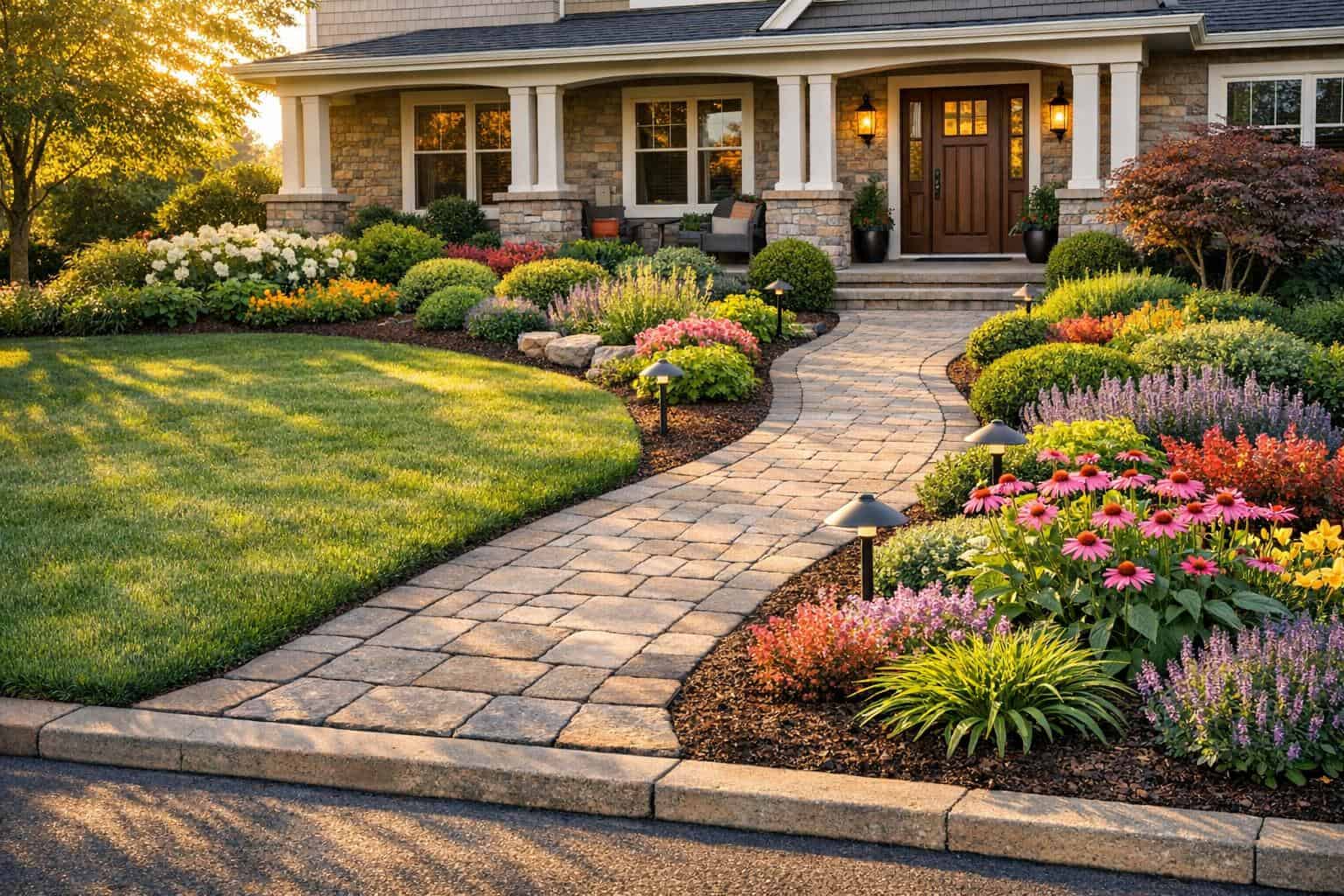
    Garden Bed and Planting Installation Guide for Homeowners related example showing Attractive residential front yard with walkway, planting beds, lawn, and curb appeal landscaping
    This front yard example gives homeowners a visual reference for comparing layout, materials, and maintenance tradeoffs before starting the project.
    • Common project goals: curb appeal, privacy, shade, screening, seasonal color, or a cleaner low-maintenance look.
    • Common materials: shrubs, trees, perennials, ornamental grasses, mulch, decorative rock, and edging details.
    • Main performance factors: plant spacing, irrigation compatibility, sun exposure, soil conditions, and long-term maintenance planning.

    Planting should match the way the property is used

    Some homeowners want bold visual impact near the front entry. Others want backyard privacy, low-maintenance structure, or softer transitions around patios and walkways. Those are all valid goals, but they lead to different plant choices and bed layouts.

    This is why planting should be tied to the broader landscape plan described in our services guide. Beds that ignore circulation, drainage, and irrigation often look good briefly but become harder to maintain over time.

    What affects planting and garden bed cost

    Project cost is shaped by plant size, quantity, soil amendment needs, bed preparation, edging details, mulch or stone coverage, irrigation updates, and how much removal or cleanup is required before the new work begins. Larger specimen material can change the budget quickly, especially when access is limited.

    Homeowners should also think about long-term maintenance. A lower-maintenance bed may cost more upfront if it uses better spacing, stronger structure plants, weed suppression layers, or irrigation improvements, but it can save time and labor later.

    How irrigation and drainage connect to planting

    Planting performance is closely tied to water management. Beds that stay too wet, dry out too quickly, or receive uneven irrigation often struggle no matter how attractive the plant palette looked on paper. If water movement is a concern, pair this topic with our drainage guide and irrigation guide.

    Questions to ask before hiring for planting work

    • What is the main goal of this planting plan: privacy, curb appeal, screening, color, or lower maintenance?
    • How will the plant choices respond to sun, irrigation, and soil conditions on this property?
    • What prep work is included before new plants go in?
    • What mulch, edging, and watering assumptions are part of the bid?
    • How much maintenance should I expect in the first year?

    Our hiring guide can help you compare planting proposals more effectively.

    What homeowners should remember

    A strong planting project is about function as much as appearance. The best results come when the plants match the site, the water plan, and the way the homeowner wants to live with the yard after installation. When a contractor explains spacing, maintenance, and irrigation clearly, the finished landscape usually holds up much better over time.

    Garden Bed and Planting Installation Guide for Homeowners related example showing Front entry landscape materials relevant to choosing surfaces and finishes for a smaller yard
    This related front yard detail helps show how site conditions and finish choices can change the homeowner's plan.

    Related guide: If the goal is to create separation from neighboring properties or soften a fence line, the Privacy Landscaping Guide for Homeowners can help with layered screening ideas.

    Nursery guide: If planting purchases are part of the project, the plant material comparison guide can help homeowners buy with more confidence.

    Plant-selection guide: The low-maintenance plant guide helps connect nursery choices to real long-term upkeep.

    Cost guide: The planting and garden bed cost guide helps homeowners compare bed scope, plant size, and finish-detail pricing more clearly.

    Quote guide: The planting and garden bed quote guide makes it easier to compare plant size, bed prep, mulch, and irrigation assumptions.

    Timeline guide: The planting and garden bed timeline guide helps homeowners compare layout, sourcing, installation, and finish timing more clearly.

    Expectations guide: The planting expectations guide helps homeowners understand bed prep, plant staging, and finish-work flow.

    Maintenance guide: The planting maintenance guide helps homeowners manage watering, pruning, and long-term bed health.

    Mistakes guide: The planting planning mistakes guide helps homeowners catch layout, plant-size, and upkeep mismatches early.

    Warning signs guide: The planting-bed warning signs guide helps homeowners judge stress, thin coverage, and irrigation trouble before the bed declines further.

    More Service Planning Guides

    More Foundation and Front-Bed Guides

    More Front-Bed Composition Guides


  • Landscape Lighting Guide for Homeowners

    Landscape Lighting Guide for Homeowners

    Landscape lighting can make a property feel safer, more polished, and easier to use after dark. It can also be one of the most misunderstood landscaping services because homeowners often focus on fixture count before defining what the lighting actually needs to do. A good lighting plan is not just decoration. It supports visibility, highlights key areas, and helps outdoor spaces feel intentional at night.

    This guide explains what residential landscape lighting usually includes, how homeowners should think about placement and priorities, and what to ask before hiring.

    What landscape lighting usually includes

    Residential landscape lighting often centers on low-voltage systems that illuminate pathways, entry areas, planting beds, steps, patios, and selected architectural or focal features. Depending on the property, the scope may include transformers, wiring runs, fixture placement, timers or smart controls, and adjustments after dark once the system is energized.

    Landscape Lighting Guide for Homeowners related example showing Lighting detail relevant to dim areas, fixture shifts, and warning signs
    This lighting example gives homeowners a visual reference for comparing layout, materials, and maintenance tradeoffs before starting the project.
    • Common fixture types: path lights, uplights, step lights, downlights, wall lights, and accent lighting.
    • Common goals: safety, wayfinding, nighttime curb appeal, and extending the usability of patios or gathering areas.
    • Main planning factors: power access, beam spread, glare control, fixture spacing, and what parts of the property deserve emphasis.

    Start with purpose, not fixture count

    Homeowners get better lighting outcomes when they begin by asking what needs to be visible and what should feel highlighted. A front walkway may need clear wayfinding. A patio may need soft perimeter light instead of harsh overhead brightness. A planting bed may only need subtle accent lighting to create depth after sunset.

    This kind of thinking fits naturally into the broader site-planning approach described in our landscaping services guide.

    Where lighting usually has the most value

    • Walkways and entries: improve visibility and make access safer.
    • Patios and outdoor living areas: help extend the space into evening use.
    • Steps and grade changes: reduce trip hazards and improve navigation.
    • Planting beds and trees: add depth and visual structure at night.
    • Architectural focal points: give the home a more finished nighttime appearance.

    Lighting is often most effective when it supports spaces that are already well planned. If the yard layout is still taking shape, it may help to read the patio guide and project expectations guide as well.

    What affects landscape lighting cost

    Pricing depends on fixture quality, number of runs, transformer setup, installation difficulty, access, controls, and how spread out the lighting zones are across the property. A small front-entry system is very different from a whole-property lighting plan that covers pathways, patios, trees, and architectural accents.

    As with other services, value is not just about the visible hardware. Layout quality, nighttime adjustment, wire routing, and long-term reliability matter too. Our landscaping cost guide can help frame these decisions more realistically.

    Questions to ask before hiring for lighting

    • What areas of the property do you think need lighting most, and why?
    • How will glare be controlled so the lighting feels intentional rather than harsh?
    • What fixture quality and control options are included in the bid?
    • How will the lighting be adjusted after dark?
    • How should I expect to maintain the system over time?

    It also helps to review questions to ask before hiring a landscaper before comparing proposals.

    What homeowners should remember

    Good landscape lighting makes the property easier to move through and more enjoyable to look at after sunset. The best systems feel considered, not excessive. When a contractor can explain purpose, placement, and how the lighting supports the way the yard is used, you are much more likely to end up with a system that adds real value instead of visual clutter.

    Landscape Lighting Guide for Homeowners related example showing Landscape lighting detail relevant to fixture placement, wire routing, and project timing for homeowners
    This related lighting detail helps show how site conditions and finish choices can change the homeowner's plan.

    Cost guide: If you are still comparing proposals, the What Affects Landscape Lighting Cost Guide explains how wiring, zones, and fixture goals shape the budget.

    Fixture guide: The lighting fixture guide helps homeowners compare path, accent, and entertaining-area lighting by use case instead of by fixture style alone.

    Quote guide: The landscape lighting quote guide helps homeowners compare fixture count, transformer assumptions, and adjustment scope across bids.

    Timeline guide: The landscape lighting timeline guide helps homeowners judge scheduling expectations around design, installation, and nighttime adjustment.

    Expectations guide: The landscape lighting expectations guide helps homeowners understand layout, installation, and nighttime adjustment flow.

    Maintenance guide: The landscape lighting maintenance guide helps homeowners protect fixture performance and nighttime balance over time.

    Mistakes guide: The landscape lighting planning mistakes guide helps homeowners catch placement and over-lighting issues before installation.

    Warning signs guide: The landscape lighting warning signs guide helps homeowners judge dim areas, glare, fixture shifts, and control issues.

    More Service Planning Guides


  • Irrigation System Guide for Homeowners

    Irrigation System Guide for Homeowners

    An irrigation system can protect planting investments, support lawn health, reduce hand-watering time, and make a landscape easier to manage through seasonal changes. But not every property needs the same type of irrigation, and not every system is designed with efficiency or long-term maintenance in mind.

    This guide explains the basics of residential irrigation planning, common system types, what affects cost, and what homeowners should ask when irrigation is part of a larger landscape project.

    What residential irrigation usually includes

    Irrigation work can range from a simple sprinkler-zone upgrade to a full system planned around lawn areas, planting beds, drip lines, controllers, valves, and seasonal adjustments. On many projects, irrigation is one of the supporting systems that makes the visible landscaping perform well after installation.

    • Lawn irrigation: usually focused on even coverage and durable equipment placement.
    • Drip irrigation: often used in planting beds, shrubs, and lower-water-use designs.
    • Controller and zoning setup: helps match watering schedules to different plant and exposure needs.

    Why irrigation should match the landscape plan

    Watering should be built around what is actually being planted and how the property is used. A system designed only for convenience can overwater some areas, miss others, and make maintenance harder. The best results come when irrigation is planned with lawn shape, planting density, sun exposure, and hardscape layout already in mind.

    Irrigation System Guide for Homeowners related example showing Irrigation detail relevant to controller checks, head alignment, and maintenance
    This irrigation example gives homeowners a visual reference for comparing layout, materials, and maintenance tradeoffs before starting the project.

    That is one reason irrigation belongs inside the bigger planning conversation described in our landscaping services guide.

    When homeowners should evaluate irrigation

    Irrigation is worth reviewing when:

    • new lawn or planting beds are being installed
    • existing zones are not covering evenly
    • water bills are high and coverage seems wasteful
    • parts of the property stay too wet while others dry out
    • the landscape layout is changing enough that old head placement no longer makes sense

    Major patio, retaining wall, drainage, and planting projects are often the right time to rework irrigation because the site is already being opened up.

    How irrigation affects cost and maintenance

    Irrigation pricing depends on zone count, trenching needs, controller choices, valve work, drip-line complexity, repairs to existing systems, and how much of the yard needs new coverage. Long-term cost is also affected by maintenance and seasonal adjustments. A cheaper install that wastes water or requires frequent fixes may not be the better value.

    Homeowners comparing full outdoor budgets should also read our landscaping cost guide so irrigation is evaluated as part of the whole project, not as an isolated line item.

    Irrigation and drainage are connected

    Too much water in the wrong place can look like a drainage failure when the real problem is irrigation coverage or scheduling. In other cases, a true grading or runoff problem can make homeowners think the irrigation system is at fault. That is why the best contractors evaluate both. If water management is a concern on your site, pair this guide with our drainage solutions guide.

    Questions to ask before hiring for irrigation work

    • How will the system be zoned for lawn, planting beds, and different sun exposures?
    • What parts of the existing system can realistically be reused?
    • How will irrigation be coordinated with new patios, walls, or planting plans?
    • What maintenance or seasonal service should I expect?
    • How will you test for even coverage and overspray?

    If you are still comparing companies more generally, our hiring guide can help you ask better project-level questions.

    What homeowners should remember

    A good irrigation system supports the landscape you actually want, not just the one that was there before. The more clearly a contractor explains zoning, efficiency, maintenance, and how irrigation fits into the rest of the project, the more likely you are to end up with a system that protects the investment instead of creating new water problems.

    Irrigation System Guide for Homeowners related example showing Irrigation detail relevant to planning mistakes, zoning, and controller decisions
    This related irrigation detail helps show how site conditions and finish choices can change the homeowner's plan.

    Related guide: If coverage problems, runoff, or dry spots are the main issue, the Signs Your Irrigation System Needs Attention Guide can help narrow the problem before bigger plant stress sets in.

    Cost guide: Homeowners comparing system proposals can use the What Affects Irrigation System Cost Guide to understand zoning, trenching, and retrofit factors.

    Quote guide: The irrigation quote guide makes it easier to compare zone planning, controller scope, and testing assumptions.

    Expectations guide: The irrigation expectations guide helps homeowners understand layout, trenching, controller setup, and system testing during the project.

    Maintenance guide: The irrigation maintenance guide helps homeowners stay ahead of head alignment, leaks, controller issues, and uneven coverage.

    Mistakes guide: The irrigation planning mistakes guide helps homeowners catch zoning, coverage, and controller mistakes before installation.

    Timeline guide: The irrigation timeline guide helps homeowners understand how layout, trenching, and testing affect project length.

    More Service Planning Guides


  • Retaining Wall Guide for Homeowners

    Retaining Wall Guide for Homeowners

    Retaining walls can solve slope problems, create usable yard space, support patios and walkways, and help control erosion. They can also fail early if homeowners treat them like a simple decorative add-on instead of a structural landscape feature. The look of the wall matters, but performance depends on base work, drainage, soil pressure, and how the wall fits into the grade of the property.

    This guide helps homeowners understand what retaining walls actually do, what affects cost and durability, and what to ask before hiring.

    What a retaining wall is meant to do

    A retaining wall holds back soil where there is a change in elevation. On some properties that means preventing erosion on a slope. On others it means carving out space for a patio, lawn, planting area, driveway edge, or walkway. The right wall can make a yard feel dramatically more usable.

    Because retaining walls manage both structure and water, they should be planned with drainage and surrounding surfaces in mind. A wall that looks good but traps water or sits on a poorly prepared base is much more likely to shift, lean, or fail over time.

    Common residential retaining wall materials

    • Segmental block systems: popular for many residential projects because they are modular and widely available.
    • Poured concrete: sometimes used when a cleaner or more engineered appearance is preferred.
    • Natural stone: can create a more organic look, but may increase labor and design complexity.
    • Timber: used in some settings, though homeowners should think carefully about longevity and maintenance.

    The best choice depends on wall height, site conditions, visual goals, and budget.

    Why drainage is critical behind the wall

    Many wall problems are really water problems. When runoff or trapped moisture builds up behind a wall, pressure increases and performance declines. That is why drainage provisions are not optional details. They are part of the core structure.

    If your property already has pooling or runoff issues, read our drainage solutions guide alongside this page. The two scopes are often connected.

    What affects retaining wall cost

    Wall pricing is shaped by more than visible length. Height, access, excavation, soil conditions, drainage needs, reinforcement, material choice, and how the wall interacts with nearby surfaces all matter. A short but difficult site can cost more than a longer wall with easy access and straightforward grading.

    Retaining Wall Guide for Homeowners related example showing Retaining wall detail relevant to planning mistakes, drainage, and grade behavior
    This retaining wall example gives homeowners a visual reference for comparing layout, materials, and maintenance tradeoffs before starting the project.
    • Major cost drivers: wall height, excavation depth, drainage components, reinforcement needs, access, and finish material.
    • Project combinations that raise scope: stairs, patio integration, driveway edge support, lighting, and planting bed rebuilds.

    If you are comparing broader outdoor budgets, our landscaping costs guide can help you interpret quotes more realistically.

    When a retaining wall belongs in a larger plan

    Retaining walls rarely function best as isolated projects. They often support a larger outdoor design by creating a level area for a patio, improving circulation, stabilizing a driveway edge, or organizing planting spaces more effectively.

    This is where site planning matters. Our landscaping services guide explains how structural services often need to be sequenced with drainage, patios, planting, and lighting rather than handled one at a time without a bigger plan.

    Questions to ask before hiring for a retaining wall

    • How will you handle drainage behind and around the wall?
    • What base preparation and reinforcement are included?
    • How does this wall connect to nearby patio, walkway, or lawn grades?
    • What material do you recommend for this site and wall height?
    • What signs of movement or settlement should I watch for later?

    It also helps to review questions to ask before hiring a landscaper before comparing proposals.

    What homeowners should remember

    A retaining wall is one of the clearest examples of landscaping as both design and construction. It should look appropriate for the property, but it also needs to manage soil pressure, water, and long-term stability. The more clearly a contractor explains drainage, base work, and how the wall supports the rest of the yard, the more confidence you can have in the installation.

    Retaining Wall Guide for Homeowners related example showing Residential retaining wall installation scene with excavation, blocks, and slope conditions
    This related retaining wall detail helps show how site conditions and finish choices can change the homeowner's plan.

    Compare materials: Homeowners deciding between modular block and a smoother structural look can review the Retaining Wall Block vs Poured Concrete Guide before choosing a system.

    Related guide: If you are seeing movement or cracking already, the Signs a Retaining Wall May Be Failing Guide explains what to watch for next.

    Cost guide: If you are comparing estimates for this kind of project, the What Affects Retaining Wall Cost Guide explains why site conditions and drainage can change the number quickly.

    Timeline guide: If schedule matters as much as budget, the How Long Does a Retaining Wall Project Take Guide explains where time tends to go.

    Quote guide: The retaining wall quote guide helps homeowners compare bids by drainage, reinforcement, and site assumptions instead of price alone.

    Expectations guide: The retaining wall expectations guide helps homeowners understand excavation, drainage detail, backfill, and finish grading during the project.

    Maintenance guide: The retaining wall maintenance guide helps homeowners monitor drainage behavior, movement, and surface change over time.

    Mistakes guide: The retaining wall planning mistakes guide helps homeowners catch drainage and grade mistakes before construction begins.

    Warning signs guide: The retaining wall warning signs guide helps homeowners judge leaning, bulging, cracking, and drainage-related changes early.

    More Service Planning Guides


  • Drainage Solutions Guide for Homeowners

    Drainage Solutions Guide for Homeowners

    Drainage problems are easy to ignore until they start damaging the parts of the property homeowners care about most. Pooling water, soggy lawn edges, washed-out mulch, slippery walkways, runoff toward the garage, and erosion near retaining walls are all signs that water is moving the wrong way. Once those issues start affecting hardscapes, planting beds, or the foundation, they usually get more expensive to fix.

    This guide explains the most common residential drainage solutions, when homeowners should address water problems before other upgrades, and what to ask a contractor when drainage is part of the project scope.

    Signs a yard needs drainage work

    Not every wet spot means a full drainage system is needed, but recurring water issues usually point to a bigger grading or runoff problem. The key is to watch what happens after heavy irrigation or rainfall, not just how the property looks on a dry day.

    • Water stands in the yard long after rain stops.
    • Mulch or soil washes out from planting beds.
    • Water collects near the house, garage, or patio edge.
    • Lawn areas stay muddy or soft when surrounding areas dry out.
    • Walkways, driveways, or retaining walls show signs of undermining or settlement.

    Common residential drainage solutions

    The right drainage fix depends on what kind of water you are dealing with. Surface runoff, roof discharge, oversaturated planting beds, and low spots in the lawn do not always need the same solution.

    • Grading corrections: reshape the surface so water flows away from structures and gathering areas.
    • Channel drains and catch basins: collect and redirect water from hardscape areas where flow concentrates.
    • French drains: help intercept subsurface or slow-moving water in some landscape conditions.
    • Downspout extensions: move roof runoff away from the immediate foundation zone.
    • Swales and surface pathways: guide water across the property in a controlled way.

    Some projects use more than one method because the problem is not a single low spot, but a larger site-planning issue.

    Why drainage should often come before other upgrades

    Homeowners sometimes want to start with the visible improvements first: a patio, new lawn, walkway, or planting beds. But if water movement is already poor, finishing surfaces before fixing drainage can shorten the life of everything that follows.

    Drainage Solutions Guide for Homeowners related example showing Drainage detail relevant to pooling, runoff shifts, and warning signs
    This drainage example gives homeowners a visual reference for comparing layout, materials, and maintenance tradeoffs before starting the project.

    Drainage is often part of the structural side of landscaping. It belongs in the same planning conversation as patios, retaining walls, and access surfaces because those features all depend on stable grades and predictable runoff.

    How contractors evaluate drainage problems

    A strong contractor should look beyond the obvious puddle. They should be paying attention to slope, elevation changes, hardscape edges, downspout discharge, soil conditions, and where water is likely entering or concentrating across the site.

    • Where does the water start?
    • Where is it supposed to go?
    • What surfaces or beds are interrupting that movement?
    • Are there signs of settlement, erosion, or poor compaction nearby?

    Those questions usually tell you more than a fast suggestion to “just add a drain.”

    Drainage work and project cost

    Drainage can feel expensive because much of the value is invisible once the job is complete. But invisible does not mean optional. The cost usually reflects excavation, pipe or collection components, grading labor, disposal, and the coordination needed to make water move correctly without creating a new problem elsewhere on the property.

    If you are reviewing bids, our landscaping costs guide can help you compare scope more accurately.

    Questions to ask before approving drainage work

    • What is causing the water issue in the first place?
    • How will this solution move water away from the problem area?
    • Does this fix depend on changes to slope, hardscape, or downspouts elsewhere?
    • Will this work protect nearby patios, walkways, lawn, or planting beds over time?
    • What maintenance should I expect for this drainage setup?

    What homeowners should remember

    Drainage is not just a cleanup issue. It is a performance issue that affects patios, lawns, retaining walls, planting beds, and even the structure itself. If a contractor explains the water path clearly and shows how the solution fits into the broader landscape, you are much more likely to end up with a fix that lasts instead of a temporary patch.

    Drainage Solutions Guide for Homeowners related example showing Drainage detail relevant to planning mistakes, runoff diagnosis, and grading decisions
    This related drainage detail helps show how site conditions and finish choices can change the homeowner's plan.

    If you are unsure whether the real fix is collection drains, surface reshaping, or both, our drainage vs regrading guide can help you compare those approaches.

    If the underlying problem may be surface shape rather than collection alone, our grading and yard leveling guide is a helpful next step.

    Related guide: If you are not sure whether the yard has a drainage problem in the first place, the Signs You Need Better Yard Drainage Guide can help identify common warning signs.

    Cost guide: The What Affects Drainage Project Cost Guide helps explain why some water issues require much more than a simple quick fix.

    Quote guide: The drainage quote guide makes it easier to compare problem definition, outlet planning, and restoration scope across proposals.

    Expectations guide: The drainage expectations guide helps homeowners understand trenching, pipe work, restoration, and how the yard may look mid-project.

    Maintenance guide: The drainage maintenance guide helps homeowners monitor outlets, runoff patterns, and recurring wet spots over time.

    Mistakes guide: The drainage planning mistakes guide helps homeowners catch runoff-source and grading mistakes before trenching begins.

    Warning signs guide: The drainage warning signs guide helps homeowners judge pooling, outlet trouble, and runoff changes before the problem grows.

    More Service Planning Guides


  • Patio Installation Guide for Homeowners

    Patio Installation Guide for Homeowners

    A patio project can add usable square footage, improve circulation through the yard, and make outdoor living areas feel more intentional. It can also become expensive or frustrating if homeowners jump straight to surface materials without thinking through layout, drainage, elevation, and daily use. A good patio is not just a finished surface. It is a well-planned part of the landscape.

    This guide explains what patio installation usually includes, how to think about material and layout choices, and what homeowners should ask before hiring. Whether you are considering concrete, pavers, or natural stone, the same planning logic applies: function comes first, then finish.

    What patio installation usually includes

    Patio work typically begins with layout planning, excavation, sub-base preparation, grade control, and edge definition before the visible surface material is ever installed. Depending on the project, the scope may also include steps, seat walls, drainage improvements, lighting rough-ins, or connections to nearby walkways and planting beds.

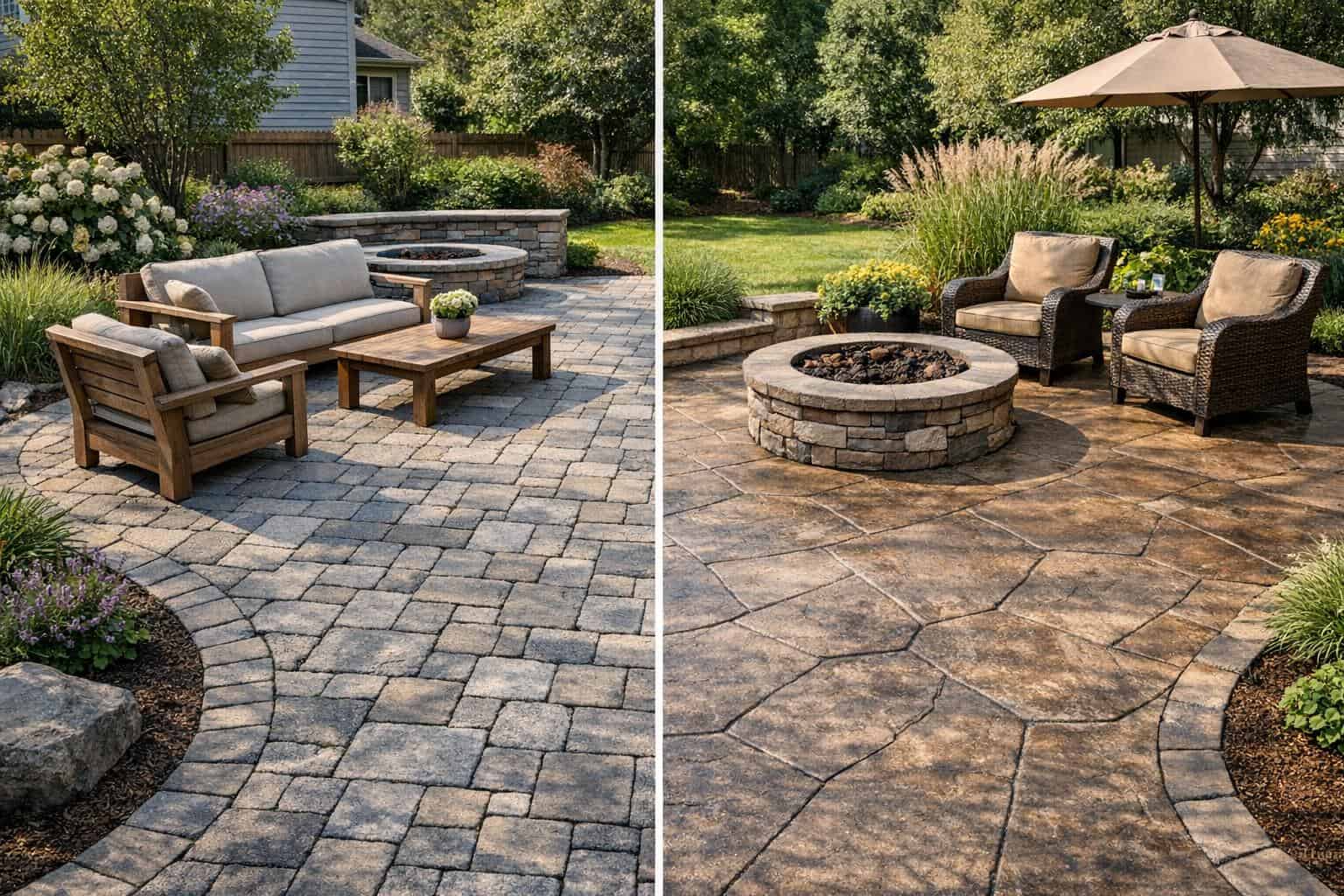
    Patio Installation Guide for Homeowners related example showing Concrete, paver, and stone outdoor surfaces showing common patio and walkway material choices for homeowners
    This patio example gives homeowners a visual reference for comparing layout, materials, and maintenance tradeoffs before starting the project.
    • Common patio materials: poured concrete, pavers, natural stone, and concrete slabs.
    • Common add-ons: seating walls, fire pit zones, pathways, landscape lighting, pergola pads, and planting-bed integration.
    • Main performance factors: base preparation, drainage, slope, edge restraint, and the right surface for the way the space will be used.

    Start with how the patio will be used

    Before comparing materials, homeowners should define what the space needs to do. A patio for a small dining set has different size and circulation needs than one designed for entertaining, grilling, and a fire feature. If people will move between the house, lawn, pool, or outdoor kitchen, those routes should shape the layout from the beginning.

    This is one reason broader planning matters. Our landscaping services guide explains how patios often work best when they are planned alongside walkways, lighting, drainage, and planting instead of as a standalone slab.

    Material choice affects cost, appearance, and maintenance

    Material decisions often start with appearance, but long-term upkeep matters too. Concrete can be a practical value option and works well in many contemporary layouts. Pavers offer flexibility and easier spot repair. Natural stone can look premium and organic, but may raise installation complexity and cost.

    • Concrete patios: often cost less than premium stone options and can be finished in multiple ways.
    • Paver patios: offer modular flexibility, pattern variety, and easier localized repairs when installed well.
    • Natural stone patios: can create a distinctive high-end look, but require good planning around thickness, bedding, and edge details.

    The best choice depends on budget, design goals, climate, maintenance tolerance, and how the patio connects to the rest of the property.

    Drainage and slope matter more than many homeowners expect

    A patio should not trap water against the house or create slippery low spots after rain. Drainage planning is one of the most important parts of the project, especially when the patio sits near the foundation, a retaining wall, or a transition into lawn and planting beds.

    If your yard already struggles with pooling water or runoff, a patio project is often the right time to solve that. Our drainage solutions guide explains why water movement should be handled as part of the same plan, not after the finish surface is already installed.

    How the installation process usually unfolds

    While exact methods vary by material, most patio projects follow a similar sequence:

    • layout confirmation and elevation planning
    • excavation and removal of unsuitable material
    • base preparation and compaction
    • drainage and edge-detail work
    • surface installation and finishing
    • cleanup, curing or settlement checks, and handoff

    Homeowners who want a broader overview of staging, disruption, and project rhythm should also read what to expect during a landscaping project.

    Questions to ask before hiring for a patio

    • How will you handle drainage and slope on this part of the property?
    • What base preparation is included in the bid?
    • How will the patio connect to steps, doors, walkways, or nearby beds?
    • What material do you recommend for this use case, and why?
    • What maintenance should I expect in the first year and beyond?

    Our guide on questions to ask before hiring a landscaper is a helpful companion when you start comparing bids.

    What homeowners should remember

    A good patio is not only about the surface. It is about how the space functions, drains, connects to the yard, and holds up over time. The more a contractor explains layout, base work, water management, and transitions to nearby features, the more confidence you can have that the finished patio will perform well instead of simply looking good on day one.

    Patio Installation Guide for Homeowners related example showing Backyard patio comparison showing paver surface and stamped concrete surface
    This related patio detail helps show how site conditions and finish choices can change the homeowner's plan.

    If you are still deciding between different outdoor-living structures, also read our patio vs deck guide for homeowners.

    If your patio is being planned as a social gathering area, also read our fire pit installation guide for homeowners.

    Material comparison: Homeowners choosing a patio surface can also review the Paver Patio vs Stamped Concrete Patio Guide for repair and maintenance tradeoffs.

    Related guide: If the patio is only one part of a larger outdoor-living plan, the Backyard Landscaping Ideas and Planning Guide for Homeowners can help connect seating, lawn, privacy, and circulation.

    Related guide: Homeowners with older hardscape can compare symptoms in the Signs It Is Time to Replace a Patio Guide before deciding whether repairs are enough.

    Cost guide: The What Affects Patio Cost Guide breaks down why similar-looking patio proposals can be priced very differently.

    Timeline guide: Homeowners who want a clearer schedule can review the How Long Does a Patio Project Take Guide alongside installation and cost planning.

    Quote guide: The patio quote guide helps homeowners compare bids by prep, drainage, and finish scope instead of price alone.

    Expectations guide: The patio expectations guide helps homeowners understand disruption, excavation, finish-detail flow, and cleanup timing.

    Maintenance guide: The patio maintenance guide helps homeowners stay ahead of joint wear, settling, and surface changes.

    Mistakes guide: The patio planning mistakes guide helps homeowners catch layout, drainage, and sizing mistakes before installation.

    Warning signs guide: The patio warning signs guide helps homeowners judge settling, drainage trouble, and surface wear before the space worsens.

    More Service Planning Guides

    More Patio Ideas and Example Guides

    More Patio Comfort and Layout Guides

    More Patio Transition and Step Guides

    More Patio Edge and Planting Guides

    More Patio Comfort Guides

    More Patio Lighting Guides

    More Patio Edge-Definition Guides

    More Patio Edge-Use Guides

    More Patio Planting Condition Guides

    More Patio Planting and Edge-Cleanliness Guides

    More Family-Use Patio Planting Guides

    More Pet-Friendly Patio Planting Guides

    More Patio Border Finish Guides

    More Patio Exposure Guides

    More Small-Space Patio Planting Guides

    Related homeowner planning guides

    Use these next-step guides to make the project more specific before comparing estimates or choosing materials.

    Related homeowner planning guides

    Use these next-step guides to narrow the project before choosing materials, comparing estimates, or changing the layout.

    More specific homeowner planning guides

    Use these deeper guides when the broad project direction is clear and the next decision is about layout, materials, maintenance, or cost tradeoffs.

    More specific homeowner planning guides

    Use these deeper guides when the broad project direction is clear and the next decision is about layout, materials, access, maintenance, or cost tradeoffs.


  • Landscaping Costs Explained for Homeowners

    Landscaping Costs Explained for Homeowners

    Landscaping costs are hard to judge when all you have is a rough idea, a few inspiration photos, and wildly different quotes from contractors. Many homeowners start by asking, “How much does landscaping cost?” The more useful question is, “What drives the cost of my project, and what kind of scope am I really pricing?”

    That distinction matters because landscaping is not one product. A cleanup and mulch refresh is different from a full backyard renovation. A new walkway is different from drainage reconstruction and retaining walls. Costs vary because the work, materials, access, and long-term performance requirements vary.

    Why landscaping prices vary so much

    The biggest reason price ranges feel inconsistent is that estimates often cover very different scopes. One contractor may include demolition, drainage corrections, soil preparation, cleanup, haul-off, and better materials. Another may bid only the visible installation with minimal prep assumptions. Both numbers may look like they are pricing the same project when they are not.

    That is why homeowners get the best value from cost education when they look beyond the total. Understanding the pieces of the budget helps you compare bids more intelligently and spot missing scope before work begins.

    The main cost drivers homeowners should know

    What Affects Patio Cost Guide for Homeowners
    Hardscape scope, site prep, and finish choices often set the budget floor for a landscaping project.
    • Project size: More square footage usually means more labor, materials, disposal, and setup time.
    • Site access: Tight side yards, stairs, limited equipment access, and urban sites usually cost more.
    • Excavation and prep: Removal, grading, compaction, drainage correction, and base work often shape the real budget.
    • Material choice: Standard concrete, decorative concrete, pavers, natural stone, premium plant material, and custom lighting all change the budget quickly.
    • Complexity: Curves, elevation changes, retaining work, custom patterns, and irrigation integration add labor and coordination.
    • Phasing: Breaking a project into stages can help with budget planning, but it may also increase mobilization and repeat setup costs.

    Hardscape work usually sets the budget floor

    Patios, walkways, retaining walls, driveways, stairs, and structural landscape features tend to be the most expensive parts of a project because they involve excavation, base preparation, material delivery, skilled installation, and often drainage planning. These are not just decorative choices. They are performance-related installations.

    For example, a concrete driveway quote is shaped not only by square footage, but also by slab thickness, reinforcement, finish choice, demolition needs, and how well the base is rebuilt. That is why our guides on driveway thickness, finish choice, and replacement versus new installation can all change the way a homeowner reads a bid.

    Softscape and planting costs depend on density and expectations

    Planting projects can look affordable at first, but totals rise quickly when the design includes large specimen plants, privacy screening, extensive bed preparation, irrigation updates, edging, mulch, decorative rock, or seasonal color. Maintenance expectations also matter. A lower-maintenance planting palette may cost more upfront but reduce long-term labor.

    Homeowners should ask whether the bid includes soil amendments, irrigation adjustments, mulch depth, staking, cleanup, and plant replacement policy. Those details often separate a quick install from a more durable planting job.

    Drainage and irrigation are easy to underestimate

    Water management can increase a budget quickly, but it also prevents costly problems later. If water is pooling near the house, washing out beds, undermining flatwork, or collecting where people walk, that issue usually belongs in the project budget from day one.

    Irrigation and drainage work often feels invisible compared with new paving or planting, yet it may be the upgrade that protects everything else you install. Skipping it to save money can create expensive rework later.

    How to compare quotes without oversimplifying

    What Landscaping Materials Cost Guide for Homeowners
    Material choices and installation scope change landscaping budgets more than a simple per-square-foot comparison suggests.

    A smart comparison starts by asking each contractor to spell out the scope in writing. If one bid includes demolition and disposal while another does not, they are not directly comparable. If one contractor prices premium materials and another assumes entry-level materials, the total alone will not tell you much.

    • Look for prep assumptions and not just finish materials.
    • Check whether drainage, base work, and cleanup are included.
    • Ask how allowances or unit prices are handled if conditions change.
    • Notice how clearly the timeline, exclusions, and communication process are described.

    Our guide on questions to ask before hiring a landscaper can help you compare proposals beyond the top-line number.

    Budgeting in phases can be smart

    Many homeowners do not need to complete everything at once. Phasing a landscape project can be a practical way to solve the most important issues first while keeping a broader plan in mind.

    • Phase 1: drainage, grading, access, and structural issues
    • Phase 2: patios, walkways, driveways, walls, and other hardscape elements
    • Phase 3: planting, lawn areas, decorative upgrades, lighting, and finishing touches

    The key is to phase the work in a way that avoids redoing earlier steps. That means planning ahead even if you are not funding the entire transformation right away.

    What homeowners should remember

    The most expensive landscaping project is often the one that has to be partially rebuilt. When you compare costs, look for value in planning, prep work, durability, and communication, not just the cheapest visible finish.

    If you are still mapping out the job, start with our landscaping services guide and our project expectations guide. Those two pages make it much easier to understand what you are actually pricing before you request bids.

    Related guide: Timing can affect bids, material availability, and phasing. The Best Time of Year to Start a Landscaping Project Guide explains how season changes the decision process.


  • What to Expect During a Landscaping Project

    What to Expect During a Landscaping Project

    Many homeowners are comfortable choosing colors, materials, and general design ideas, but they still feel unsure about what a landscaping project will actually look like once work starts. That uncertainty is normal. Even a relatively simple project can involve deliveries, demolition, noise, dust, access changes, inspection points, weather delays, and decisions that have to be made quickly.

    This guide walks through the normal rhythm of a landscaping job so you know what to expect before the crew arrives. While every project is different, the same broad stages show up again and again: planning, site prep, installation, adjustments, cleanup, and handoff.

    Before the first workday

    How to Prepare for a Landscaping Crew Guide
    Preparing access, staging, and site expectations early makes the first landscaping workday less disruptive for homeowners.

    The project usually starts long before anyone unloads equipment. Measurements, material approvals, layout decisions, and scheduling all happen ahead of the first visible activity. Homeowners should expect a few details to be confirmed before work begins, especially on jobs involving concrete, drainage, retaining walls, patios, or irrigation changes.

    • Final scope and pricing should be clearly documented.
    • Material selections and finish choices should be confirmed.
    • Access points, parking, and staging areas should be discussed.
    • Any utility marking or permit needs should be addressed in advance.

    This is also the right moment to ask how communication will work during the job. Knowing who gives updates and who approves changes prevents confusion later.

    Site prep can look messy before it looks better

    The early stage of a landscaping project often looks worse before it looks better. Existing surfaces may be removed, planting beds may be stripped back, soil may be stockpiled, and materials may take over parts of the driveway or yard. That can feel disruptive, but it is usually a normal part of getting the site ready.

    Prep work may include demolition, excavation, rough grading, debris removal, base installation, layout marking, or protective measures for nearby surfaces. If the project involves hardscape work, this phase often determines how durable the finished installation will be.

    For homeowners comparing concrete work specifically, our step-by-step guide to concrete driveway installation shows how much of the long-term performance depends on preparation before the pour.

    Crews may work in phases rather than one continuous push

    Many homeowners picture landscaping as a straight line from start to finish, but real projects often move in stages. One crew may handle demolition or grading. Another may install drainage or irrigation. A finishing crew may handle concrete, pavers, planting, or lighting later.

    That means the site may appear quiet for short stretches while materials arrive, concrete cures, inspections happen, or the next phase is scheduled. Short pauses do not always mean the project is off track. What matters is whether the contractor communicates those pauses clearly.

    Expect decisions and adjustments along the way

    Even well-planned projects can uncover surprises once work begins. Soil conditions may be worse than expected. Drainage issues may be more obvious after excavation. Existing surfaces may reveal hidden thickness or base problems. Grades may need to be adjusted to make water move correctly.

    Good contractors bring those issues forward with options, not panic. They should explain what changed, why it matters, what it costs, and what happens if the issue is ignored. That is one reason our guide on questions to ask before hiring a landscaper emphasizes process and communication instead of price alone.

    How daily life may be affected during the job

    What to Expect During a Patio Project Guide
    Landscape projects often affect circulation, outdoor access, and the daily rhythm of the property while crews work in phases.

    The level of disruption depends on the scope, but homeowners should assume at least some temporary inconvenience. Depending on the project, that can include blocked access, noise, dust, crew vehicles, wet concrete, limited use of the yard, or areas that need to stay undisturbed for curing.

    • Driveways and approaches: may be unusable for a period of time.
    • Backyards: may have restricted access while excavation or installation is underway.
    • Pets and children: usually need extra supervision around active work zones.
    • Watering and irrigation: may need temporary changes if existing systems are being adjusted.

    Asking about those disruptions in advance makes it easier to plan around them instead of reacting mid-project.

    Weather and curing time are part of the real schedule

    Weather affects landscaping more than many homeowners expect. Rain can delay excavation, grading, planting, concrete placement, and sealants. High heat can change watering needs and curing schedules. Cold weather can affect concrete, adhesives, or some planting windows depending on the region.

    Even when the visible work is complete, a project may not be ready for full use immediately. Concrete needs curing time. New sod needs establishment. fresh plantings need irrigation attention. Sealers may need dry conditions. A realistic schedule accounts for those performance requirements, not just the last day a crew is physically present.

    The handoff matters as much as the build

    Before considering the job complete, homeowners should understand what was installed, what needs attention next, and what the contractor expects over the following days or weeks. A proper handoff should cover care instructions, cleanup expectations, and any limits on use.

    • When can the surface or yard be used normally?
    • What maintenance should happen in the first month?
    • Are there irrigation adjustments or watering instructions?
    • Which items are considered normal settling or curing behavior, and which should be reported?

    This is especially important for new hardscape and concrete work. Our article on concrete driveway maintenance and sealing is a good example of the kind of care guidance homeowners should receive after installation.

    What a smooth project usually feels like

    A well-run landscaping project does not have to be perfectly quiet or perfectly predictable. It should feel organized, communicative, and intentional. You should know what stage the job is in, what happens next, and who to talk to if something changes.

    That is often the biggest difference between a stressful project and a manageable one. When expectations are clear, even the inconvenient parts feel temporary and understandable instead of chaotic.

    Prep guide: Before work begins, the How to Prepare for a Landscaping Crew Guide can help reduce surprises around access, pets, and site use.


  • Questions to Ask Before Hiring a Landscaper

    Questions to Ask Before Hiring a Landscaper

    Hiring a landscaper is easier when you treat the first conversation as an interview instead of a sales pitch. Homeowners who ask better questions usually get better proposals, clearer timelines, and fewer surprises during the job. The goal is not to interrogate a contractor. It is to understand how they think, how they work, and whether they are a good fit for the scope you have in mind.

    That matters because landscaping projects often involve details that are easy to miss when comparing bids. Drainage, base preparation, cleanup expectations, protection of existing surfaces, schedule delays, and change-order handling can all affect the real outcome. A contractor who explains those items clearly is usually easier to work with than one who jumps straight to price.

    Start with questions about the contractor’s fit

    Before discussing exact materials or scheduling, ask whether the contractor regularly handles projects like yours. A company that mainly does lawn maintenance may not be the right fit for a retaining wall or driveway replacement. A crew that specializes in high-end design-build work may also not be the best match for a smaller practical cleanup project.

    • What types of projects do you handle most often?
    • How similar are those projects to mine?
    • Will you self-perform the work, subcontract parts of it, or coordinate multiple crews?
    • Who will be my day-to-day point of contact once the project starts?

    These questions help you understand whether the contractor’s expertise matches the job or whether they are stretching into unfamiliar territory.

    Ask how they evaluate the property

    Choosing the Right Contractor for a Concrete Driveway
    A site walkthrough helps homeowners understand how a landscaper evaluates drainage, access, and project priorities before quoting.

    Strong contractors usually spend more time observing the property than talking about finishes. They should be paying attention to slope, drainage, access, measurements, existing conditions, and how the space is used. If a bid is produced without much site evaluation, that is worth noticing.

    • What site conditions stand out to you right away?
    • Do you see any drainage, grading, access, or base concerns?
    • What should be solved before cosmetic upgrades begin?
    • Are there any areas where you would recommend a different scope than what I originally requested?

    The most helpful answers are specific to your property. Generic answers often lead to generic execution.

    Clarify the scope in plain language

    One of the easiest ways to avoid disputes is to ask the contractor to describe the project in simple, practical terms. You want to know exactly what is included, what is not included, and what assumptions the bid depends on.

    • What does this price include from start to finish?
    • What prep work is included?
    • What materials, quantities, or thicknesses are assumed?
    • What cleanup and haul-off are included?
    • What would count as an additional charge later?

    This is especially important on hardscape projects. For example, our article on concrete driveway thickness shows how missing scope details can affect long-term performance, not just price.

    Understand their process before work begins

    Homeowners often focus on the finished look, but the process matters just as much. Ask how the work will unfold, how long each stage usually takes, and what needs to happen before crews arrive. That gives you a much better sense of whether the contractor has a repeatable system or is improvising.

    • What are the major phases of this job?
    • What happens before the first workday?
    • How do you handle materials delivery, staging, and site access?
    • What can delay the timeline, and how do you communicate delays?

    If you want a broader view of the homeowner side of the process, read what to expect during a landscaping project.

    Ask about quality control and workmanship

    Good contractors can usually explain why they build things a certain way. They can talk about compaction, drainage, joint placement, slope, plant spacing, irrigation coverage, or finish choices in a way that makes sense to a homeowner. You are not looking for perfect technical vocabulary. You are looking for clarity and confidence.

    • How do you make sure the finished project performs well over time?
    • What are the most common mistakes homeowners should avoid with this kind of project?
    • What details separate a durable installation from a rushed one?
    • What parts of the job deserve the closest attention during installation?

    Discuss scheduling and communication

    Communication problems create stress even when the physical work is acceptable. It helps to know how often you will hear updates, who approves changes, and how decisions are documented.

    • When could you realistically start?
    • How long should this job take in normal conditions?
    • How do you communicate weather delays, material changes, or hidden issues?
    • Who approves change orders and unexpected extra work?

    These questions become even more important on phased projects or jobs that affect access to the garage, yard, or front entry.

    Compare bids the smart way

    How to Compare Landscaping Quotes Guide for Homeowners
    Comparing landscaping quotes works better when homeowners line up scope, process, and communication expectations before price alone.

    The lowest bid is not automatically the best value, and the highest bid is not automatically the most thorough. When comparing estimates, look at what each contractor assumed about prep work, materials, cleanup, schedule, and problem-solving. Two prices can look close on paper while covering very different levels of work.

    A smart comparison focuses on:

    • scope completeness
    • material quality and quantities
    • base or prep assumptions
    • timeline clarity
    • warranty language
    • communication style and responsiveness

    If cost comparison is your main concern, our guide to landscaping costs for homeowners can help you judge proposals more realistically.

    Red flags worth noticing

    Not every concern shows up as a dramatic warning sign. Sometimes the issue is simply that the contractor stays vague whenever the conversation turns to process, scope, or site conditions.

    • They push for a quick deposit before clearly defining the job.
    • They avoid discussing drainage, prep work, or layout details.
    • They promise unusually fast completion without explaining how.
    • They cannot explain who will actually supervise the job.
    • They keep steering the conversation back to price instead of performance.

    What homeowners should remember

    The best hiring questions are the ones that reveal how a contractor thinks. Do they notice the right problems? Do they explain tradeoffs clearly? Do they set realistic expectations? Those are the signals that usually matter more than polished sales language.

    A good landscaper should help you make better decisions, not rush you into one. When you understand the scope, process, and expectations before signing anything, you put the whole project on much stronger footing from the start.

    Related guide: Once estimates start coming in, the How to Compare Landscaping Quotes Guide for Homeowners can help you evaluate scope and exclusions more confidently.