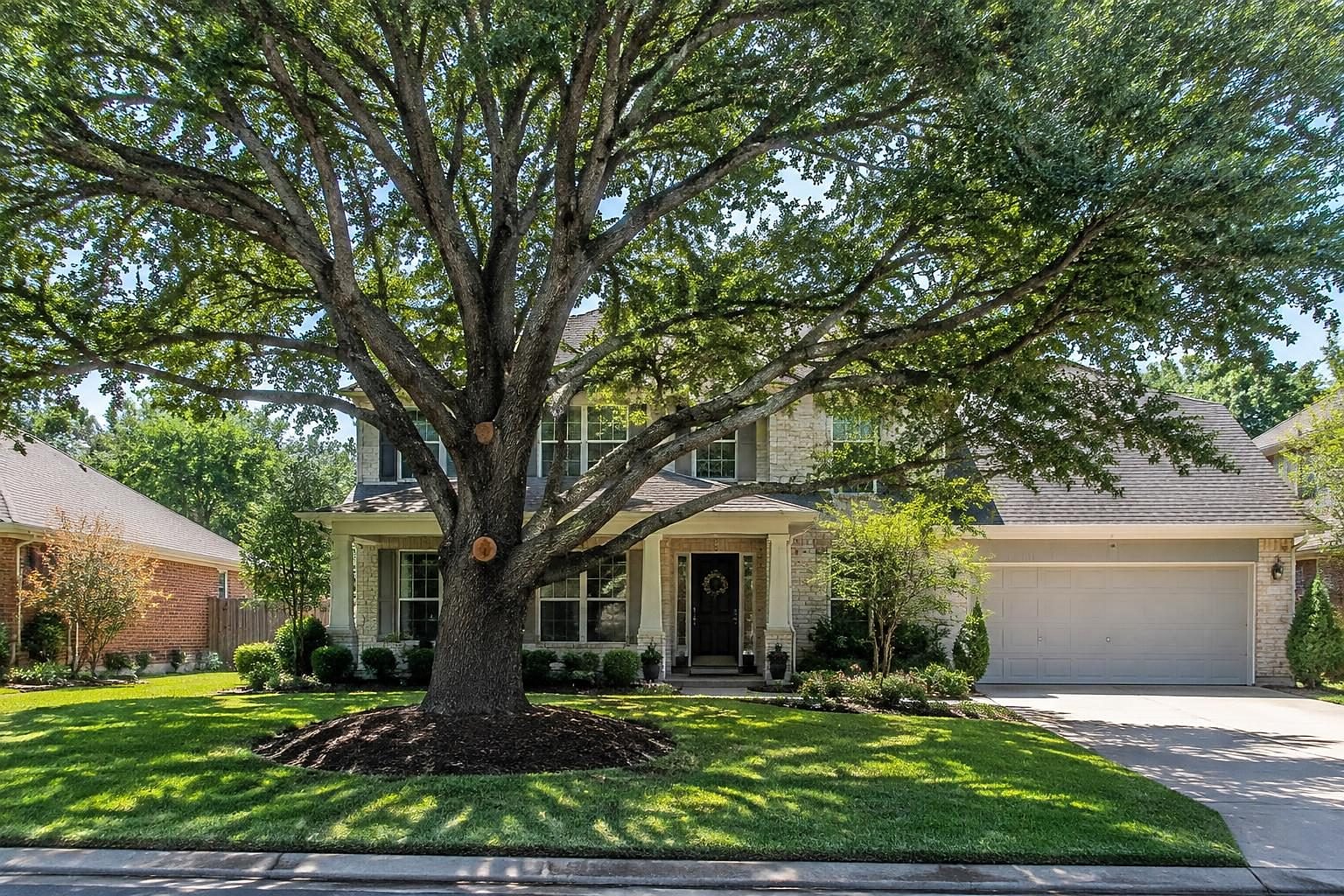
Most yard trees need a qualified tree service only every few years: light structural pruning while young, a check-up and cleanup of dead wood every three to five years once mature, and removal only when a tree is dead, structurally failing or simply in the wrong place. Expect to pay roughly $250–$800 to trim one tree, $400–$2,000 to remove one, and $100–$400 to grind the stump, with large trees over houses or near power lines costing far more. The best value comes from an insured, preferably ISA-certified arborist with a written scope, not the lowest bid.
Quick answer: Prune a sound tree with dead, broken or low limbs. Get an arborist’s assessment for large dead limbs, deep cracks, a new lean, mushrooms or conks at the base, or roots damaged by construction. Remove a tree that is dead, failing at the trunk or roots, or in the wrong place. Rough national costs: trimming $150–$450 for a small tree and $700–$2,000+ for a large one; removal $200–$700 small, $500–$1,800 medium, $1,200–$3,500 large, and $2,500–$8,000+ with a crane; stump grinding $100–$400 per stump. Never let anyone “top” a tree. Prices vary by region, access and the tree’s condition.
Tree care options compared
You have more choices than “trim it” or “cut it down.” Rounded US ranges for one tree; costs vary by region, size and access.

| Option | What it involves | Rough cost per tree | When it fits |
|---|---|---|---|
| Leave it and monitor | Look it over yearly and after storms | Free; an arborist visit costs extra | Healthy trees with no target below, or away from the house |
| Pruning (trimming) | Remove dead, broken, crossing or low limbs; reduce weight or clearance | $150–$450 small; $300–$900 medium; $700–$2,000+ large | Sound trees that need cleanup, clearance or better structure |
| Cabling or bracing | Steel cable or rods to support a weak fork | A few hundred dollars and up, on top of pruning | Valuable trees with a weak but not failing union |
| Removal | Fell or take down in sections; chip brush | $200–$700 small; $500–$1,800 medium; $1,200–$3,500 large; $2,500–$8,000+ crane | Dead, failing or badly placed trees |
| Stump grinding | Grind the stump 6–12 inches below grade | $100–$400 per stump; big stumps more | Almost any lawn or bed after removal |
| Stump extraction | Pull stump and main roots with an excavator | $300–$1,000+ | Building a patio, footing or driveway on the spot |
For the detailed numbers behind each row, see the tree trimming cost guide, the tree removal cost guide and the stump removal and grinding guide.
Prune, treat or remove: warning signs and a decision checklist

A tree with a defect is only a hazard if it could hit something when it fails: your roof, a car, a fence, a play area or people. The University of California IPM program lists the main warning signs and recommends that trees near buildings or busy areas be inspected regularly by an ISA Certified Arborist or a registered consulting arborist.
Warning signs to look for
- Dead limbs. Bare, brittle branches in summer, especially over the house or driveway. Dead wood falls without warning.
- Cracks. Splits in the trunk, or where two large stems meet in a tight “V.” A crack that goes deep into the wood is more serious than one in bark alone.
- Lean. A tree that has always grown at an angle may be stable. A new or worsening lean, especially with cracked or heaving soil on the opposite side, points to root failure and needs a prompt look.
- Root damage. Roots cut by trenching, driveway or foundation work, soil piled over the root zone, or roots exposed when the grade was lowered. Most roots are shallow and spread well beyond the branch tips.
- Fungus and decay. Mushrooms, shelf-like conks on the trunk or base, soft wood and cavities usually mean decay inside, which is hard to judge by eye.
- Dieback. A crown thinning year after year can signal root or disease problems.
Decision checklist
- Is anything under it? A defective tree in the back woods can often be left. The same tree over a bedroom cannot.
- Is the problem in limbs or in the trunk and roots? Limb problems are usually solved by pruning. Major trunk decay, large cracks through the trunk, and root failure usually mean removal.
- How much of the crown is alive? A tree with more dead than live crown rarely recovers.
- Is it a species worth saving? A healthy oak is worth paying an arborist to assess. A short-lived, weak-wooded tree planted too close to the house may not be.
- Is it in the right place? Trees growing into power lines, against the foundation, or lifting a slab may cost more to keep than to replace with a better-sited tree. For roots under pavement, see our driveway repair guide.
- Is the decline getting worse? A dying tree gets more brittle every year. A tree that can be climbed and roped down today can need a crane in two years, which costs much more.
- Do you need a second opinion? For a large, valuable tree, a paid assessment from an arborist who is not selling the removal is worth the fee.
If the answer points to removal, the tree removal cost guide explains how crews price the job and what a fair quote includes.
Proper pruning: what good tree work looks like

Good pruning removes the right branches the right way, for a stated reason, following the US standard ANSI A300.
The basics of a good job
- Every cut has a goal: cleaning out dead or broken wood, thinning to reduce weight, raising low limbs, or reducing a limb back to a side branch for clearance.
- Cuts sit just outside the branch collar, the slightly swollen ring where a branch joins the trunk. Flush cuts and long stubs both slow sealing.
- Large limbs come off in three cuts so the bark does not tear down the trunk.
- Not too much at once. A common rule is no more than about a quarter of the live canopy in a season, and less on mature trees, which recover slowly.
- No climbing spikes on trees being kept. Spikes are for removals.
Why topping is never the answer
Topping means cutting the whole crown back to stubs to make a tree smaller. ISA’s Why Topping Hurts Trees brochure explains that it starves the tree, opens large wounds to decay, and triggers fast, weakly attached sprouts that break more easily than the original limbs. If a tree is too big for its space, the alternatives are reduction pruning back to side branches that are at least a third the size of the cut limb, or removal and replanting with a smaller species. Over-thinning (lion-tailing), which strips the interior and leaves foliage only at the tips, is the opposite mistake.
Timing, and the oak wilt rule
For most trees, the dormant season from late fall through late winter is a good time for routine pruning. Dead, broken and hanging limbs can come off any time.
Oaks need extra care wherever oak wilt is present. The fungus is carried by sap beetles drawn to fresh wounds and can kill red oaks within weeks. University of Minnesota Extension rates April through July as high risk for pruning or wounding oaks, March to mid-April and August through October as lower risk with wounds sealed immediately, and November through February as safe. In Texas, the Texas A&M Forest Service advises avoiding oak wounds from February through June and painting any fresh oak wound right away year-round. Ask your extension office for your local window; a good arborist will raise it without being asked.
How often trees need pruning
Young trees benefit from light structural pruning every year or two, mature shade trees commonly every three to five years, and fruit trees yearly. Broken and hanging limbs should come down promptly after storms.
The tree trimming cost guide covers what these visits cost.
Tree removal, stump grinding and stump removal

How removals are done
In open ground, a tree can be felled in one piece. Near a house, fence or garage, a climber or bucket truck takes it down in sections and lowers each piece on ropes. When the tree is over the roof, too weak to climb, or has no drop zone, a crane lifts sections out. The Purdue Landscape Report points to location, condition, power lines and insurance as the main reasons tree work costs what it does.
Before scheduling, confirm whether a permit is required, whether the stump is included, and what happens to the logs and chips. Some low bids leave the trunk in rounds on the lawn.
Stump grinding vs stump removal
- Stump grinding chews the stump and main surface roots into chips, usually 6 to 12 inches below grade, Deeper roots rot slowly in place. Ask for 12 to 18 inches if you plan to replant nearby.
- Stump removal (extraction) pulls the stump and main roots with an excavator. It leaves a large hole and is worth it mainly when you are building a patio, walkway, shed footing or driveway on that spot, where rotting roots could settle later.
- Stump remover products only speed up natural rotting. Expect a year or more, and large hardwood stumps can look unchanged after a season.
Grinding counts as digging in many states, so call 811 a few business days ahead. Flag private irrigation and lighting lines yourself. Afterward, replace the chips with topsoil mounded slightly above grade. Our stump removal guide covers renting vs hiring, sprouting stumps and replanting in detail.
What tree work costs
Tree services price by the job. These rounded national ranges match our detailed cost guides; use them to sanity-check quotes, not as a price list. They vary by region, access and the tree’s condition.

Tree trimming cost
| Tree size | Typical examples | Rough cost per tree |
|---|---|---|
| Small (under about 30 ft) | Crepe myrtle, dogwood, young fruit trees | $150–$450 |
| Medium (30–60 ft) | Red maple, birch, mature fruit trees | $300–$900 |
| Large (60–80 ft) | Mature oak, pecan, sycamore | $700–$2,000 |
| Very large (80 ft+) | Old oaks, tall pines, cottonwoods | $1,200–$3,000+ |
| Cabling or bracing | Supporting a weak fork | A few hundred dollars and up |
Most single-tree trimming jobs land around $250–$800. Minimum charges are common. See the tree trimming cost guide for oak, palm and pine pricing.
Tree removal cost by size
| Tree size | Trunk diameter | Rough cost |
|---|---|---|
| Small (under 30 ft) | Under 12 in | $200–$700 |
| Medium (30–60 ft) | 12–24 in | $500–$1,800 |
| Large (60–80 ft) | 24–36 in | $1,200–$3,500 |
| Very large (80 ft+) | Over 36 in | $2,000–$6,000+ |
| Crane-assisted removal | Any size over a house or with no drop zone | $2,500–$8,000+ |
| Log and wood haul-away, if not included | Trunk sections | $100–$500 |
A large tree that must come down in sections next to a house usually prices at the top of its row or above it. The tree removal cost guide explains each driver.
Stump grinding cost
| Stump diameter | Typical professional grinding |
|---|---|
| Under 12 in | $100–$150 (usually the minimum charge) |
| 12–24 in | $100–$250 |
| 24–36 in | $150–$400 |
| Over 36 in | $300–$700+ |
| Chip removal and topsoil backfill | Often $50–$200 extra |
Grinders commonly charge about $2–$5 per inch of diameter, and extra stumps in the same visit cost less each. Grinding in the same visit as the removal is usually cheapest; the stump removal guide has the full breakdown.
Emergency work, permits and assessments
- Emergency and storm work. A tree on the roof at night, or any job right after a regional storm, costs more than the same tree on a scheduled day: crews work overtime, rigging a tree off a structure is slow and risky, and demand spikes. Expect the upper end of the large-tree or crane ranges, and sometimes beyond. Ask for a “make safe” price for just the immediate hazard, and get any price in writing or by text before work starts.
- Insurance. Homeowner policies generally pay to remove a tree that falls on a covered structure, often with a cap around $500–$1,000. A tree that falls in the yard without hitting anything is usually not covered, and routine trimming never is.
- Permits. Many cities regulate removal of trees above a set trunk diameter or of protected species, sometimes even when the tree is dead. Fees in the city examples we checked ran from about $25 a tree to a few hundred dollars per application, and some cities also require a replacement tree or an in-lieu fee. Our permit guide for landscaping projects explains how to find your local rules.
- Arborist assessments. Many arborists charge a consultation fee for a risk assessment, often a few hundred dollars for one tree and more for a written report used for a permit or insurance claim.
Prices rise with distance to buildings, tight access, decay, power lines and storm demand, and fall when you keep the wood or chips, bundle several trees in one visit or book in late fall and winter.

Trees near power lines
Never prune near overhead lines yourself or let a general yard crew do it. Electricity can arc to a branch or pole saw without contact, and line-clearance work requires specially trained crews.
- Main lines between poles are usually the utility’s job. Utilities run their own clearance programs at no cost to you, but they prune for line clearance, not looks, which can leave V- or L-shaped crowns.
- The service drop, the line from the pole to your house, is often the homeowner’s responsibility to keep clear. Many utilities will temporarily disconnect it so your tree service can work safely, some free with advance notice and some for a fee.
- A tree or limb on a line is an emergency for the utility, not a tree service. Stay well away and call the utility.
Call your utility before booking any work near lines, since rules vary by company and state. Line work is one of the reasons the trimming and removal guides list power lines as a major price driver.
Planting the right tree in the right place

Many expensive tree problems, from trees in power lines to roots lifting driveways, were set up on planting day. The Arbor Day Foundation’s “right tree, right place” approach means choosing by mature size, not nursery size.
- Keep tall species away from lines. Utility guidance differs, but the common rule is small trees, roughly 25 feet or less at maturity, near overhead lines, and tall species well away from them, often 50 feet or more. Ask your utility for its planting distances.
- Give the house and paving room. Large shade trees belong well back from foundations, driveways, sidewalks and septic fields.
- Match the site. Hardiness zone, sun, soil drainage and space for roots matter more than a tree’s looks at the garden center.
- Call 811 before digging. Gas, electric and water lines can be shallow.
Planting it right
- Dig a wide, shallow hole, about two to three times as wide as the root ball and no deeper than it.
- Set the tree so the root flare, where the trunk widens into the roots, sits at or slightly above the soil surface. Planting too deep is one of the most common reasons young trees fail.
- Remove twine, wire and top burlap, loosen circling roots, backfill with native soil and water in. Stake only if needed, and remove stakes within a year.
- Spread 2 to 4 inches of mulch in a wide ring, pulled a few inches back from the trunk. Mulch piled against the trunk, often called a mulch volcano, invites rot. Our mulch depth guide covers how thick to spread it.
- Water deeply through the first two growing seasons when the soil a few inches down is dry.
If you are replacing a removed tree, plant a few feet away from the old stump, or have the stump ground deep and the chips replaced with soil first. Shade from new trees also changes what grows below; our complete lawn guide covers grass choices for shade.
Seasonal tree care calendar
Timing shifts with climate, so treat this as a general guide and check local extension advice, especially for oaks.

| Season | What to do | Notes |
|---|---|---|
| Late winter (dormant) | Structural and routine pruning of most deciduous trees; book arborist visits; look over bare branches for cracks and dead wood | Safest oak pruning window in oak wilt areas |
| Early spring | Plant bare-root and container trees; refresh mulch rings; remove winter storm damage | Avoid pruning oaks once the local high-risk season starts |
| Late spring | Prune spring-flowering trees just after bloom; check new plantings for watering; watch for leaf diseases and pests | Avoid heavy pruning while trees are pushing new leaves |
| Summer | Water young trees deeply in dry spells; remove dead or broken limbs; check for wilting, early leaf drop or scorch | Dead limbs stand out against green leaves |
| Early fall | Plant trees in many regions; walk the yard for fungus at tree bases and new lean before storm season | Cooler air and warm soil help roots establish |
| Late fall | Water evergreens before the ground freezes; protect young trunks from mowers and rodents; schedule winter pruning or removals | Frozen or dry ground is gentler on lawns |
| After any storm | Look for hanging limbs, new cracks, lifted soil at the base; photograph damage for insurance | Stay clear of downed lines; be wary of door-to-door crews |
Choosing an arborist or tree service

Anyone with a chainsaw can call themselves a tree service, so these checks matter.
What to look for
- ISA certification. An ISA Certified Arborist has passed an exam on tree biology and safe work practices. Verify a name on ISA’s find an arborist search, and ask whether that person will be on site.
- Insurance. Ask for certificates of both general liability and workers’ compensation sent straight from the insurer, and call the agent to confirm they are current.
- A tree company, not a mow crew. General landscapers are fine for small shrubs. Climbing, rigging and large cuts call for a dedicated tree care company. Our guide to comparing landscaping companies explains the difference.
- On-site estimates. Get two or three bids from people who walked the job.
What a written quote should include
- Which trees, by location and species.
- The goal for each tree: clean deadwood, raise over the driveway to a stated height, reduce away from the roof by a stated distance, or remove.
- Roughly how much will be cut, and a statement that work follows ANSI A300 with no topping and no climbing spikes on trees being kept.
- Cleanup: brush chipped and hauled, logs hauled or left, chips kept or removed.
- Stump grinding as its own line, with depth and whether grindings are removed and the hole backfilled.
- Lawn protection, permits and who handles each.
- Total price, deposit, payment terms and anything that could change the price.
Questions to ask
- What will you cut from each tree, why, and how much of the canopy will come off?
- For oaks: is this a safe time of year here?
- Will you call the utility if a service line is involved?
Our questions to ask before hiring a landscaper and guide on how to compare landscaping quotes help you line up bids fairly.
Red flags
- Door-knockers after a storm. Reputable companies are busy after storms and rarely canvass; storm chasers may be uninsured.
- Offers to “top,” “hat-rack” or “round over” trees, or heavy cutting sold as making a tree safer.
- No proof of insurance, or a certificate they will “send later.”
- Cash only, or full payment before work starts.
- Climbing spikes on trees you are keeping.
- Pressure to remove healthy trees, or a price far below every other bid with no explanation.
- Oak pruning booked in the high-risk oak wilt season with no mention of it.
Full hiring checklists are in the tree removal and tree trimming guides.
Problems homeowners run into

These stories come up again and again in homeowner forums, arborist boards and contractor reviews.
- Wildly different quotes. Bids for the same tree two or three times apart are common. The gap usually comes down to scope (stump, hauling, crane, cabling), insurance, or how much the company wants the job.
- Sticker shock on big trees near the house. Large oaks and pecans over a roof can cost thousands each. Many phased the work, riskiest tree first.
- Storm pricing. After major storms, some owners got five-figure quotes for one tree on a roof. Several who pushed back or got another quote saw the price drop substantially.
- No price agreed in an emergency. Crews that started without a number billed far more than others would have.
- Scope creep. A crew arrived and said another tree had to come down for access, or that hauling logs cost extra.
- Surprise stump. Owners assumed grinding was included, or got a grind only flush with the ground.
- Too much cut off. Mature trees left with bare interiors and tufts at the ends, or a canopy cut in half, because the crew equated more cutting with more value.
- A sinking stump patch. The ground over a ground stump sank months later, and grass seeded straight into wood chips came up pale and thin.
- Lawn damage. Trucks and dropped logs rutted lawns and crushed beds when nobody wrote down who would repair them.
Frequently asked questions
How much does a tree service cost?
Roughly $250–$800 to trim one tree, $400–$2,000 to remove one, and $100–$400 to grind a stump. Large trees over houses, crane work, power lines and storm calls cost more.
How do I know if a tree needs to be removed?
Large deep cracks in the trunk, extensive decay or fungus at the base, a new or worsening lean with lifting soil, severe root damage, or a mostly dead crown usually point to removal, especially when the tree could hit the house. Limb problems alone can usually be pruned. A certified arborist can assess borderline trees.
When is the best time to trim trees?
For most trees, late fall through late winter while dormant. Remove dead or broken limbs any time. In oak wilt areas, avoid pruning oaks in your local high-risk season, roughly April through July in the upper Midwest and February through June in Texas.
Is stump grinding included in tree removal?
Usually not. Most companies quote it separately. Ask for it as its own line, with the grinding depth and whether the chips are hauled away and the hole backfilled.
Who is responsible for trees near power lines?
Utilities usually clear main lines between poles. The line from the pole to your house is often your responsibility, though many utilities will disconnect it so a tree service can work. Never prune near a live line yourself.
Do I need a permit to remove a tree?
It depends on your city and HOA. Many places regulate trees over a certain trunk diameter or protected species, sometimes even when dead. Check with your planning or urban forestry office before scheduling.
Tree care guide library
Every tree and stump guide on the site, grouped by decision.
Pruning and trimming
- Tree trimming cost — prices by tree size and type, what good pruning looks like, the oak wilt rule and how to read a pruning quote.
Removal
- Tree removal cost — prices by size, crane and storm jobs, permits, insurance and a step-by-step hiring checklist.
Stumps
- Stump removal and stump grinding — grinding vs extraction vs stump removers, costs by diameter, renting a grinder and replanting.
More complete guides
- Complete lawn guide — grass types, shade, installation and yearly care for the lawn around your trees.
- Complete driveway guide — materials, costs and repairs, including slabs lifted by tree roots.