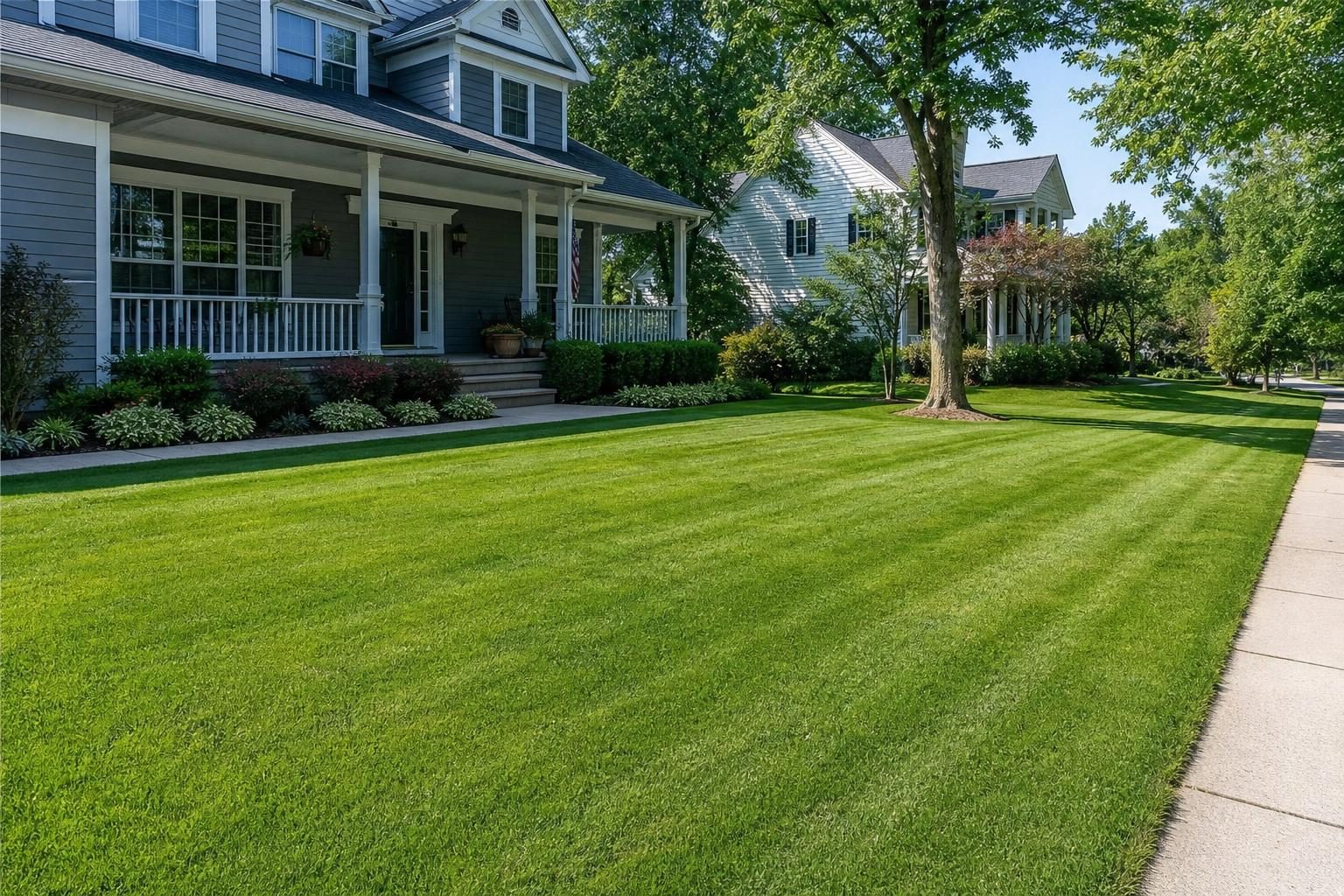
For most homes, the best lawn is a grass suited to your climate and light, planted the way your budget and timeline allow: seed if you can wait and want the lowest cost, hydroseed for large or sloped areas, sod if you need a finished lawn in a few weeks, and artificial turf only where real grass keeps failing or water is scarce. Professional installation runs from roughly $0.10 per square foot for seed to $1–$3 for sod and $8–$15 for turf. After that, a typical quarter-acre lawn costs about $1,100–$3,000 a year to have mowed.
Quick answer: Choose the grass first: cool-season grasses such as tall fescue and Kentucky bluegrass in the North, warm-season grasses such as Bermuda, zoysia and St. Augustine in the South, and either in the transition zone. Rough installed prices are $0.10–$0.50 per sq ft for seed, $0.10–$0.30 for hydroseed, $1–$3 for sod and $8–$15 for turf. Yearly care runs about $40–$75 per mow for most suburban lots, $50–$100 per fertilizer round and $100–$250 for core aeration. Soil prep, grading and watering in the first weeks decide whether a new lawn takes. Prices vary by region, lot size, slope and access.
Ways to get a lawn compared
Three of the four ways to get a green lawn grow real grass and differ mainly in upfront cost versus waiting time. The fourth replaces grass. The table gives rounded US ranges for professional installation including normal prep.

| Method | Installed cost per sq ft | Time to a usable lawn | Watering at the start | Best for |
|---|---|---|---|---|
| Seed | About $0.10–$0.50 with pro prep; pennies DIY | Often 2–3 months or longer | Keep the surface damp for 2–4 weeks | Tight budgets, patient owners, thickening an existing lawn |
| Hydroseed | About $0.10–$0.30; small jobs hit a minimum charge | Often 1–2 months | Similar to seed; the mulch holds moisture a little longer | Larger areas, slopes, erosion control |
| Sod | About $1–$3, more for premium grass or heavy prep | Often 2–4 weeks for light use | Daily for about two weeks, then deeper and less often | A finished look fast, homes being sold, erosion-prone spots |
| Artificial turf | About $8–$15; $15–$25 for small or complex areas | Right away | None for growth; rinsing for pets and heat | Deep shade, heavy dog use, water restrictions |
Our guide to lawn installation companies: sod, seed, hydroseed or turf walks through all four and how to find a local installer for each.
Seed
Seed is the cheapest way to start a lawn and offers the widest choice of varieties. The trade-off is time and risk: rain washes it off slopes, birds eat it, weeds compete, and one hot, dry afternoon can kill sprouting grass. Seed cool-season grass in late summer to early fall and warm-season grass in late spring to early summer. The sod vs seed guide compares the two most common choices.
Hydroseed
Hydroseeding sprays a slurry of seed, mulch, fertilizer and usually a tackifier onto prepared soil. The mulch holds seed and moisture in place, which helps on slopes and big open areas. It still needs weeks of watering, can wash out in a downpour before it sets, and on small yards the minimum charge erases most of the savings.
Sod
Sod is mature farm-grown grass cut into rolls. You get a finished-looking lawn on day one, fewer early weeds and no seed to wash away. It costs several times more than seed, your grass choices are limited to what local farms grow, and the rolls should be laid the day they arrive. The sod and lawn installation guide covers what the job includes.
Artificial turf
Synthetic turf goes over a compacted crushed-rock base with secured edges and infill. It needs no mowing, feeding or irrigation and stands up to dogs. It also costs far more, gets much hotter than grass in sun, needs rinsing in pet areas and wears out in roughly 10 to 15 years. See artificial turf vs sod for a direct comparison and artificial turf vs natural grass for whether you want a living lawn at all.
Choosing a grass type for your climate
Virginia Tech’s extension turfgrass guide explains the basic split: cool-season grasses grow best when daytime highs are around 60–75°F, so they peak in spring and fall, while warm-season grasses prefer 80–95°F, handle drought better and go brown and dormant after repeated frosts, for four to five months in Virginia and longer farther north.

- North and Pacific Northwest: cool-season blends of tall fescue, Kentucky bluegrass, perennial ryegrass and fine fescues.
- Deep South, Gulf Coast and desert Southwest: warm-season Bermuda, zoysia, St. Augustine and centipede.
- Transition zone (roughly Virginia and Kentucky west to Kansas and Oklahoma): summers are hard on cool-season grass and winters on many warm-season grasses. Tall fescue is common in the northern half, Bermuda and zoysia in the southern half.
| Grass | Group | Sun and shade | Usually planted as | Mowing height | Strengths and drawbacks |
|---|---|---|---|---|---|
| Tall fescue (turf-type) | Cool | Full sun to moderate shade | Seed or sod | About 3–3.5 in. in summer | Deep roots, good drought avoidance; grows in clumps, so thin spots need reseeding |
| Kentucky bluegrass | Cool | Full sun; poor in shade | Seed (slow to sprout) or sod, often blended | About 3 in. or higher | Dense, cold hardy, spreads to repair itself; goes dormant in drought |
| Fine fescues | Cool | Best shade tolerance of the cool-season grasses | Seed | Mowed high; check local guidance | Low feeding needs; poor in heavy traffic and heat |
| Bermuda | Warm | Full sun only | Common types from seed; hybrids by sod, plugs or sprigs | About 1–2 in. common; 0.5–1.5 in. hybrid | Fast to establish and recover, very wear tolerant; creeps into beds |
| Zoysia | Warm | Sun to light or moderate shade, by variety | Mostly sod or plugs | About 1–2 in. | Very dense, so fewer weeds; fairly cold tolerant; slow to spread and recover |
| St. Augustine | Warm | Best shade tolerance of the warm-season grasses | Sod or plugs | About 2.5–4 in. | Thick cover in humid heat; limited cold tolerance |
| Centipede | Warm | Sun to light shade | Seed, sod or plugs | About 1.5–2 in. | Low-input Southern lawn; dislikes heavy feeding and traffic |
Mowing heights follow Clemson’s Home & Garden Information Center, which also advises removing no more than a third of the blade at once and leaving clippings on the lawn to return nitrogen.
Zoysia grasses
A mature zoysia lawn is thick, soft and crowds out most weeds. The catch is patience and price. It spreads slowly, so most zoysia lawns start as sod, plugs take a season or more to fill in, and damage recovers slowly. It needs less fertilizer than Bermuda but turns tan in winter. Zoysia and other premium sods cost more per pallet, as what affects sod and lawn installation cost explains. Whatever grass you pick, ask your county extension office which varieties perform best locally.
How to choose: a decision checklist

Most homeowners have their method and grass narrowed down by the fifth question.
- How much sun does the lawn get? Most turfgrass needs several hours of direct sun. In shade, choices narrow to fine fescues or tall fescue in the North and St. Augustine or some zoysias in the South. Deep shade under mature trees is often better as a bed or groundcover.
- Do you want green in winter? Warm-season lawns go brown for months. In the transition zone, tall fescue is the usual pick if that bothers you.
- How much watering can you commit to? Every new lawn needs steady water for weeks. If there is no working sprinkler system, plan irrigation first. Our irrigation system guide covers the options.
- How fast does it need to look finished? A sale, bare mud on a new build or erosion points to sod. A flexible timeline makes seed or hydroseed the better value.
- How big is it and how is it used? Large areas favor seed or hydroseed. Kids, sports and dogs call for wear-tolerant Bermuda, Kentucky bluegrass or tall fescue, or turf in a dog run.
- Does water pool or run toward the house? Fix the grade first. Our drainage solutions guide helps you sort out which problem you have.
- How much care will you really do? A smaller lawn with planted beds costs less to install and to keep.
What a lawn costs to install and maintain
Installation is a one-time cost driven by method, grass and prep. Lawn care is a yearly cost driven mostly by how many weeks your grass grows. Both vary a lot by region, lot size, slope and access.

Lawn installation cost
| Method | Installed cost per sq ft | About 1,000 sq ft | About 5,000 sq ft |
|---|---|---|---|
| Seed, DIY | Pennies to about $0.20 | Up to about $200 | Up to about $1,000 |
| Seed, professional with prep | $0.10–$0.50+ | $100–$500, often a minimum charge | $500–$2,500 |
| Hydroseed | $0.10–$0.30+ | Minimum charge usually applies | $500–$1,500 |
| Sod, professional | $1–$3+ | $1,000–$3,000 | $5,000–$15,000 |
| Artificial turf | $8–$15; $15–$25 small or complex | $8,000–$15,000 | Rare at this size; often $40,000+ |
Sod installation cost surprises people because the grass is a small part of the bill. Sod alone is often well under a dollar per square foot; removal, grading, soil work, delivery and labor make up the rest. For turf, the artificial turf cost guide breaks down base, infill, pet systems and edging.
What moves the installation price
- Removing the old lawn. Sod cutting, hauling and disposal, plus weed treatment weeks ahead where needed.
- Grading and drainage. Light finish grading is usually included; moving soil or adding drains is extra.
- Soil work. Clay or construction fill may need tilling, compost or topsoil priced by the cubic yard. See soil amendment vs topsoil.
- Grass type. Common fescue, bluegrass blends and Bermuda cost least; zoysia, St. Augustine and shade blends more.
- Size and access. Big lawns cost less per square foot. No truck access means pallets move by hand.
- Irrigation. Adding or fixing sprinkler coverage can be one of the largest line items.
Yearly lawn care cost
| Service | Typical cost | Notes |
|---|---|---|
| Lawn mowing, up to 1/4 acre | $40–$60 per visit | Usually includes trimming, edging and blowing off paved areas |
| Lawn mowing, 1/4 to 1/2 acre | $50–$75 per visit | More with many beds, trees or slopes |
| Lawn mowing, 1/2 to 1 acre | $60–$120 per visit | Riding mowers keep larger lots from scaling evenly |
| A season of mowing, 1/4 acre | $1,100–$1,800 North; $2,000–$3,000 South | About 24–28 cuts versus 40–45 |
| Fertilizer and weed control program | $300–$700 a year | Five to eight rounds at about $50–$100 each |
| Core aeration | $100–$250 for an average lot | Rental about $80–$120 a day |
| Aeration plus overseeding | $150–$450+ | Seed type and amount drive the price |
| Preventive grub control | $60–$150 | Often sold separately |
| Full-service maintenance | $2,500–$6,000+ a year | Mowing, treatments, aeration, cleanups, bed care |
Estimate an artificial turf install
Enter the area and site conditions to see a rough installed range for artificial turf; it is a planning range, not a quote.
Artificial Turf Cost Calculator
Estimate artificial turf pricing with turf grade, removal needs, access, and install complexity.
Artificial turf cost estimate
- Estimated area
- –
- Low estimate
- –
- Mid estimate
- –
- High estimate
- –
- Estimated range per sq ft
- –
Compare seed, hydroseed and sod for your lawn
Enter your lawn area to compare rough installed ranges for seed, hydroseed and sod; it is a planning range, not a quote.
Sod vs Seed Cost Calculator
Compare rough installed cost ranges for sod, seed, and hydroseed on the same lawn area.
Lawn establishment comparison
- Estimated area
- –
- Seed estimate
- –
- Hydroseed estimate
- –
- Sod estimate
- –
- Fastest visible result
- –
The lawn care cost guide covers mowing by lot size, weekly versus biweekly pricing and add-ons. For lawn aeration cost and whether you need it yearly, see the lawn aeration guide.
Installation: what a good job looks like

Whether the lawn starts as sod, seed or hydroseed, the work before the grass goes down decides how it does for years.
The steps that matter
- Clear the site. Remove old turf, weeds, rocks, roots and debris. Unwanted perennial grasses such as quackgrass or Bermuda may need several treatments over weeks first. Sod laid over old grass fails more often.
- Set the rough grade. Ground should fall away from the house with no low spots. The University of Nebraska–Lincoln’s sod establishment guide recommends stockpiling topsoil for big grade changes, loosening the subsoil and spreading topsoil back at least 4 inches deep.
- Test the soil. An inexpensive extension soil test tells you whether you need lime, sulfur or nutrients instead of guessing.
- Prepare the soil. Till the top 4 to 6 inches and work in what the test calls for. Compost helps clay; sand does not. Never till wet soil.
- Settle and finish grade. Let rain or irrigation settle the soil, then rake smooth, about an inch below walks so sod sits flush.
- Plant. Lay sod the day it arrives in a staggered brick pattern with tight seams, no stretching and no overlaps, starting at the bottom of slopes and pegging steep ones. Spread seed in two passes at right angles and rake it in lightly.
- Roll and water in. Lightly roll sod, then water right away until the soil beneath is wet. Seed gets a gentle watering without puddles.
Watering a new lawn
Nebraska’s guide calls for daily watering of new sod for the first two weeks. After 7 to 10 days, tug the grass; when it resists, usually around 10 to 14 days, water less often but more deeply. Seed needs the top half inch kept damp until it sprouts, often one to three light waterings a day for two to four weeks. Mow sod as soon as it starts growing, and mow seedlings at about 3 to 4 inches, with a sharp blade on dry soil.
Red flags during installation
- Sod rolled over existing grass, weeds or cloddy, unraked soil.
- Pallets left stacked in the sun overnight.
- Gaps between pieces, or seams lined up instead of staggered.
- Soil sloping toward the foundation, or low spots left in place.
- No sprinkler adjustment and no written watering instructions.
For turf, the artificial turf installation guide covers base depth, seams and edges.
Lawn problems, fixes and when to start over

Most lawn problems trace back to a few causes. Fix the cause before buying a product for the symptom.
Bare and thin spots
Thin grass usually signals compaction, shade, grubs, mowing too short or poor watering. Fix that, then overseed. In cool-season lawns the window is late summer to early fall, and seed must reach soil, not sit on thatch. The lawn overseeding guide covers seed, rates and watering. Warm-season grasses usually fill in by spreading once the cause is fixed.
Weeds
A thick lawn mowed at the right height is the best weed control. Crabgrass preventers go down in spring before soil warms, but they also stop grass seed, so skip them within about two to four months of seeding. In cool-season lawns, fall is the best time to treat dandelions and clover.
Grubs
Grubs eat roots, so damaged turf peels back like a loose rug. Dig a few square-foot samples in late summer before treating. University of Illinois Extension uses about 10 to 12 grubs per square foot as a treatment threshold; fewer, especially in a watered lawn, rarely justify insecticide.
Compaction
If a screwdriver is hard to push into moist soil, the lawn is compacted. Core aeration relieves it; spike and liquid aeration do much less. Aerate cool-season grass in early fall and warm-season grass in late spring to early summer, every one to three years, or yearly on clay and heavy traffic.
Drainage and shade
Grass dies where water sits, and aeration will not fix a low spot that floods every storm. That calls for regrading, rerouted downspouts or a drain. In deep shade, grass thins every year no matter how often you reseed; switch to a shade-tolerant grass, have an arborist thin the canopy, or turn the area into a bed.
Repair, renovate or replace?
Overseed and repair when at least half the lawn is still good grass of the type you want and the cause can be fixed. Replace when weedy grasses have taken over, the grade sends water toward the house, or construction left compacted fill under a thin skin of topsoil. Replacing without fixing those conditions repeats the failure.
Seasonal lawn care calendar by grass type
Dates shift with climate, so use growth and soil temperature as the trigger. The rule: feed, aerate and seed when your grass is growing strongly, not when it is dormant or heat-stressed.

| Grass | Early spring | Late spring to early summer | Summer | Early fall | Late fall and winter |
|---|---|---|---|---|---|
| Cool-season (tall fescue, Kentucky bluegrass, ryegrass, fine fescue) | Rake debris; sharpen blade; crabgrass preventer unless seeding; soil test | Light feeding; spot-treat weeds; mow at about 3 in. or higher | Raise mower; water about 1 in. a week or let it go dormant; check for grubs in August | Main feeding; core aerate; overseed mid-August to mid-September; treat broadleaf weeds | Final feeding; mow until growth stops; mulch leaves into the lawn |
| Bermuda and zoysia | Wait for green-up; crabgrass preventer; no heavy feeding yet | First feeding after full green-up; core aerate; plant sod, plugs or Bermuda seed | Feed during active growth (zoysia needs less); mow often and low; water deeply; grub check | Taper feeding; preventer for winter weeds if needed | Dormant and brown; limit traffic; ryegrass overseeding on Bermuda only, if wanted |
| St. Augustine and centipede | Wait for green-up; avoid early feeding | First light feeding after green-up; aerate if compacted; plant sod or plugs | Mow St. Augustine high; water deeply when it wilts; watch for chinch bugs and grubs | Taper feeding; centipede needs very little fertilizer | Dormant or slow; keep leaves off; no ryegrass overseeding |
For cool-season lawns, university turf programs such as Purdue’s put the heaviest feeding in fall, with light feeding in spring and little in summer, so a well-timed five-round program can do as much as an eight-round one.
DIY vs hiring a lawn installer or lawn care service

DIY or hire?
Mowing is the easiest job to keep: on a quarter-acre lawn, doing it yourself typically saves over $1,000 a year once you own a mower, trimmer and blower. Fertilizing is closer, since bagged products for 10,000 sq ft often cost $150–$300 a year and the hard part is timing. Many homeowners mow themselves and hire out treatments and aeration. Seeding a small area is a fair DIY job; sod is heavy, perishable and unforgiving of poor prep, and turf needs excavation and a compacted base. Hire for large lawns, regrading or turf.
Questions to ask a lawn installer
- How will you remove the old lawn, and is haul-off included?
- What grading and soil prep is included, and how much compost or topsoil?
- Which grass species and varieties, and where does the sod or seed come from?
- Will you adjust the sprinklers for full coverage, and who sets the controller?
- What does the establishment warranty cover, and what voids it?
Use what a lawn installation estimate should include as a line-by-line checklist for comparing bids.
What a lawn care contract should include
- What each mowing visit includes, and whether bagging or debris removal costs extra.
- The mowing height for your grass type.
- For treatment programs, the number of rounds, the product and timing of each, and whether you can choose fewer.
- Price per visit or round, the policy on skipped visits and any long-grass fees.
- Whether it renews automatically, how to cancel and any cancellation fee.
- Free re-treatment if weeds return between rounds.
- The state pesticide applicator license number and insurance covering pesticide work.
- Notice before applications and how long kids and pets should stay off.
For choosing a broader maintenance crew, see our landscape maintenance services guide.
Red flags
- A contract offered only over the phone, or nothing in writing.
- No proof of a pesticide applicator license or insurance.
- Refusing to name products, or claiming a “secret formula.”
- Diagnosing a disease or insect problem by phone without seeing the lawn.
- Pressure to sign today, or a large deposit before materials arrive.
- An installation quote with one total and no soil prep, grass type or warranty.
Problems homeowners run into

The same stories come up again and again in homeowner forums, contractor reviews and extension Q&A sites.
- New sod browning in patches. A sprinkler zone missed a corner, seams dried out, sod sat on the pallet too long, or light, frequent watering kept roots shallow. Lifting a corner to check for white roots and damp soil shows which.
- Hydroseed that washed away. A heavy storm a day or two after spraying carried seed downhill and the job had to be redone. Others got a patchy lawn and new weeds they blamed on imported topsoil. Ask who pays for reseeding after a washout before you sign.
- Overseeding that never came up. Seed landed on thatch, watering stopped when fast ryegrass sprouted, or a spring crabgrass preventer blocked it. Cheap annual-ryegrass mixes looked good for one season, then faded.
- Billing after canceling. Crews kept coming and billing after a phone cancellation, or a program renewed automatically in spring. Cancel in writing and keep a copy.
- Surprise add-ons. Grub control, lime and disease treatments showed up as unexpected extras. Some homeowners asked for fewer rounds and saw little difference.
- Mow-and-go crews. Scalping, missed edges, clippings on the driveway and gates left open with pets inside.
- Turf that was too hot or smelly. Families pulled turf from sunny play areas, and dog owners fought urine odor where infill or base held moisture.
- Fighting shade every year. Owners reseeded under trees season after season before switching grasses or planting beds.
Frequently asked questions
How much does sod installation cost?
About $1–$3 per square foot installed, or roughly $5,000–$15,000 for 5,000 square feet. Removal, grading, soil work, premium grass and poor access push it higher.
When is the best time to plant a new lawn?
Late summer to early fall for cool-season grasses, with spring as second choice; late spring to early summer for warm-season grasses. Sod can go down whenever the ground is not frozen but needs much more water in summer.
How often should a lawn be aerated?
Every one to three years for most lawns, and yearly or more for clay, new construction lots or heavy traffic. If a screwdriver slides easily into moist soil, you can skip a year.
How much does lawn care cost per month?
Weekly mowing on a quarter-acre lot usually runs about $160–$260 a month in season. A treatment program adds roughly $30–$70 a month spread over the year.
How long before I can walk on a new lawn?
Sod is usually ready for light use in two to four weeks. Seed and hydroseed take longer, often until after a few mowings. Keep heavy play off any new lawn for its first season if you can.
Is artificial turf cheaper than grass in the long run?
It costs several times more than sod to install. Water, mowing and fertilizer savings can pay it back, but in mild, rainy climates that can take most of its 10- to 15-year life.
Lawn guide library
Every lawn, sod and turf guide on the site, grouped by decision.
Choosing how to start a lawn
- Sod vs seed — speed, cost and watering demands of the two most common ways to start a lawn.
- Artificial turf vs sod — which surface fits your yard, pets, climate and upkeep tolerance.
- Artificial turf vs natural grass — whether a living lawn is right for you at all.
- Lawn installation companies: sod, seed, hydroseed or turf — the four methods compared and how to vet local installers.
Costs
- What affects sod and lawn installation cost — removal, grading, soil, grass type and irrigation behind a lawn bid.
- Artificial turf cost — per-square-foot prices, base, infill, pet systems and rebates.
- Lawn care cost — mowing by lot size, treatment programs, add-ons and contracts.
Installation
- Sod and lawn installation — what the job includes, from grading and soil prep to first-month care.
- Artificial turf installation — base prep, drainage, seams and edges that make turf last.
Lawn care and repair
- Lawn aeration — core vs spike vs liquid, timing by grass type, and renting vs hiring.
- Lawn overseeding — timing, seed labels, rates and the watering schedule that makes it work.
Hiring
- What a lawn installation estimate should include — a line-by-line checklist for comparing lawn bids.