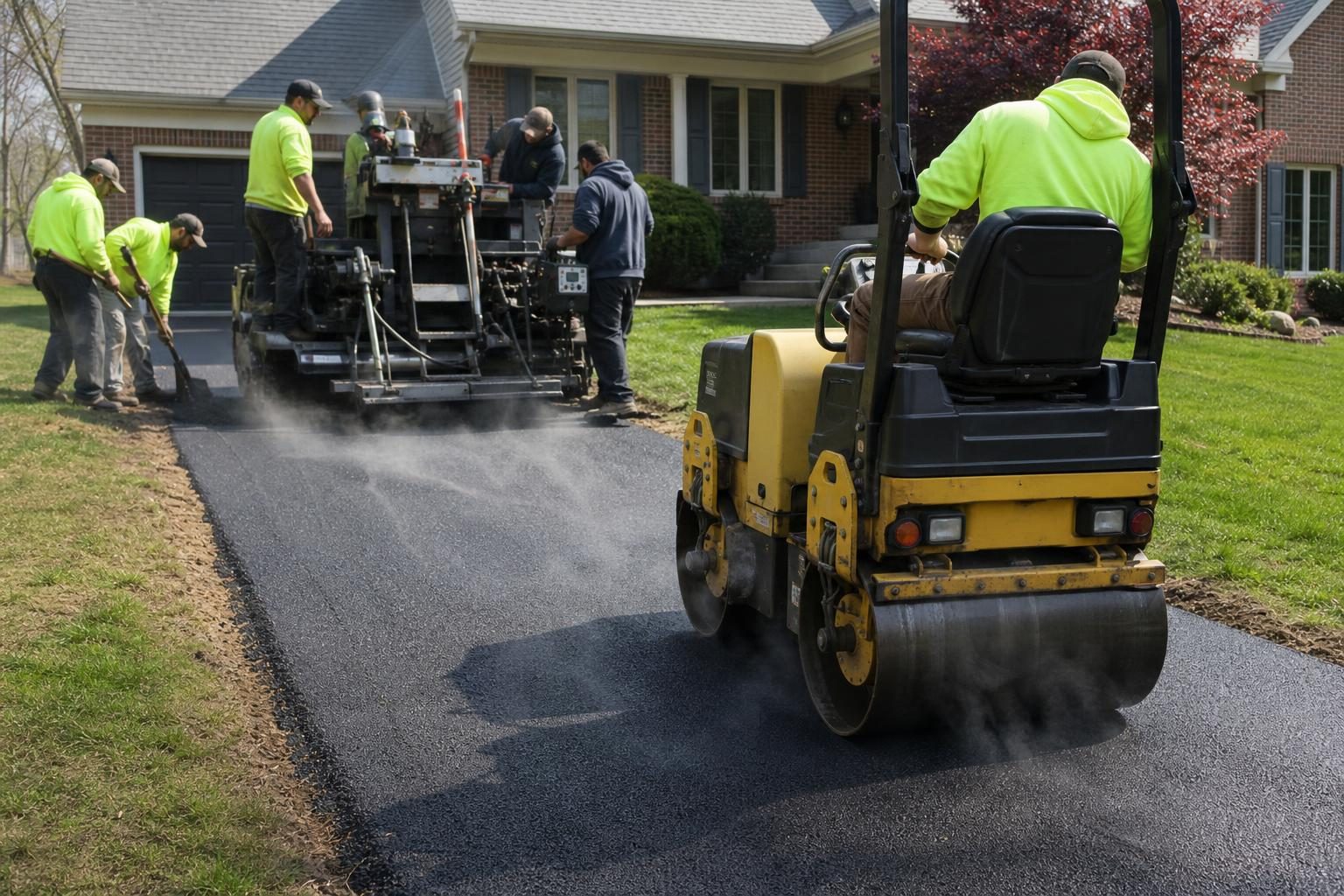
Most homeowners pay somewhere between $2 and $12 per square foot for asphalt driveway work. A fresh overlay on a sound driveway sits at the low end. Tearing out a failed driveway and paving it again lands in the middle. Building a new driveway on raw ground, with excavation and a full stone base, costs the most.
How long the driveway lasts depends more on the base and the compacted asphalt thickness than on the price per square foot.
Quick answer: Budget roughly $2–$5 per sq ft for an overlay, $5–$10 per sq ft to tear out and replace, and $6–$12+ per sq ft for a new driveway on bare ground. For a typical 600 sq ft two-car driveway, that works out to about $1,200–$3,000, $3,000–$6,000 and $3,600–$7,200+. Prices vary by region, site access, soil and season. Ask every bidder for the compacted asphalt thickness and the base depth in writing.
Part of our Complete Driveway Guide: types, costs, installation, repair and hiring in one place.
Asphalt driveway cost by job type
The ranges below are rounded US figures for residential work. Treat them as a starting point for comparing quotes, not a price list. Labor rates, asphalt plant prices, how far the crew travels, and how easily a truck and paver can reach your driveway all move the number.
| Job | Typical cost per sq ft | About 600 sq ft (two-car) | Expected life with care |
|---|---|---|---|
| Overlay (repairs plus a new 1.5–2 in. surface on a sound driveway) | $2–$5 | $1,200–$3,000 | About 8–15 years |
| New asphalt over an existing, well-compacted gravel driveway | $4–$8 | $2,400–$4,800 | About 15–25 years |
| Tear out and replace (remove old asphalt, fix and recompact base, repave) | $5–$10 | $3,000–$6,000 | About 15–25+ years |
| New driveway on raw ground (excavation, 6–8 in. stone base, asphalt) | $6–$12+ | $3,600–$7,200+ | About 15–25+ years |
| Removal and haul-off of old asphalt only | $1–$4 | $600–$2,400 | Not applicable |
| Extra base stone for soft or clay soil | $1–$3 | $600–$1,800 | Adds years to everything above |
Large driveways often price lower per square foot, because the crew’s setup cost is spread over more area. Small jobs price higher, and many pavers have a minimum charge.
New install vs replace vs overlay

New installation
This is paving where there was no asphalt before, either bare soil or an existing gravel driveway. On bare ground the crew strips topsoil and organic material, shapes the grade so water runs off, then places and compacts a crushed-stone base before any asphalt goes down. If you already have a gravel driveway that has carried cars for years without soft spots, much of that base may be usable. The paver still has to regrade it, add stone where it is thin, and compact it. That is why paving over gravel can cost noticeably less than starting from dirt. If you are still deciding whether to pave at all, our gravel driveway cost and installation guide covers the cheaper option.
Full replacement
Replacement means removing the old asphalt, fixing the base, and paving fresh. It is the right call when the driveway has widespread “alligator” cracking, sunken areas that hold water, potholes that keep coming back, or edges that have broken off. Those are usually base or drainage failures, and new asphalt laid on top inherits the same problem.
Overlay (resurfacing)
An overlay is a new layer of asphalt, usually 1.5 to 2 inches, placed over the existing driveway after cracks are filled, soft patches are cut out and repaired, and a tack coat is applied. The edges at the garage and street are often milled down so the new surface does not leave a lip. An overlay makes sense when the driveway is structurally sound but worn, faded or rough. It is a poor choice over a driveway with sinking or water-soaked areas, because the old cracks tend to reappear in the new surface within a few years. For isolated damage, read our driveway repair guide before paying for a full overlay.
A simple test: if the cracks are mostly thin lines and the surface still feels solid underfoot, an overlay or repair can work. If you see dips, puddles that sit for days, or cracks in a web pattern, budget for replacement.
Thickness and base: what you are really paying for

Two quotes at the same price can describe very different driveways. The details that matter most are the base and the compacted asphalt thickness.
- Base: For a car driveway, plan for about 6 to 8 inches of compacted crushed stone over firm, compacted subgrade. Clay, wet or previously disturbed soil may need more, sometimes with a geotextile fabric under the stone.
- Asphalt: About 2 to 3 inches of compacted asphalt is a common minimum for cars. Many pavers recommend 3 to 4 inches, often placed in two layers: a coarser binder course and a smoother surface course. Go thicker if trucks, RVs or delivery vehicles use the driveway.
- “Compacted” is the key word. Loose asphalt shrinks noticeably under the roller. A contract that says “3 inches” without saying compacted leaves room for a thinner finished driveway.
- Slope and drainage: Paved surfaces are typically built with about a 2% cross-slope, roughly a quarter inch of fall per foot of width, according to Penn State’s Center for Dirt and Gravel Road Studies. Water that sits on or beside asphalt soaks into the base, and that is where most failures start. If water already pools near your driveway, our drainage solutions guide is worth reading before you pave.
- Edges: Thin, tapered edges crumble first. Ask for full-thickness edges, with the stone base extending a few inches past the asphalt and soil backfilled against the edge afterward.
What pushes the price up or down
- Size and shape: Long, straight driveways pave efficiently. Tight turns, curves, and hand work around walkways and garage aprons add labor.
- Removal and disposal: Tearing out old asphalt or concrete adds machine time and hauling. Some areas recycle old asphalt, which can trim the disposal cost.
- Soil and grading: Soft clay, a high water table, or a driveway that needs to be raised or re-pitched means extra excavation and stone. Our grading and yard leveling guide explains what that work involves.
- Drainage work: A culvert under the driveway at the road ditch, a trench drain at the garage, or regrading to move water away from the house all add cost, and all are cheaper to do now than after paving.
- Access: Trucks, a paver and a roller need room. Steep slopes, narrow side yards, or soft lawns the trucks must cross can slow the job.
- Asphalt prices move with oil prices and local demand.
- Permits: Some towns require one, especially where the driveway meets a public road or sidewalk.

Asphalt vs concrete
Asphalt usually costs less up front than concrete, can be driven on within days rather than a week or more, and handles road salt and snowplows well. That makes it a common choice in cold-winter regions. Concrete costs more but lasts longer with less routine care, stays cooler in summer sun, and offers more decorative finishes. Asphalt benefits from sealcoating every few years and can soften and scuff on very hot days. For a side-by-side look at cost, lifespan and climate, see our asphalt vs concrete driveway guide.
Best time of year to pave
Asphalt is installed hot and has to be compacted before it cools. Cold ground and cold air pull heat out of the mix quickly, especially in the thin layers used on driveways. The Federal Highway Administration’s guidance for asphalt pavements sets higher minimum surface temperatures for thinner layers: about 50°F for layers an inch or less, and 40°F only for layers 3 inches or thicker.
Our guide to the best time of year to start a landscaping project covers how to sequence driveway work with other outdoor projects.
- Best window: Late spring through early fall in most of the country, when daytime temperatures are reliably warm.
- Northern regions: Many asphalt plants slow down or close for winter. Book early, because good pavers fill their calendars by summer.
- Avoid: Paving in rain, on wet or frozen base, or on a cold late-fall morning. A crew that wants to pave in poor conditions to finish the season is a warning sign.

Curing: when you can drive and park on it
New asphalt hardens as it cools, but it stays slightly soft for weeks and keeps curing for months. Follow your contractor’s instructions for your specific mix. These are common guidelines:
- Walking: Usually fine after the surface has cooled, typically within a day.
- Driving: Generally 2 to 3 days, longer during a heat wave.
- Parking: Wait about 1 to 2 weeks if you can, and longer in very hot weather.
- First year: Avoid turning the steering wheel while the car is stopped. Vary where you park. Put a board under motorcycle kickstands, trailer jacks, ladders and dumpster rails. Keep heavy trucks off the edges.
- Sealcoating: Most pavers suggest waiting roughly 6 to 12 months before the first sealcoat. Our driveway sealcoating guide covers timing, cost and whether it is worth it.
Problems homeowners run into
Owner stories on home improvement and contractor forums tend to repeat the same handful of regrets:
- Thinner than the contract said. Homeowners measure the edge after a year of cracking and find much less asphalt than they paid for. Contracts that do not specify compacted thickness make this hard to dispute.
- Paving over a bad base. A cheaper overlay over a driveway with low spots and water damage looks great for a season, then the old cracks come back through.
- Edges breaking off. Tapered edges with no base support crumble, especially where cars cut the corner or snow is piled.
- Low spots that hold water. Depressions left from the old driveway were never fixed in the base, so the new surface puddles in the same places.
- Price pressure. “Sign by Friday to lock in this price” for a job that will not start for months.
- Tire marks and scuffs from parking or turning on the driveway too soon in hot weather.
- Driveway scams. Crews knock on the door claiming leftover asphalt from a nearby job, ask for cash, and lay a thin coat that falls apart. The Tennessee Attorney General’s office lists these as classic warning signs, along with no written contract and pressure to decide on the spot.
Questions to ask and red flags

Step-by-step: getting a good asphalt driveway
- Decide whether you need an overlay, replacement or new build, using the warning signs above.
- Fix drainage problems first, or include them in the paving scope.
- Get three written quotes that describe the same scope, so you can compare them line by line. Our guide on how to compare landscaping quotes walks through it.
- Check license and insurance, and read reviews of driveways that are a few years old.
- Agree on the schedule, weather rules, and payment terms. Never pay most of the job up front.
- On paving day, watch for base compaction before asphalt arrives, and rolling right behind the paver.
- Before final payment, walk the driveway after a rain or with a hose to confirm water runs off.
Questions to ask a contractor
- What compacted thickness of asphalt will I get, and is it one layer or two?
- How deep will the stone base be, and how will you compact the subgrade and base?
- How will you fix the low spots and soft areas in my current driveway?
- Which way will water drain, and where will it go?
- How will you finish the edges and the transitions at the garage and street?
- Who pulls the permit, if one is needed?
- What does your warranty cover, for how long, and is it in writing?
- When should I first drive, park, and sealcoat?
Red flags
- Door-to-door offers of “leftover” asphalt, or cash-only pricing.
- A contract with a price per square foot but no total, no thickness, or no base spec.
- Claims of special “airport grade” or premium mix without paperwork to back them up.
- No mention of grading, compaction or drainage.
- Willingness to pave on a wet, frozen or obviously soft base.
For a broader checklist, see how to choose a paving company for a driveway or patio.
Frequently asked questions
How much does a 2-car asphalt driveway cost?
A typical two-car driveway of about 500 to 700 square feet often runs about $2,500 to $7,000 to tear out and replace, and about $1,000 to $3,500 for an overlay. A new driveway built from bare ground can exceed $7,000 when excavation, a deep base or drainage work is needed.
Is it cheaper to overlay or replace an asphalt driveway?
An overlay usually costs about half as much as a full replacement. It only saves money if the base is sound. Over a driveway with sinking areas or web-pattern cracking, an overlay often fails early, and you end up paying for replacement anyway.
How long does an asphalt driveway last?
A well-built asphalt driveway with a proper base and good drainage commonly lasts about 15 to 25 years, sometimes longer. An overlay usually lasts less, often around 8 to 15 years, depending on the condition of what is underneath. Prompt crack filling and occasional sealcoating help either one last longer.
How thick should an asphalt driveway be?
For passenger cars, about 2 to 3 inches of compacted asphalt is a common minimum, and 3 to 4 inches is a sturdier target, over roughly 6 to 8 inches of compacted stone base. Heavier vehicles call for more.
Can you put asphalt over a concrete or gravel driveway?
Asphalt can go over a well-compacted gravel driveway after regrading and adding stone where needed. Paving over old concrete is possible, but the joints and cracks in the concrete tend to show through the asphalt over time, so many pavers recommend removing it.
How soon can I drive on a new asphalt driveway?
Most contractors say to wait about 2 to 3 days before driving and 1 to 2 weeks before parking, and longer in hot weather. Avoid sharp turns and heavy point loads for the first year.