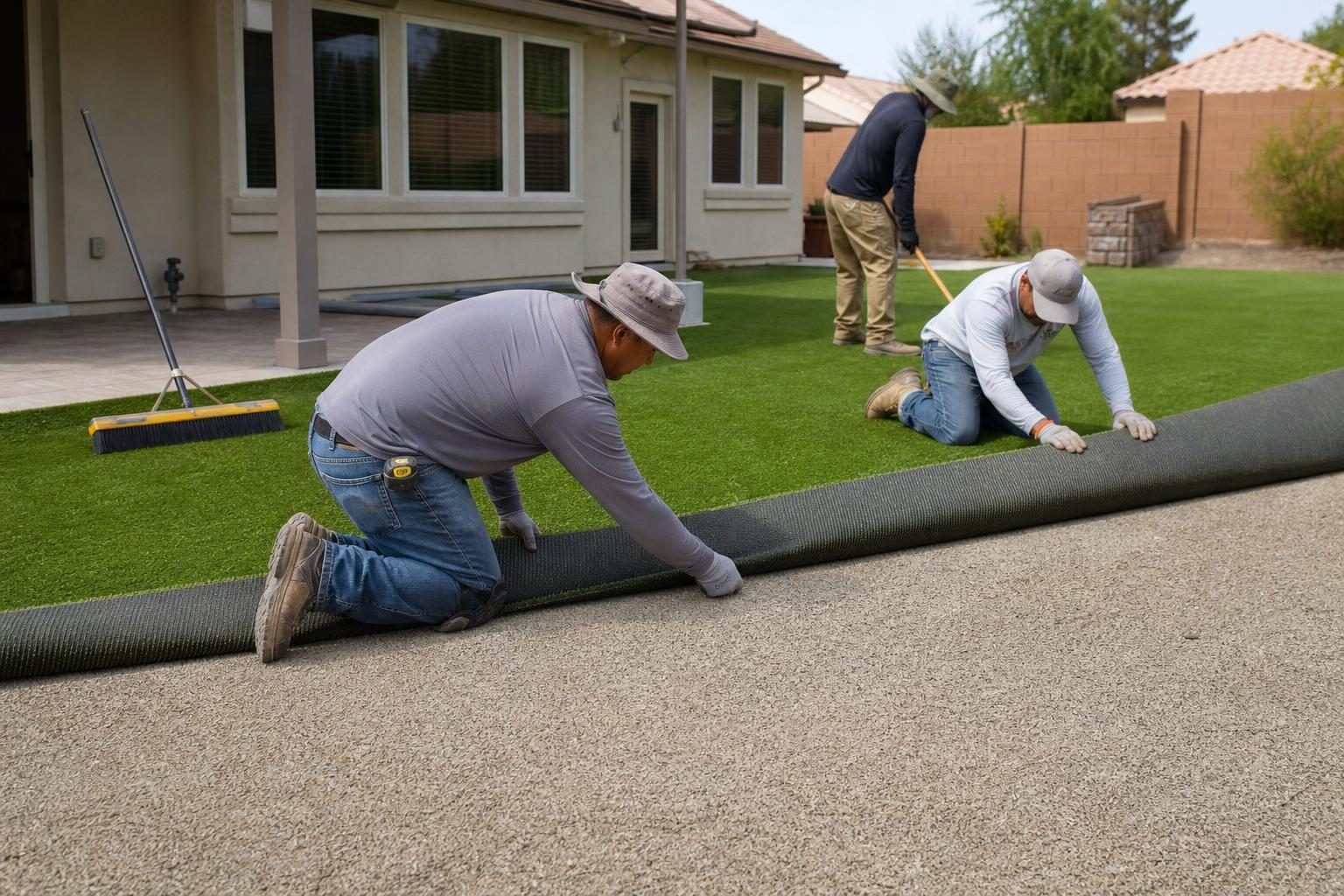
Professionally installed artificial turf usually costs about $8 to $15 per square foot in the US. A typical 500 to 1,000 square foot backyard often ends up somewhere between $4,000 and $15,000. Prep, not the turf, is where much of that money goes: removing the old lawn, building a compacted base, and finishing the edges and seams so the surface stays flat for years.
This guide breaks down what you are actually paying for, where cheap installs go wrong, and the questions that matter if you have dogs, kids, hot summers, or an HOA.
Quick answer: Budget around $8 to $15 per square foot installed for a standard backyard, more for small or awkward areas and pet-specific systems. The base is what makes turf last. Ask how deep it will be and how it gets compacted, what infill goes on top, and how the edges are held down. Before you count on a rebate, check the program rules, because many water districts no longer pay for artificial turf.
Part of our Complete Lawn Guide: seed vs sod, grass types, costs, care calendar and hiring in one place.
Artificial turf cost per square foot
Quotes vary a lot by region, access, soil, and product. Use these rounded ranges as planning numbers, then compare them against two or three local quotes for the same scope.
| Project type | Typical installed cost per sq ft | Notes |
|---|---|---|
| DIY, materials only | About $2 to $6 | Turf, base rock, infill, seam tape, nails, plus tool rental. Your labor is the trade-off. |
| Standard pro install, open backyard | About $8 to $12 | Lawn removal, about 3 to 4 inches of compacted base, mid-grade turf, infill, edging. |
| Premium or pet-specific system | About $12 to $18 | Denser or more realistic turf, fully permeable backing, odor-control infill, extra drainage work. |
| Small, narrow, or complex areas | $15 to $25 or more | Side yards, curves, many seams, putting greens. Installer minimum charges push small jobs up. |
For whole-project budgeting, a 500 square foot area often lands around $4,000 to $7,500, and 1,000 square feet around $8,000 to $15,000, before any extra drainage, grading, or hauling surprises. If you are still deciding whether turf is right at all, compare it with artificial turf vs sod and see what affects sod and lawn installation cost for the natural-grass side of the math.
What drives the price

Two quotes for the same square footage can be thousands of dollars apart. Usually that is because they describe different jobs. These are the line items that move the number most.
Demolition and excavation
The existing lawn, roots, and some soil have to come out so the new base can sit at the right height next to patios and walkways. Tight access means hand-carrying soil out in wheelbarrows, and that adds labor. So do heavy clay and a long haul to the dump.
Base depth and compaction
Most installers build a base of crushed rock or road base around 3 to 4 inches deep. Clay or poorly draining soil may need more. The base has to be compacted in layers with a plate compactor and graded so water runs off or drains through. This is the step cheap bids shorten, and it is the main reason one turf lawn stays smooth while another develops dips and ripples. If your yard already has drainage issues, read our grading and yard leveling guide before you sign.
The turf itself
Price rises with blade density (face weight), pile height, and backing quality. A thicker, more realistic product can cost several dollars more per square foot than an entry-level roll. Ask for samples, walk on them barefoot, and look at them in sun.
Infill type
Infill is the granular layer brushed between the blades to hold them upright and weigh the turf down. Silica sand is the most affordable option. Coated sand, zeolite (a mineral used to help control pet odor), and organic infills cost more. Some installers skip infill on light-use areas, but most turf is designed to be used with it.
Pet-specific turf and drainage
Dog areas usually call for a fully permeable backing, a base that drains freely, and odor-control infill. Some homes also need extra drainage under the busiest spot. Expect pet systems toward the upper end of the price range.
Edging and seams
Turf has to be secured at every edge, using bender board, a concrete curb, or nails into a firm base. Wide lawns need seams where rolls join. More seams, curves, and cut-outs around trees or beds mean more labor, and more places where a rushed job will show.
Extras people forget
- Capping or rerouting existing sprinkler lines.
- Gopher or mole wire under the base where burrowing animals are common.
- Weed barrier fabric. Some pet installers avoid it under dog areas because it can hold odor.
- Haul-off fees and dump charges for old sod and soil.
Our artificial turf installation guide walks through each build step in more detail.
DIY vs professional installation
DIY can cut the bill roughly in half. Most of the savings come from labor, and that labor is heavy: digging out the lawn, moving several tons of base rock, renting a plate compactor, stretching and seaming the turf, and brushing in infill. Homeowners who have done it themselves often describe it as a multi-weekend project that is harder than it looks.
DIY tends to work best when:
- The area is small, roughly rectangular, and fits a single roll width, so there are no seams.
- Access is easy enough to bring in base material with a wheelbarrow or small loader.
- Drainage is already good and the area is fairly level.
Hiring a pro usually makes sense for large lawns, yards with drainage problems, slopes, pet areas, or anything with visible seams. A common DIY story goes like this: the turf looks great at first, then a low spot forms where people step off a deck or patio, and it starts holding rainwater. Fixing it means folding back the turf and adding base or sand. An extra inch of compacted base in high-traffic spots during the build would have prevented it.
Heat, pets, and odor

Surface heat
This is the biggest surprise for many owners. Artificial turf in direct sun gets far hotter than living grass. Researchers at the University of Florida IFAS measured artificial turf surfaces as high as 174°F on the hottest days, compared with about 102°F for natural turf. Other university studies have found that spraying turf with water cools it only briefly before it heats back up.
What helps in practice:
- Put turf where it gets afternoon shade, or plan a shade tree, sail, or pergola nearby.
- Keep play areas and dog runs in the shadiest part of the yard.
- Ask about heat-reducing infills, but treat cooling claims cautiously and feel samples in full sun.
- Watch for reflected sunlight from low-E windows nearby. It can concentrate heat on turf and in some cases melt the fibers.
Pets and odor
Turf holds up well to running dogs, but urine odor is a common complaint, especially in hot weather. Owners and installers usually trace it to infill or base materials that absorb urine, or to a layer that traps it under the turf. Rinsing alone often does not solve it. What works better:
- A fully permeable turf backing over a free-draining base.
- Odor-control infill such as zeolite, which costs more than plain silica sand.
- Regular rinsing of the main pee spot, plus an enzyme cleaner applied in the evening.
- Picking up solid waste promptly.
If you have more than one dog or a small yard, plan on routine rinsing either way. That also cuts into the water savings. Our pet-friendly backyard landscaping guide covers layouts that keep dog traffic off delicate areas.
Lifespan, water savings, rebates, and HOA rules

How long it lasts
Good residential turf on a solid base commonly lasts about 10 to 15 years. Heavy sun, heavy dog use, and thin entry-level products shorten that, mostly through flattening and fading. Manufacturer warranties often run 8 to 15 years. They usually cover UV fading and backing failure, not installation problems, so ask the installer separately what workmanship warranty they give for wrinkles, seams, and low spots. The Synthetic Turf Council publishes buying and maintenance guidelines worth skimming before you compare products.
Water savings
Turf does not need irrigation, which is the main reason people choose it in dry regions. The real savings depend on how much you were watering before and whether you will rinse for pets or cool the surface in summer. For a broader look at drought-friendly options, see our low-water landscaping guide.
Local rebates
Many lawn-removal or “cash for grass” rebates now require living, water-efficient plants and specifically exclude artificial turf. Some programs still allow it under conditions. For example, the Southern Nevada Water Authority accepts permeable artificial turf as part of a conversion that also meets plant-coverage and irrigation rules. Always read your district’s current terms and get pre-approval before removing the lawn. Many programs require an inspection first.
HOA and city rules
Some states limit how far an HOA can go. In California, for example, Civil Code section 4735 bars HOAs from banning artificial turf outright but allows reasonable rules on its look and quality. Elsewhere, HOAs may restrict color, pile height, front-yard use, or require architectural approval. Some cities regulate turf too, and a few places now restrict turf made with certain chemicals. Get approval in writing before you pay a deposit.
Problems homeowners run into
These are the regrets that come up again and again in homeowner discussions and installer advice.
- Wrinkles and ripples: usually caused by turf that was not stretched properly, a base that was not compacted evenly, or edges that were not secured well. Turf also expands in heat, so a loose install gets worse in summer.
- Low spots and ponding: soft or thin base, especially at steps, gates, and dog paths, settles and holds water. Standing water under turf can also lead to mildew and odor.
- Visible seams: rolls laid with the grain running in different directions, or poorly glued seams, show as lines in the lawn. Dogs sometimes pull up weak seams.
- Cheap turf that ages fast: thin, low-density products can flatten and fade within a few years, especially in full sun.
- Too hot to use: some families end up removing turf from sunny play areas because it is uncomfortable for bare feet in summer.
- Lingering dog odor: often linked to absorbent infill or a base that does not drain well.
- Weeds at the edges: weeds can push through perforations or creep in at gaps along borders after a few seasons.
- Infill migration: rubber pellets or sand can track indoors or wash out of sloped areas.
Questions to ask a contractor and red flags

Questions to ask
- How deep will the base be after compaction, what material is it, and how many lifts will you compact?
- Which exact turf product and infill are you using, and can I keep a sample to compare on install day?
- How will water drain, and what do you do differently for dog areas?
- How are the edges secured, and where will seams fall?
- What workmanship warranty do you offer for wrinkles, seams, and low spots, and for how long?
- Who handles old lawn removal, sprinkler capping, haul-off, and any HOA or rebate paperwork?
- Are you licensed and insured where I live?
Red flags
- A per-square-foot price with no base depth, product name, or infill listed.
- Plans to lay turf over leveled dirt or a thin layer of sand with no compacted base.
- Pressure to sign the same day for a “leftover roll” discount.
- No answer on how pet urine will drain.
- A manufacturer warranty presented as if it covers installation defects.
Use our guide on how to compare landscaping quotes to line up bids on the same scope.
Frequently asked questions
Is artificial turf cheaper than sod in the long run?
Turf costs several times more up front than sod. It can pay back over time in water, mowing, and fertilizer savings, but how fast depends heavily on local water rates and how much you were spending on lawn care. In mild, rainy climates the payback can be very long. Our artificial turf vs natural grass guide compares the two in more detail.
How much does it cost to install 500 square feet of artificial turf?
A professionally installed 500 square foot area often runs about $4,000 to $7,500. Small areas cost more per square foot because of minimum charges and the fixed cost of setup, edging, and cleanup.
Can artificial turf go over existing grass or dirt?
Laying turf straight over grass or loose dirt usually leads to lumps, ponding, and weeds. The lawn should be removed and replaced with a compacted, graded base.
Does artificial turf get too hot for kids and dogs?
In full summer sun it can get much hotter than real grass, hot enough to be uncomfortable or unsafe on bare skin. Shade, smart placement, and checking the surface by hand before play are the most reliable precautions.
How do you keep artificial turf from smelling with dogs?
Start with a permeable backing, a free-draining base, and odor-control infill. Then rinse the main potty area regularly and use an enzyme cleaner. Most odor complaints trace back to drainage or infill choices made during installation.
Will my water district give me a rebate for artificial turf?
Maybe, but many programs now exclude it and pay only for living, water-efficient plants. Check your district’s current rules and get pre-approval before removing your lawn.