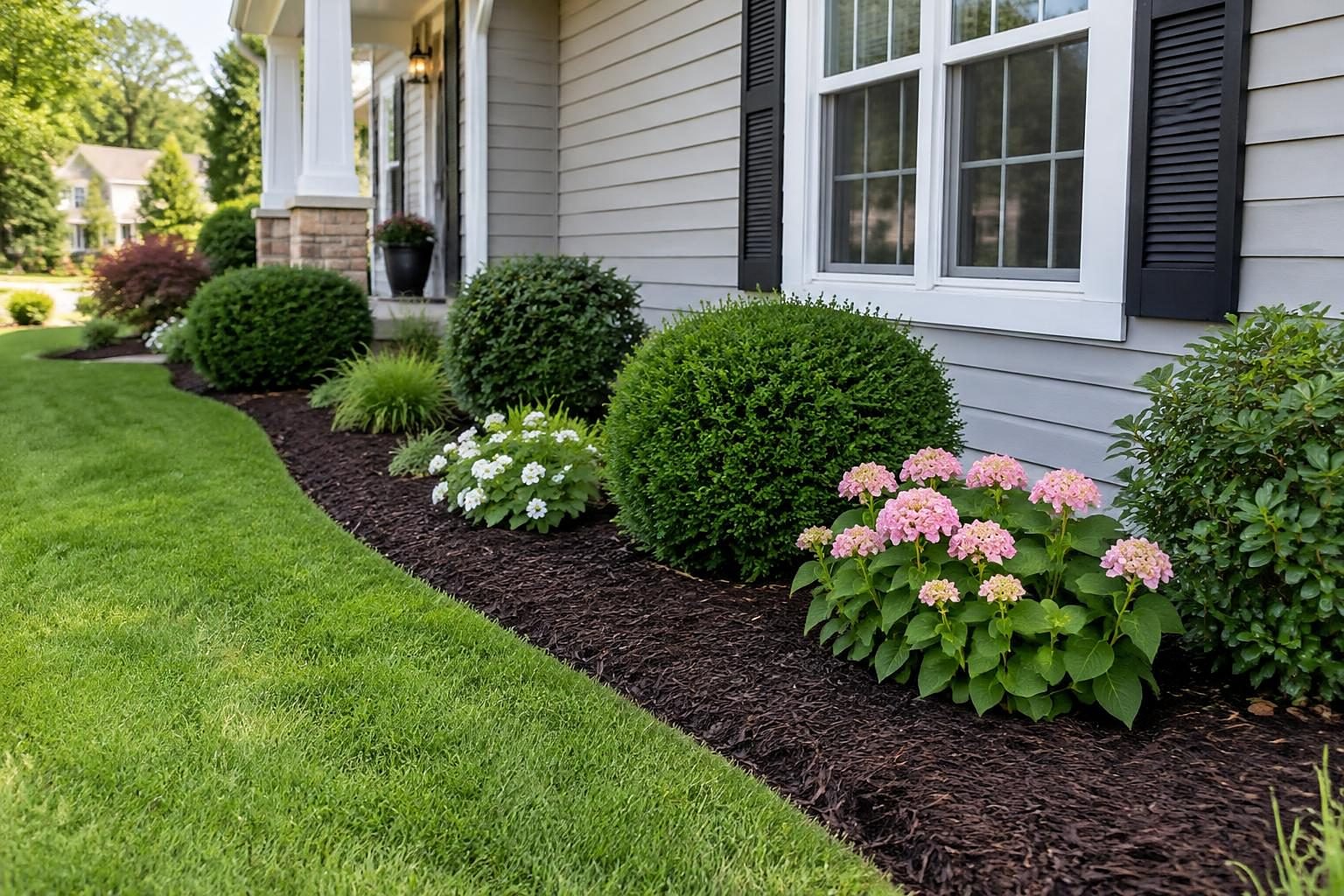
For most planting beds, the best mulch is shredded hardwood or bark spread 2 to 3 inches deep, kept a few inches off trunks and siding, and topped up every year or two. Pine straw, cedar and compost each fit particular spots; rock suits fire zones and drainage areas; rubber mulch belongs mainly under play equipment. Professionally installed hardwood mulch typically runs about $85–$125 per cubic yard, and a cubic yard covers about 108 square feet at 3 inches deep.
Quick answer: Use shredded hardwood or bark in flower and shrub beds, straw or shredded leaves in vegetable gardens, and a wide, flat ring around trees, never a cone against the trunk. Spread it 2 to 3 inches deep. Cubic yards = square feet × depth in inches ÷ 324. Bulk hardwood costs roughly $38–$52 per cubic yard before delivery and $85–$125 installed; dyed runs about $95–$135 and cedar $110–$160 installed. About 13 to 14 two-cubic-foot bags make a cubic yard. Prices vary by region, supplier and access.
Types of mulch compared
Mulch holds moisture, evens out soil temperature and blocks light from weed seeds. Organic mulches break down into the soil and need topping up; rock and rubber last for years but add nothing to the soil.

| Mulch | Looks and feel | How long it lasts | Target depth | Best for | Watch out for |
|---|---|---|---|---|---|
| Shredded hardwood | Natural brown, fibrous; knits into a mat | About 1–2 years before a top-up | 2–3 in. | Most flower and shrub beds, gentle slopes | Mats if piled deep; artillery fungus |
| Bark nuggets (pine bark) | Chunky, reddish brown | Longer than shredded; large nuggets last several years | 3–4 in. | Flat, low-traffic beds and foundation beds | Floats away on slopes |
| Pine straw | Light, airy needles, common in the Southeast | About 1 year before it fades and thins | 3–4 in. fluffed, settling to about 2 | Slopes, acid-loving shrubs, large beds | Very flammable when dry |
| Cedar or cypress | Aromatic, reddish or blond, shredded | Slower to break down than most hardwood | 2–3 in. | Beds where you want a lighter color and longer life | Costs more; shredded cedar burns readily |
| Dyed mulch (black, brown, red) | Uniform color that hides the wood | Color often fades within a season or two | 2–3 in. | Front beds where looks matter most | Wood source; can stain paving |
| Rubber mulch | Shredded or nugget tire rubber, bright or brown | Many years; does not decompose | About 6 in. under play equipment; less in beds | Play areas | Hot, flammable, hard to remove |
| Compost | Dark, crumbly, fine | Breaks down within a season | 1–2 in. | Vegetable and annual beds, feeding poor soil | Too fine to stop weeds alone |
| Gravel or decorative rock | Stone in many sizes and colors | Decades, with occasional topping and raking | 2–3 in.; deeper for large stones | Drainage areas, desert-style beds, strips next to the house | Holds heat; hard to remove |
Depth targets follow our mulch depth guide, which also explains why coarse nuggets go a little deeper than shredded mulch.
Wood and bark mulches
Shredded hardwood is the default for good reason: it is cheap, stays put on gentle slopes because the fibers interlock, and breaks down into organic matter that improves the soil. Bark nuggets look tidy and last longer but float, so keep them on flat ground. Cedar and cypress resist decay longer and cost more. Pine straw is the Southern standard, light and cheap to spread, and holds on slopes; one bale covers roughly 35 to 50 square feet at about 3 inches.
Dyed and black mulch
Dyed mulch, including the popular black mulch, is wood colored with iron oxide or carbon-based colorants, which are generally considered safe. The bigger question is the wood: some dyed mulch is made from pallets and construction waste that can include old treated lumber. Buy from a supplier who names the source, or choose a product certified free of CCA-treated wood.
Rubber, compost and rock
Rubber mulch lasts for years, but in planting beds it adds nothing to the soil, gets hot in sun, burns hotter than wood and is miserable to remove; it makes the most sense under play equipment. Compost feeds the soil but is too fine to stop weeds alone, so many gardeners spread an inch and cover it with coarser mulch; the soil amendment vs topsoil guide explains when compost is enough. Rock never needs replacing but heats up and does nothing for plants; the mulch vs decorative rock cost guide compares the two over several years.
Choosing mulch by where it goes

The best mulch depends less on the product than on the spot. Here is what works where.
Flower and shrub beds
Shredded hardwood or bark at 2 to 3 inches is the best mulch for flower beds in most yards: natural looking, easy to plant through and good for the soil. Pine straw suits azaleas and other acid-loving shrubs. Keep mulch an inch or two off perennial crowns. Our garden bed and planting installation guide covers bed layout and soil prep before the mulch goes down.
Vegetable gardens
The best mulch for a vegetable garden is one you can turn in at season’s end: weed-free straw, shredded leaves, thin layers of clippings from untreated lawns, or compost. Spread it after the soil warms. Save wood chips for paths; worked into soil, fresh wood can tie up nitrogen.
Around trees
Spread wood chips or shredded mulch 2 to 3 inches deep in a wide, flat ring, ideally out several feet, and pull it a few inches back from the trunk so the root flare is visible. A cone of mulch against the bark, the so-called mulch volcano, does slow damage. University of Illinois Extension explains that piled mulch keeps bark wet so it rots, cuts off oxygen to roots, and encourages roots that circle and choke the trunk, often showing up only years later.
Slopes
Use mulch that knits together, such as shredded hardwood or pine straw, never nuggets. On steeper banks, add groundcover plants or erosion-control blankets; the erosion control guide covers when a slope needs more than mulch.
Playgrounds
Under play equipment, mulch is safety surfacing, so depth matters more than looks. The CPSC Public Playground Safety Handbook says loose fill compresses at least 25% over time, so a play area that needs 9 inches of wood chips should start at about 12 inches. It advises never using less than 9 inches of loose fill, except shredded or recycled rubber, where 6 inches is recommended, and avoiding wood mulch that may contain CCA-treated wood. Rake it back under swings and slide exits often. The kid-friendly backyard landscaping guide covers play-area layout.
Next to the house: termites and fire
Mulch is not a major termite food, but damp mulch against the foundation keeps soil moist and hides termite tubes, so keep it thin, pulled back from the foundation and well below siding. In wildfire country, the rules are stricter. The UC ANR Fire Network advises against combustible mulch within five feet of a house, recommends gravel, rock or pavers there, and rates pine needles, shredded bark and shredded rubber as the most hazardous mulches, with composted wood chips and bark nuggets less so.
A decision checklist
- What grows there? Wood or bark for shrubs and perennials, straw or compost for vegetables, rock for desert plants.
- Sloped or in a water path? Shredded mulch or pine straw on slopes; rock under downspouts.
- Within five feet of the house in fire country? Rock, gravel or pavers.
- Do kids play on it? Wood chips or rubber at playground depth.
- How much upkeep will you do? Organic mulch needs a top-up every year or two; the low-maintenance landscaping guide shows how dense planting cuts the mulch you need.
- What is your five-year budget? The mulch vs rock cost guide runs that comparison.
How much mulch you need
Mulch is sold by the cubic yard in bulk and by the cubic foot in bags, so you need area and depth. Measure each bed’s length and width in feet, multiply to get square feet, and add the beds together. For odd shapes, break them into rectangles and triangles or pace off a rough average.

The formula
Square feet × depth in inches ÷ 324 = cubic yards. One cubic yard covers about 162 square feet at 2 inches, 108 square feet at 3 inches and 81 square feet at 4 inches. A 2-cubic-foot bag covers about 12 square feet at 2 inches or 8 square feet at 3 inches, and about 13 to 14 bags make a cubic yard.
Example: three beds totaling 400 square feet at 3 inches need 400 × 3 ÷ 324, or about 3.7 cubic yards. Order 4 yards in bulk, or about 50 two-cubic-foot bags. Round up slightly for uneven ground, but do not add a big cushion; extra mulch tends to end up piled too deep.
How deep to spread it
Aim for 2 to 3 inches after settling for shredded wood and bark, 3 to 4 inches for nuggets and loose pine straw, and 1 to 2 inches for compost and vegetable beds. Thinner layers let weeds through; deeper layers starve roots of air and waste money. Before a refresh, push a trowel into the bed in several places: if 2 inches remain, an inch of new mulch is enough, a third of a full 3-inch order. The mulch depth guide has a depth chart by material.
Estimate how much mulch you need
Enter a bed’s length, width and depth to see cubic feet, cubic yards and how many bags to buy; it is a planning estimate, so check depth and add beds together before you order.
Mulch Calculator
Estimate how much mulch your planting beds need before you order bags or bulk material.
Mulch estimate
- Area
- –
- Area (alternate unit)
- –
- Cubic feet
- –
- Cubic yards
- –
- Estimated bag count
- –
- Rounded-up bag recommendation
- –
Mulch prices: bagged vs bulk, delivery and installation
Mulch is cheap per yard; delivery, bags and labor are what surprise people. These rounded US ranges match our mulch cost calculator; local yards may be higher or lower.

| Mulch type | Bulk material per cubic yard | Delivered, you spread it | Installed by a crew |
|---|---|---|---|
| Shredded hardwood | About $38–$52 | About $56–$80 | About $86–$124 |
| Dyed mulch (black, brown, red) | About $48–$64 | About $66–$92 | About $96–$136 |
| Cedar | About $62–$86 | About $80–$114 | About $110–$158 |
For 400 square feet of beds at 3 inches, about 3.7 cubic yards, that is roughly $140–$190 in hardwood material, $210–$300 delivered and $320–$460 installed. Some yards sell plain hardwood for about $25 a yard, and simple refreshes can come in near $60–$70 a yard installed; heavy weeding and old-mulch removal push quotes higher.
Other ground covers
| Material | Typical bulk price | Typical installed cost |
|---|---|---|
| Compost | About $30–$70 per cubic yard | Varies with how it is worked in |
| Pea gravel or crushed rock | About $30–$60 per ton | About $80–$160 per ton |
| River rock | About $60–$150 per ton | About $120–$250+ per ton |
| Rubber mulch, bagged | About $10–$15 per 0.8 cu ft bag, roughly $270–$500 per cubic yard | Usually quoted as a playground surfacing job |
Rock prices come from the mulch vs decorative rock cost guide; most gravel weighs about 1.3 to 1.5 tons per cubic yard. Compost pricing matches the soil amendment vs topsoil guide.
Bagged vs bulk mulch
Bags suit a single bed, a touch-up or a home with no place to dump a load, but they cost more per yard: at $4 to $7 a bag, the 13 to 14 bags in a cubic yard come to about $55–$95. Beyond two or three yards, bulk is almost always cheaper even after delivery, and you can see the product first. Our guide to where to buy landscaping materials compares supply yards, nurseries and big-box stores.
How delivery is priced
Most suppliers charge a flat fee by distance, often $50–$150 per load. Our calculator spreads delivery at $18–$28 per cubic yard, which matches a flat fee on a typical 3- to 5-yard order; on one or two yards, expect delivery to cost more than the calculator shows. Combine mulch, soil and gravel into one trip, and put a tarp under the pile, because dark mulch can stain concrete in rain.
What moves the price
- Material. Dyed and cedar cost more than plain hardwood.
- Prep. Weeding, edging and removing old mulch can cost as much as spreading.
- Access. Narrow gates and steps add labor; some crews blow mulch from a truck on large jobs.
- Quantity and season. Big orders cost less per yard; spring is the busiest season.
Estimate your mulch cost
Choose bed size, depth, mulch type and service level to see material, delivery and installation ranges; it is a planning range, not a quote.
Mulch Cost Calculator
Estimate mulch quantity plus material and installation cost ranges for planting beds.
Mulch cost estimate
- Estimated cubic yards
- –
- Material estimate
- –
- Delivery and labor estimate
- –
- Low total
- –
- High total
- –
For how mulch fits into a wider materials budget, see what landscaping materials cost and our landscaping materials guide.
How to install mulch the right way

Mulching is simple, but the prep decides whether beds look sharp for a season or turn into a weed patch by July.
The steps that matter
- Time it. Mid to late spring after the soil warms, or fall for new plantings. Water bone-dry beds first, and skip frozen ground.
- Weed thoroughly. Mulch blocks new weed seeds; it does not smother established perennial weeds or creeping grass.
- Cut a clean edge. A spade-cut trench or steel, aluminum or stone edging keeps mulch and lawn apart.
- Check the old layer. Rake matted mulch; if it is already 3 to 4 inches deep, remove some first.
- Spread evenly. Dump between plants, not on them, rake to depth, and pull mulch back from trunks, stems and the foundation.
- Water in and clean up. Settle the mulch with a light watering and sweep walks and driveways, especially before rain.
Landscape fabric: pros and cons
Fabric helps under gravel paths and rock beds, where it keeps stone from sinking into soil. Under organic mulch it usually backfires: mulch breaks down into soil on top, weeds root through it, the fabric blocks organic matter from feeding the soil, and years later it surfaces in tattered strips that are hard to pull from around roots. For most beds, rely on depth, dense planting and good edging instead. Under rock, overlap the seams and pin it well.
What a good mulch job looks like
- An even layer 2 to 3 inches deep, with no soil showing and no deep piles.
- Bare, visible root flares on trees and mulch pulled back from stems.
- Crisp, consistent bed edges.
- Mulch below siding and weep holes, with a small gap at the foundation.
- Clean walks, driveway and lawn when the crew leaves.
Red flags during installation
- Mulch heaped against trunks, or dumped over weeds or an already deep layer.
- Mulch packed against siding, thresholds or utility boxes.
- A load that smells sharply sour or of ammonia.
Mulch problems, fixes and when to start over

Most mulch problems trace back to depth, moisture or the source of the material. Few need products; most need raking, thinning or a different mulch.
Sour mulch
Mulch that sat in a big, wet pile without air can turn sour. It smells like vinegar, rotten eggs or ammonia, and it can scorch or kill tender plants within a day or two of spreading. If a delivery smells that way, spread it thin on a tarp or driveway edge, wet it and let it air out for several days before it goes near plants. Healthy mulch smells earthy or woody.
Mushrooms, slime mold and white fungus
Mushrooms, yellow slime mold and white threads are normal decomposition and do not harm plants. Scoop out mushrooms if pets might eat them, and rake apart any dense crust that sheds water.
Artillery fungus
Artillery fungus shoots tiny, sticky black spore masses onto light siding and cars, usually on the shady side of the house, and the spots are very hard to remove once dry. Penn State Extension reports that it is mainly a problem in uncomposted wood mulch, that every wood and bark mulch it studied eventually supported the fungus after a few years, and that large pine bark nuggets resisted it best. Near light siding, consider nuggets, a fresh layer each year, or rock or groundcover in place of wood.
Washout and mulch on the walk
Mulch on the sidewalk after every storm usually means the wrong type for the spot or no edge. Use shredded mulch or pine straw on slopes, edge the low side, and put rock where roof water lands. For faded or matted mulch, rake the old layer before buying more; that often restores color and lets water through.
Repair, top up or start over?
Top up with about an inch when the old layer is under 2 inches. Start over when beds have built up to 4 inches or more, mulch is piled against plants, fabric is surfacing, or artillery fungus or weeds have taken over: remove old mulch down to about an inch, fix edges and weeds, then spread a fresh layer. If plants still struggle, check the soil; the soil amendment vs topsoil guide covers when to add compost or soil before re-mulching.
Mulch maintenance calendar
Organic mulch needs a little attention through the year. Timing shifts a few weeks with your climate.

| Season | What to do | Notes |
|---|---|---|
| Early spring | Rake and fluff old mulch, pull early weeds, recut bed edges, check depth | Check depth before ordering |
| Mid to late spring | Top up to 2–3 inches once soil has warmed; mulch vegetable beds after planting | Peak demand, so order bulk mulch early |
| Summer | Pull weeds while small, rake mulch off walks after storms, check for artillery fungus near siding | Keep fire-zone strips clear |
| Fall | Mulch new plantings, spread shredded leaves on vegetable beds, rake back mulch from trunks | A good time to replace mulch around new trees and shrubs |
| Winter | In cold climates, add loose mulch over tender perennials after the ground freezes | Pull winter cover back in spring as growth starts |
| Every 1–2 years | Add about 1 inch of new mulch | Check depth first; skip a year if the layer is still 2–3 inches |
| Every 3–5 years | Remove built-up or matted mulch and start fresh | Especially near siding or where fungus or weeds have taken hold |
The mulch depth guide covers how to measure depth before each refresh.
DIY vs hiring a mulch installer

DIY or hire?
Mulching is an easy DIY job. At our calculator’s rates, a crew adds roughly $30–$45 a yard on top of delivery, so doing a few yards yourself saves a few hundred dollars and a weekend’s work. Hire out for many yards, long wheelbarrow runs, slopes, heavy weeding or old mulch to remove. Maintenance crews often bundle spring mulching with cleanup; see the landscape maintenance services guide for how those contracts work.
Questions to ask a mulch installer
- What product is it, and where does the wood come from?
- Will you remove old mulch if the beds are already deep?
- How will you keep mulch off trunks, stems and siding?
- Is cleanup of walks, driveway and lawn included?
What a mulch quote must include
- Material type and color, and the cubic yards or bags included.
- The square footage of beds and the planned depth.
- Weeding, edging and old-mulch removal as separate lines or clearly stated as included or excluded.
- Whether landscape fabric is used, and why.
- Delivery, disposal and any minimum charge.
- Price per extra yard if the beds take more than estimated.
Our guide on how to compare landscaping quotes shows how to line up bids that are written differently.
Red flags
- A quote with one total and no yards, depth or product.
- A crew that plans to put fresh mulch over the old layer every year regardless of depth.
- Mulch volcanoes on the installer’s other jobs or in their photos.
- Refusal to say where the mulch comes from.
- Pressure to add fabric, dye or extra yards you did not ask about.
Problems homeowners run into

The same complaints come up again and again in homeowner forums, extension Q&A and consumer stories.
- Beds buried by yearly mulching. A service added a fresh layer every spring until beds were 5 or 6 inches deep, and shrubs slowly declined.
- Fabric that turned into a nightmare. Mulch over landscape fabric broke down, weeds rooted through it, mulch slid off slopes and the exposed fabric had to be cut out by hand.
- Dyed mulch fading or not matching. Color faded within a season, or a second load did not match the first.
- Stained driveways. Dyed mulch dumped on concrete, then rained on, left stains that power washing would not fully remove.
- Spots on siding and cars. Black specks on light siding turned out to be artillery fungus from foundation mulch, and repainting did not cover them well.
- Running short. Owners under-ordered, then paid a second delivery fee for the last bed.
- Mulch on the sidewalk. Nuggets on slopes and under downspouts washed out after every storm until owners switched to shredded mulch or rock.
- Sour-smelling loads. A pile that had sat too long scorched new annuals within days.
- Rubber mulch regrets. Owners found it hot and smelly in summer sun and spent a weekend picking pieces out of beds and lawn when they switched back.
Frequently asked questions
How much does mulch cost?
Bulk hardwood runs about $38–$52 per cubic yard before delivery and $85–$125 installed; dyed about $95–$135 and cedar $110–$160 installed. Small bulk orders often pay a flat $50–$150 delivery fee.
What is the best mulch for flower beds?
Shredded hardwood or bark at 2 to 3 inches suits most beds; pine straw works well for acid-loving shrubs and slopes.
Is rubber mulch a good idea?
Under swings and play equipment, it can be. In planting beds, usually not: it adds nothing to the soil, gets hot, burns readily and is hard to remove.
Is black mulch safe for plants and pets?
The colorants are generally considered safe. The bigger concern is wood from pallets or demolition debris, so buy mulch certified free of CCA-treated wood or from a supplier who names the source.
Should I remove old mulch before adding new?
Only if the bed is already deep. If the old layer is under 2 inches, rake it and add about an inch. If it is 3 to 4 inches or more, remove some first so the total stays around 2 to 3 inches.
How many bags of mulch are in a yard?
About 13 to 14 two-cubic-foot bags, or 18 bags of 1.5 cubic feet, or 9 bags of 3 cubic feet.
When is the best time to mulch?
Mid to late spring, after the soil warms, is most common. Fall works well for new plantings and to protect roots over winter.
Mulch guide library
Every detailed mulch guide on the site, grouped by decision.
Depth, quantity and upkeep
- Low-maintenance yard mulch depth guide — how deep to spread each mulch, how much to buy and how to keep beds low-maintenance.
Costs and alternatives
- Mulch vs decorative rock cost guide — bulk and installed prices, coverage, heat and weed trade-offs, and which wins over several years.
The soil under the mulch
- Soil amendment vs topsoil guide — when beds need compost, when they need more soil, and how to buy good topsoil.
Related planning guides
- Garden bed and planting installation — bed layout, soil prep, planting and what a planting bid should include.
- Landscaping materials guide — ground covers, soil, hardscape and edging chosen as one plan.
- Where to buy landscaping materials — supply yards vs nurseries vs big-box stores, and bulk vs bagged.