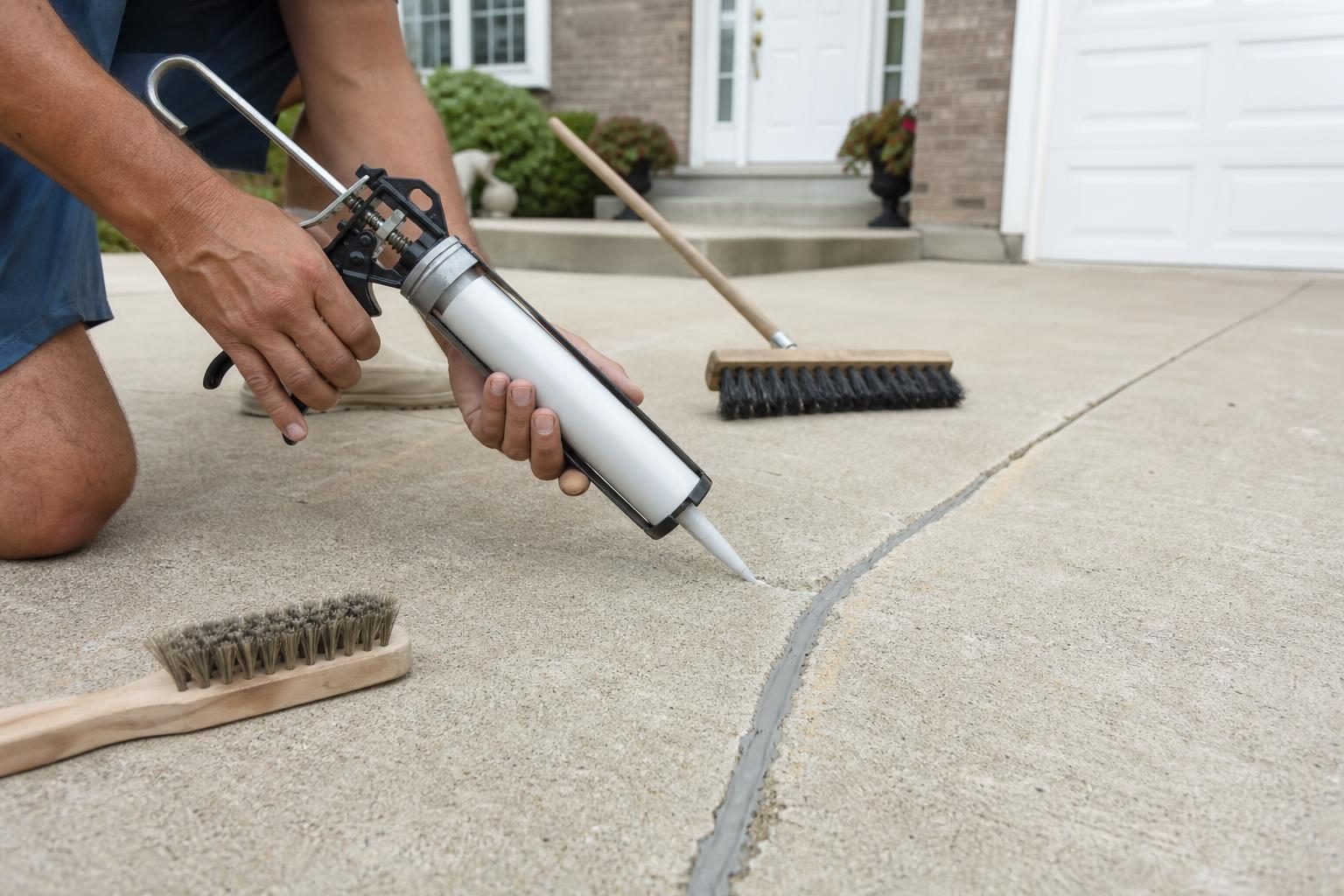
Most driveway damage falls into two groups. Surface problems like hairline cracks, small holes and worn spots are cheap to fix and often DIY-friendly. Structural problems like alligator cracking, sinking, heaving and crumbling edges mean the base underneath has failed or something is pushing on it. Those need a deeper repair or replacement. The key to repairing a cracked driveway so it stays fixed is matching the fix to the cause, and the cause is very often water or roots.
Quick answer: Clean and fill isolated cracks under about 1/2 inch with a flexible filler. On asphalt, use a rubberized crack filler. On concrete, use a polyurethane sealant. Cut out and rebuild alligator-cracked or potholed asphalt with a full-depth patch. Lift sunken concrete slabs with mudjacking or foam if they are otherwise sound. Fix drainage or root problems first or the damage will come back. If damage covers a large share of the driveway or the base is failing in several places, replacement is usually the better value.
Part of our Complete Driveway Guide: types, costs, installation, repair and hiring in one place.
Diagnose the damage first
Walk the driveway after a rain, when cracks and low spots are easiest to see. Note where water sits, where cracks start, and whether one side of a crack is higher than the other.
| What you see | What it usually means | Typical fix |
|---|---|---|
| Hairline cracks (concrete) | Normal shrinkage; usually cosmetic | Leave alone or seal; fill once they open up |
| Single cracks up to ~1/2 in., level on both sides | Temperature movement or shrinkage | Clean and fill with flexible crack filler |
| Wide cracks or one side higher | Settling, heaving or roots | Find the cause; lift, grind or replace the section |
| Alligator cracking (asphalt) | Interlocking cracks in a small-block pattern; the base can no longer carry the load | Full-depth patch with base repair |
| Potholes | Water got through cracks and washed out or froze the base | Cut out and patch, ideally with hot mix |
| Crumbling edges | Thin edge, no edge support, tires riding off the side | Rebuild edge with support; widen if needed |
| Sunken slab (concrete) | Soil settled or washed out underneath | Mudjacking or polyurethane foam lifting |
| Spalling or scaling (concrete) | Surface flaking from freeze-thaw and deicers, or a weak top layer from finishing | Thin bonded resurfacing if the slab is sound; otherwise replace |
| Gray, rough, loose stones (asphalt) | Oxidation and raveling | Crack fill and sealcoating |
Not every crack is a failure. The National Ready Mixed Concrete Association notes that concrete expands and contracts with moisture and temperature. It adds that most random cracks are unsightly but rarely affect a slab’s structure or service life. Our article on why concrete driveways crack explains control joints and normal shrinkage. The cracks to worry about are the ones that keep widening, have uneven edges, or come with sinking and standing water.

Root causes: water, base and trees
A patch that ignores the cause is a temporary fix. The usual causes are:
- Water. Downspouts dumping onto the driveway, a yard that slopes toward it, or low spots that hold puddles all soften the base and wash out soil under slabs. In cold climates, trapped water freezes and lifts the surface. Fixing drainage or regrading is often the real repair.
- A thin or poorly compacted base. Many failing driveways were built with too little gravel or on soft soil that was never compacted. No surface patch fixes this; the failed area has to be dug out.
- Tree roots. Roots lift slabs and push up ridges in asphalt. Cutting large roots near a tree can injure or destabilize it, so talk to an arborist before you cut. Root barriers can help but are not foolproof. If the tree is coming out anyway, see our guides to tree removal cost and stump removal. Roots that are left to rot can leave a hollow that settles later.
- Heavy loads and edges. Delivery trucks, RVs and dumpsters crack driveways built for cars, especially along unsupported edges.
- Freeze-thaw and deicers. Salt and repeated freezing cause concrete scaling. The NRMCA’s guidance on scaling warns never to use ammonium nitrate, ammonium sulfate or magnesium-based deicers on concrete.
Asphalt driveway repair methods

Crack filling
Isolated cracks are the cheapest and most valuable fix, because each one is a path for water into the base. Clean the crack with a wire brush and blow it out. For deep cracks, pack sand or backer rod to within about 1/2 inch of the top. Then fill with a rubberized crack filler. Professionals often use hot-pour rubberized sealant, which stays flexible and usually outlasts bottled cold-pour fillers.
Patching potholes and soft spots
- Cold patch is the bagged material sold at home centers. It is fine as a stopgap, especially in winter, but it often pushes out or sinks within months if packed into a wet, dirty hole.
- Hot-mix patch uses fresh asphalt from a plant, compacted with a plate or roller, and lasts much longer. It is the standard pro repair in warm weather.
- Infrared patch heats the existing asphalt, mixes in new material and re-compacts it. That leaves a seamless repair with no cold joint. It works well for potholes and surface defects but does not fix a failed base.
Full-depth patching
Alligator cracking means the base has failed. Crack filler and sealcoat will not stop it. The fix is to saw-cut a rectangle past the damaged area and dig out the asphalt and soft base. Then correct any drainage issue, rebuild and compact the gravel base, and repave the patch. Patches often perform best when built a bit thicker than the original pavement.
Overlay (resurfacing)
A new layer of asphalt over the old one can refresh a driveway that is worn but structurally sound. Over a failing base, an overlay is a short-term fix because cracks “reflect” up through the new layer. Plan to repair base failures first, and check that the added height still works at the garage slab and street. If cracking is widespread, compare overlay pricing against our asphalt driveway cost guide for full replacement.
Concrete driveway repair methods

Crack sealing
Use a flexible polyurethane or silicone-based concrete crack sealant, with backer rod in cracks deeper than about 1/2 inch. Self-leveling versions work well on flat driveways. Epoxy suits stable, non-moving cracks but tends to break loose where a crack opens and closes with the seasons. Expect repairs to stay visible; concrete patches and fillers rarely match the old color.
Slab lifting: mudjacking vs polyjacking
If a section has dropped but is otherwise intact, it can often be raised instead of replaced. Mudjacking pumps a cement-based slurry under the slab. Polyjacking, or foam lifting, injects expanding polyurethane foam. Foam costs more but is much lighter, needs smaller holes and cures fast. Either way, the lift only lasts if the reason the soil moved has been fixed, which is usually water.
Resurfacing
A thin polymer-modified overlay can renew a slab with light to moderate scaling or a worn surface. Industry guidance is clear that the overlay is only as good as the concrete under it. The old surface must be sound and thoroughly cleaned of loose material, dirt and oil, and applied in mild weather. Resurfacing over moving cracks, heaved sections or badly deteriorated concrete tends to peel within a winter or two.
Section replacement
Because driveways are poured in panels between joints, a badly broken or heaved panel can be cut out and repoured on its own. The new panel will not match perfectly, but it is often far cheaper than a whole new driveway. Our guide to replacing an old driveway vs pouring new concrete covers the bigger decision.
DIY crack fillers and patch products
- Asphalt crack filler, cartridge or squeeze bottle: for cracks up to about 1/2 inch. Easy to use but can shrink or pull out after a hard winter.
- Asphalt crack filler, pourable jug: faster for long cracks; same width limits.
- Rubberized crack-fill rope: rope-style filler melted into place with a propane torch. Holds up better than many bottled products.
- Cold patch (asphalt): for potholes; tamp it hard in thin layers and expect to redo it.
- Polyurethane self-leveling sealant (concrete): for horizontal concrete cracks and joints; pair with backer rod.
- Vinyl or polymer concrete patch: for chips and shallow spalls, not moving cracks.
- Avoid: latex or acrylic caulk outdoors on a driveway. It is not built for traffic or movement.
Work on a dry day within the temperature range on the label, and keep cars off until the product cures.
Driveway repair costs
These rounded ranges are for typical residential jobs. Prices vary by region, site access, crack length, depth and minimum trip charges. Paving crews in particular often have a minimum that makes very small jobs cost more per square foot.

| Repair | Typical US range |
|---|---|
| DIY crack filling (materials) | $20–$100 |
| Pro crack sealing, asphalt or concrete | Roughly $150–$600 for a typical driveway |
| Asphalt cold or hot patch, small pothole | Roughly $100–$400 per patch |
| Asphalt full-depth or infrared patch | Roughly $3–$10 per sq ft; minimums often apply |
| Asphalt overlay | Roughly $2–$5 per sq ft |
| Concrete mudjacking | Roughly $3–$6 per sq ft |
| Concrete foam lifting | Roughly $5–$25 per sq ft |
| Concrete resurfacing | Roughly $3–$8 per sq ft |
| Replace one concrete panel | Often $1,000–$3,000+ depending on size and access |
Get at least two written quotes that describe the method, not just a price. Our checklist for comparing quotes helps line them up.
Repair or replace? A decision checklist
There is no official cutoff, but these signs point toward replacement rather than more repairs:
- Widespread base failure. Alligator cracking, potholes or soft spots in several areas, not one.
- A large share of the surface is damaged. Many contractors start recommending replacement once roughly a quarter to a third of the driveway has deep cracking.
- Repeated repairs in the same spots. If patches keep failing, the base or drainage is the real issue.
- Drainage can’t be fixed without regrading. If the driveway itself has to be reshaped, replacement is usually simpler.
- Age. An asphalt driveway past about 20 years or a concrete one far into its life with widespread problems may not justify more patching. See how long a concrete driveway lasts.
- Heaving across multiple panels from roots or frost.
If none of these apply, targeted repair plus regular crack filling is usually the better value. If you are replacing, consider whether asphalt, concrete or a gravel driveway fits your site best.

Problems homeowners run into
- Crack filler that pops out after one winter, usually because the crack was dirty or damp or the product was a cheap rigid filler.
- Cold patch that ruts or sinks within weeks under tires.
- Repairs that clearly don’t match, especially on concrete, where new material is a different color.
- Resurfacer peeling off scaled concrete that wasn’t sound enough to bond to.
- Lifted slabs settling again because the downspout or washout under them was never addressed.
- Cracks returning over tree roots within a year or two of patching.
- Paying to seal over alligator cracking instead of fixing the base, then needing the full repair anyway.
Questions to ask and red flags
Questions to ask a contractor
- What do you think caused this damage, and how does your repair address the cause?
- Will you saw-cut and remove the failed area, and how deep will you dig and rebuild the base?
- Hot-mix, cold patch or infrared? Hot-pour or cold-pour crack sealant?
- For lifting, how will you keep the slab from settling again, and what happens if it does?
- What warranty comes with the repair, and what voids it?
- Are you licensed and insured where required, and is everything in a written estimate?
For broader vetting tips, see choosing the right contractor for a concrete driveway.
Red flags
- Door-to-door crews with “leftover asphalt” from a nearby job, cash-only pricing or pressure to start today.
- Recommending sealcoat or an overlay over obvious base failure without mentioning the risk.
- No mention of drainage or roots when the damage clearly follows a downspout or a tree.
- Large upfront deposits for small repair jobs.
- Vague estimates that list “repair driveway” with no method, area or depth.
Frequently asked questions
What is the best driveway crack filler?
For asphalt, a flexible rubberized filler; hot-pour rubberized sealant is the longest-lasting option and is mostly a pro product. For concrete, a polyurethane self-leveling sealant with backer rod in deeper cracks. Rigid fillers and latex caulk tend to fail where cracks move.
Can I fill driveway cracks in cold weather?
Most fillers and sealants need dry conditions and a minimum temperature, often around 40°F to 50°F. Check the label. In winter, cold patch can plug a pothole temporarily until a proper repair in spring.
How do I repair a cracked driveway that is sinking?
Find out why it sank first, usually water washing soil out or a soft spot in the base. Concrete slabs that are intact can often be lifted with mudjacking or foam. Sinking asphalt needs the area cut out, the base rebuilt and the patch repaved.
Is resurfacing cheaper than replacing a driveway?
Usually, yes, but only when the existing driveway is structurally sound. Resurfacing over a failing base or moving cracks often fails within a few years, which makes it the more expensive choice over time.
Should I seal my driveway after repairs?
On asphalt, sealing after crack filling and patching helps protect the whole surface and blends the look. Wait until patches have cured. Our driveway sealcoating guide covers timing and products.