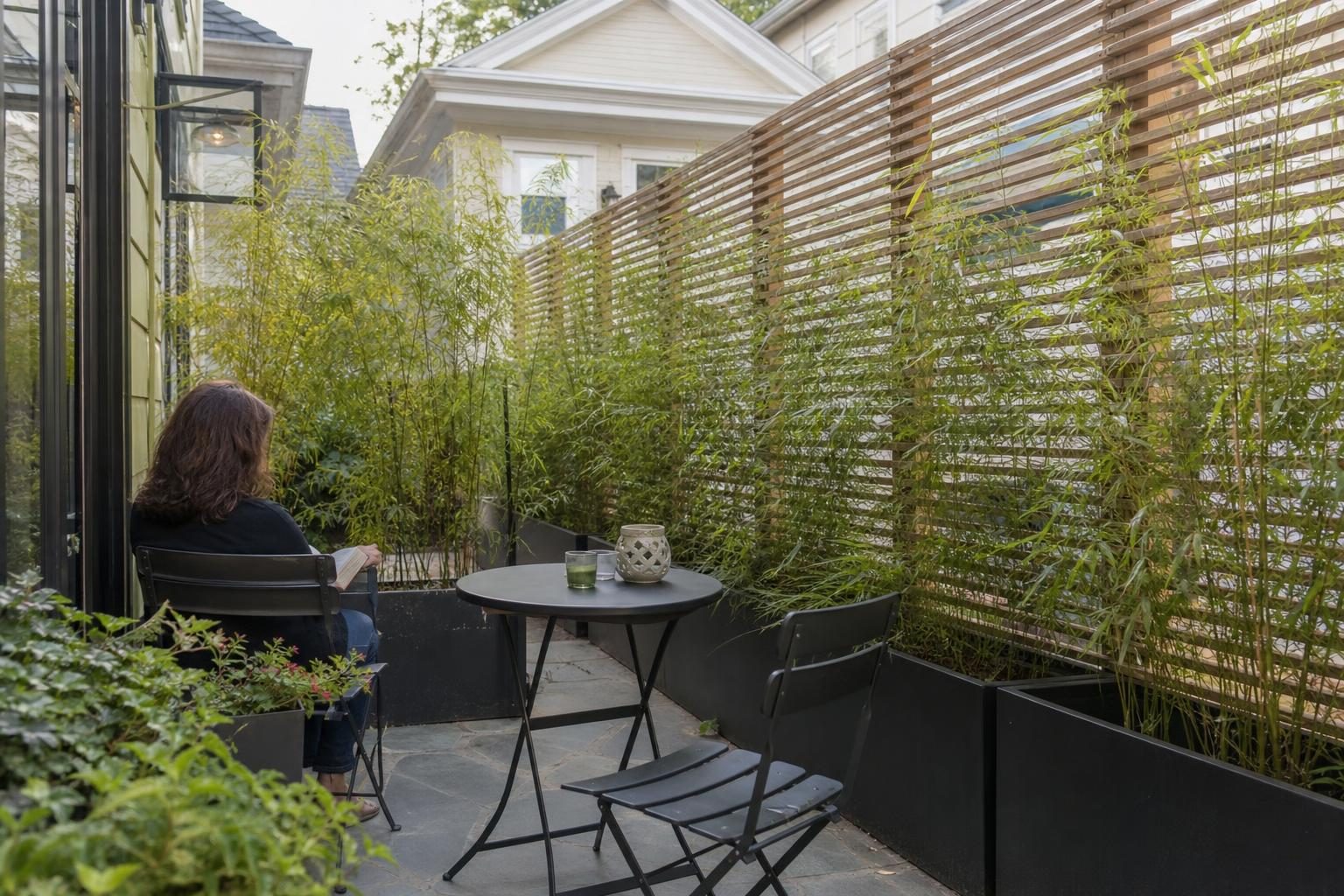
In a small yard, the best privacy usually comes from blocking views close to where you sit rather than lining the whole property edge. Narrow-footprint options such as columnar plants, slatted screens, trellises with vines, raised planters and small pergolas give real privacy without eating up the limited space you have to use.
Part of our Complete Fence and Privacy Guide: materials, costs, rules, installation and plant screens in one place.
Start by mapping the views you actually need to block
In a small yard, every foot of screening takes space away from seating, lawn or planting. So before choosing anything, sit where you usually sit and note what you can see: a neighbor’s window, a second-story deck, the street or an alley. Mark those sightlines on a sketch.
A screen placed close to your seat blocks a wide view with a short structure, the same way a hand in front of your face blocks more than one at arm’s length. A six-foot panel beside a bench can do more than a long hedge at the property line.

Narrow plants that screen without crowding
Choose plants by mature width, not just height. Many classic hedge plants spread six feet or more, which can swallow a small yard. Look instead for upright, columnar or fastigiate varieties suited to your climate, and confirm mature size on the plant tag or with a local nursery.
- Columnar evergreens: Narrow forms of arborvitae, juniper, yew, holly or similar plants, depending on your region, provide year-round cover in tight beds.
- Clumping bamboo: Some clumping types work in large containers or with root barriers. Avoid running bamboo in small yards; it spreads aggressively.
- Tall ornamental grasses: Give soft, seasonal screening in sunny spots, though many are cut back in late winter.
- Espaliered shrubs or trees: Trained flat against a wall or wire, they provide greenery in very little depth.
Our evergreen screen ideas guide goes deeper on plant choices for year-round cover.
Structures that give instant privacy
Slatted or horizontal screens
Freestanding or fence-mounted slatted panels let air and some light through while blocking views. Horizontal slats can also make a narrow yard feel wider.
Trellis with vines
A trellis panel takes only inches of depth. Annual vines fill in within a season; perennial vines take longer but return each year. Choose vines that will not damage fences or siding, and check that they are not invasive in your area.
Pergolas and overhead covers
If neighbors look down from upper windows, side screens cannot help. A pergola with slats, shade cloth, a retractable canopy or climbing vines blocks views from above and adds shade.
Fence height extensions
Adding a lattice or slat topper to an existing fence can gain height, but check local height limits and HOA rules first, and confirm the existing posts can handle the extra wind load.
Container and raised-bed screens
Large planters filled with tall grasses, columnar shrubs or bamboo in containers create movable screens for patios, balconies and rental properties. Raised planters give plants a head start on height, so a four-foot shrub in a two-foot planter screens like a six-foot one. Containers need more frequent watering, so plan for drip irrigation or a self-watering design.
Cost comparison of small-yard privacy options
Costs vary by region, materials, height and access. These are general installed ranges.

| Option | Typical installed cost | Footprint | Time to privacy |
|---|---|---|---|
| Columnar shrubs in a bed | $50–$300+ per plant | 2–4 ft deep | 1–4 seasons |
| Trellis panel with vines | $150–$600 per panel | Under 1 ft | 1–3 seasons |
| Slatted wood or composite screen | $40–$120+ per linear foot | Under 1 ft | Immediate |
| Large planters with tall plants | $200–$1,000+ each | 2–3 ft | Immediate to 2 seasons |
| Pergola with overhead screening | $3,000–$12,000+ | Covers a seating area | Immediate |

Layering for a better result
The most effective small-yard screens combine a structure for instant privacy with plants that soften it. A slatted panel with a vine, or a fence with a narrow planting bed in front, looks more natural than either alone and provides some sound softening. Varying heights also keeps a small yard from feeling boxed in.
If you are planning the whole space, our small backyard landscaping ideas and outdoor privacy solutions guides show how screening fits with seating and planting.
Maintenance to plan for
Small-yard screens are close to the house and your seating, so their upkeep is easy to see. Plan for it from the start:
- Plants: Columnar shrubs usually need only light shaping once or twice a year. Vines on trellises need tying in and annual pruning to keep them from smothering the support.
- Wood screens: Expect cleaning and restaining every few years. Composite and metal screens need less care but cost more upfront.
- Containers: Check water frequently in hot weather, refresh potting mix every few years, and repot or divide plants that outgrow their pots.
Choosing options you will actually maintain keeps the screen looking good rather than becoming one more chore.

Common small-yard privacy mistakes
- Planting wide hedges. They eat up usable space and need constant trimming.
- Screening the whole perimeter. Full enclosure can make a small yard feel cramped and dark. Block only what you need.
- Ignoring sun. Tall screens on the south or west side can shade your seating area and plants.
- Skipping rules. Fence and structure height limits, setbacks and HOA standards apply to small yards too.
- Underestimating watering. New screens and containers fail most often from inconsistent water.
What to ask before hiring
- What mature width and height will these plants reach, and how often will they need trimming?
- How are screens and posts anchored, and are they rated for local wind?
- Does the estimate include soil prep, mulch, irrigation and removal of existing plants?
- Are there warranties on plants and structures?
- Who checks local height limits and permits if a structure is involved?
Frequently asked questions
What is the fastest privacy solution for a small yard?
Freestanding slatted screens, fence toppers where allowed, and large planters with mature plants provide privacy right away.
How do I block a neighbor’s second-story view?
Use overhead cover such as a pergola with slats, shade sails, an umbrella or a small tree placed to block the specific sightline from the window to your seat.
Are hedges a good idea in small yards?
Only if you choose narrow, slow-to-moderate growers sized for the space. Wide hedges can take over a small yard.
Can I add privacy in a rental yard?
Yes. Freestanding screens, containers and planters can be moved when you leave, but confirm with your landlord before attaching anything to fences or walls.