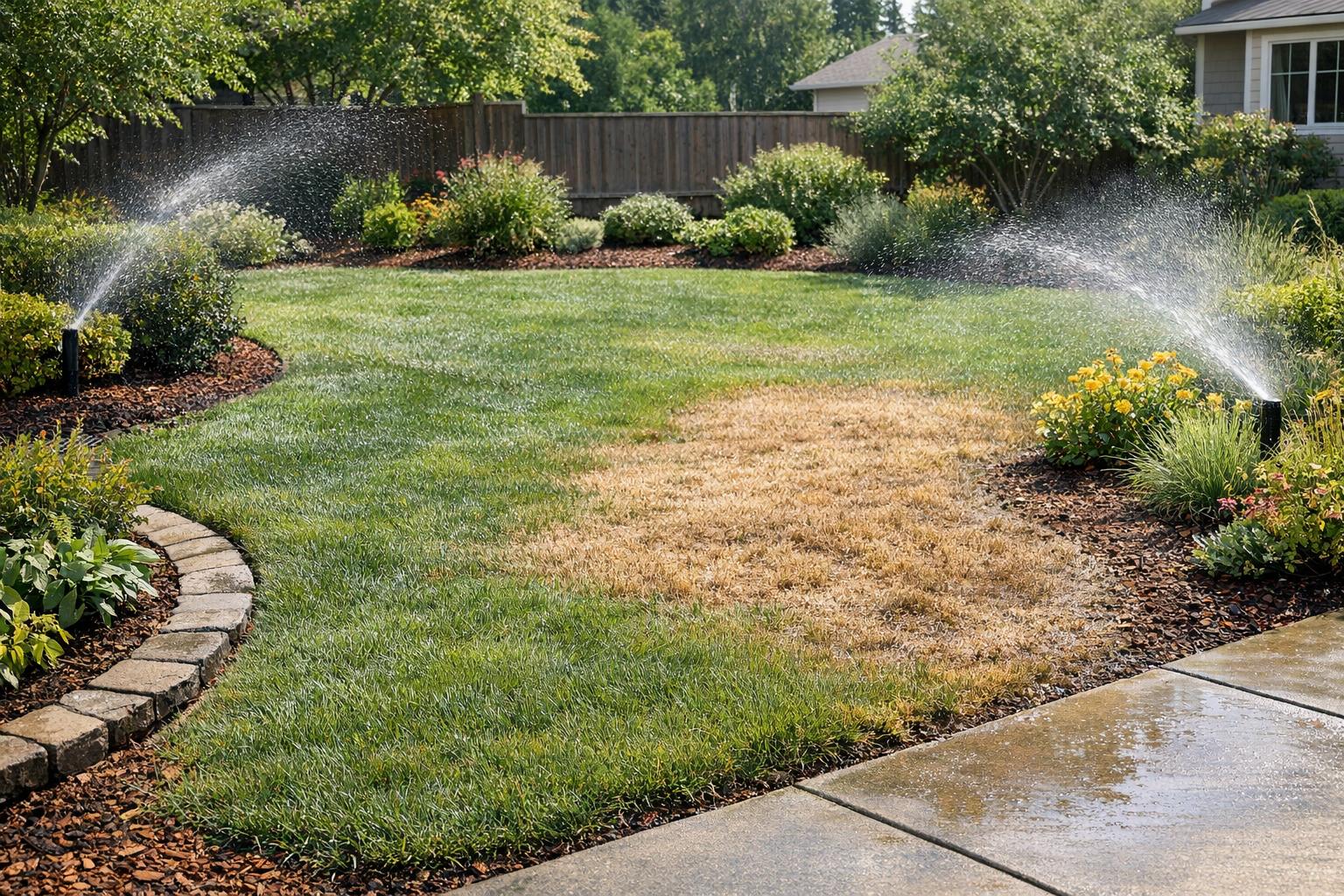
A good irrigation estimate spells out the zones, the type and number of heads or drip emitters, pipe sizes, the controller and valves, backflow protection, how lines will be trenched or pulled, and what restoration and warranty are included. If a quote only lists “install sprinkler system” and a total, you cannot tell what you are buying or compare it fairly with another bid.
Part of our Complete Irrigation Guide: sprinklers vs drip, layout, costs, winterizing and repairs in one place.
Why the details matter
Two irrigation quotes for the same yard can differ by thousands of dollars because they describe different systems. One may use more zones, matched-precipitation nozzles, and drip for beds; another may cover the yard with fewer, larger zones. Neither is automatically wrong, but you can only judge them if each estimate shows its design. Installed systems for a typical suburban lot commonly fall somewhere in the low-to-high thousands of dollars, and costs vary widely by region, yard size, soil, water pressure, and access. Our guide to what affects irrigation system cost explains the main drivers.
The core items every irrigation estimate should list
| Item | What to look for |
|---|---|
| Zones | Number of zones and what each covers (front lawn, back lawn, beds, trees) |
| Heads and emitters | Type (spray, rotor, rotary nozzle, drip), quantity per zone |
| Pipe | Material (PVC or poly), sizes for mainline and laterals, burial depth |
| Valves | Quantity, brand or type, valve box locations |
| Controller | Model or type, indoor or outdoor, smart or weather-based features |
| Backflow preventer | Type required by your water provider, installation and testing |
| Water source connection | Tap location, meter size, any upgrades needed |
| Sensors | Rain or soil moisture sensor if included |
| Installation method | Trenching vs pulling pipe, crossing under walks or driveways |
| Restoration | Lawn, bed, and hardscape repair after installation |
| Permits and inspections | Who obtains them and whether fees are included |
| Warranty | Parts and labor coverage length |

Design details worth asking about
Water pressure and flow
A contractor should measure static pressure and available flow before designing zones. Zones designed without that check may run weak, mist, or fail to reach the edges. Ask: “What pressure and flow did you measure, and how did that set the number of zones?”
Head-to-head coverage
Spray and rotor heads are typically spaced so each one throws water to the next. Gaps in coverage show up as dry rings and brown edges. Ask how heads are spaced and whether the plan shows it.
Separating lawn and beds
Lawns and planting beds need different amounts of water. Zones that mix them overwater shrubs or underwater grass. Drip irrigation is often the better fit for beds; see drip irrigation vs sprinklers.
Sun and shade
Shady areas need less water than full sun. Good zoning separates them where practical.
For layout principles, our irrigation layout guide walks through how zones are typically planned.

Repair or replacement estimates
If you already have a system, the estimate should first describe what was found:
- Which zones were tested and what problems were seen.
- Broken heads, leaks, failed valves, or wiring faults, by location.
- Controller condition and age.
- Backflow device condition and test status.
- Whether repairs or a partial redesign are recommended, and why.
Repairs are often priced per item or by time and materials. Watch for open-ended hourly pricing without a cap or estimate of hours. Our guide on repair, replacement, or new system helps decide which path makes sense.
Allowances and change orders
Some irrigation estimates include allowances, such as a set number of feet of boring under a driveway or a budget for unexpected rock. Make sure each allowance is stated in units and dollars, and that the quote explains how overages are billed. Ask how change orders are approved before extra work starts. Common surprise costs include hitting buried rock or roots, a water meter or service line that is too small for the planned system, and old pipes or wiring found during trenching. A contractor who explains these possibilities up front is easier to work with than one who discovers them on your invoice.

Red flags in an irrigation quote
- A single lump sum with no zone count or head count.
- No mention of backflow prevention where your water provider requires it.
- No pressure test or site visit before quoting a new system.
- Lawn and beds on the same zones with no explanation.
- Restoration described as “as needed” with no detail.
- No warranty or a verbal-only warranty.
- Cheap controller or valves without brand or model, making later comparison impossible.
How to compare two or more estimates
- Put each quote’s zone count, head types, and head count side by side.
- Check that each covers the same areas, including side yards and parking strips.
- Compare controller features and whether a rain or moisture sensor is included.
- Confirm backflow, permits, and inspection are handled in each.
- Compare restoration and cleanup.
- Compare warranty length and what voids it.
- Ask each contractor to explain any big difference in price.
The lowest price may simply have fewer zones or skip restoration. The highest may include better components and a longer warranty.
Questions to ask before you sign
- Will I receive an as-built drawing showing valve and line locations?
- Who sets the initial watering schedule, and will you show me how to adjust it?
- Is winterization or a first-season check included where freezing occurs?
- How will you protect existing trees, plantings, and hardscape?
- What is the schedule, and how long will the lawn be disturbed?
For what the installation itself looks like day to day, see what to expect during an irrigation project.
Estimate irrigation cost before approving scope
Use this calculator to compare repair, retrofit, and new-system ranges before reviewing the written proposal.
Irrigation Cost Calculator
Estimate irrigation pricing based on area, system style, number of zones, and controller choice.
Irrigation cost estimate
- Estimated area
- –
- Low estimate
- –
- Mid estimate
- –
- High estimate
- –
- Estimated zone allowance
- –
Frequently asked questions
Should an irrigation estimate include a drawing?
For a new system, a simple layout showing zones and head locations is very helpful. At a minimum, ask for zone descriptions and head counts.
Is backflow prevention always required?
Many water providers and codes require it for irrigation connected to drinking water. Check local rules and confirm the quote includes it.
Why do irrigation quotes vary so much?
Differences in zone count, component quality, drip vs spray, installation method, restoration, and warranty.
Can I add zones later?
Often, if the controller has spare stations and the mainline can supply them. Ask for that capacity up front.