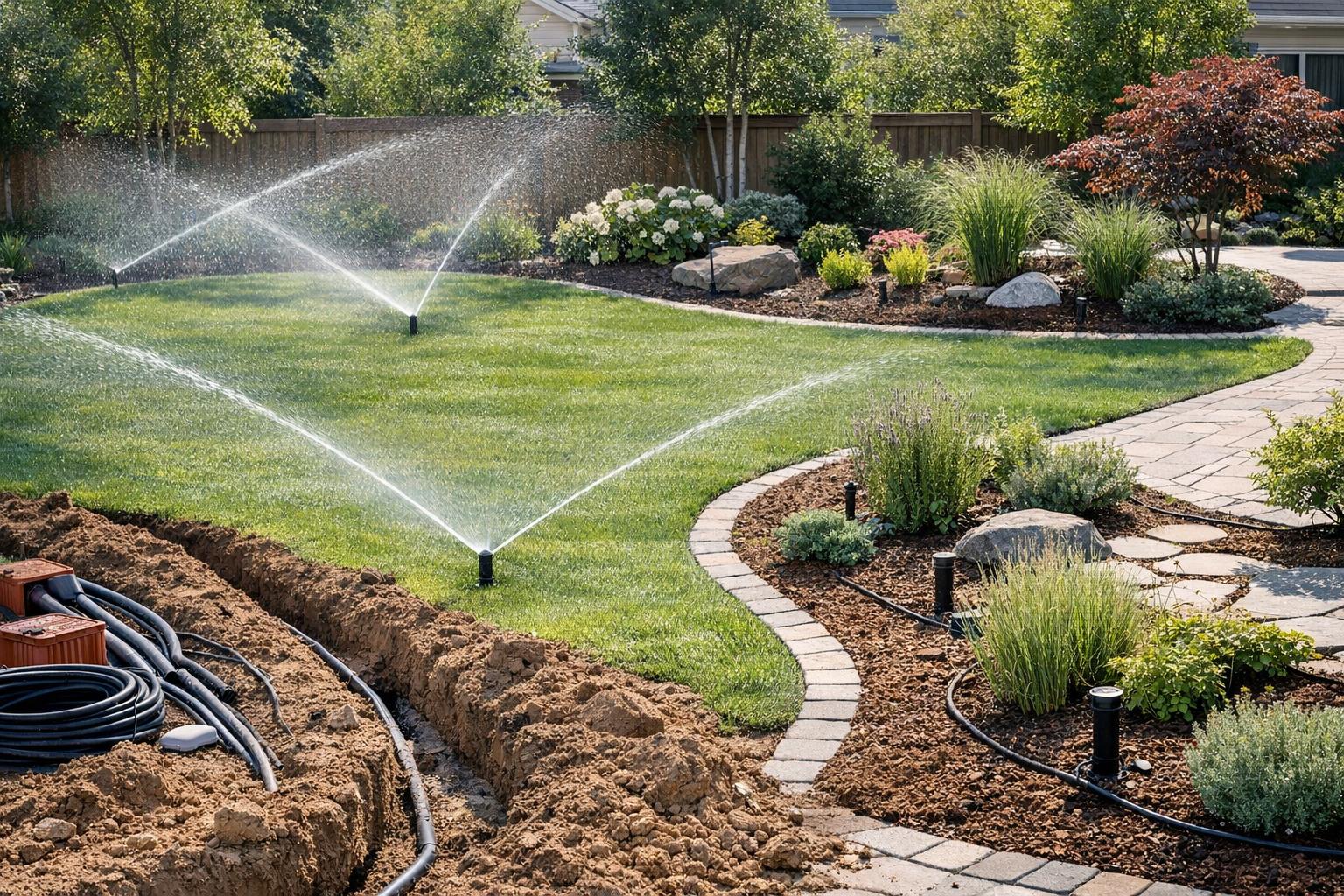
Irrigation system cost is driven mainly by the size and shape of the area being watered, how many zones it takes, the type of system (spray, rotor or drip), water pressure and supply, soil and access for trenching, and the controller and backflow requirements in your area. A typical in-ground system for an average suburban yard often lands somewhere in the low-to-mid thousands of dollars, but prices vary a lot by region and site.
Part of our Complete Irrigation Guide: sprinklers vs drip, layout, costs, winterizing and repairs in one place.
Typical cost ranges
These are broad planning ranges for professionally installed residential systems. Local labor rates, permit fees, soil conditions and access can push your job above or below them.
| Project | Typical installed range | Notes |
|---|---|---|
| Small front or back yard, 2–4 zones | $2,000–$4,500 | Simple lawn and bed layout, good access |
| Average lot, 5–8 zones | $3,500–$8,000 | Mix of lawn and planting beds |
| Large or complex lot, 9+ zones | $7,000–$15,000+ | Slopes, many beds, longer runs |
| Converting beds to drip | $300–$900 per zone | Often reuses existing valves and lines |
| Smart controller upgrade | $250–$700 installed | Depends on zone count and sensors |
| Backflow preventer (new) | $400–$1,200+ | Varies by code, device type and plumbing |
The main cost drivers

1. Zone count and layout
Zones are the biggest cost driver. Each zone needs a valve, wiring and its own pipe network, and the number of zones depends on how much water your supply can deliver at once and how many different watering needs you have.
Lawns, shrub beds, vegetable gardens and sunny versus shaded areas should generally be on separate zones because they need different run times. An irregular yard with lots of small beds will need more zones and more fittings than a simple rectangle of lawn. Our guide to choosing the right irrigation layout explains how zoning decisions are made.
2. System type: spray, rotor or drip
- Spray heads suit small to medium lawn areas. They are inexpensive per head but you need more of them, and they apply water quickly, which can cause runoff on slopes or clay.
- Rotors cover larger lawn areas with fewer heads. They cost more each but can reduce trenching on big open spaces.
- Drip delivers water directly to plant roots in beds and is usually more water-efficient. Materials are cheap, but labor for laying and staking tubing can add up, and drip needs filters and pressure regulators.
Many yards use a combination. For a deeper comparison, read drip irrigation vs sprinklers.
3. Water supply and pressure
Before designing, a good installer tests static pressure and flow (gallons per minute) at your supply. Low pressure or a small meter limits how many heads can run per zone, which increases zone count and cost. Very high pressure may require a regulator. Homes on wells may need pump checks or a different design approach.
Connecting to the main line, upgrading a supply pipe, or adding a dedicated irrigation meter, where your utility allows it, all add cost but can be worth it in areas with high sewer charges tied to water use.
4. Site conditions and access
Trenching is labor. Soft loam with open access lets a crew use a trencher or pulling machine quickly. Rocky soil, heavy clay, tree roots, steep slopes and narrow side yards slow the work. Crossing under driveways and walkways requires boring or sleeving, which adds time.
Installing irrigation in an already established yard also costs more than in a new landscape, because the crew has to work around plants and restore lawn after trenching.
5. Controller, sensors and smart features
A basic timer is the least expensive option. Weather-based or soil-moisture smart controllers cost more upfront and can reduce overwatering, which is often where savings come from. Rain or freeze sensors are inexpensive add-ons that prevent watering during storms or cold snaps. Some water utilities offer rebates on qualifying controllers; check yours before buying.
6. Permits, backflow and code requirements
Many jurisdictions require a permit and an approved backflow prevention device to protect drinking water, and some require annual testing by a certified tester. Requirements and device types vary widely, so the cost of this line item can range from minor to significant. Make sure your estimate says who pulls the permit and whether the backflow device and inspection are included.

7. Materials quality and long-term costs
Head quality, pipe type, valve brand and wire gauge all affect both the bid and how long the system lasts. Cheaper heads may clog or break more often. Professional-grade valves and properly sized wire make troubleshooting easier later. Also budget for ongoing costs: spring start-up, fall winterization in freezing climates, occasional head replacement and backflow testing where required.
Ways to control irrigation cost
- Reduce lawn area and use drip in beds to simplify zoning and cut water use.
- Install irrigation before or during a landscape project, not after, to avoid restoration costs.
- Keep plant groups with similar water needs together so fewer zones are required.
- Ask about utility rebates for smart controllers and efficient nozzles.
- Do not undersize the design to save money; poor coverage leads to dry spots and overwatering everywhere else.

What to check in an irrigation estimate
- Number of zones and what each zone waters.
- Head types, nozzle types and drip components by brand or model.
- Pipe material and size, trench depth and how lawn will be restored.
- Pressure and flow test results used for the design.
- Controller model, sensors, backflow device, permit and inspection.
- Warranty terms for parts and labor, and whether first-season adjustment visits are included.
Our irrigation estimate checklist goes into each line in more detail.
Frequently asked questions
Why are two irrigation quotes for the same yard so different?
Usually because the scope differs: different zone counts, head types, controller choices or whether permits, backflow and lawn restoration are included. Compare line items, not just totals.
Is drip irrigation cheaper than sprinklers?
Drip materials are often cheaper, but labor for beds can be similar. Drip typically saves water over time in planting beds, while sprays and rotors remain the usual choice for lawns.
Can I add irrigation to an existing landscape?
Yes, but it usually costs more than installing during a new landscape because crews must work around established plants and repair turf after trenching.
Does a smart controller pay for itself?
It can, especially if your current schedule overwaters or your utility offers a rebate. Savings depend on your climate, water rates and how carefully the old timer was managed.