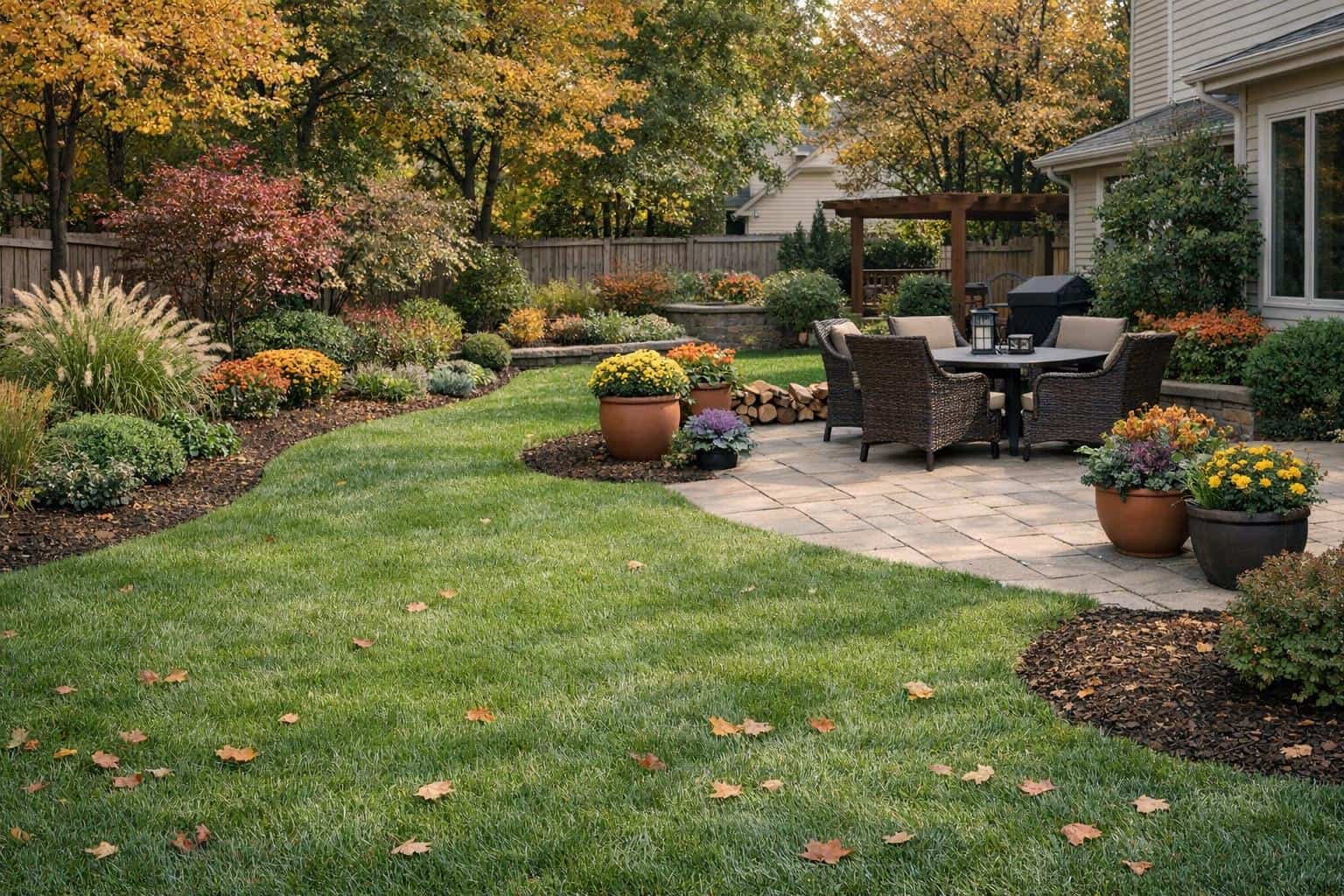
Fall is the best time of year to set your yard up for spring. The soil is still warm, the air is cooler, and plants put energy into roots instead of leaves, so the work you do between September and the first hard freeze pays off more than the same work done in April. This checklist covers what to do, roughly when, and which jobs are worth hiring out.
Part of our Complete Yard Design and Planning Guide: layouts, ideas by yard type, phasing and budgets in one place.
Early fall: lawn work that pays off most
For cool-season grasses such as tall fescue, Kentucky bluegrass and perennial ryegrass, early fall is the main event. Aim to finish this work about six weeks before your area’s typical first frost.
Warm-season grasses such as Bermuda, zoysia and St. Augustine are slowing toward dormancy in fall, so skip heavy fertilizing and seeding for those lawns and save that for late spring. If you are weighing a bigger lawn redo, our sod vs seed guide explains why fall is often the best seeding window for cool-season lawns.
- Core aerate compacted areas. If a screwdriver is hard to push into moist soil, or water puddles on the lawn, aeration helps. Professional core aeration for a typical suburban lot often runs about $100 to $250, depending on lot size and region.
- Overseed thin spots right after aerating. Seed lands in the holes and gets better soil contact. Keep it consistently moist for the first two to three weeks.
- Fertilize. A fall feeding supports root growth. Follow the label rate and keep granules off driveways and sidewalks so they do not wash into storm drains.
- Keep mowing at a normal height. Do not scalp the lawn. Drop the height a notch only for the final mow of the season.

Leaves: mulch, compost or remove
A light layer of leaves can be mulched in place with a mower and left on the lawn. A thick mat that hides the grass needs to come off, because it blocks light and holds moisture that encourages disease.
- Shred leaves before adding them to beds. Whole leaves mat down and shed water.
- Keep leaves out of gutters, downspouts, drain inlets and the low spots in your yard where water needs to move.
- Check your local yard-waste rules before bagging. Many cities have a set collection window in fall.
Planting season for trees, shrubs and bulbs
Fall is a strong planting window in most regions because roots keep growing in warm soil while cooler air reduces stress on the top of the plant.
- Trees and shrubs: plant at least four to six weeks before the ground freezes. Water deeply until the ground freezes, especially in a dry fall.
- Spring bulbs: tulips, daffodils and crocus go in once soil cools, usually after a few weeks of nighttime temperatures in the 40s and 50s.
- Perennials: divide crowded clumps of hostas, daylilies and similar plants now and replant or share them.
If you are planning new beds rather than filling gaps, see our garden bed and planting installation guide before you buy plants.

Beds, mulch and cleanup
Fall bed cleanup is about protecting roots and reducing next year’s weeds, not making everything bare.
- Pull weeds before they drop seed. Perennial weeds are easier to remove from moist fall soil.
- Cut back diseased foliage and remove it from the yard. Healthy seed heads and hollow stems can stay for birds and overwintering insects if you like the look.
- Top up mulch to about 2 to 3 inches after the ground cools, keeping it a few inches away from stems and tree trunks. Our mulch depth guide covers how much to add over existing mulch.
- Do not prune spring-flowering shrubs like lilac, forsythia or azalea now. They have already set next year’s buds.
Irrigation and water: shut down before the first freeze
In freezing climates, water left in sprinkler pipes, valves and backflow devices can crack them. Repairs to a split backflow preventer or manifold usually cost far more than prevention.
- Cut watering back gradually as temperatures drop. Lawns need far less water in fall.
- Schedule a winterization (blowout) before the first hard freeze. Many irrigation companies book up in October; a typical blowout for a residential system often runs about $75 to $150.
- Disconnect and drain garden hoses, and shut off and drain exterior hose bibs if they are not frost-free.
- Note any broken heads, leaks or dry spots you saw during the season so you can fix them in spring.
In mild-winter regions, you will not need a blowout, but you should still reset the controller to a fall schedule.

Drainage and hardscape checks
Fall rain is a good test of how water moves around your house. Walk the property during or right after a heavy rain.
- Confirm downspouts discharge several feet away from the foundation, not into a bed against the wall.
- Look for water pooling on patios, walks or along the foundation.
- Check retaining walls for new leaning, bulging or blocked weep holes.
- Seal or repair small cracks in concrete before freeze-thaw cycles widen them.
If you find standing water or soil washing away, our drainage solutions guide explains the common fixes and what they involve.
Fall is also planning season
If you want a patio, wall, drainage fix or new planting next year, fall is a good time to get estimates. Many contractors are finishing their season and have more time to visit, measure and talk through options. Getting quotes now can help you book an early spring start instead of joining the April rush.
- Photograph problem areas now, while you can still see what failed this year.
- Ask each contractor what can be done in fall versus what should wait for spring.
- Ask whether early booking affects price or scheduling.
What to do yourself and what to hire out
| Task | DIY-friendly? | When hiring helps |
|---|---|---|
| Leaf cleanup and mulching | Yes | Large lots or many mature trees |
| Core aeration | Yes, with a rented machine | Heavy machine, hilly lot, or no truck to haul it |
| Overseeding and fertilizing | Yes | Large thin areas or repeated failures |
| Irrigation winterization | Possible with a compressor | Most homeowners; needs the right air volume and pressure |
| Tree planting | Small trees, yes | Large balled trees or near utilities |
| Large tree pruning | No | Always for work at height or near power lines |

Frequently asked questions
When should I start my fall yard checklist?
Start lawn aeration and seeding in late summer to early fall, usually about six weeks before your first expected frost. Bulb planting, mulching and irrigation shutdown come later, as the soil and air cool.
Should I leave leaves on the lawn over winter?
A light layer shredded by the mower is fine and can return nutrients to the soil. A thick, wet layer should be raked or blown off because it smothers grass and invites disease.
Is fall a good time to plant trees?
In most regions, yes. Warm soil supports root growth while cooler weather reduces stress. Plant at least four to six weeks before the ground freezes and water deeply until it does.
Do I need to winterize my sprinkler system?
If your area gets hard freezes, yes. Water left in the lines and backflow device can freeze and crack parts. In mild climates, adjusting the controller schedule is usually enough.