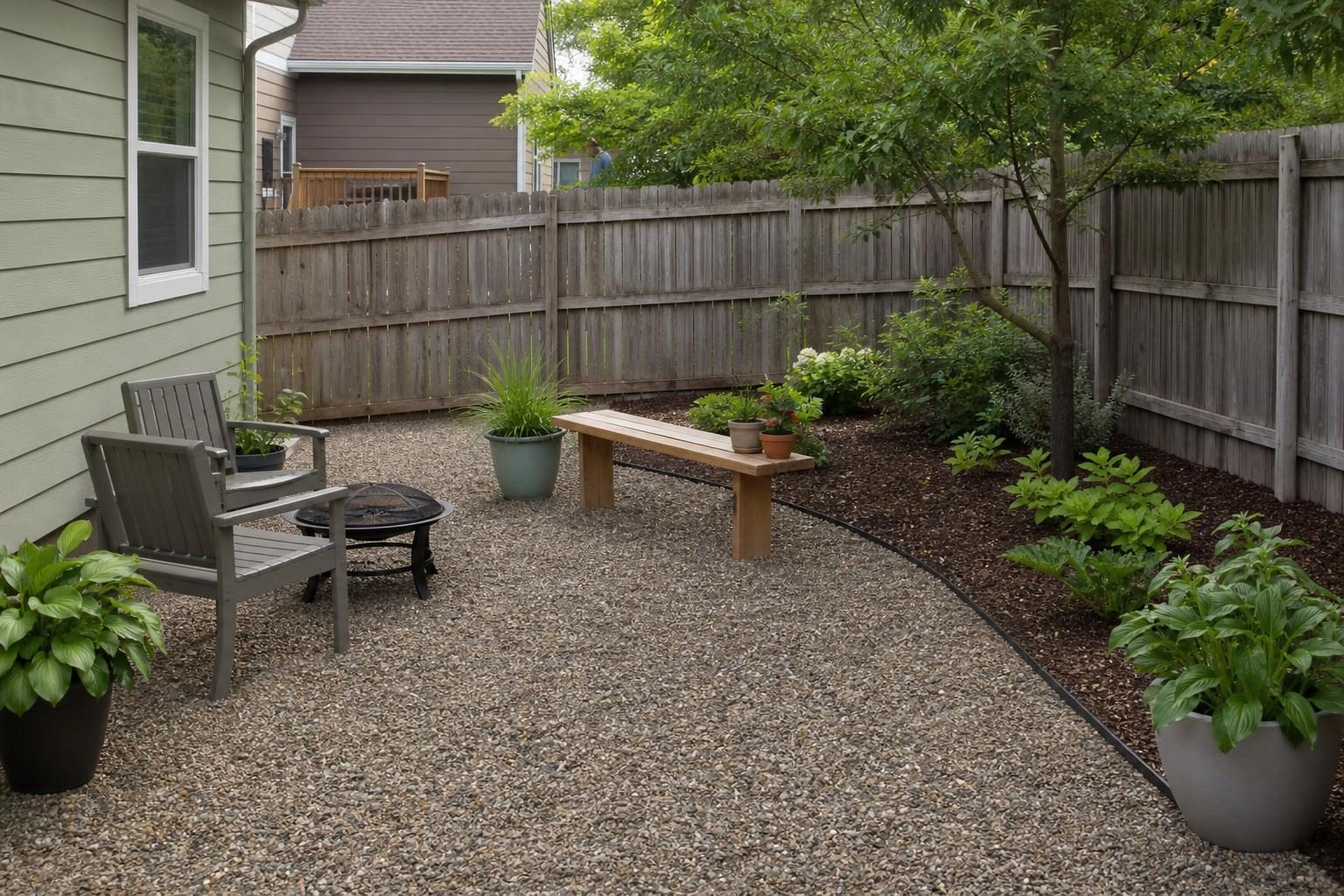
The most budget-friendly backyard ideas lean on inexpensive materials like mulch, gravel, and plants grown from small sizes, combined with a plan you build in phases. Spending first on what makes the yard usable, such as fixing drainage, creating one good sitting area, and defining beds, usually gets more out of a limited budget than spreading money across many small upgrades.
Part of our Complete Yard Design and Planning Guide: layouts, ideas by yard type, phasing and budgets in one place.
Below are practical ideas grouped by cost, plus where to save, where not to cut corners, and how to phase the work.
Start with a plan, even a rough one
The cheapest yard improvement is avoiding work you later redo. Before buying anything:
- Sketch the yard to scale on graph paper, including the house, doors, fences, trees, and slopes.
- Note sun and shade through the day, and where water collects after rain.
- List how you want to use the space: eating, play, gardening, pets, privacy.
- Mark the main paths people already walk.
Then decide which area to do first. Our guide on how to phase a landscaping project explains how to order the work so early phases do not get torn up later.
Low-cost ideas (mostly DIY, often under a few hundred dollars)

Define and mulch your beds
Cutting clean bed edges and adding 2 to 3 inches of mulch makes a yard look finished quickly. Bulk mulch from a supply yard is usually much cheaper than bags for larger areas. Free wood chips from tree services or municipal programs can work for back areas and paths.
Gravel paths
A simple gravel path with edging is one of the least expensive ways to connect a gate, patio, and garden. Use angular crushed stone that locks together rather than round pea gravel if you want a firm surface. Our walkway gravel depth guide covers base depth.
Plant small and divide
Buy perennials in smaller pots and shrubs in smaller sizes. They cost less and often catch up within a few seasons. Divide existing perennials, swap with neighbors, and choose plants that spread on their own as groundcover.
Refresh what you have
Pressure-wash a patio or fence, repaint or stain old furniture, and prune overgrown shrubs. Removing clutter and dead plants can change a yard more than adding something new.
String lights and solar accents
Plug-in string lights over a sitting area are an inexpensive way to make a yard usable at night. Solar path lights are cheap but usually dimmer and shorter-lived than low-voltage systems.
Shrink the lawn
Grass is cheap to start but costs time, water, and fuel every week. Converting a hard-to-mow corner, a shady strip, or a steep bank into a mulched bed with tough groundcovers lowers ongoing costs. Lay cardboard over the grass, cover it with several inches of mulch or wood chips, and plant through it the following season instead of renting a sod cutter.
Mid-range ideas (a few hundred to a few thousand dollars)
Gravel patio
A gravel patio with steel or paver edging costs far less than poured concrete or pavers and is DIY-friendly. It drains well and can be upgraded later.
Fire pit area
A simple wood-burning fire ring set on gravel creates a gathering spot. Check local burn rules and keep it well away from structures and overhanging branches.
Raised beds
Raised beds built from untreated wood or metal kits make vegetable gardening easier and look tidy. Fill them with a planting mix from a bulk yard rather than bagged soil to save money.
Privacy plantings
A row of fast-growing shrubs or ornamental grasses, or a trellis with vines, can screen a view for less than a fence. Plant for mature size so you are not removing crowded plants later.
Cost comparison of common surfaces
| Surface | Relative cost | DIY-friendly? | Tradeoffs |
|---|---|---|---|
| Mulch | Lowest | Yes | Needs topping off; not for furniture |
| Gravel | Low | Yes | Can scatter; needs edging and a weed barrier or compacted base |
| Seeded lawn | Low | Yes | Slow to establish; ongoing mowing and water |
| Sod | Moderate | Possible | Fast result; prep and watering matter |
| Concrete patio | Moderate to high | Rarely | Durable; can crack; hard to modify |
| Paver patio | Higher | Ambitious DIY | Attractive and repairable; base prep is critical |
Actual costs vary widely by region, material availability, and access. Our backyard living space ideas by budget and yard size goes deeper on what each price level can achieve.

Where not to cut corners
- Drainage. If water pools against the house or across the yard, fix it first. Everything else depends on it.
- Base preparation. Patios and paths fail when the base is skipped or too thin. Saving on base material costs more in repairs.
- Plant selection. Cheap plants that are wrong for your sun, soil, or climate die and must be replaced.
- Structural work. Retaining walls over a few feet, decks, and anything involving gas or electrical should be done properly and to code.

Common budget mistakes
- Buying plants or decor before having a layout.
- Trying to finish the whole yard at once and running out of money halfway.
- Using landscape fabric under mulch in planting beds, where it often traps debris and fails over time.
- Planting trees too close to the house, fences, or each other.
- Choosing high-maintenance features you will not have time to care for.
When hiring help still saves money
Even on a budget, paying a professional for a single design consultation or for the hardest step, such as grading or patio base work, can prevent expensive mistakes. You can handle planting, mulching, and finishing touches yourself. Our guide to comparing landscaping quotes helps when you do bring someone in.
Frequently asked questions
What is the cheapest way to landscape a backyard?
Clean up, define beds with mulch, add a gravel path or sitting area, and plant small perennials and shrubs. Doing the labor yourself and buying bulk materials keeps costs lowest.
Is gravel cheaper than grass?
Installed gravel and seeded grass can be similar upfront. Gravel avoids mowing and watering, while grass is softer for play. Sod usually costs more than both.
How can I make a small budget go further?
Focus on one area at a time, fix drainage first, buy bulk materials, and choose plants that suit your site so you do not replace them.
Should I hire a designer if my budget is small?
A one-time consultation can be worth it if you are unsure about layout or drainage. Many homeowners then do the installation themselves in phases.