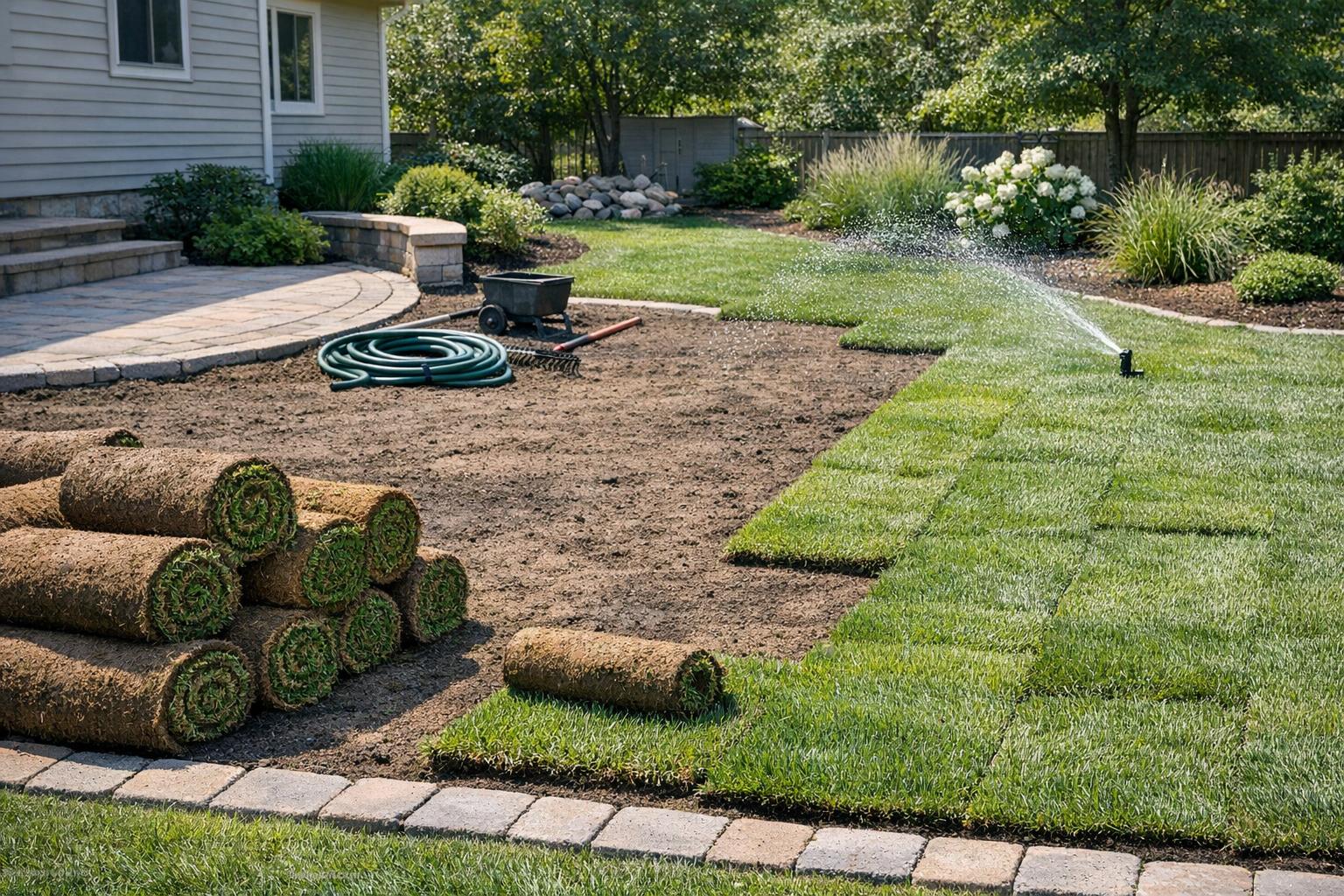
A good lawn installation estimate spells out exactly what will be removed, how the soil will be prepared, what grass will go in and how much, how it will be watered, and what happens if it fails. If an estimate just says “install sod, 2,000 sq ft” with one price, you cannot tell what you are paying for or compare it fairly against another bid.
Part of our Complete Lawn Guide: seed vs sod, grass types, costs, care calendar and hiring in one place.

Scope, measurement and removal
Site measurement
The estimate should state the area in square feet and which parts of the yard are included. Ask how the contractor measured it. A small measuring difference across bids can explain a big price difference.
- Total square footage of new lawn.
- Areas excluded, such as beds, slopes or side yards.
- Any areas that need special treatment, like steep slopes or shade.
Removal of existing lawn and debris
Old turf, weeds, rocks and roots need to go before new lawn goes in. Methods include sod cutting, herbicide followed by tilling, or scraping with equipment. The estimate should say:
- How existing turf and weeds will be removed.
- Whether removed material is hauled away and who pays disposal fees.
- Whether persistent weeds, such as Bermuda grass in some regions, will be treated first.
Grading and soil preparation
Soil prep is the most important part of a lawn install and the easiest to cut. Look for specifics, because two bids that both say “prep included” can mean very different amounts of work:
- Rough grading so water drains away from the house.
- Tilling or loosening compacted soil, and to what depth.
- Soil amendments such as compost, and how many inches or cubic yards.
- Topsoil, if any, with quantity.
- Soil testing, or at least a basic plan for pH and nutrients.
- Fine grading and rolling to create a smooth, firm surface.
- Starter fertilizer.
Our soil amendment vs topsoil guide explains what your yard may need.
Grass type and installation method
The estimate should name the method and the grass, not just “lawn.”

- Method: sod, seed, hydroseed, or plugs.
- Grass species or blend: for example tall fescue blend, Kentucky bluegrass, Bermuda or zoysia, suited to your climate and sun.
- Quantity: square feet of sod, including a small waste allowance, or pounds of seed.
- Source: sod farm or seed product if you care about quality.
Typical installed price ranges, which vary a lot by region and prep, are roughly:
| Method | Typical installed cost per sq ft | Time to usable lawn |
|---|---|---|
| Seed | About $0.10 to $0.50 (more with heavy prep) | Often 2 to 3 months or longer |
| Hydroseed | About $0.10 to $0.25 | Often 1 to 2 months |
| Sod | About $1 to $2.50 | Often 2 to 4 weeks for light use |
For help choosing, see our sod vs seed guide and lawn installation cost guide.

Irrigation and timing
Irrigation
New lawn needs consistent water, especially in the first weeks. The estimate should say:
- Whether the existing system will be checked and adjusted for full coverage.
- Whether new heads or zones are included.
- What watering schedule you should follow, and who sets the controller.
If there is no irrigation, ask how they expect you to water and whether that affects the warranty.
Timing and schedule
- Expected start and completion dates.
- How weather delays are handled.
- Whether the timing fits your grass type; cool-season seed does best in early fall, warm-season grass in late spring and early summer.
- When sod will be delivered, since it should be laid the same day.
Aftercare and warranty
This is where many disputes start. New lawns usually fail for predictable reasons: too little water in the first two weeks, mowing too early, heavy foot traffic before roots knit, or a sprinkler zone that misses a corner. A clear aftercare section protects both you and the installer, because everyone knows who is responsible for what. The estimate should cover:
- Written watering and mowing instructions, including when to mow first.
- Any follow-up visits, fertilizing or overseeding of bare spots.
- What the warranty covers, how long, and the conditions, often requiring that you follow the watering instructions.
- What is excluded, such as pet damage, foot traffic, drought restrictions or disease.

Price breakdown and payment
- Separate line items for removal, prep, materials, installation and irrigation work.
- Delivery and disposal fees.
- Deposit amount and payment schedule tied to work milestones.
- Change-order process if they find buried debris, rock or other surprises.
When comparing bids, line items let you see whether one contractor skipped prep. Our guide to comparing landscaping quotes shows how to line them up.
Comparing two lawn bids side by side
Put each estimate in a simple list with the same rows: area, removal method, soil prep and amendments, grass type and method, irrigation work, aftercare visits, warranty and total. Gaps jump out quickly. A bid that is much lower often leaves out removal haul-away or compost, or assumes your sprinklers already cover every corner.
If a line is missing, ask the contractor to add it in writing rather than assuming it is included. A short follow-up email that lists what you expect to be done gives you a record if questions come up later.
Red flags in a lawn estimate
- One total price with no breakdown.
- No mention of soil prep or grading.
- Sod laid directly over old grass or weeds.
- No grass type named.
- No warranty or a vague one.
- A large upfront deposit before materials are delivered.
Compare lawn installation options
Use these calculators to compare sod, seed, hydroseed, and artificial turf ranges before reviewing contractor proposals.
Sod vs Seed Cost Calculator
Compare rough installed cost ranges for sod, seed, and hydroseed on the same lawn area.
Lawn establishment comparison
- Estimated area
- –
- Seed estimate
- –
- Hydroseed estimate
- –
- Sod estimate
- –
- Fastest visible result
- –
Artificial Turf Cost Calculator
Estimate artificial turf pricing with turf grade, removal needs, access, and install complexity.
Artificial turf cost estimate
- Estimated area
- –
- Low estimate
- –
- Mid estimate
- –
- High estimate
- –
- Estimated range per sq ft
- –
Frequently asked questions
Why is one lawn quote much higher than another?
Usually because of soil prep, removal and irrigation. A higher quote may include tilling, compost and grading that a cheaper quote skips.
Should a lawn estimate include a warranty?
Yes. Most reputable installers offer some warranty, usually conditional on proper watering. Get the terms in writing.
Can I prep the soil myself to save money?
Sometimes. Some installers will price a lawn with homeowner prep, but many will not warranty grass laid on soil they did not prepare. Ask before you start digging.
Is soil testing necessary?
It is not always included, but it is inexpensive through many county extension offices and helps avoid guessing about lime or fertilizer.