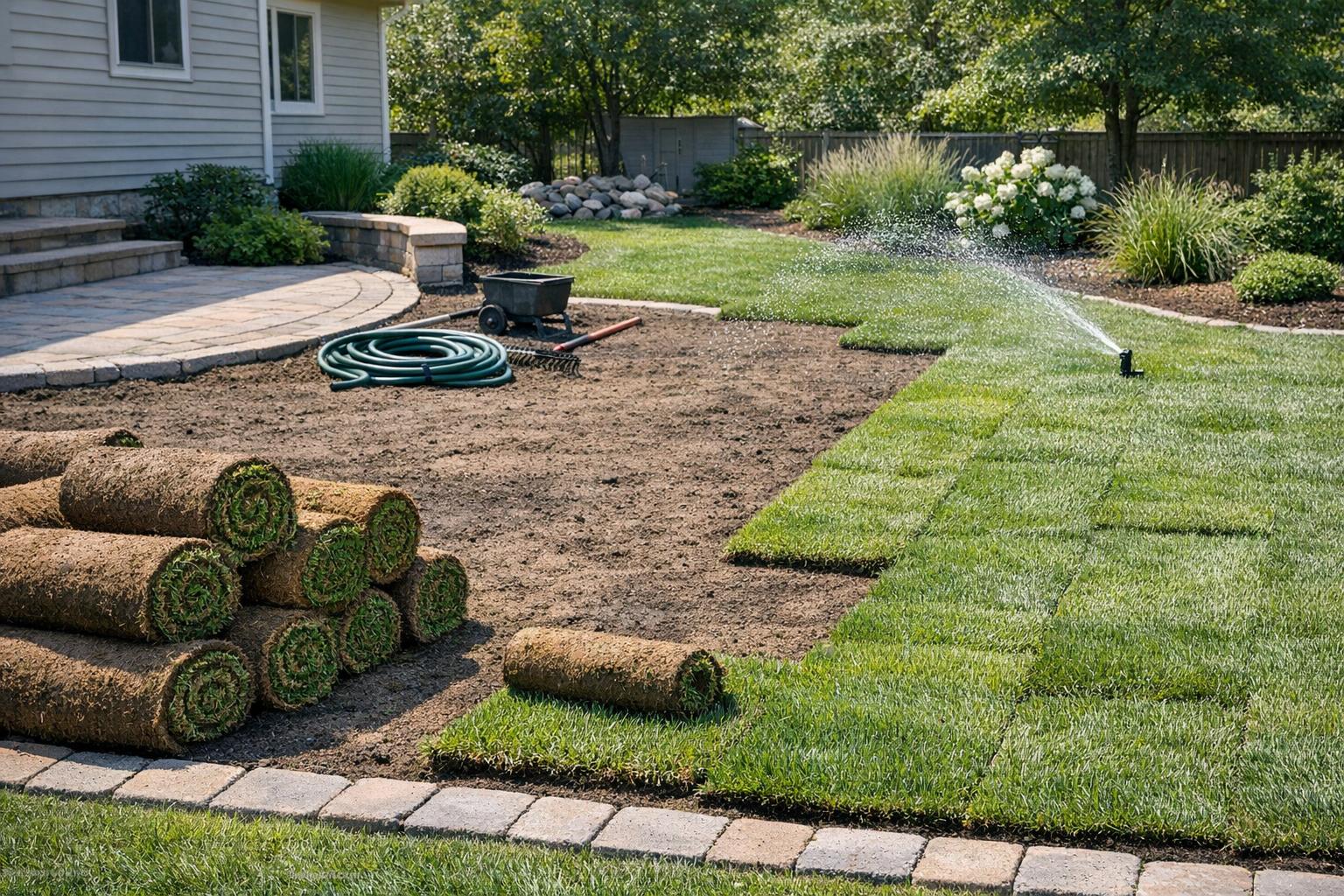
Sod installation cost is driven mostly by how much ground preparation your yard needs, the grass type, the size and access of the area, and whether irrigation is part of the job. The sod itself is often a smaller share of the bill than homeowners expect; removing the old lawn, grading, and soil work can match or exceed it.
Part of our Complete Lawn Guide: seed vs sod, grass types, costs, care calendar and hiring in one place.
Here is what moves the price, rough cost ranges, and how to read a lawn installation quote so you are comparing the same scope.
Typical cost ranges
Professionally installed sod in the US commonly falls somewhere around $1 to $3 per square foot including basic prep and labor, with simple jobs at the low end and difficult sites, premium grass, or heavy grading pushing well above that. The sod alone often runs well under a dollar per square foot for common varieties, more for specialty grasses. Prices vary widely by region, season, site, and access, so use these numbers only to sanity-check quotes.
| Lawn option | Rough installed cost per sq ft | Notes |
|---|---|---|
| Seed (DIY) | Pennies to roughly $0.20 | Cheapest, slowest, most care required |
| Seed (professional, with prep) | Roughly $0.10 to $0.50+ | Prep is most of the cost |
| Hydroseed | Roughly $0.10 to $0.30+ | Often more economical on larger areas |
| Sod (professional) | Roughly $1 to $3+ | Instant lawn; prep and irrigation drive range |
| Artificial turf | Roughly $8 to $20+ | High upfront, different maintenance |
For the bigger picture on choosing between these, see our sod vs seed guide.
The biggest cost drivers

1. Removing the existing lawn
Old grass and weeds have to go before new sod goes down. A sod cutter strips the top layer, which then has to be hauled away. Heavy weed infestations may need treatment first, adding time. Removal and disposal can be a significant line on its own, especially when debris has to be carried a long way to a truck.
2. Grading and drainage
Sod follows the ground it sits on. If the yard holds water, slopes toward the house, or is lumpy, it should be corrected before installation. Light rough and finish grading is often included; moving significant soil, fixing negative slope, or adding drainage is extra. Skipping this step is the most expensive shortcut because the problems show up in the new lawn.
3. Soil preparation
Compacted clay, construction fill, or very sandy soil may need tilling, compost, or imported topsoil. Topsoil is priced by the cubic yard, and adding even an inch or two across a big lawn adds up quickly. A soil test can tell you whether you actually need amendments. Our soil amendment vs topsoil guide explains the difference.
4. Grass type
Common cool-season sods like tall fescue or Kentucky bluegrass blends, and warm-season types like Bermuda, are usually the most affordable in their regions. Zoysia, St. Augustine varieties, and specialty shade blends often cost more per pallet. Choose for your sun, traffic, and climate first, price second.
5. Size and access
Larger lawns usually get a lower price per square foot because setup and delivery are spread out. Small jobs often carry a minimum charge. Narrow side yards, steps, slopes, and no driveway access to the backyard mean pallets get moved by hand, which adds labor.
6. Irrigation
New sod needs consistent water for the first few weeks. If the yard has no sprinklers, or the existing system has poor coverage, adding or adjusting irrigation can be a major part of the budget. Plan it before the sod goes down, not after.
Smaller factors that still matter
- Season. Spring is peak demand. Installing in a contractor’s slower window may help scheduling, but timing must still fit your grass type.
- Edging and bed work. New edges along beds and walks are sometimes bundled, sometimes extra.
- Starter fertilizer and rolling. Usually included, but confirm.
- Delivery fees. Sod farms and suppliers often charge delivery, especially for smaller orders.
- Waste allowance. Curved beds and odd shapes mean more cutting and more leftover sod.

How to read a sod quote
Two quotes for the same yard can differ by thousands of dollars because they describe different jobs. A clear quote should spell out:
- Total square footage and how it was measured.
- Removal method for the existing lawn and whether disposal is included.
- Grading scope: rough grade, finish grade, and any drainage corrections.
- Soil work: tilling depth, amendments, and topsoil quantity in cubic yards.
- Grass variety and source.
- Starter fertilizer, rolling, and cleanup.
- Irrigation work, if any, and who is responsible for watering after install.
- Establishment warranty and what voids it.
Our checklist on what a lawn installation estimate should include covers this in more detail.
Ways to keep costs reasonable
- Fix drainage first. It is cheaper to grade bare soil than to rip up dying sod later.
- Size the lawn to how you use it. Converting hard-to-mow corners, steep banks, or deep shade to beds or groundcover can lower both install and upkeep costs.
- Consider seed or hydroseed for large or low-visibility areas, and sod only where you need instant results.
- Do the removal yourself if you have time and a way to dispose of debris, but confirm with the contractor that their warranty still applies.
- Get at least two or three quotes with the same scope written down.
Common mistakes
- Laying sod over old grass or weeds.
- Skipping grading because the yard “looks flat.”
- Assuming the cheapest quote includes the same soil work as the others.
- Installing without a watering plan for the first two to three weeks.
- Choosing a sun-loving grass for a shaded yard.

Compare sod, seed, and hydroseed cost ranges
Use this comparison calculator to see how prep level and watering readiness can change rough lawn establishment ranges.
Sod vs Seed Cost Calculator
Compare rough installed cost ranges for sod, seed, and hydroseed on the same lawn area.
Lawn establishment comparison
- Estimated area
- –
- Seed estimate
- –
- Hydroseed estimate
- –
- Sod estimate
- –
- Fastest visible result
- –
Frequently asked questions
Why is sod installation so much more than the sod itself?
Labor, removal, haul-away, grading, soil prep, and delivery make up most of the price. The pallets are only one part of the job.
Is it cheaper to lay sod myself?
Usually, if you can handle heavy rolls and prep the soil properly. Sod is perishable and should be laid the day it arrives, so plan help and timing carefully.
Does sod need irrigation?
New sod needs frequent, consistent watering until it roots. A working sprinkler system makes that much easier and reduces the risk of losing the lawn.
What time of year is cheapest to install sod?
Off-peak months can be easier to schedule, but the right time depends on your grass type and climate. Installing in the wrong season can cost more in lost sod than any discount saves.