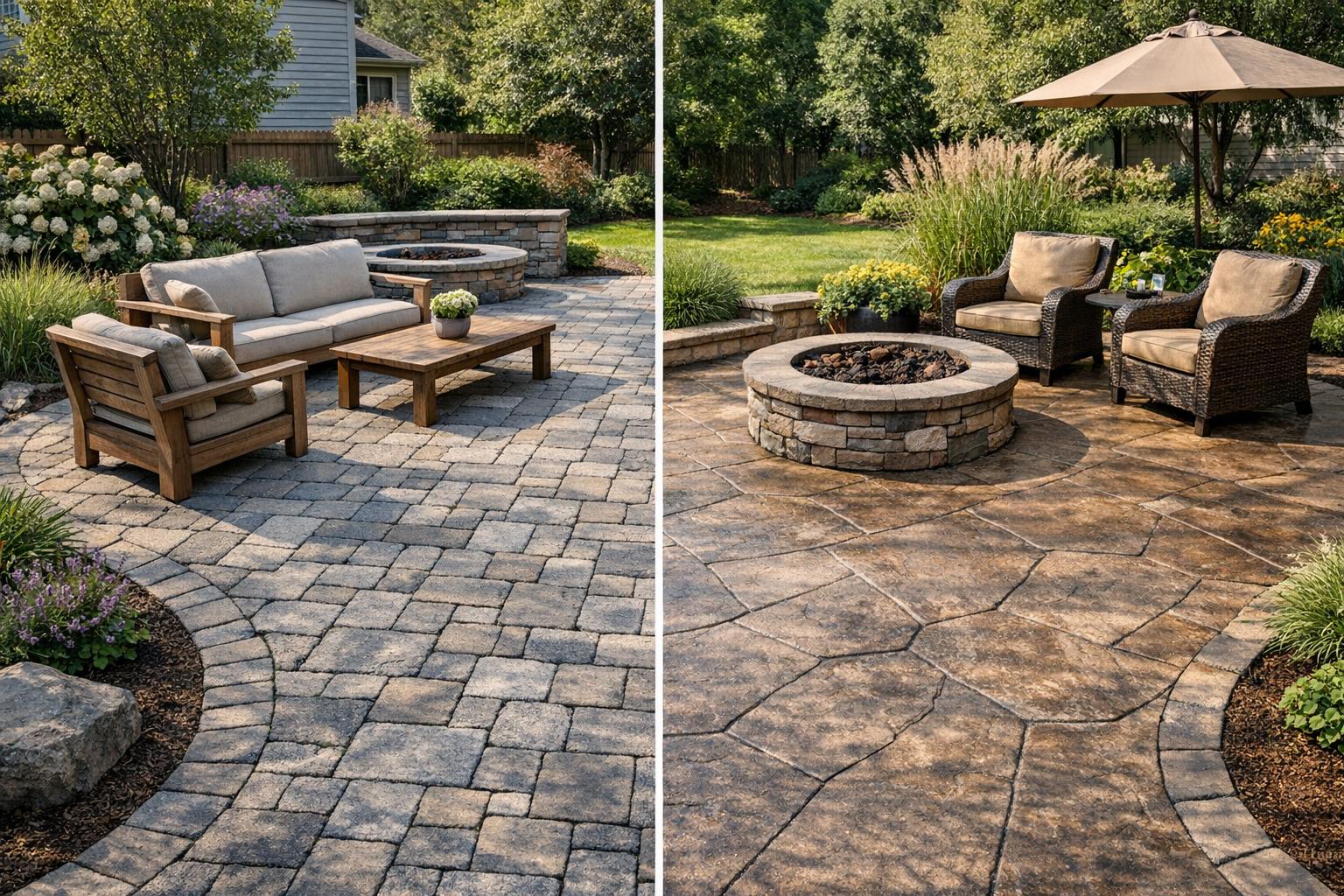
The best paver color and finish is the one that ties your house, plantings and the way you use the space together, while hiding everyday dirt and staying comfortable underfoot. Start from the fixed colors on your home, choose a blend rather than a single flat tone, and pick the surface texture based on traffic, slip resistance and how much maintenance you will accept.
Part of our Complete Patio and Paver Guide: materials, costs, installation, repair and hiring in one place.
Start with what you cannot change
Your roof, brick or siding, trim, stone accents and any existing concrete are fixed. Pavers that pick up one of those colors usually look intentional. Pavers that introduce a brand new color can look disconnected.
Hold paver samples against the house siding, not just on the ground, and look at them in morning and late-afternoon light.
- Warm homes (red brick, tan stucco, cedar): look at tan, buff, red and brown blends.
- Cool homes (gray siding, white trim, slate roofs): charcoal, gray and blue-gray blends usually sit well.
- Neutral or mixed homes: multi-tone blends that include both warm and cool notes can bridge the gap.
Choosing the color itself
Blends usually beat solid colors
A single solid color shows every leaf stain, tire mark and efflorescence patch. Blends with two or three tones hide dirt, wear and minor color variation between production runs. They also make large areas feel less flat. For small patios or modern designs, a tighter, more uniform blend can look clean; for big driveways, more variation usually ages better.

Light vs dark pavers
| Factor | Lighter colors | Darker colors |
|---|---|---|
| Surface heat in sun | Stay cooler underfoot | Get noticeably hotter |
| Shows dirt and stains | Shows dark stains, oil and mildew | Shows dust, pollen and white efflorescence |
| Fading | Fading is less noticeable | Fading can be more visible over time |
| Visual effect | Makes small spaces feel bigger and brighter | Grounds a space, contrasts with light walls |
| Good fit | Pool decks, sunny patios, walkways | Driveways, shaded areas, modern looks |
Middle tones in a blend are the most forgiving choice for most homes.
Understanding finishes and textures
Standard or smooth face
The most common and usually least expensive. Comfortable for furniture and easy to sweep and shovel. Can be more slippery when wet than textured finishes, especially near pools.
Tumbled
Edges and faces are aged in production to look worn and old-world. The softened edges hide chips well and give good grip. The rougher surface can be a little harder to keep clean, and table legs may wobble slightly.
Textured or stone-look
Pressed to mimic slate, flagstone or cleft stone. Good traction and a natural look. Deep texture can trap dirt and make snow shoveling less smooth.
Premium surface or architectural finishes
Some lines use a denser top layer, exposed aggregate or shot-blasted finish for a refined look and better color retention. These usually cost more. Ask the manufacturer or contractor exactly what the finish is and how it holds up.

Match finish to use
- Driveways: Choose a paver rated for vehicles (often thicker), a blend that hides oil and tire marks, and an interlocking pattern like herringbone.
- Pool decks: Light colors and slip-resistant textures. Check heat in direct sun with a sample before ordering.
- Dining patios: Smoother finishes keep tables and chairs stable.
- Walkways: Textured or tumbled finishes give grip in rain; contrasting borders help define the path.
Our patio and walkway materials guide compares pavers with concrete and natural stone if you are still choosing the material itself.
Pattern, borders and joint color
Pattern changes how a color reads. Running bond and stack bond feel calm and modern. Herringbone is strong and busy. Mixed-size random patterns feel more like natural stone. A border in a contrasting or darker shade frames the space and hides the cut edges.
Joint sand matters too. Polymeric sand comes in several colors; a joint color close to the paver makes the surface read as one field, while a contrasting joint highlights the pattern. Some polymeric sands can leave haze if installed poorly, so ask your installer how they apply and clean it.

Sealing and color over time
Concrete pavers fade slowly with sun and wear. Sealers come in natural (matte), enhanced or “wet look” finishes. Wet-look sealers deepen color but can make surfaces more slippery and need reapplication. Sealing is optional for many homeowners; if you plan to seal, look at a sealed sample, not just the raw paver, because it changes the color.
White powdery efflorescence can appear in the first months on new pavers. It is common and usually fades or can be cleaned with appropriate products.
How to choose: a step-by-step process
- Photograph your house, roof and existing hardscape in daylight.
- Narrow to two or three blends that pick up a color already on the house.
- Get physical samples, ideally several pieces of each so you see the blend.
- Lay them where the project will go, wet them with a hose and look in different light.
- Visit an existing installation of your top choice if your supplier or contractor can point you to one.
- Confirm the exact product line, color name and finish in your written estimate.

Common mistakes
- Choosing from a small brochure swatch or a screen.
- Picking a dark, smooth paver for a sunny pool deck.
- Ignoring how cars, grills and trees will stain the surface.
- Not ordering enough extras for future repairs, since later production runs can vary slightly in color.
Before you sign, compare the line items in each bid using our hardscape estimate guide, and see paver patio vs stamped concrete if you are still deciding between the two.
Frequently asked questions
Do paver colors fade?
Most concrete pavers fade gradually from sun and traffic. Blends hide fading better than solid colors, and some premium lines and sealers help colors last longer.
What paver color hides dirt best?
Mid-tone multi-color blends usually hide dirt, leaves and wear better than very light or very dark single colors.
Should my patio pavers match my driveway?
They do not need to match exactly, but sharing a color family or border color helps the property look coordinated.
Should I order extra pavers?
Yes. Keeping a few spare pieces from the same production run makes future repairs blend in far better than buying new later.